
Setting up the grill means lining up the fillets and trimming the asparagus, trying not to tear the delicate spears. The smell of raw fish and green veg fills the air as you prep, knowing the sizzle is coming.
You’ll have the salmon resting skin-side down, the asparagus spears laid out in a single layer, ready to char and crackle as the heat does its work.
Cooking is a dance between patience and quick decisions—flipping, turning, checking for doneness. The sound of the fish crisping and the asparagus snapping as they cook keeps your focus sharp, not distracted by anything else.
The satisfying crack of the asparagus as you bite into it, paired with the crisp, smoky char of the salmon’s skin.
What goes into this dish
- Salmon fillets: I prefer skin-on fillets for that crispy edge, but you can use skinless if you want less fuss—just watch for overcooking. The smell of fresh salmon is rich and oily, a real treat when it hits the grill.
- Asparagus: Fresh, firm spears are essential—avoid limp or overly thick ones. Trim the woody ends and toss with a little oil; the bright green color and snap are signs they’re ready to char and crackle.
- Olive oil: Use good-quality extra virgin—brings a smoky, fruity note that complements the fish. Skip it if you prefer a dry finish, but don’t skimp on flavor here.
- Lemon: Fresh lemon juice brightens everything up with a zesty, tangy punch. Squeeze it just before serving to keep that citrus vibrancy alive, avoiding the dull, cooked lemon taste.
- Salt and pepper: Don’t underestimate the power of good seasoning—coarse sea salt and freshly cracked black pepper make all the difference. Skip or reduce if you’re watching sodium, but the flavor will suffer.
- Optional herbs: A sprinkle of dill or parsley adds freshness, but if you’re out, a quick squeeze of lemon and a pinch of garlic powder will do the trick in a pinch.
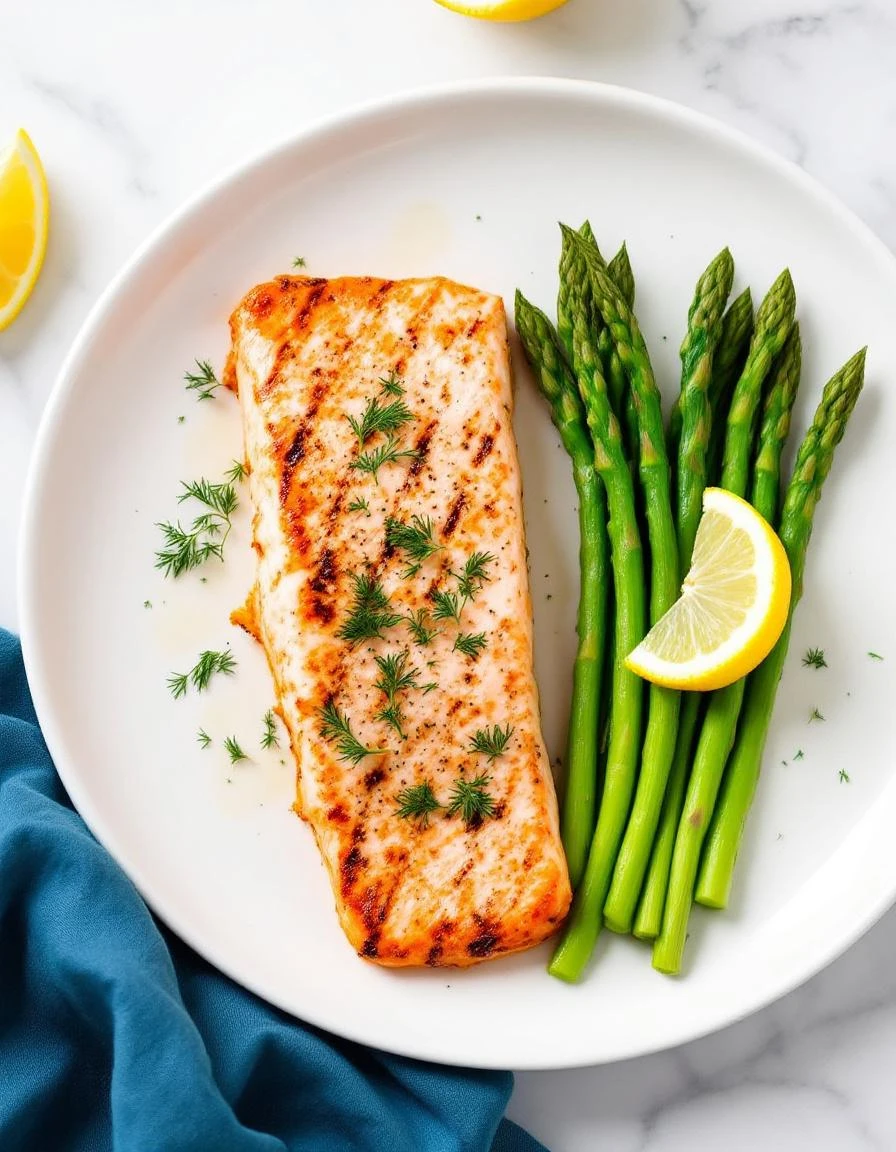
Grilled Salmon with Asparagus
Ingredients
Equipment
Method
- Preheat the grill to medium-high heat, aiming for a steady, hot surface to sear the fish and vegetables.
- Brush the grill grates generously with oil to prevent sticking, creating a non-stick surface for the salmon and asparagus.
- Drizzle the salmon fillets with olive oil, then season generously with salt, pepper, and a touch of lemon zest for flavor.
- Toss the trimmed asparagus spears with olive oil, salt, and pepper until evenly coated, then arrange them in a single layer on a large platter or tray.
- Place the salmon fillets skin-side down on the hot grill, hearing a satisfying sizzle as the skin begins to crisp and turn golden brown.
- Lay the asparagus spears directly on the grill grates in a single layer, allowing them to char and develop smoky grill marks.
- Grill the salmon for about 4-5 minutes, then flip carefully using tongs to cook the other side until the fish flakes easily and the skin is crispy.
- Continue grilling the asparagus, turning occasionally, until they are tender and slightly charred, about 5-7 minutes.
- Remove the salmon and asparagus from the grill once done; the salmon should be opaque, flaky, with crispy skin, and the asparagus bright green with grill marks.
- Squeeze fresh lemon juice over the grilled salmon and asparagus, then sprinkle with chopped dill or parsley for a fresh aroma and flavor.
- Serve immediately, enjoying the crispy skin of the salmon paired with the smoky, tender asparagus for a bright, satisfying meal.
Common mistakes and how to fix them
- FORGOT to oil the grill grates → OIL the grates generously to prevent sticking.
- DUMPED the asparagus onto the hot grill → Spread asparagus in a single layer, avoid overcrowding.
- OVER-TORCHED the salmon → Keep a close eye, flip early if the skin burns too quickly.
- MISSED seasoning on the fish → Season generously before grilling for better flavor coverage.
Make-Ahead and Storage Tips
- You can prep the salmon and trim the asparagus a day ahead. Keep them covered in the fridge for up to 24 hours.
- Marinate the salmon briefly in lemon and herbs if you like—up to 4 hours in the fridge enhances flavor.
- The cooked dish tastes good for about 2 days in the fridge, but the asparagus may lose some snap after 24 hours.
- Reheat gently in a warm oven or on a low grill, checking for warmth and maintaining a slight crisp on the fish skin.
- Expect flavors to mellow slightly overnight, so a fresh squeeze of lemon before serving brightens everything back up.
FAQs
1. How do I know when the salmon is done?
The salmon should flake easily with a gentle press and have an opaque, moist look inside. The asparagus will be tender but still have a slight snap when done.
2. What if the salmon skin isn’t crispy enough?
Look for the fish to turn flaky and lose its translucent sheen. The skin should be crispy and golden, with a smoky aroma.
3. How do I prevent the asparagus from overcooking?
If the asparagus is limp or overly soft, it’s overcooked. Remove it promptly and consider a quick toss in lemon juice for brightness.
4. Can I prepare this dish ahead of time?
Use fresh lemon juice just before serving to keep that zesty brightness. Over time, the citrus can dull and the flavors fade.
5. How should I reheat leftovers?
Reheat gently in a warm oven or on a low grill until just heated through. The fish skin should crisp up again, and the asparagus will regain some of its snap.

Hi, I’m Katie Dawson, the owner, cook, and storyteller behind Little More Lovely. I run a small café in a cozy corner of Seattle, where the smell of freshly baked bread meets the hum of neighborhood chatter. I’ve spent years learning how food can bring people together, both as a professional and as someone who loves to share meals with family and friends.