
Making gazpacho means standing over a cutting board, smashing tomatoes, and peeling cucumbers with a knife that slips slightly. The process involves a lot of rough chopping, then blending everything into a cool, liquid mess that you taste as you go.
Eating it involves a spoonful that’s thick and chunky or smooth and silky, depending on your blend. You’ll feel the cold splash of the soup on your tongue and the crunch of raw veggies if you leave some chunks.
The gentle squish of ripe tomatoes as you core them, the splash of juice on your hands, and the soothing rhythm of blending everything into a smooth, cool soup.
Grocery List and Substitutions
- Ripe tomatoes: I mash these with my hands, feeling their squish and juice burst; skip if you prefer a smoother base, but I love the rustic texture it adds.
- Cucumbers: Peel and chop roughly — the skins add a fresh crunch, but if you’re in a rush, skip peeling for a milder flavor.
- Bell peppers: I toss in a red or yellow, roasted lightly for smoky sweetness; raw works fine if you want crispness, but roasting deepens the flavor.
- Garlic: A couple of cloves, smashed and minced, smell sharp and pungent — skip if you’re sensitive, or add more for a punch.
- Vinegar: Splash in sherry or red wine vinegar, brightens everything up; skip if you prefer a milder, less tangy soup.
- Olive oil: Drizzle a good quality, fruity extra virgin for richness; skip or reduce if you’re watching the fat, but it really rounds the flavors.
- Salt & pepper: Season liberally, tasting as you go — the salt makes everything pop, especially after chilling.
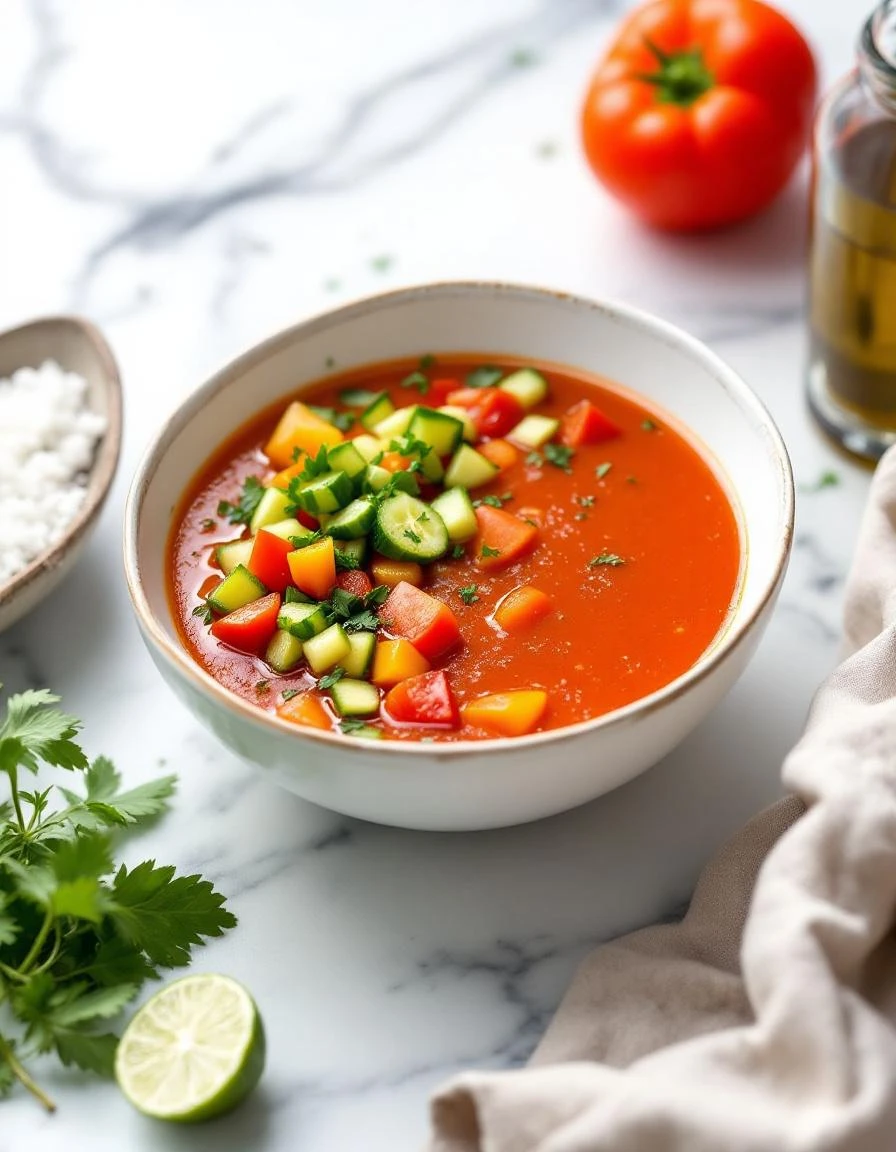
Classic Gazpacho
Ingredients
Equipment
Method
- Begin by roughly chopping the ripe tomatoes into large chunks, feeling their squish and juice burst as you cut.
- Peel the cucumber, then cut it into rough chunks, adding a fresh crunch to the mix.
- If using roasted or raw bell peppers, roughly chop one and add it to the bowl for smoky sweetness or crispness.
- Smash and mince the garlic cloves, releasing their pungent aroma, and add them to the bowl.
- Pour in the sherry vinegar, which brightens the flavors, and drizzle the olive oil over the vegetables.
- Season generously with salt and pepper, then give everything a gentle stir to combine the ingredients.
- Transfer the chopped vegetables and liquids into a blender, and blend until the mixture reaches your desired consistency—smooth or slightly chunky.
- Taste the soup and adjust seasoning with more salt, vinegar, or olive oil if needed, blending briefly to incorporate.
- Pour the gazpacho into a bowl or jar, cover, and refrigerate for at least one hour to let the flavors meld and the soup chill thoroughly.
- Before serving, give the soup a quick stir, then ladle into bowls and enjoy cold, garnished with fresh herbs or chopped vegetables if desired.
Common Gazpacho Mistakes and Fixes
- FORGOT to taste the soup after blending, fix with more vinegar or salt.
- DUMPED in hot water, then cooled too quickly, causing dull flavors. Fix by gradual chilling.
- OVER-TORCHED the garlic, turning bitter. Fix by adding extra lemon juice to mask bitterness.
- MISTAKENLY used olive oil with strong flavor, overwhelming the soup. Fix with milder oil or less.
Make-Ahead and Storage Tips
- Chop and peel your veggies a day in advance; store in airtight containers in the fridge to keep them fresh and ready to blend.
- The soup can be made up to 24 hours ahead; keep it chilled in the fridge. Flavors meld and deepen overnight, but avoid letting it sit longer than a day.
- Freezing isn’t ideal—texture can suffer, and some flavors may dull. If you must freeze, do it for no more than a month and re-blend after thawing.
- Refrigerated gazpacho tastes best chilled, with a splash of olive oil or vinegar added just before serving. Reheat is generally not recommended; serve cold for full flavor.
- Let the gazpacho sit out for 10-15 minutes before serving to take the chill off and boost the fresh aroma. Watch for separation—give it a quick stir if needed.
FAQs
1. How should gazpacho taste and feel?
A chilled spoonful of gazpacho should hit your tongue cold and refreshing, with a bright tomato tang and a hint of garlic. Feel the smooth or slightly chunky texture as you swallow.
2. What tomatoes work best for gazpacho?
Use ripe, juicy tomatoes that squish easily under your fingers. The more juice and sweetness, the better the base flavor hits. Skip the mealy ones or if they’re too soft, they’ll make the soup dull.
3. Should I blend gazpacho smooth or chunky?
Chop your veggies into rough pieces so you get bursts of flavor with each spoonful. If you blend it smooth, it feels like a silky cool cloud, but chunky bits give a satisfying crunch and freshness.
4. How long before serving should I chill gazpacho?
Chill the soup for at least an hour so flavors meld and the texture becomes even cooler on your tongue. Serve it cold, never warm, for that perfect summer refreshment.
5. How do I fix bland or off-tasting gazpacho?
If it tastes flat, add a splash more vinegar or a pinch more salt. If it’s too sour or sharp, a tiny drizzle of olive oil can round it out and soften the acidity.

Hi, I’m Katie Dawson, the owner, cook, and storyteller behind Little More Lovely. I run a small café in a cozy corner of Seattle, where the smell of freshly baked bread meets the hum of neighborhood chatter. I’ve spent years learning how food can bring people together, both as a professional and as someone who loves to share meals with family and friends.