
I start by slicing summer squash into rounds, trying to keep them evenly thick so they cook uniformly. The mess of seeds and flesh often spills over the cutting board, making me wipe my hands before I move on.
Once the squash hits the pan, I listen for that gentle sizzle, watching for the edges to turn just a little golden before I stir. It’s a quick dance—softening, releasing that faintly sweet aroma, then tossing in other ingredients without missing a beat.
The gentle sizzle of sliced squash hitting the hot skillet, releasing a faint, sweet aroma as they soften and caramelize.
What goes into this dish
- Summer squash: I slice these into rounds, aiming for even thickness so they cook uniformly. If they’re too thick, they stay watery; if too thin, they turn crisp too fast. Swap with zucchini if needed, but the squash’s mild sweetness is key.
- Onion: Finely chopped for that sweet, fragrant base. Skip if you’re out, but you’ll miss the aromatic sweetness that balances the dish. Use shallots for a subtler, slightly sweeter note.
- Cheddar cheese: I grate it fresh for melty richness. If you prefer a milder flavor, swap with Monterey Jack. Skip cheese for a vegan version, but the creamy gooeyness really makes it.
- Breadcrumbs: I toss these with a bit of butter until golden. Use panko for extra crunch or crushed Ritz for a buttery kick. Skip if you want a lighter casserole, but it won’t have that crispy topping.
- Eggs: Whisked into the mixture for binding. Omit for a vegan version, but the casserole might be a bit more fragile. If you’re out, a splash of milk can help hold things together.
- Herbs: Fresh thyme or parsley add brightness. Dried works in a pinch but lacks the punch of fresh. Skip if you’re allergic, but it’ll lose that garden-fresh aroma.
- Cream or milk: I use heavy cream for richness, but whole milk or half-and-half work too. Skip if dairy-free, but the casserole will be less lush and creamy.
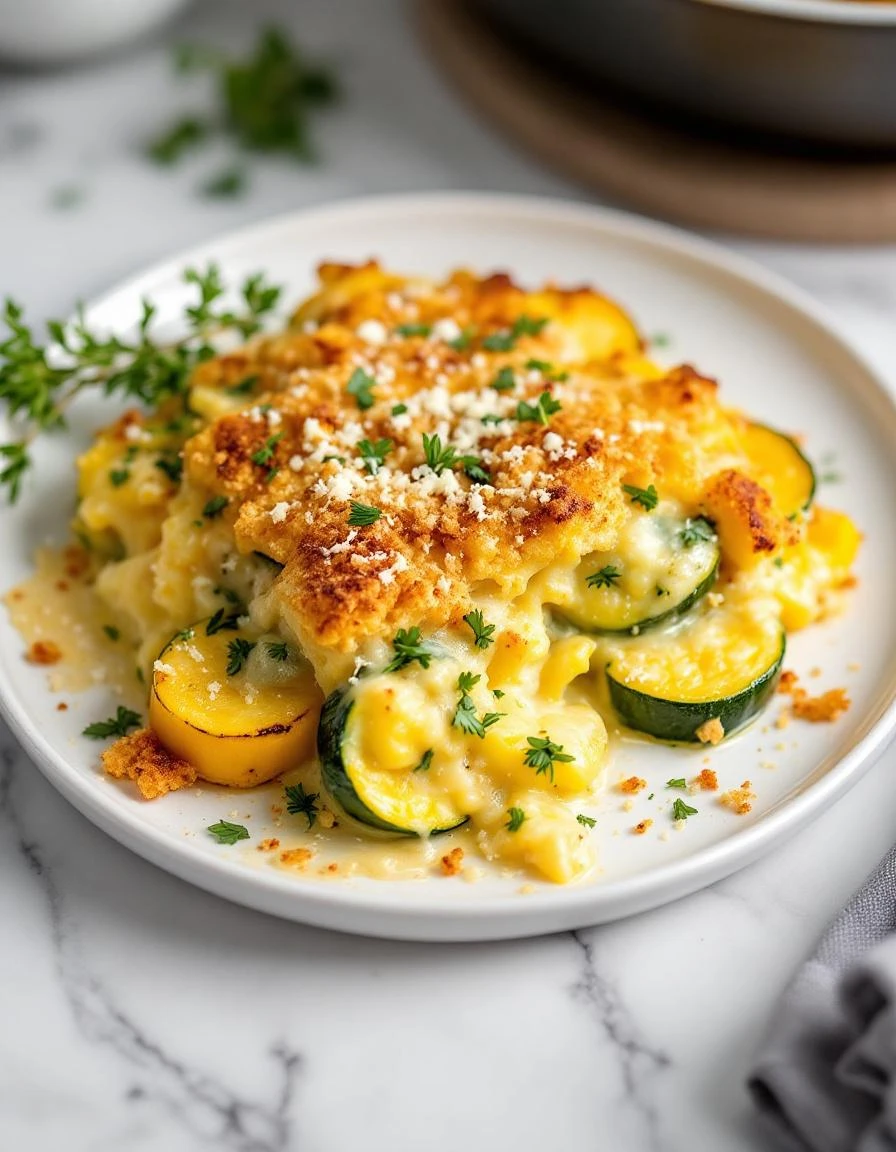
Summer Squash Casserole
Ingredients
Equipment
Method
- Use a sharp knife to slice the summer squash into even rounds, about 1/4 inch thick. Place the slices on a cutting board and set aside.
- Finely chop the onion and set aside; this will add sweetness and aroma to the casserole.
- Preheat a skillet over medium heat and add a splash of oil or butter. Once hot, spread the squash slices in a single layer and cook until they begin to turn golden around the edges, about 3-4 minutes per side. Listen for a gentle sizzle and watch for a slight caramelization.
- Remove the cooked squash and set aside. In the same skillet, add the chopped onion and sauté until fragrant and translucent, about 2-3 minutes.
- In a mixing bowl, combine the grated cheese, chopped herbs, whisked egg, and heavy cream if using. Stir until well mixed to create a creamy binding mixture.
- Layer the sautéed onions in the bottom of a greased baking dish, then arrange the squash slices evenly on top. Pour the cheese mixture over the squash, ensuring an even coating.
- Toss the breadcrumbs with a few tablespoons of melted butter until golden, then sprinkle evenly over the top of the casserole for a crispy crust.
- Place the casserole in a preheated oven at 375°F (190°C) and bake until bubbling and golden on top, about 25-30 minutes. Keep an eye on the breadcrumbs to prevent over-browning.
- Once baked, remove from the oven and let the casserole rest for about 10 minutes. This allows the flavors to settle and makes for easier slicing.
- Slice into squares and serve warm, enjoying the tender squash with a crispy topping and cheesy, aromatic filling.
Common mistakes and how to fix them
- FORGOT to adjust oven temperature, resulting in burnt breadcrumbs. Lower heat and watch closely.
- DUMPED all ingredients in at once, causing uneven cooking. Add in stages for better control.
- OVER-TORCHED the cheese topping, turning it bitter. Keep an eye and remove when golden.
- MISSED draining excess moisture from squash, making the casserole watery. Salt squash early to draw out moisture.
Make-Ahead and Storage Tips
- You can slice and salt the squash a day early; it helps draw out excess moisture, keeping the casserole from becoming watery.
- Assemble the casserole the night before, then refrigerate; it keeps well for up to 24 hours, flavors melding as it rests.
- Freeze unbaked casserole for up to 2 months; wrap tightly to prevent freezer burn and preserve freshness.
- Refrigerated casseroles should be baked within a day or two; allow to come to room temperature before baking for even cooking.
- Reheat leftovers in the oven at 350°F, covered with foil; check for bubbling around the edges and a hot center. The flavors deepen, but watch for dryness—add a splash of milk if needed.
FAQs
1. How do I prepare the squash properly?
Use a sharp knife and keep the squash slices uniform. Feel for a firm, smooth texture as you cut to avoid slipping and uneven slices.
2. How much cheese should I add?
A dash more cheese gives a gooey, slightly salty crust, while less keeps it lighter. Focus on that melty, golden top after baking.
3. How do I avoid overcooking?
Overcooking makes the squash mushy and releases too much water, watering down the casserole. Bake until just tender and golden on top.
4. How long should I let it rest?
Let the casserole rest for 10 minutes after baking. The flavors settle, and the texture firms up, making it easier to serve clean slices.
5. How do I reheat leftovers?
Reheat covered at 350°F until bubbly and fragrant, about 15-20 minutes. The top will crisp up slightly, and the casserole will regain its creamy warmth.

Hi, I’m Katie Dawson, the owner, cook, and storyteller behind Little More Lovely. I run a small café in a cozy corner of Seattle, where the smell of freshly baked bread meets the hum of neighborhood chatter. I’ve spent years learning how food can bring people together, both as a professional and as someone who loves to share meals with family and friends.