
Setting up the smoker is a messy affair—coarse salt, black pepper, and wood chips scatter everywhere. You’ll be wiping your hands on your apron, trying not to knock over the drip pan or crush the bark before it forms.
As the brisket cooks, you’ll hear a constant low hum, punctuated by the crackle of fat rendering and the occasional burst of smoke. It’s a slow, patient process that demands attention to the bark’s color and the internal temp.
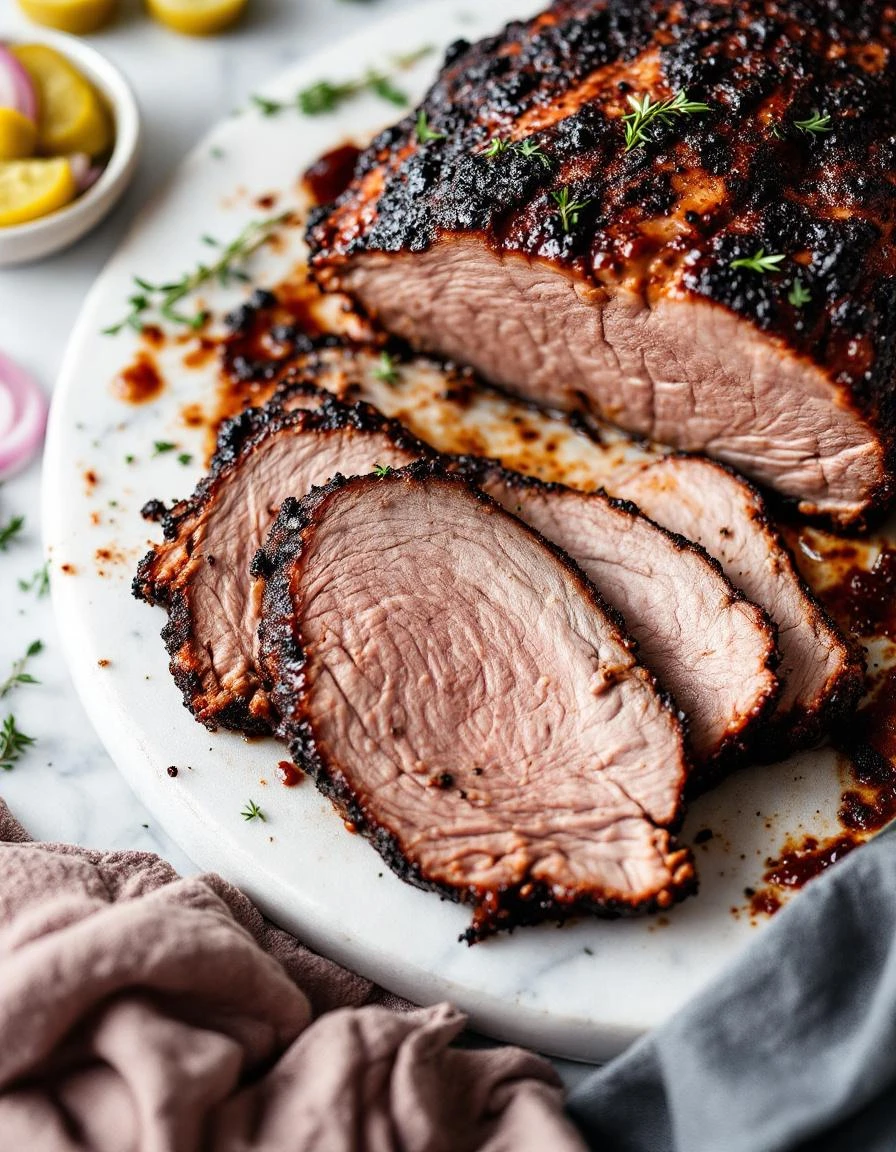
The crackle of the bark as you slice into the brisket, each cut revealing a smoky, juicy interior.
Essential ingredients for smoked brisket
- Brisket: I stick to a whole packer cut—fat cap on helps keep it moist and flavorful during the long smoke. If you prefer leaner, trim some of that fat, but don’t go too lean or it’ll dry out.
- Salt and black pepper: Simple coarse salt and cracked black pepper are my go-to. If you like a little heat, add cayenne or smoked paprika. Skip the fancy rubs; this is about the pure smoky beef flavor.
- Wood chips: Hickory or oak are classic—smoke adds that deep, earthy aroma. Soak them first to slow down burning; if you want a sweeter touch, try fruit woods like apple or cherry.
- Beef broth or apple juice: I keep a spray bottle filled with a mix for spritzing—keeps the bark glossy and tender. Skip if you’re short on time, but it really boosts flavor and moisture.
- Optional seasonings: Garlic powder, onion powder, maybe a dash of cumin—if you want a spicy kick or a little extra aroma. Keep it simple; overdoing it can mask that smoky beef essence.
- Cooking setup: I prefer a pellet or offset smoker—consistent heat and that wood smoke flavor. If you’re using an oven, you can still get good results, but it won’t have that true smoked depth.
Smoked Beef Brisket
Ingredients
Equipment
Method
- Pat the brisket dry with paper towels, then generously season all sides with coarse salt and cracked black pepper, pressing the seasoning into the meat.
- Preheat your smoker or grill to a steady 225°F, adding soaked wood chips to the fire or smoker box to produce a steady stream of smoke.
- Place the brisket fat side up on the grill grates, ensuring good airflow around the meat, and close the lid to start the slow smoking process.
- Maintain the smoker temperature around 225°F, adding more soaked wood chips every hour to keep a consistent smoke flow.
- Spritz the brisket every hour with the beef broth or apple juice using a spray bottle to keep the bark glossy and moist.
- Cook the brisket for approximately 10-12 hours, or until the internal temperature reaches 195-205°F and the bark is deep mahogany and firm to the touch.
- Once done, carefully remove the brisket from the smoker and wrap it loosely in foil, letting it rest for at least 30 minutes to retain juices.
- Unwrap the brisket, then slice against the grain to reveal its smoky, juicy interior with a beautiful bark crust.
- Serve slices of brisket hot, enjoying the tender, flavorful meat with a smoky aroma and appealing crust.
Common Mistakes and How to Fix Them
- FORGOT to monitor the smoker temperature; use a reliable thermometer to fix this.
- DUMPED too much wood at once; add wood gradually for a balanced smoky flavor.
- OVER-TORCHED the bark; wrap the brisket in foil or butcher paper to prevent burning.
- MISSED resting time; let the meat rest at least 30 minutes to lock in juices.
Make-Ahead and Storage Tips
- Prep the brisket a day ahead—trim excess fat and season it thoroughly. Wrap tightly in plastic wrap and refrigerate overnight to let flavors penetrate.
- Smoke the brisket a few hours early; once cooled, refrigerate for up to 3 days. Reheat slowly to preserve moisture and tenderness.
- The smoky flavor intensifies overnight, so expect a richer, more integrated taste after resting. The bark may firm up but remains flavorful.
- Reheat in a low oven (around 250°F) covered loosely with foil. Check every 30 minutes; the meat should be hot and juicy, with a faint smoke aroma wafting out.
- Leftovers can be frozen wrapped tightly for up to 2 months. Thaw in the fridge overnight before reheating for best texture and flavor.
FAQs
1. How should smoked brisket smell and taste?
The smoky aroma hits your nose first, then a tender, juicy bite with a slight chew and a savory, umami finish.
2. What visual cues show a perfectly smoked brisket?
Look for a deep, mahogany bark with a firm but yielding texture. The meat inside should be moist and pull apart easily.
3. How do I know when my brisket is done?
Use a thermometer to check the internal temp around 195-205°F for ideal tenderness. The meat should feel like butter when pierced.
4. How do I reheat smoked brisket without drying it out?
Reheat slowly in a low oven or wrapped in foil on the grill. Expect a gentle release of smoky steam and a warm, juicy bite.
5. How long can I keep smoked brisket in the fridge or freezer?
Wrap leftovers tightly in foil or plastic, store in the fridge for up to 3 days or freeze for 2 months. Reheat with a splash of broth for moisture.

Hi, I’m Katie Dawson, the owner, cook, and storyteller behind Little More Lovely. I run a small café in a cozy corner of Seattle, where the smell of freshly baked bread meets the hum of neighborhood chatter. I’ve spent years learning how food can bring people together, both as a professional and as someone who loves to share meals with family and friends.