
Pasta Primavera starts with boiling water that smells faintly of starch and salt, bubbling loud enough to drown out most other kitchen noises. As I drain the pasta, I feel the hot steam on my face and see the glossy strands cling to each other, waiting for the stir-fry of vegetables to come next.
Chopping the vegetables—bell peppers, zucchini, cherry tomatoes—each hit the cutting board with a crisp sound, releasing fresh, vegetal scents. Tossing them into a hot pan with olive oil, I listen for the sizzle and watch the colorful medley soften and char slightly at the edges, ready to mingle with the pasta.
The rhythmic sound of vegetables hitting the hot pan, the sizzle and crackle as they soften, and the gentle pour of olive oil—each step feels alive and audible, grounding you in the act of cooking.
What goes into this dish
- Bell peppers: I chop these into thin strips, the crunch is satisfying, and their sweetness balances the acidity. Skip if you prefer milder flavors, but the color really pops. For a smoky touch, char them slightly first.
- Zucchini: Sliced into rounds or half-moons, they soften quickly and add a tender bite. If you dislike the watery texture, salt and drain for 10 minutes. Skip if you want a firmer crunch.
- Cherry tomatoes: Halved, their burst of tangy juice adds brightness. Use sun-dried for a concentrated sweetness or omit if you’re not into the juicy pop in each bite.
- Garlic: Minced finely, it releases that fragrant, almost nutty aroma as it hits the hot oil. For a milder flavor, roast it first. Skip if garlic isn’t your thing, but you’ll miss the aromatic punch.
- Olive oil: Use good-quality extra virgin—its grassy, peppery notes coat everything. For a nuttier flavor, try toasted sesame oil sparingly. Skip if you prefer a lighter dish, but don’t skip the oil altogether.
- Parmesan: Grated fresh, it melts into the sauce, adding umami and salt. Pecorino works well too. If dairy-free, a sprinkle of nutritional yeast can mimic the cheesy note, but it’s not quite the same.
- Pasta: I prefer spaghetti or penne, cooked al dente—firm enough to hold the veggies but tender. Skip overcooking; the pasta’s texture ties the whole dish together.
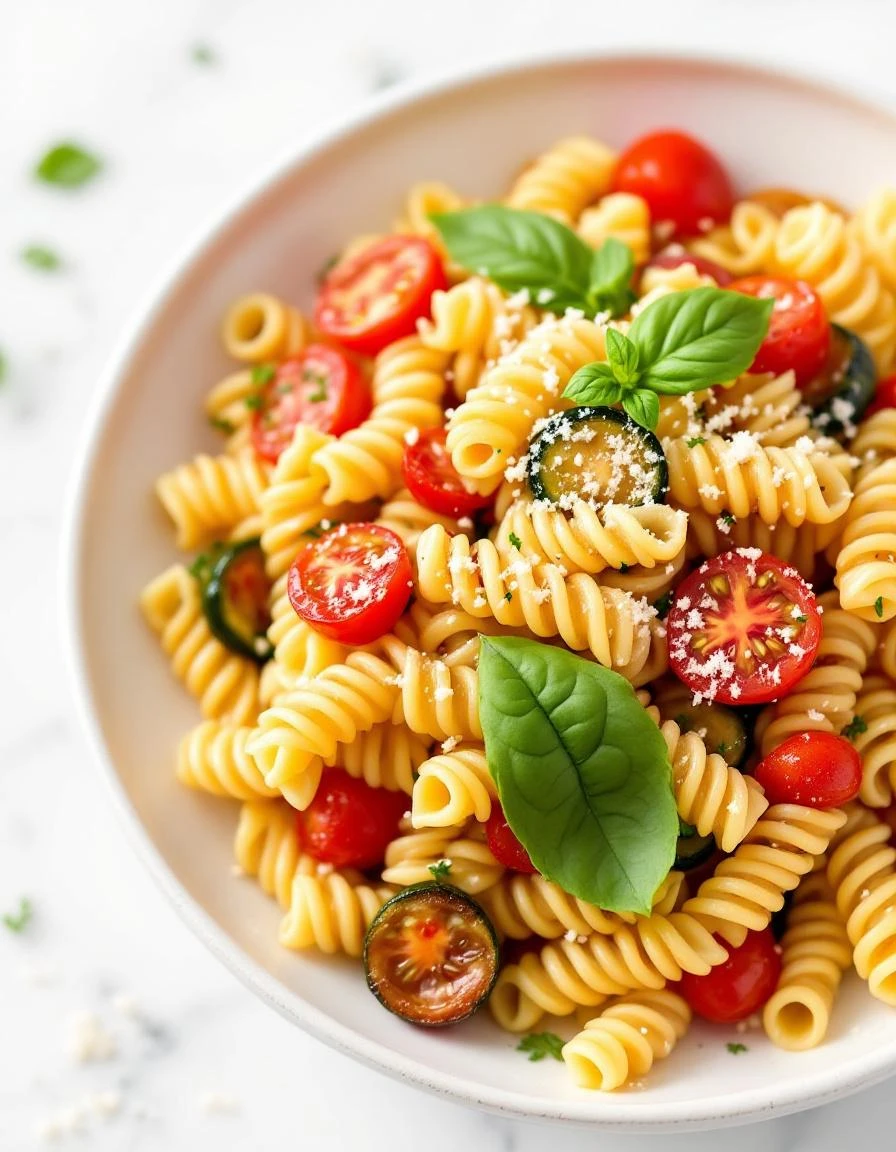
Pasta Primavera
Ingredients
Equipment
Method
- Bring a large pot of salted water to a boil, then add the pasta and cook until just al dente, about 8-10 minutes. Drain and set aside, reserving a splash of pasta water.
- While the pasta cooks, chop the bell peppers into thin strips and slice the zucchini into rounds or half-moons. Halve the cherry tomatoes and set aside.
- Heat the olive oil in a large skillet over medium-high heat until shimmering and slightly fragrant. Add the bell peppers and zucchini, then sauté, stirring occasionally, until the vegetables soften and develop some charred edges, about 5-7 minutes.
- Add the minced garlic to the skillet and cook for about 30 seconds, until fragrant and just beginning to turn golden. Be careful not to burn it.
- Stir in the halved cherry tomatoes and cook for another 2-3 minutes until they soften slightly and release their juices, filling the skillet with bright aroma.
- Add the drained pasta to the skillet, tossing gently to combine everything. If the mixture seems dry, add a splash of reserved pasta water to loosen and help everything meld together.
- Sprinkle the freshly grated Parmesan cheese over the pasta and vegetables, tossing again to evenly distribute the cheesy goodness. Season with salt and freshly ground black pepper to taste.
- Cook for another minute to allow the cheese to melt and the flavors to meld, then remove from heat. The dish should look vibrant, with the colorful vegetables coated in a light, fragrant sauce.
- Serve immediately, garnished with extra Parmesan or fresh herbs if desired. Enjoy the tender pasta with the crisp-tender, slightly charred vegetables and bright, cheesy flavor!
Common Mistakes and How to Fix Them
- FORGOT to taste the pasta before draining—adjust salt or cooking time accordingly.
- DUMPED in all the vegetables at once—sauté in stages for even caramelization.
- OVER-TORCHED the garlic—remove from heat sooner to prevent bitterness.
- FAILED to reserve pasta water—use it to loosen the sauce and enhance flavor.
Make-Ahead and Storage Tips
- Chop vegetables like peppers, zucchini, and cherry tomatoes ahead—store in airtight containers for up to 2 days. They’ll keep their crispness a bit longer if kept dry.
- Cook the pasta until just shy of al dente, then drain, toss with a little oil to prevent sticking, and store in the fridge for up to 24 hours. It will absorb flavors if mixed with a splash of olive oil.
- Prep garlic and herbs in advance; mince or chop and keep refrigerated for up to 1 day. Their aroma will mellow slightly but still pack a punch when added later.
- The flavor of roasted or charred vegetables can intensify if kept refrigerated for a day or two, so consider adding fresh or reheated just before serving for the best texture and brightness.
- Reheat gently in a skillet over medium-low, adding a splash of water or broth to loosen the sauce. Watch for the veggies to become tender again and the pasta to rewarm without losing texture.
- Avoid freezing the assembled dish directly; the texture of the vegetables may suffer. If freezing, do it unassembled, then reheat components separately for best results.
FAQs
1. How do I get perfect pasta texture?
The pasta should be slightly underdone when you drain it; it’ll finish cooking with the veggies and sauce, keeping a firm bite and avoiding mushiness.
2. Should I salt the boiling water?
Salting the water generously is key; it seasons the pasta from within, making every bite savory and satisfying, not bland.
3. Why are my veggies soggy?
If your vegetables release too much water, cook them over medium-high heat first to get some color and concentrate their flavors.
4. How do I reheat Pasta Primavera?
Reheat leftovers gently in a skillet, adding a splash of water or broth, until the dish is hot and the veggies regain some of their original vibrancy.
5. Can I make it ahead and keep it fresh?
Use fresh herbs and lemon zest just before serving to keep the bright, zesty flavors lively and crisp on the palate.

Hi, I’m Katie Dawson, the owner, cook, and storyteller behind Little More Lovely. I run a small café in a cozy corner of Seattle, where the smell of freshly baked bread meets the hum of neighborhood chatter. I’ve spent years learning how food can bring people together, both as a professional and as someone who loves to share meals with family and friends.