
Lobster rolls are about the mess of cracking shells, gently pulling meat out, then chopping it into chunks that still feel firm under your knife. You’ll hear the snap of the shell, smell the briny sea scent mixed with butter, and feel the coolness of the lobster meat against your fingertips.
As you stuff the lobster into the toasted bun, there’s a moment of anticipation—pressing everything down slightly, feeling the squish, hearing the bread give way, and catching that first bite with a crunch and a burst of buttery lobster juice.
The gentle squeeze of lemon releasing a bright, zesty aroma as you assemble the roll, contrasting with the rich, tender lobster meat—each press awakens the flavors and brings everything together with a satisfying, audible squish.
What goes into this dish
- Lobster meat: Fresh lobster is key, but frozen works if you thaw it slowly in the fridge. The tender, slightly sweet meat should still have a bit of chew—no rubbery bits. Feel free to swap for langoustines if you want a subtler flavor.
- Buns: Toasted brioche buns add a rich, buttery crunch that holds up to the lobster. If you can’t find them, good quality hot dog buns lightly buttered and toasted work just as well—look for something soft yet sturdy.
- Mayonnaise: Use real mayo for that creamy coating, but Greek yogurt can replace part of it for a tangy, lighter twist. The goal is a smooth, rich spread that clings to each chunk; skip it if you prefer a cleaner, lobster-only taste.
- Lemon: Bright, zesty lemon juice is essential—squeeze just before serving to cut through the richness. If you don’t have fresh, a splash of bottled lemon juice will do, but fresh gives the best punch of aroma.
- Herbs: Chopped chives or parsley add freshness and a slight onion or grassy note. If you’re out, thinly sliced green onions or basil are decent swaps—just something to lift the richness with a bit of color and aroma.
- Butter: A little melted butter brushed on the toasted buns adds richness and helps them crisp up. For a dairy-free version, olive oil works, but it won’t have that same buttery depth.
- Seasonings: Salt, a pinch of black pepper, and optional smoked paprika or Old Bay can boost flavor. Feel free to skip the spice if you want pure lobster sweetness; just taste and adjust as you go.
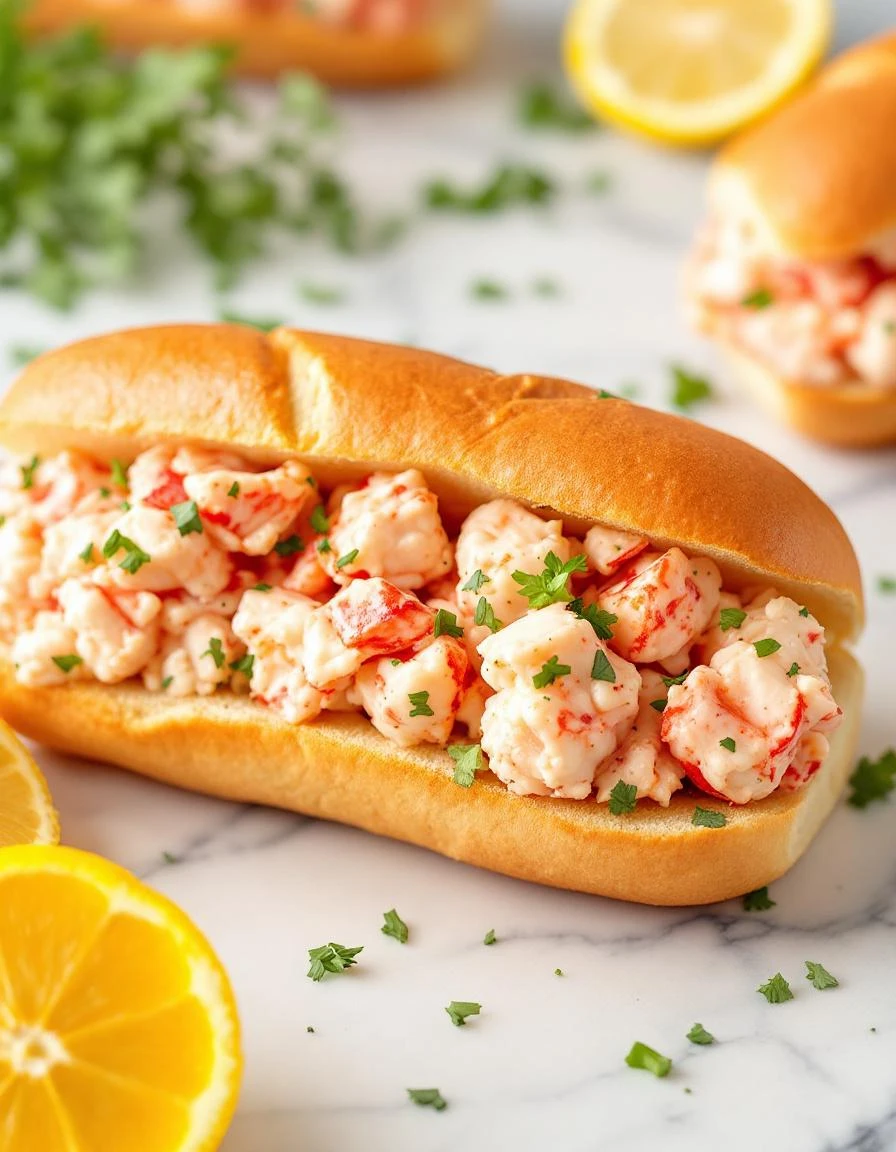
Lobster Rolls
Ingredients
Equipment
Method
- Bring a large pot of salted water to a boil and carefully add the lobster. Cover and cook for about 8-10 minutes until the shell turns bright red and the meat is tender. Remove the lobster and let it cool slightly before handling.
- Once cooled enough to handle, crack open the lobster shells with a sharp knife or kitchen scissors, and carefully extract the meat, keeping it in chunks. Rinse off any shell fragments and pat the meat dry.
- Chop the lobster meat into bite-sized chunks and place in a mixing bowl. Squeeze fresh lemon juice over the meat and gently toss to combine, adding salt, pepper, and optional spices to taste.
- Add mayonnaise and chopped herbs to the lobster, then fold everything together until well combined. Taste and adjust seasonings, ensuring the mixture is creamy and flavorful but not overpowering.
- Split the buns and brush the insides with melted butter. Toast them in a toaster oven or skillet over medium heat until golden brown and crispy, about 2-3 minutes.
- Using a spreading knife, fill each toasted bun generously with the lobster mixture, pressing down slightly to help it settle and enhance the squishy, satisfying texture.
- Finish by adding a squeeze of fresh lemon on top of each filled bun for brightness, and serve immediately for the best crunch and juiciness.
Common Mistakes and How to Fix Them
- FORGOT to keep lobster cold, which can make the meat mushy; chill thoroughly before prep.
- DUMPED too much mayo, drowning the lobster; start small and add gradually for balance.
- OVER-TORCHED the buns, making them hard and dry; toast gently over medium heat.
- MISSED the lemon squeeze, losing brightness; add just before serving for that fresh zing.
Make-Ahead and Storage Tips
- Cook and chop the lobster meat a day ahead. Keep it chilled in an airtight container for up to 24 hours to preserve freshness and prevent mushiness.
- Toast the buns and store them in a paper bag at room temperature. They stay crisp for a few hours, but best eaten within 4 hours of toasting.
- Mix the lobster with mayo, herbs, and lemon juice ahead of time. Cover and refrigerate for up to 12 hours. Flavors meld, but may lose some brightness—the lemon squeeze just before assembly helps.
- Reheat the lobster mixture gently if needed—warm it slightly in a double boiler or microwave, just until it’s warm to the touch. Feel for a gentle heat, not boiling, to keep the meat tender.
- Assemble the rolls just before serving. If you need to prep too early, keep everything cold and do the final assembly within 30 minutes for the best crunch and freshness.
FAQs
1. How can I tell if lobster is fresh?
Fresh lobster smells sweet and briny, like the sea, not fishy or ammonia-y. It should feel firm, not slimy or mushy, when you handle it.
2. What should I expect texture-wise?
A good lobster roll has a noticeable crunch from the toasted bun and a burst of buttery, tender meat with every bite.
3. Can I serve this warm?
Use cold lobster meat for the best flavor and texture. Warmed-up lobster can get mushy and lose that firm bite.
4. Can I make it lighter?
If mayo feels too heavy, swap some for Greek yogurt. It keeps the creaminess but adds a tang and lightness.
5. When should I add lemon?
Add lemon juice right before serving to preserve its bright, zesty aroma. It cuts through richness and awakens flavors.

Hi, I’m Katie Dawson, the owner, cook, and storyteller behind Little More Lovely. I run a small café in a cozy corner of Seattle, where the smell of freshly baked bread meets the hum of neighborhood chatter. I’ve spent years learning how food can bring people together, both as a professional and as someone who loves to share meals with family and friends.