
Fresh peas have this delicate, sweet aroma that often goes unnoticed, but when you cook them gently, that scent becomes your guide. It’s like a whisper of spring telling you it’s time for something bright and simple. This soup is all about capturing that grassy freshness, without fuss or complicated ingredients.
I love how the aroma of fresh peas can fill the kitchen with a kind of quiet joy. You don’t need fancy tricks—just a little butter, a splash of broth, and a quick blitz. It’s a reminder that good flavor comes from honest ingredients and a gentle touch, especially when the season is fleeting. Plus, it’s so fast, you’ll be surprised how little effort it takes to turn a handful of peas into something comforting and vibrant.
Focusing on the overlooked sweet, grassy aroma of fresh peas and how that scent can guide the soup’s perfect seasonality and freshness.
The story behind this recipe
One spring afternoon, I was walking through a farmers’ market when I caught a whiff of fresh peas—bright, sweet, almost grassy. It reminded me of childhood garden afternoons, just plucking peas straight from the pod. This recipe came from wanting to capture that pure, unadulterated flavor in a simple soup that feels like a quick breath of fresh air. Sometimes, the best ideas come from just being present with the season and letting that aroma guide your cooking.
Key Ingredient Insights
- Fresh peas: I love how their bright, grassy aroma fills the kitchen when I cook them gently. Use the freshest, sweetest peas you can find for maximum flavor.
- Butter: I prefer a generous knob to bring out the peas’ natural sweetness and add a silky texture. If you want a dairy-free version, a splash of olive oil works but won’t be as lush.
- Vegetable broth: I use homemade or low-sodium store-bought broth. It’s the subtle backbone that keeps the soup from tasting flat—don’t skimp on quality here.
- Onion: A small sweet onion, diced finely, adds a gentle sweetness and depth. Skip it if you’re avoiding onion but consider a pinch of leek for similar effect.
- Mint: Fresh mint leaves brighten the soup with a burst of herbal freshness. If mint isn’t available, a sprinkle of basil or parsley can add a different, but lovely, herbal note.
- Lemon juice: A squeeze at the end lifts everything—think of it as a fresh breath that makes the peas pop. Don’t skip it; it’s the secret to that zingy brightness.
- Cream (optional): A drizzle of cream or a dollop of yogurt adds richness, but the soup is lovely even without it. For a vegan twist, use coconut cream for a subtle, tropical note.
Spotlight on key ingredients
Fresh peas:
- I love how their bright, grassy aroma fills the kitchen when I cook them gently. Use the freshest, sweetest peas you can find for maximum flavor.
- Peas behave differently when cooked quickly—tender but still firm enough to hold their shape. Their aroma intensifies as they heat, releasing that unmistakable sweet smell.
Mint:
- I find the aroma of fresh mint invigorating, especially when added at the end. It brightens the soup with a herbal punch and a subtle coolness.
- Mint leaves should be added just before serving; overcooking dulls their aroma and can make the flavor bitter. The leaves should be vibrant and fragrant, not wilted.
Notes for ingredient swaps
- Dairy-Free: Swap butter for olive oil or coconut oil. The soup will lose some richness but gain a slightly different, fruitier note.
- Vegan: Use vegetable broth instead of chicken broth, and skip dairy or replace with cashew cream for creaminess.
- Herb Variations: Mint is classic, but basil or parsley can provide a different herbal brightness. Use fresh, not dried, for best impact.
- Onion Alternatives: Leeks or shallots can be used instead of onion, bringing a milder, sweeter flavor to the base.
- Pea Variants: If fresh peas aren’t available, frozen peas work well—just thaw and drain before cooking. They tend to be slightly less sweet but still vibrant.
- Lemon Juice: Use lime juice for a slightly different tang, or skip entirely if you prefer a more subdued, earthy flavor.
- Cream Substitutes: For a vegan or lighter option, blend in a spoonful of coconut milk or use a splash of almond or cashew cream for smoothness.
Equipment & Tools
- Saucepan: Cook the peas and onion until tender.
- Blender or immersion stick: Puree the cooked mixture into a smooth soup.
- Measuring cup: Measure liquids like broth and lemon juice accurately.
- Ladle: Serve the soup neatly into bowls.
Step-by-step guide to fresh pea soup
- Gather the equipment: a medium-sized saucepan, a blender or immersion stick, a measuring cup, and a ladle. The saucepan is for cooking; the blender blends the soup to smoothness; the measuring cup helps with liquids; the ladle serves.
- Heat the saucepan over medium heat until warm, around 160°C (320°F). Add a generous tablespoon of butter. Let it melt and foam gently, releasing a sweet, nutty aroma.
- Add finely chopped onion (about 1/2 cup). Cook, stirring occasionally, until translucent, about 3-4 minutes. The onion should smell sweet and be just starting to turn golden.
- Pour in 2 cups of vegetable broth. Bring to a gentle simmer, around 85°C (185°F). Drop in 2 cups of fresh peas. Cook until peas are tender, about 4-5 minutes. Peas should be bright green, slightly plump, and smell fresh.
- Use a slotted spoon to transfer peas and onion into the blender. If you prefer a thinner soup, add a splash of broth. Blend until smooth, about 30 seconds. The mixture should be velvety and bright green.
- Pour the pureed soup back into the saucepan. Warm gently over low heat, about 60°C (140°F). Stir in a teaspoon of lemon juice and a few chopped mint leaves. Taste and adjust seasoning with salt and pepper. The soup should smell vibrant, with a fresh herbal aroma.
- Finish with a swirl of cream or yogurt if desired. Ladle into bowls, garnish with extra mint or a drizzle of olive oil if you like. Serve immediately for the freshest flavor and aroma. The soup should be hot, velvety, and fragrant.
Ladle the hot soup into bowls. Garnish with fresh herbs or a drizzle of oil. Serve immediately while bright and fragrant.
How to Know It’s Done
- Peas are tender and bright green, with a sweet aroma.
- Soup is velvety and smooth, with no lumps or graininess.
- Lemon juice and mint are well incorporated, adding brightness and herbal notes.
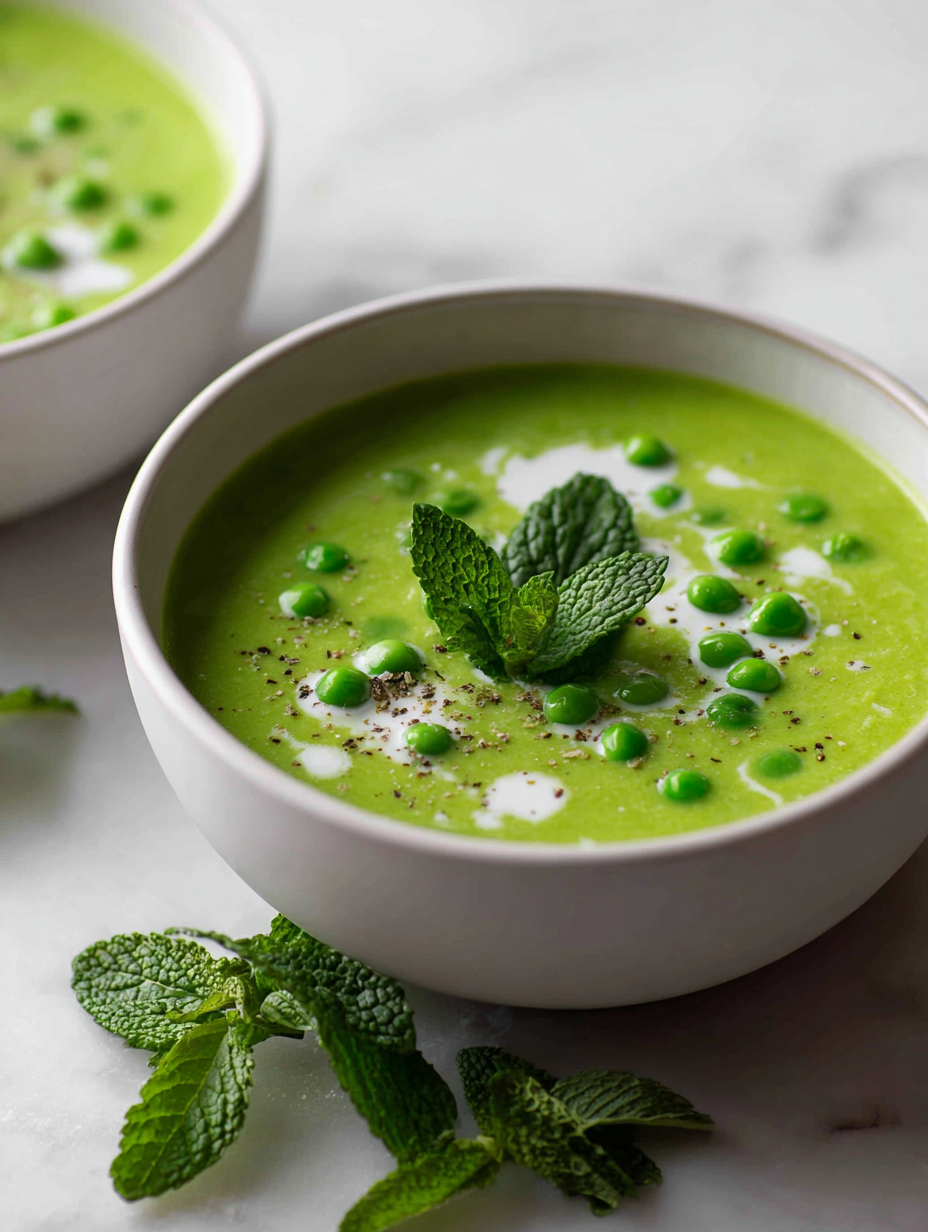
Fresh Pea Soup with Mint
Ingredients
Equipment
Method
- Start by gathering your equipment: a saucepan, an immersion or regular blender, a measuring cup, and a ladle.
- Place the saucepan over medium heat and add a generous tablespoon of butter. As it melts, it will foam gently and release a warm, nutty aroma, signaling it's ready.
- Add the finely chopped onion to the pan and cook, stirring occasionally, until translucent and just starting to turn golden, about 3-4 minutes. The onion should smell sweet and fragrant.
- Pour in the vegetable broth and bring it to a gentle simmer. Once bubbling, add the fresh peas, and cook until they’re tender and bright green, about 4-5 minutes. You'll notice their aroma intensify as they heat.
- Using a slotted spoon, transfer the cooked peas and onion into your blender. Add a splash of broth if you prefer a thinner soup. Blend until completely smooth and velvety, about 30 seconds. The mixture should be vibrant green and fragrant.
- Pour the pureed soup back into the saucepan and warm gently over low heat. Stir in a teaspoon of lemon juice and the chopped mint leaves. Taste and season with salt and pepper. The soup should smell fresh, bright, and herbal.
- If desired, swirl in a bit of cream or add a dollop of yogurt for extra richness. Ladle the hot soup into bowls and garnish with additional mint leaves or a drizzle of olive oil if you like.
Notes
Pro tips for perfect fresh pea soup
- Use fresh peas for a brighter, sweeter aroma that guides the seasoning.
- Gently simmer peas and onion—avoid boiling vigorously to preserve their delicate flavor and color.
- Blend until silky—avoid over-mixing to prevent a grainy texture and keep the soup smooth.
- Add lemon juice just before serving—brightens flavors and enhances the fresh pea aroma.
- Use a splash of cold water or stock when blending—helps achieve a velvety, lump-free consistency.
- Taste and adjust seasoning at the end—pears and herbs develop fully only with proper balancing.
- Garnish with fresh mint or herbs—adds a fragrant, herbal lift that complements the peas’ sweetness.
Common mistakes and how to fix them
- FORGOT to check pea tenderness → Test with a fork for slight give, not mush.
- DUMPED all peas at once → Add peas gradually to avoid overcooking and loss of color.
- OVER-TORCHED the butter → Keep heat moderate; butter should foam gently, not burn.
- MISSED blending thoroughly → Puree until silky, avoiding grainy textures in the soup.
Quick fixes and pantry swaps
- When peas look dull, splash cold water on them to shock and preserve color.
- If soup is too thick, stir in a quick splash of warm broth to loosen it.
- Splash a few drops of lemon juice to brighten dull flavors mid-simmer.
- Patch overcooked peas with a dollop of butter for extra richness.
- Shield delicate herbs like mint from direct heat to preserve aroma.
Prep, store, and reheat tips
- Prepare the soup base: Cook the peas and onions, then blend and chill in an airtight container. Keeps well for up to 2 days in the fridge, with the fresh aroma fading slightly over time.
- Store in a covered container: Reheat gently on the stove, stirring often. The soup may thicken; add a splash of broth or water to loosen it while warming, and look for a vibrant green color and fragrant aroma.
- Shelf life: Best enjoyed within 48 hours; after that, the flavor becomes duller and the peas lose some of their grassy brightness.
- Reheating tips: Warm slowly over low heat, about 60°C (140°F). The soup should shimmer gently and smell fresh, with the herbal notes still lively. Do not boil vigorously to preserve the smooth texture.
- Freezing: You can freeze in portions for up to 3 months. Thaw overnight in the fridge and reheat slowly, checking for a bright green hue and fresh aroma upon warming.
Top questions about fresh pea soup
1. How do I know when the peas are tender enough?
Fresh peas have a sweet, grassy aroma that peaks when cooked gently. It’s your scent guide for perfect timing.
2. Should I blend the soup until completely smooth?
A quick blitz in the blender makes the soup velvety. Over-blending can make it grainy, so stop when smooth.
3. When should I add the lemon juice?
Adding lemon juice brightens the flavor and enhances the fresh aroma of the peas. A little goes a long way.
4. Can I use frozen peas instead of fresh?
Frozen peas work well—just thaw and drain. They’re slightly less sweet but still vibrant and easy to use.
5. What herbs work best as a garnish?
Garnish with fresh herbs like mint or basil right before serving. It keeps their aroma lively and fresh.
6. How long can I keep the soup in the fridge?
Store leftovers in a sealed container in the fridge for up to 2 days. The flavor dulls slightly but stays fresh.
7. How do I reheat without losing flavor?
Reheat gently over low heat, stirring often. The soup should shimmer and smell bright with herbal notes.
8. What if the soup is too thick after blending?
If the soup becomes too thick, stir in a splash of broth or water until it reaches your desired consistency.
9. Can I use older peas or only fresh ones?
Use fresh peas for the best aroma and flavor; older or store-bought peas may lack that grassy sweetness.
10. Should I add oil or butter before serving?
Adding a drizzle of good-quality olive oil at the end can add a fruity aroma and silky finish.
This simple pea soup is a reminder that some of the best flavors come from just a handful of ingredients and a gentle touch. The fresh aroma, the vibrant color, and that silky texture make it a perfect quick lunch or a light starter. It’s one of those dishes that feels like a small celebration of spring, even on the busiest days.
In the end, it’s about embracing the season’s bounty and trusting that honest ingredients will do the heavy lifting. A little herbs, a splash of lemon, and a swirl of cream—nothing more needed to keep that bright, grassy aroma alive. Sometimes, the simplest things are exactly what you didn’t know you needed.

Hi, I’m Katie Dawson, the owner, cook, and storyteller behind Little More Lovely. I run a small café in a cozy corner of Seattle, where the smell of freshly baked bread meets the hum of neighborhood chatter. I’ve spent years learning how food can bring people together, both as a professional and as someone who loves to share meals with family and friends.