
I’ve always loved how roasting transforms butternut squash from a humble veggie into something almost buttery, sweet, and complex. But I got tired of the same old cubes with cinnamon and maple—wanted something more surprising. This recipe started as a mishmash of ideas in my kitchen, and now it’s become a go-to for chilly evenings.
It’s not fancy, just honest roasting with a little tweak here and there. The result is a soft, caramelized beauty that pairs with everything from grains to salads, or even on its own with a dollop of yogurt. Sometimes, it’s the simplest ways that make the biggest difference.
Why I Keep Roasting It
It’s the kind of simple pleasure that never gets old. Each batch feels like a little bit of a kitchen victory, especially when I find that perfect caramelized edge. Plus, it’s endlessly adaptable—pair it with grains, greens, or just eat it straight up. That smoky, oozy goodness keeps calling me back.
What’s Inside: The Heart of the Dish
- Butternut squash: Sweet, dense flesh that caramelizes beautifully when roasted.
- Olive oil: Adds richness and helps in browning, think smoky and fruity.
- Salt: Enhances sweetness, just enough to elevate flavors.
- Lemon juice or zest: Brightens the dish with a fresh, tangy contrast.
- Spice options (paprika, cumin, or cinnamon): Add warmth and depth—choose your adventure.
- Tahini or yogurt (for serving): Creamy, nutty, and cooling, balancing the roasted sweetness.
- Fresh herbs (parsley, cilantro): Herbaceous lift that makes every bite lively.
Tools of the Trade for a Flawless Roast
- Sharp vegetable peeler: Eases peeling of the tough butternut skin.
- Large baking sheet: Provides ample space for even roasting.
- Pastry brush: For brushing the flesh with oil evenly.
- Paring knife: Helps with precise peeling and seed removal.
- Cooling rack: Allows squash to cool without steaming.
Step-by-Step to a Perfect Roast
Step 1: Preheat your oven to 200°C (390°F).
Step 2: Peel and halve the butternut squash lengthwise, scoop out the seeds.
Step 3: Arrange the squash halves cut side up on a baking sheet lined with parchment paper.
Step 4: Brush the flesh with olive oil, sprinkle with salt, and roast for 40-45 minutes.
Step 5: Check for caramelization around the edges and a tender, slightly translucent flesh.
Step 6: Once roasted, let it cool for 10 minutes before handling.
Step 7: Slice into thick, irregular chunks to keep the rustic feel.
Step 8: Serve warm, drizzled with a lemony tahini sauce or a dash of smoked paprika.
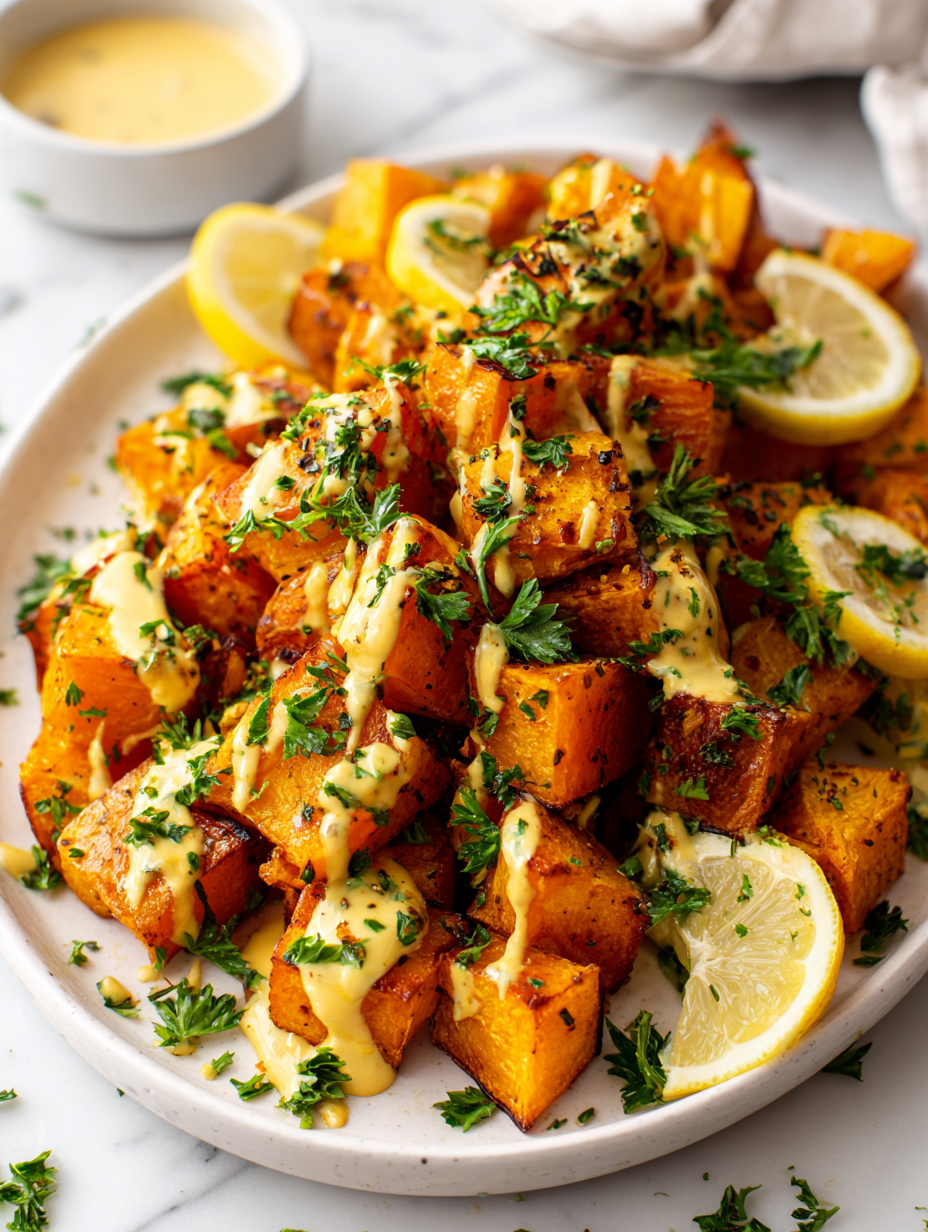
Roasted Butternut Squash with Lemon Tahini Drizzle
Ingredients
Equipment
Method
- Peel the butternut squash using a sharp vegetable peeler, then halve it lengthwise and scoop out the seeds with a paring knife. Arrange the halves cut side up on a parchment-lined baking sheet.
- Brush the flesh of the squash with olive oil using a pastry brush, sprinkle with salt, and optionally add smoked paprika for extra warmth and depth.
- Place the baking sheet in a preheated oven at 200°C (390°F) and roast for 40-45 minutes, until the edges are caramelized and the flesh is tender when pierced with a fork.
- Remove the squash from the oven and let it cool for about 10 minutes. Once cool enough to handle, slice it into rustic, irregular chunks to keep the charming, homey look.
- Meanwhile, prepare the lemon tahini drizzle by whisking together tahini, lemon juice or zest, and water until smooth and pourable. Adjust with more water if needed to reach your desired consistency.
- Arrange the roasted chunks on a serving platter, then drizzle generously with the lemon tahini sauce. Garnish with chopped parsley or cilantro for a fresh, herbaceous finish.
- Serve warm, perhaps with a side of grains or greens, or enjoy straight from the platter for a cozy, satisfying meal.
Cooking Tips & Tricks to Nail It
- Ensure even thickness when slicing for consistent roasting.
- Watch for caramelized edges—these add depth and sweetness.
- If the squash isn’t tender after 40 minutes, give it a few more minutes, but keep an eye to prevent burning.
- Use a sharp knife for peeling and slicing to avoid slips and uneven cuts.
Common Pitfalls and How to Avoid Them
- Dull blades make peeling and slicing difficult.? USE a sharp knife to peel and cut, avoiding slips.
- Overcooking leads to mushy, burnt edges.? Keep an eye on roasting time to prevent burning.
- Uneven roasting from hot spots in the oven.? Adjust oven rack for even heat distribution.
- Over or under roasting due to guesswork.? Test for tenderness with a fork, not just visual cues.
This dish is a reminder that simple ingredients can surprise you when roasted with a little patience. It’s not just about the sweetness of the squash but how it marries with bold, unexpected flavors. Feel free to add herbs or spice blends to match your mood or the season. Enjoy making it your own—sometimes the imperfect, slightly charred bits are the best.

Hi, I’m Katie Dawson, the owner, cook, and storyteller behind Little More Lovely. I run a small café in a cozy corner of Seattle, where the smell of freshly baked bread meets the hum of neighborhood chatter. I’ve spent years learning how food can bring people together, both as a professional and as someone who loves to share meals with family and friends.