
This creamy asparagus risotto with parmesan isn’t about flashy tricks or complicated steps. It’s about that quiet moment of perfect balance—when the rice is just tender enough, and the asparagus still has a slight snap, bright and fresh. I’ve learned that the secret lies in controlling heat and timing, so each spoonful feels like a gentle conversation between the ingredients.
Growing up, I watched my grandma make risotto in her old copper pot, stirring patiently while the kitchen filled with that nutty aroma of toasted rice and melting cheese. Now, I chase that same warmth and comfort, but with a fresh twist—using asparagus at just the right moment to keep its vibrant color and lively flavor intact. It’s simple, honest cooking, rooted in those small, overlooked details that turn good into memorable.
Focusing on the overlooked subtlety of perfectly balancing the creamy texture with the fresh, bright burst of asparagus, this recipe emphasizes the importance of timing and temperature control in achieving that elusive, silky risotto.
The story behind this recipe
- This dish came together one spring when I had a bunch of fresh asparagus and a craving for something both comforting and bright. I wanted a risotto that felt like a conversation—creamy but not heavy, with just enough bite from the asparagus to keep it lively. It’s a reminder that sometimes, simplicity rooted in fresh ingredients makes the best meal.
- I remember cooking this in my tiny apartment during a busy week, the aroma of toasted rice filling the kitchen, mingling with the fresh scent of asparagus just cut. That moment of stirring, watching the rice slowly absorb the broth, felt like a small act of mindfulness. Now, it’s become my go-to when I want something that’s honest, hearty, and reminds me to appreciate those simple, fleeting flavors.
- heading: The story behind this recipe
Key Ingredients Breakdown
- Arborio rice: I love that slightly chewy bite it offers, and I find that rinsing it briefly keeps it from becoming too starchy—just enough to let it absorb flavors without turning gluey.
- Fresh asparagus: Their bright green color and tender snap are what make this dish special. If yours are a bit limp, blanch briefly in salted boiling water to revive their vibrancy.
- Parmesan: The salty, umami punch it adds is essential. For a deeper flavor, try aging parmesan or even a little Pecorino Romano—just a sprinkle.
- Vegetable broth: I prefer homemade or good-quality store-bought for that rich, savory base. If your broth tastes bland, a splash of white wine or a teaspoon of miso can boost its depth.
- Butter and olive oil: They create that luscious, silky texture. Don’t skimp—let the butter melt slowly and listen for that gentle crackle to avoid burning.
- Lemon zest (optional): Adds a subtle brightness. If you want more zing, squeeze a little fresh lemon juice right before serving—makes everything pop!
- Salt and pepper: I adjust these at the end, tasting as I go. Remember, parmesan is salty, so don’t overdo the salt early on.
Spotlight on key ingredients
Asparagus:
- I love how their bright green color and tender snap add vibrancy and texture. If yours are limp, blanch briefly in salted boiling water to revive that lively crunch.
- Parmesan: The salty, umami punch it brings is essential. When grated fresh, it melts into the risotto, creating that luscious, cheesy silk. For a richer flavor, try aged Parmesan or a touch of Pecorino Romano—just a sprinkle.
Parmesan:
- Its granular texture melts slowly, releasing a rich, savory aroma that deepens every bite. When you add it off the heat, it softens smoothly, avoiding clumps and ensuring a silky finish.
- ingredient
Notes for ingredient swaps
- Dairy-Free: Swap Parmesan for nutritional yeast or a nut-based cheese; expect a nuttier, less salty flavor.
- Vegan: Use vegan butter and a plant-based cheese or omit cheese altogether; the risotto will be creamier with coconut milk or cashew cream.
- Gluten-Free: This dish is naturally gluten-free, just ensure your broth is certified gluten-free if needed.
- Broth Variations: Chicken broth can replace vegetable broth for a richer, meaty depth; veggie broth keeps it bright and clean.
- Rice Alternative: Short-grain rice like sushi rice can work but might change the texture—expect a slightly stickier risotto.
- Extra Brightness: Add a splash of white wine or lemon juice for more zing; adjust to taste before serving.
- Herb Boost: Fresh thyme or basil can be stirred in at the end for an herbal lift, replacing or adding to the asparagus flavor.
Equipment & Tools
- Wide pan: Ensure even heat and easier stirring for risotto.
- Wooden spoon: Gentle stirring to prevent rice from sticking or breaking.
- Ladle: Add warm broth in controlled, ladleful amounts.
- Saucepan: Keep broth hot and ready for adding.
Step-by-step guide to creamy asparagus risotto
- Gather your equipment: a wide, heavy-bottomed pan (for even heat), a wooden spoon (for gentle stirring), and a ladle (for adding broth).
- Prepare your ingredients: chop the asparagus into 1-inch pieces, grate Parmesan cheese, and measure out rice and broth.
- Heat the broth in a saucepan until just simmering, then reduce to low to keep warm during cooking.
- In your pan, melt a tablespoon of butter with a splash of olive oil over medium heat (about 160°C / 320°F).
- Add the rice and toast it gently, stirring constantly, until the edges are translucent and it has a faint nutty aroma (about 2 minutes).
- Start adding warm broth, one ladleful at a time, stirring frequently. Wait until the liquid is mostly absorbed before adding more.
- Midway through, about 10 minutes in, stir in the asparagus pieces. Continue adding broth in batches, maintaining a gentle simmer.
- After approximately 18-20 minutes, check the rice: it should be tender but still slightly firm in the center. The mixture should be creamy and slightly loose.
- Finish with grated Parmesan, a squeeze of lemon if desired, and adjust seasoning with salt and pepper. Stir until cheese melts and everything is well combined.
- Remove from heat. Let it rest for 1-2 minutes to allow flavors to meld.
- Plate the risotto, garnishing with a little extra Parmesan and a twist of black pepper. Serve immediately.
Let the risotto rest for 1-2 minutes after cooking. Serve immediately, topped with extra Parmesan and black pepper for a fresh finish.
How to Know It’s Done
- Rice is tender but still slightly firm (al dente).
- Risotto has a creamy, slightly loose consistency, not gluey.
- Asparagus is vibrant green and slightly tender, not mushy.
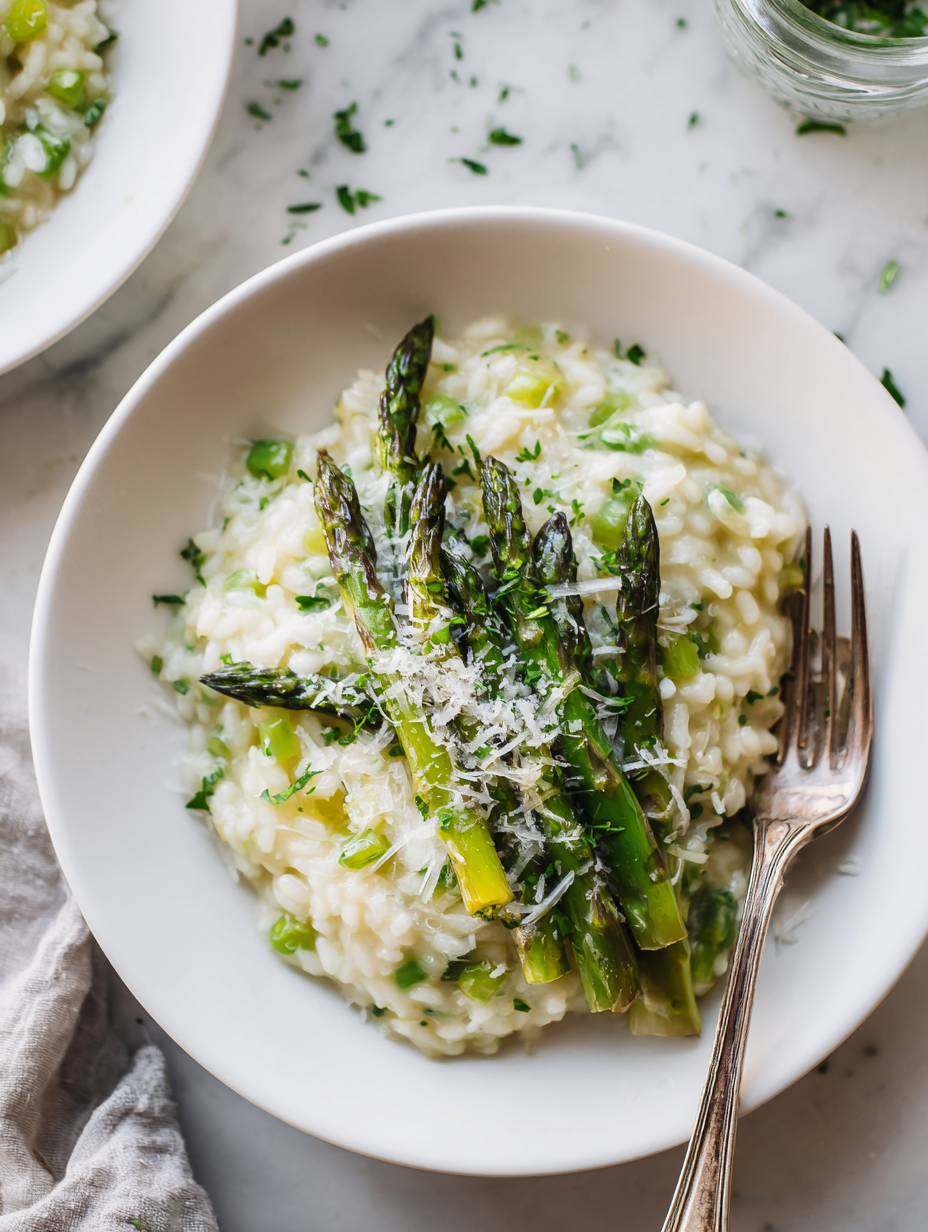
Creamy Asparagus Risotto with Parmesan
Ingredients
Equipment
Method
- Heat the vegetable broth in a saucepan until just simmering, then reduce to low to keep warm.
- In your wide pan, melt the butter with a splash of olive oil over medium heat, listening for a gentle sizzle and aroma of toasted butter.
- Add the rinsed Arborio rice to the pan and stir constantly, toasting the grains until they turn translucent at the edges and emit a nutty fragrance—about 2 minutes.
- Begin adding the warm broth in small ladlefuls, stirring steadily. Wait until most of the liquid is absorbed before adding the next ladleful, allowing the rice to release its starch and become creamy.
- After about 10 minutes, stir in the chopped asparagus pieces, ensuring they are evenly distributed throughout the rice.
- Continue adding broth gradually, stirring often, until the rice is tender but still slightly firm in the center, and the mixture is creamy—about 18 to 20 minutes total.
- Remove the pan from heat, then stir in the grated Parmesan cheese, lemon zest (if using), and the remaining tablespoon of butter, creating a silky, luscious consistency.
- Taste the risotto and season with salt and freshly ground pepper as needed, stirring to incorporate evenly.
- Let the risotto rest for a minute or two off the heat, allowing flavors to meld and the texture to settle into that perfect creamy yet tender bite.
- Serve immediately, garnished with extra Parmesan and a twist of black pepper for a bright, inviting presentation.
Pro tips for creamy risotto
- Bolded mini-head: Use a wide pan → It helps control heat and makes stirring easier, preventing sticking and burning.
- Bolded mini-head: Toast the rice gently → Stir constantly until edges are translucent and it smells nutty, about 2 minutes.
- Bolded mini-head: Add broth gradually → Ladle in warm broth, waiting until it’s mostly absorbed before adding more for creamy texture.
- Bolded mini-head: Stir often → Keep a gentle, steady motion to release starch and achieve that silky risotto consistency.
- Bolded mini-head: Test for doneness → Rice should be tender with a slight bite, and the mixture creamy but not runny.
- Bolded mini-head: Finish with cheese off heat → Incorporate Parmesan right after removing from heat for maximum melt and flavor.
- Bolded mini-head: Rest briefly before serving → Let the risotto sit for a minute or two to settle and deepen the flavors.
Common mistakes and how to fix them
- FORGOT to stir continuously → Stir often to prevent rice from sticking or burning.
- DUMPED all broth at once → Add broth gradually for proper starch release and creaminess.
- OVER-TORCHED the risotto → Keep heat medium; aim for a gentle simmer, not a boil.
- USED cold broth → Use warm broth to maintain a steady cooking temperature and even texture.
Quick fixes and pantry swaps
- When risotto looks grainy, splash in hot broth and stir vigorously for 5 seconds.
- If parmesan clumps, sprinkle it in off the heat and stir until smooth.
- Splash a little lemon juice if the risotto feels flat or dull.
- Patch over a scorched pan by deglazing with hot water and scrubbing gently.
- Shield overcooked asparagus by quickly blanching in ice water to revive color and texture.
Prep, store, and reheat tips
- Prep the broth and grate Parmesan ahead to save time; both can be stored in the fridge for up to 3 days, maintaining their fresh aroma and flavor.
- Chop asparagus and measure rice in advance; keep covered in the fridge for up to 1 day, but use quickly for the best snap and color.
- Cooked risotto is best fresh, but can be stored in an airtight container in the fridge for up to 1 day. Expect a slightly firmer texture and milder aroma upon reheating.
- Reheat gently over low heat, stirring often, until warmed through. The risotto may become creamier or slightly thicker; add a splash of broth or water to loosen it up.
- Avoid freezing, as the texture can break down and become grainy; consume within 24 hours for optimal freshness and flavor.
Top questions about creamy asparagus risotto
1. How do I choose good asparagus?
Use fresh, bright green asparagus for the best snap and flavor. Overcooked or limp asparagus will dull the dish’s vibrancy.
2. Why is my risotto grainy or gluey?
Stir the risotto constantly after adding broth to release enough starch for that creamy texture. Skipping this makes it gluey.
3. How do I get it super cheesy?
Add Parmesan off the heat and stir vigorously to melt smoothly, creating that luscious, cheesy silk without clumps.
4. Can I use cold broth?
Keep the broth warm in a separate pan. Cold broth cools the rice, preventing proper absorption and creaminess.
5. How do I know when the risotto is done?
Cook the risotto until the rice is tender but still has a slight bite—about 18-20 minutes. It should be creamy and slightly loose.
6. Should I add lemon or other acid?
Finish with a squeeze of lemon juice or zest to brighten the flavors and add a fresh, zesty note that complements the asparagus.
7. What equipment helps make good risotto?
Use a wide, heavy-bottomed pan for even heat and better stirring control, preventing sticking and burning.
8. How do I reheat leftover risotto?
Reheat gently over low heat, stirring often. Add a splash of broth if it thickens too much or becomes grainy.
9. Can I customize the broth?
For a richer flavor, swap vegetable broth for chicken broth or add a splash of white wine during cooking.
10. How do I keep asparagus bright and crisp in risotto?
Overcooking asparagus makes it mushy and dull in color. Blanch briefly in boiling salted water to keep it vibrant and crisp.
This risotto isn’t just a weeknight fix; it’s a reminder that simple ingredients can create something truly satisfying. The gentle aroma of Parmesan and the bright pop of asparagus make it feel like spring on a plate, even in the middle of winter.
Every spoonful feels like a small victory—creamy, fresh, and just a little indulgent. It’s a dish that welcomes you home, no matter how chaotic the day, with its honest, straightforward comfort.

Hi, I’m Katie Dawson, the owner, cook, and storyteller behind Little More Lovely. I run a small café in a cozy corner of Seattle, where the smell of freshly baked bread meets the hum of neighborhood chatter. I’ve spent years learning how food can bring people together, both as a professional and as someone who loves to share meals with family and friends.