
Spring is such a fleeting thing, and I find myself craving those bright, grassy flavors that feel like a breath of fresh air. This asparagus and pea pasta is my go-to when I want a quick, vibrant meal that somehow feels like a little celebration of the season. It’s simple, yes, but there’s something about the way the sweetness of peas and the tender snap of asparagus come together that makes everything taste more alive.
I’ve made this dish a dozen times, often on busy weeknights when I need something nourishing without fuss. It’s like capturing a moment of early spring—green, fresh, and full of promise—on a plate. I love how the flavors remind me of wandering through a garden, hands sticky with dirt, feeling that first burst of sunlight after long winter days.
Focusing on how the bright, grassy flavors of asparagus and peas can evoke early spring memories and bring a sense of renewal to mid-week dinners.
The story behind this recipe
- This recipe was born out of a tired Tuesday evening when I opened my fridge and saw a bunch of fresh asparagus and a bag of sweet peas. I wanted something bright and satisfying but didn’t want to fuss with complicated ingredients. It’s a dish I started making just for myself, a little celebration of spring’s fleeting bounty, even if it’s still technically winter outside.
- Over the years, I’ve tweaked it to be more than just a quick fix—something I reach for when I need a reminder of fresh mornings and the promise of longer days. It’s become a staple in my rotation, especially when I crave simplicity that still feels like a small, flavorful rebellion against the chaos of everyday life.
- heading: The story behind this recipe
Ingredient breakdown
- Asparagus: I love how the tender tips become slightly smoky when sautéed, but you can blanch them if you want more crunch. Swap with green beans for a milder, crisper bite.
- Peas: Fresh peas burst with sweet, grassy flavor and a juicy snap. Frozen peas work just fine and save time, but try to add them at the last minute to keep their bright flavor.
- Pasta: I prefer a sturdy shape like rigatoni or orecchiette that holds onto the sauce. Whole wheat or gluten-free options can work, but they’ll change the texture and flavor a bit.
- Olive Oil: Use good quality extra virgin for that fruity, peppery note. If you’re out, a neutral oil can work, but the dish loses some of its richness.
- Lemon: Brightens everything with a zesty punch. Skip if you prefer a more mellow flavor, or add a splash of vinegar for acidity instead.
- Garlic: Sauté until just fragrant—about 30 seconds—until it shimmers and turns aromatic. Overcooking can turn it bitter, so keep an eye on it.
- Parmesan: Freshly grated adds a salty, nutty depth. For a dairy-free version, nutritional yeast gives a cheesy flavor without the dairy, but it’s not quite the same.
Spotlight on key ingredients
Asparagus:
- I love how the tender tips become slightly smoky when sautéed, but you can blanch them if you want more crunch. Swap with green beans for a milder, crisper bite.
- Peas: Fresh peas burst with sweet, grassy flavor and a juicy snap. Frozen peas work just fine and save time, but try to add them at the last minute to keep their bright flavor.
Peas:
- Bright, juicy, and bursting with grassy sweetness. They add a fresh, slightly sweet pop that makes the dish feel lively.
- During cooking, they soften just enough to release their sweet aroma, but retain a slight bite if you add them last. They can turn dull if overcooked, so keep an eye.
Notes for ingredient swaps
- Dairy-Free: Swap Parmesan for nutritional yeast. It won’t melt, but adds a cheesy, umami depth.
- Vegan: Use olive oil instead of butter, and skip cheese or replace with a plant-based alternative. The flavor stays fresh and green.
- Gluten-Free: Choose gluten-free pasta like rice or chickpea; it cooks a bit quicker and has a different texture, but still tasty.
- Peas: Fresh peas are sweet and juicy, but frozen peas save time—just add them at the last minute for brightness.
- Asparagus: Green beans or snap peas can work as substitutes, offering similar crunch and freshness, but with slightly different flavor profiles.
- Lemon: Lime or a splash of vinegar can replace lemon for acidity, adding a different citrus or tangy note.
- Olive Oil: Avocado oil offers a mild, buttery flavor, while neutral oils like sunflower won’t add much complexity but will do the job.
Equipment & Tools
- Large pot: Boil pasta and blanch vegetables
- Sauté pan: Cook vegetables and combine pasta
- Slotted spoon: Transfer vegetables to ice bath and drain pasta
- Zester or microplane: Add fresh lemon zest for brightness
Step-by-step guide to asparagus and pea pasta
- Gather your equipment: a large pot for boiling pasta, a sauté pan, a slotted spoon, and a zester or microplane for lemon zest.
- Bring a large pot of salted water (about 1 tbsp salt per liter) to a rolling boil, around 100°C (212°F).
- Add your pasta—something sturdy like orecchiette or rigatoni. Cook until al dente, about 10 minutes. Taste for a slight firmness.
- While pasta cooks, trim the woody ends off the asparagus, then cut into 2-inch pieces. Blanch the asparagus in the boiling water for 2 minutes, then transfer with a slotted spoon to an ice bath to stop cooking and keep color vibrant.
- In your sauté pan, heat 2 tablespoons of good olive oil over medium heat (about 160°C/320°F). Add the asparagus tips first, sauté for 2–3 minutes until they are tender but still have a slight bite, and smell slightly smoky.
- Add the peas (frozen or fresh) to the pan with the asparagus, cook for another 1–2 minutes until just heated through. They should pop slightly and smell sweet and grassy.
- Drain the pasta, reserving about ½ cup of pasta water. Toss the pasta into the pan with the vegetables. Mix well to coat, adding a splash of reserved pasta water to loosen if needed.
- Add 1-2 minced garlic cloves, cook for 30 seconds until fragrant, then remove from heat. Grate fresh lemon zest over the dish for brightness and squeeze a little lemon juice if desired.
- Finish with freshly grated Parmesan cheese, a drizzle of olive oil, and a pinch of black pepper. Toss gently to combine.
- Plate the pasta, garnish with extra cheese and lemon zest if you like. Let it rest for a minute before serving to let flavors meld.
Let the pasta rest for a minute to meld flavors. Serve with extra cheese and lemon zest for a fresh finish.
How to Know It’s Done
- Pasta is al dente with a slight bite when tasted.
- Asparagus tips are tender yet still vibrant green, with a slight smoky aroma.
- Peas are bright, juicy, and pop when bitten.
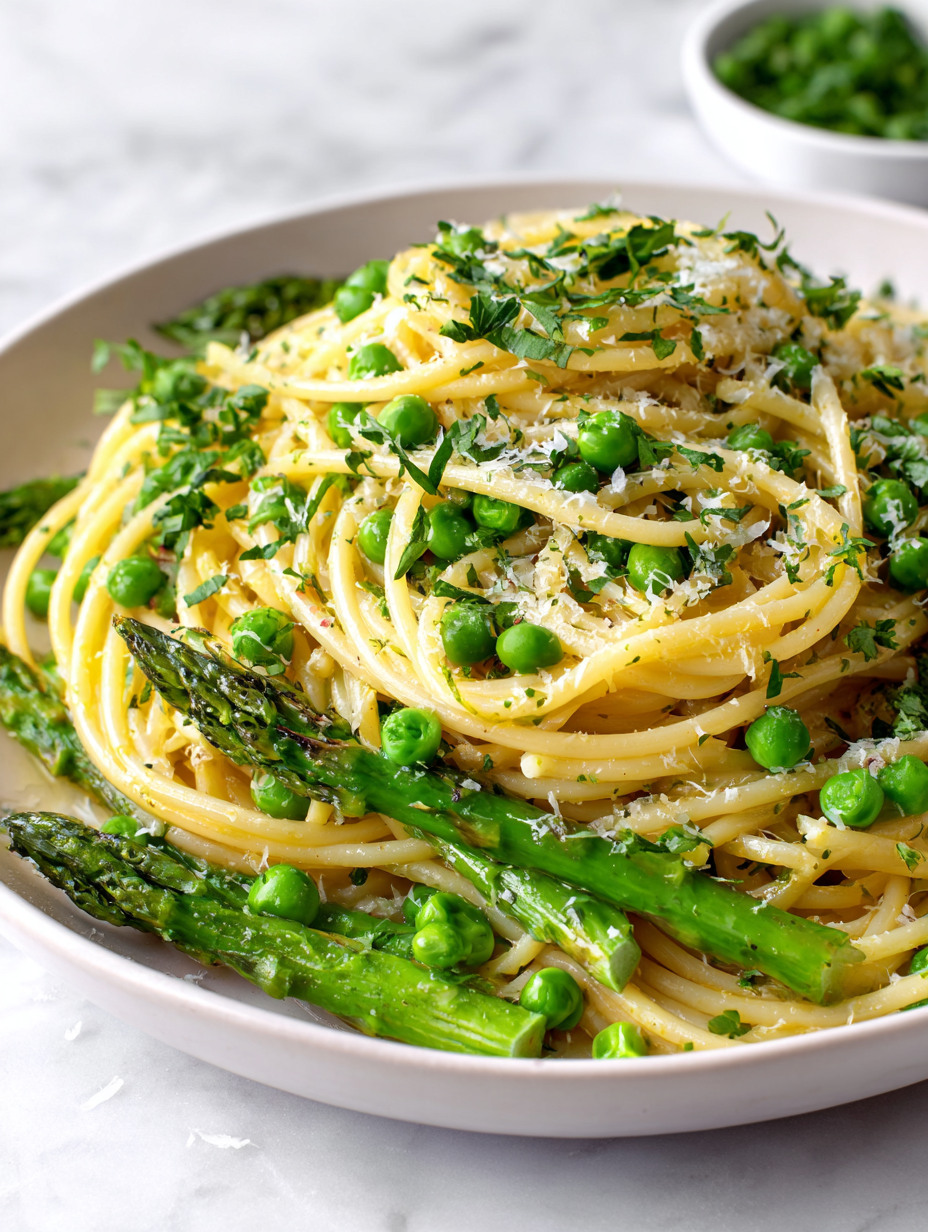
Spring Asparagus and Pea Pasta
Ingredients
Equipment
Method
- Bring a large pot of salted water to a rolling boil. Add the pasta and cook until just al dente, about 10 minutes, until it has a slight firmness when bitten. Drain, reserving about half a cup of pasta water.
- While the pasta cooks, trim the woody ends off the asparagus, then cut into 2-inch pieces. Blanch the asparagus in the boiling water for 2 minutes, then transfer with a slotted spoon to an ice bath to stop cooking and preserve vibrant green color.
- Heat the olive oil in a sauté pan over medium heat until shimmering and fragrant. Add the asparagus tips first, sauté for 2–3 minutes until they are tender yet still slightly smoky and vibrant green.
- Stir in the peas and cook for another 1–2 minutes until heated through and slightly bursting with flavor, filling the pan with a fresh, grassy aroma.
- Add the cooked pasta to the pan with the vegetables. Toss gently to coat, adding a splash of reserved pasta water if needed to loosen the mixture and create a light sauce.
- Add the minced garlic and cook for about 30 seconds until fragrant, making the kitchen smell warm and inviting. Remove from heat.
- Grate lemon zest over the pasta and squeeze a little lemon juice for brightness. Toss everything gently to distribute the flavors evenly.
- Sprinkle the freshly grated Parmesan cheese over the pasta, season with salt and black pepper to taste, and give it a gentle toss to combine.
- Transfer the pasta to serving bowls, garnish with extra lemon zest or cheese if desired, and serve immediately while vibrant and fresh.
Quick Tips for Perfect Pasta
- Bolded mini-head: Use high-quality olive oil to enhance the fruitiness and peppery notes of the dish.
- Bolded mini-head: Sauté asparagus tips until slightly smoky for a richer flavor and better texture contrast.
- Bolded mini-head: Add frozen peas at the last minute to keep their vibrant green color and juicy burst.
- Bolded mini-head: Reserve pasta water to loosen the sauce and add a subtle starchy richness.
- Bolded mini-head: Grate lemon zest just before serving to preserve its bright, aromatic freshness.
- Bolded mini-head: Keep garlic moving in the pan—about 30 seconds until fragrant—to avoid bitterness.
- Bolded mini-head: Rest the pasta for a minute after mixing to let flavors meld and improve presentation.
Common mistakes and how to fix them
- FORGOT to check pasta for al dente texture → Test a piece for slight firmness.
- DUMPED the vegetables into boiling water too long → Blanch asparagus for 2 minutes, then chill.
- OVER-TORCHED the garlic → Sauté until fragrant, about 30 seconds, to prevent bitterness.
- MISSED the lemon zest at the end → Add zest just before serving for bright, fresh aroma.
Quick fixes and pantry swaps
- If sauce looks too thick, splash in hot pasta water and stir until smooth.
- When asparagus turns mushy, add a squeeze of lemon for brightness to revive flavor.
- Splash a bit of olive oil if the pasta sticks together in the fridge.
- Patch overburnt garlic by removing and adding fresh garlic in the last minute.
- Shield delicate peas from overcooking by adding them last, just until heated through.
Prep, store, and reheat tips
- Prepare the vegetables: Trim and cut asparagus, then blanch for 2 minutes until bright green and tender. Cool quickly in ice water to stop cooking.
- Cook the pasta ahead: Boil until just al dente, then drain and toss with a little oil to prevent sticking. Store in an airtight container in the fridge for up to 2 days.
- Assemble components in advance: Keep blanched asparagus and cooked peas separate, stored in airtight containers. Reheat gently to preserve texture.
- Reheating: Warm pasta and vegetables in a skillet with a splash of water or olive oil over low heat. The aroma of garlic and lemon will perk up, and textures will soften slightly but stay vibrant.
- Shelf life: The cooked pasta and vegetables are best enjoyed within 2 days. After that, flavors dull slightly, and textures become softer. Reheat until steaming hot, about 3–4 minutes.
Top questions about asparagus and pea pasta
1. Can I use frozen peas instead of fresh?
Fresh peas are sweet and juicy, but frozen peas work just fine and save time. Add them at the last minute to keep their bright flavor.
2. Can I substitute asparagus with other vegetables?
Yes, you can swap out asparagus for green beans or snap peas. They’ll add a different crunch but still taste fresh.
3. How do I know when the pasta is done?
Cooking pasta al dente means it’s slightly firm to bite, about 10 minutes in boiling salted water. Taste a piece to check.
4. When should I add lemon zest and juice?
Add the lemon zest at the very end to preserve its bright, aromatic flavor. Squeeze lemon juice just before serving for extra zing.
5. What kind of olive oil should I use?
Use good quality extra virgin olive oil for that fruity, peppery note. Neutral oils can work but won’t add as much flavor.
6. How should I cook the asparagus?
Sauté asparagus tips until slightly smoky and tender, about 2–3 minutes. Keep an eye on them to avoid overcooking.
7. Why reserve pasta water?
Reserve about half a cup of pasta water before draining. Use it to loosen the sauce and add a subtle starchy richness.
8. Can I make this dish dairy-free?
To keep the dish dairy-free, replace Parmesan with nutritional yeast. It adds a cheesy, umami flavor without dairy.
9. How do I prevent peas from overcooking?
Overcooked peas become dull and mushy. Add them at the last minute, just until heated through and still juicy.
10. What if the sauce gets too thick?
If the sauce becomes too thick, splash in hot pasta water and stir until it loosens up and clings nicely.
This dish isn’t just about bright flavors; it’s about capturing a moment of spring’s fleeting beauty in a bowl. The aroma of roasted garlic, the snap of fresh vegetables—those small details make it worth returning to, season after season.
Whenever I make this, I’m reminded that simple ingredients, treated well, can turn into something truly satisfying. It’s a reminder to slow down, enjoy the process, and savor those green, grassy moments that feel like a breath of fresh air in the middle of a busy week.

Hi, I’m Katie Dawson, the owner, cook, and storyteller behind Little More Lovely. I run a small café in a cozy corner of Seattle, where the smell of freshly baked bread meets the hum of neighborhood chatter. I’ve spent years learning how food can bring people together, both as a professional and as someone who loves to share meals with family and friends.