
Getting the herb crust just right means pressing it onto the salmon before air frying, so it sticks through the hot air’s movement. Expect some herb crumbs to fly around—don’t worry, that’s part of the mess. The sound of the crust crisping up is loud and satisfying, like a gentle crackle under the hot air.
Once it’s in the air fryer, you’ll hear a faint sizzling as the crust firms up and browns. The smell of toasted herbs and melting fat fills the kitchen, a sign that the crust is developing that perfect crunch. It’s a quick process, but the texture change is immediate and rewarding.
The crackle of the herb crust as it hits the hot air, each bite offering a satisfying crunch that contrasts with the tender salmon inside.
What goes into this dish
- Salmon fillet: I prefer skin-on, it gets extra crispy and holds together better in the air fryer. If you want a leaner vibe, go skinless, but that crust might be less robust.
- Fresh herbs: Parsley, dill, and thyme—bright and fragrant, they make the crust pop. Dried herbs can work, but they won’t have that fresh, lively aroma that wakes up your nose.
- Breadcrumbs: Panko gives a nice crunch, but regular breadcrumbs work fine if that’s what you’ve got. Toast them slightly first for extra flavor and a golden color.
- Olive oil: Just enough to help the herbs and crumbs stick; use a good quality oil that smells fresh, not rancid. Skip if you’re watching fats, but then the crust might be a little less crispy.
- Lemon zest: Brightens everything—smells like a sunlit kitchen. Skip it if citrus isn’t your thing, but it really lifts the herb flavor and adds a zing to each bite.
- Garlic: Minced finely or grated; it roasts quickly in the air fryer and adds a smoky, savory note. If you’re sensitive to garlic, a pinch of garlic powder can do the trick.
- Salt and pepper: I keep it simple here, but a sprinkle of flaky sea salt right after cooking makes the crust sparkle and enhances all the flavors. Don’t skip seasoning—salty and savory is the goal.
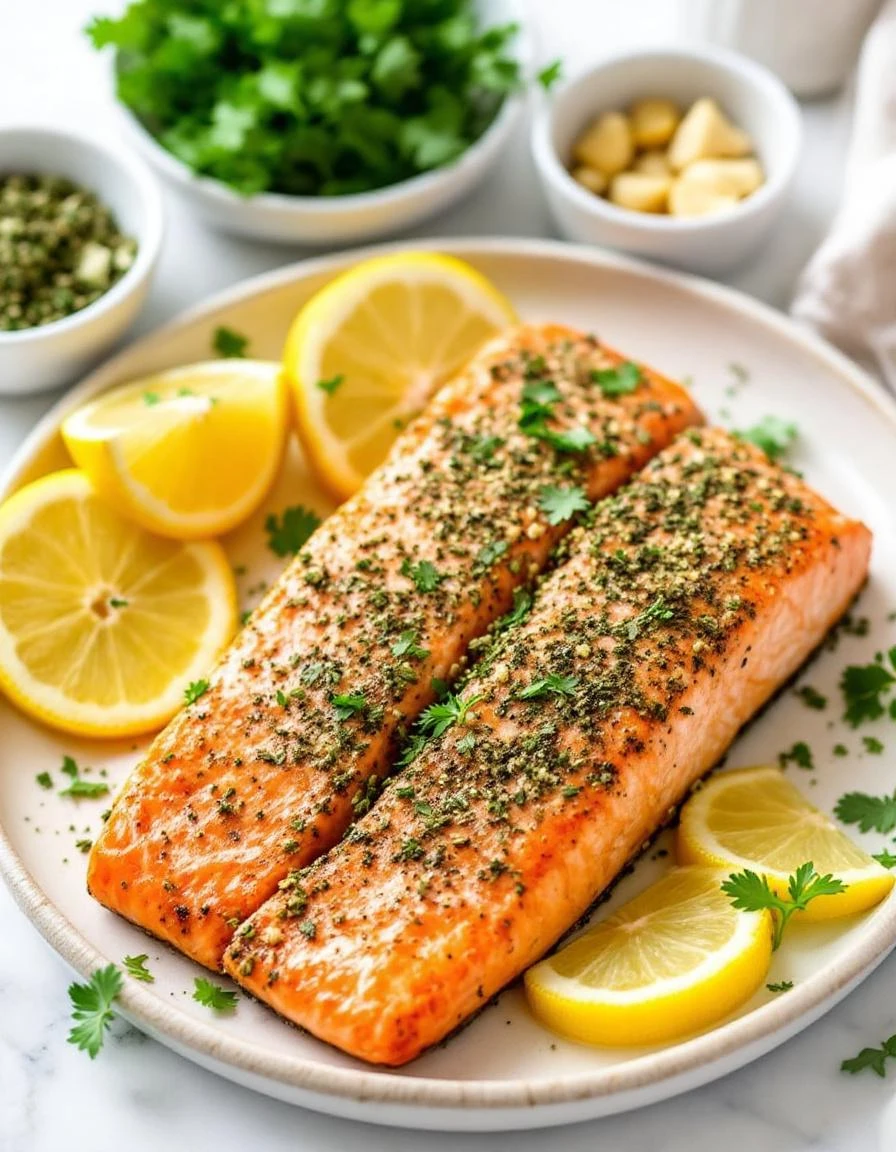
Herb-Crusted Air Fryer Salmon
Ingredients
Equipment
Method
- In a small bowl, combine breadcrumbs, chopped herbs, lemon zest, minced garlic, and a pinch of salt and pepper. Mix well to create a fragrant herb crust mixture.
- Pat the salmon fillets dry with paper towels, then brush the top side lightly with olive oil to help the crust stick.
- Press the herb breadcrumb mixture firmly onto the top of each salmon fillet, ensuring it adheres well and covers the surface evenly. Some crumbs may fly around—that's normal!
- Preheat your air fryer to 400°F (200°C) for about 3 minutes. This step ensures an even, crispy crust.
- Place the crusted salmon fillets in the air fryer basket, crust side up, making sure they aren’t touching to allow air circulation.
- Cook the salmon for 8–10 minutes, checking around the 8-minute mark. The crust should turn a golden brown and become crispy with a satisfying crackle.
- Gently flip the salmon halfway through cooking to ensure even crisping, then cook for another 2–3 minutes until the crust is crisp and the fish is just cooked through.
- Remove the salmon from the air fryer and let it rest for a minute. The crust will continue to crisp slightly as it cools, and the aroma of toasted herbs will fill your kitchen.
- Garnish with a little extra fresh herbs or lemon if desired, then serve immediately to enjoy the crispy crust and tender, flaky salmon inside.
Common Mistakes and How to Fix Them
- FORGOT to preheat the air fryer, resulting in uneven crust formation. Always preheat for 3 minutes.
- DUMPED too much oil on the herbs; it makes the crust soggy. Use just a teaspoon for coating.
- OVER-TORCHED the crust by cooking too long; it turns bitter. Keep an eye on the timer, start checking at 8 minutes.
- MISSED flipping the salmon halfway; it cooks unevenly. Flip gently at the 10-minute mark for even crispness.
Make-Ahead and Storage Tips
- You can prep the herb crust mixture a day ahead; keep it covered in the fridge. Flavors meld and intensify overnight.
- Salmon fillets can be seasoned and refrigerated up to 24 hours before cooking. Keep them on a plate with plastic wrap tight over.
- Freezing salmon works if you need longer storage—wrap tightly in plastic, then foil. Use within 2 months for best texture.
- Herb crust can be made ahead and stored in an airtight container; it stays fragrant for about 2 days in the fridge. Refresh with a quick stir before use.
- Reheating cooked salmon in the microwave can dry it out, so aim for gentle reheating at 50% power, checking every 30 seconds. The crust won’t re-crisp, but the fish remains tender.
FAQs
1. How do I know when the salmon is cooked?
The salmon should feel firm yet slightly springy when pressed. The skin is crispy and the flesh is tender, with a juicy, flaky texture. The aroma is rich with toasted herbs and fishy freshness.
2. What’s the ideal crust texture?
Look for a golden herb crust with a satisfying crunch. The fish inside should flake easily and stay moist. A slight aroma of toasted herbs is a good sign.
3. Can I swap herbs or citrus?
Use fresh herbs for a bright, vibrant flavor that wakes up your nose. Dried herbs work but lack that sharp, lively aroma. Lemon zest adds a zesty kick that makes each bite pop.
4. How do I avoid burning the crust?
Overcooking makes the crust bitter and tough. Too little oil means the crust won’t stick and crisp properly. Keep an eye on the timer and oil sparingly for best results.
5. How should I reheat leftover salmon?
Reheat gently in the microwave at half power, checking every 30 seconds. The crust may lose some crispness but stays flavorful. For best texture, reheat just until warm, not hot.

Hi, I’m Katie Dawson, the owner, cook, and storyteller behind Little More Lovely. I run a small café in a cozy corner of Seattle, where the smell of freshly baked bread meets the hum of neighborhood chatter. I’ve spent years learning how food can bring people together, both as a professional and as someone who loves to share meals with family and friends.