
This spinach and chickpea curry is my go-to when the fridge feels empty but I need something hearty and bright. It’s a quick fix, perfect after a long day when I don’t want to fuss in the kitchen. The combination of leafy greens and creamy beans somehow feels like a warm hug, even on the busiest nights.
What I love most is how adaptable it is—throw in whatever spices or vegetables you have lying around. It’s a dish that doesn’t ask for perfection, just honest, straightforward flavors. Plus, it’s a reminder that nourishing food doesn’t have to take hours or a long shopping list.
Focusing on how this spinach and chickpea curry can be a quick, nourishing weekday rescue, especially when pantry supplies are running low but you still want something vibrant and satisfying.
The story behind this recipe
- This dish came about during a particularly chaotic week when I had no time for elaborate cooking. I needed something quick, wholesome, and full of flavor that could come together with pantry staples. The moment I tossed those spinach leaves into the simmering chickpeas and fragrant spices, I realized I’d stumbled on a keeper.
- It’s a recipe born from necessity but kept alive by genuine love for simple, honest food. I remember making it late at night, the kitchen filled with the warm smell of garlic and cumin, feeling grateful for a meal that’s nourishing both body and soul, without any fuss.
- • I often tweak the spice blend based on what I have—curry powder, turmeric, or a pinch of smoked paprika—each brings a different vibe.
• Using canned chickpeas makes it a pantry miracle, but soaking dried beans works just as well if you plan ahead.
• Fresh spinach adds a bright, almost grassy note that transforms the dish from hearty to lively.
• I’ve learned that cooking the spices until fragrant before adding liquids really boosts the flavor—don’t skip that step.
• A squeeze of lemon at the end lifts everything and keeps the greens vibrant and fresh.
Ingredient breakdown: key components
- Fresh spinach: I love the way it wilts down to velvety green goodness, but if yours looks tired, toss in a handful of kale for extra resilience and a slightly different earthy flavor.
- Canned chickpeas: They’re my pantry MVP—soft, creamy, and quick. Rinse well to remove excess sodium, but if you soak dried beans overnight, you’ll get a firmer bite and richer flavor.
- Onion: The base of so many good curries. When sautéed until golden and fragrant, it creates a sweet, caramelized backdrop. Skip this step if you’re in a rush, but it’s worth the extra 5 minutes.
- Garlic & ginger: The aromatic punch. Fresh is best for vibrancy; crushed garlic and grated ginger release more juice and aroma. Dried powders work, but don’t expect the same zing.
- Spice blend: Curry powder, turmeric, cumin—what’s in your cabinet. Toast spices in a dry pan first to deepen their aroma. If you prefer milder, reduce the curry powder—your call.
- Coconut milk: I use full-fat for richness and a silky mouthfeel, but light coconut milk cuts some calories while still adding a gentle sweetness. Look for one with a clean, fresh coconut scent.
- Lemon juice: A splash brightens everything and cuts through the earthiness. If you don’t have lemon, a dash of vinegar can mimic that sharp note, but fresh lemon is best for vibrancy.
Spotlight on key ingredients
Spinach:
- Fresh spinach: I love the way it wilts down to velvety green goodness, but if yours looks tired, toss in a handful of kale for extra resilience and a slightly different earthy flavor.
- Canned chickpeas: They’re my pantry MVP—soft, creamy, and quick. Rinse well to remove excess sodium, but if you soak dried beans overnight, you’ll get a firmer bite and richer flavor.
Chickpeas:
- Canned chickpeas: They’re my pantry MVP—soft, creamy, and quick. Rinse well to remove excess sodium, but if you soak dried beans overnight, you’ll get a firmer bite and richer flavor.
- Fresh garlic and ginger: Their aromatic punch is unmatched. Crush and grate for maximum flavor release; dried powders just don’t deliver that vibrant zing.
Notes for ingredient swaps
- Leafy greens: Fresh spinach wilts quickly and adds a bright, grassy note. Swap with kale or Swiss chard for more resilience and a slightly earthier flavor.
- Canned chickpeas: Rinse well to reduce sodium, but dried chickpeas soaked overnight give a firmer bite and richer taste—just plan ahead.
- Onion: Builds the base flavor. Shallots or leeks can be good substitutes, offering a sweeter or milder profile, but won’t caramelize quite the same.
- Garlic & ginger: For that pungent, aromatic punch—use fresh for vibrancy. Dried powders are okay but lack the same brightness and zing.
- Coconut milk: Full-fat makes the sauce silky and rich; light version cuts calories but can feel a bit thinner. Look for a coconut scent that’s fresh and not stale.
- Lemon juice: Brightens everything with a sharp tang. Vinegar can work in a pinch, but lemon adds that clean, citrusy note that lifts the dish.
- Spice blend: Curry powder, turmeric, cumin—use what you have. Toasting spices first really boosts their aroma, so don’t skip that step.
Equipment & Tools
- Deep skillet or large saucepan: To cook all ingredients evenly in a single pan.
- Wooden spoon: For stirring and sautéing without scratching non-stick surfaces.
- Measuring spoons: To accurately measure spices and seasonings.
- Knife: Chopping onions, garlic, and ginger.
Step-by-step guide to the curry
- Gather your equipment: a deep skillet or large saucepan, a wooden spoon, measuring spoons, and a knife. You’ll need these to sauté, stir, and chop with ease.
- Heat the skillet over medium heat, about 160°C/320°F. Add a tablespoon of oil—olive or coconut—until shimmering but not smoking.
- Dice one onion into small pieces. Sauté for about 5 minutes, stirring frequently, until golden and fragrant. This forms your flavor base.
- Mince 3 cloves of garlic and grate a thumb-sized piece of ginger. Add to the pan. Cook for 1 minute until the mixture smells spicy and aromatic—watch for slight crackling.
- Stir in 2 teaspoons of curry powder, 1 teaspoon of turmeric, and a pinch of cumin. Toast the spices for 30 seconds, until they turn a deeper color and release a fragrant aroma. If spices burn or turn bitter, reduce heat immediately.
- Pour in 1 can (400g) of chickpeas, rinsed and drained. Add 1 can (400ml) of coconut milk. Bring to a gentle simmer. Cook for 10 minutes, stirring occasionally, until the sauce thickens slightly and the chickpeas are heated through.
- Add 4 cups of fresh spinach, a handful at a time. Stir until wilted, about 2-3 minutes. The greens should be vibrant and tender, not mushy.
- Season with salt and a squeeze of fresh lemon juice—about 1 tablespoon—stir to combine. Taste and adjust seasonings as needed.
- Turn off the heat. Let the curry rest for 2 minutes. This helps flavors meld and cools slightly for serving.
- Serve hot, spooned over rice or with crusty bread. Garnish with a sprinkle of chopped cilantro if desired.
Once off heat, let the curry sit for 2 minutes. Serve it hot with rice or bread, garnished with herbs if you like. A squeeze of lemon just before plating enhances the flavors and adds brightness.
How to Know It’s Done
- Color: The onions should be golden, spices fragrant, and greens vibrant after cooking.
- Texture: Chickpeas should be soft but hold their shape, sauce creamy and slightly thickened.
- Appearance: The curry should look rich, with a velvety sauce that coats the chickpeas and spinach evenly.
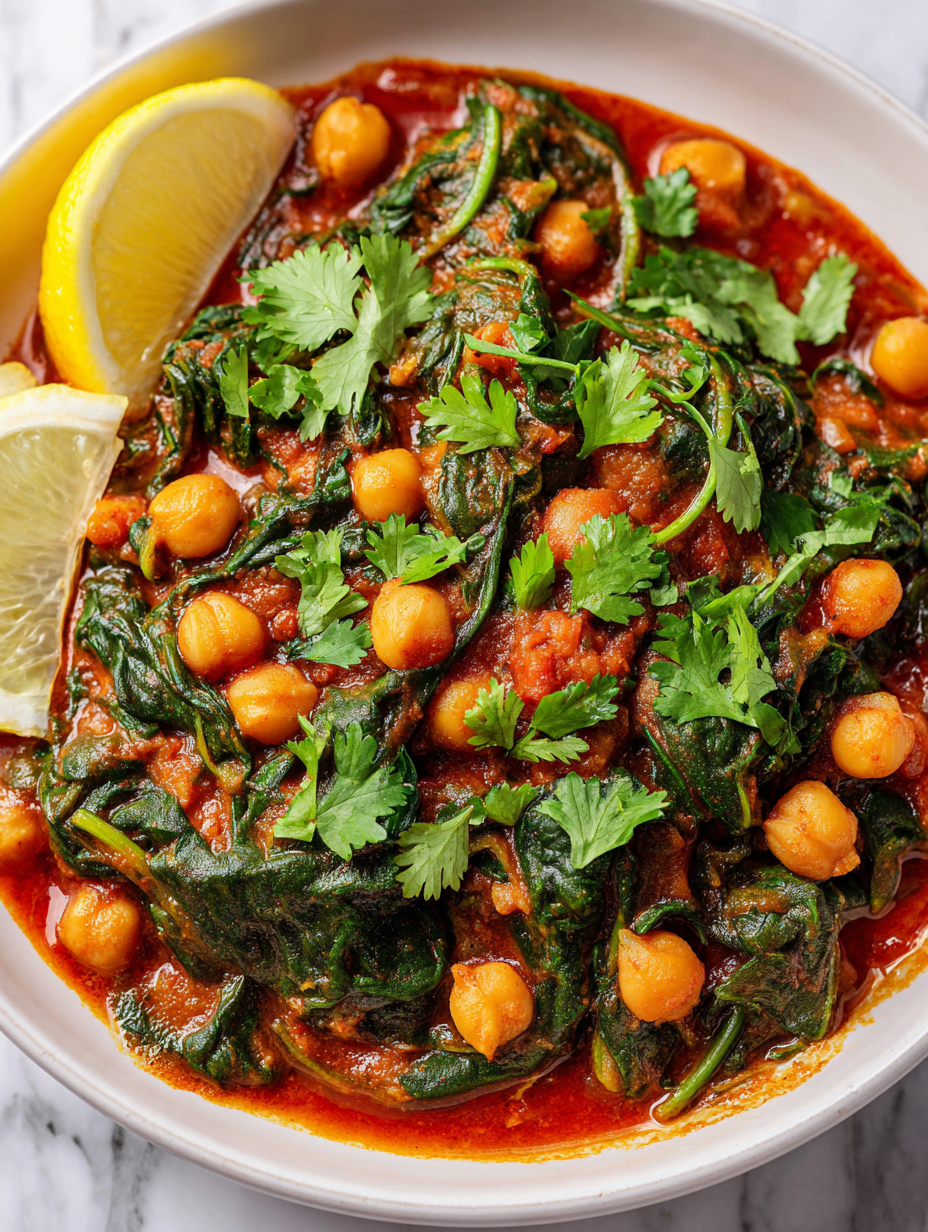
Spinach and Chickpea Curry
Ingredients
Equipment
Method
- Heat oil in a deep skillet over medium heat until shimmering. Add the diced onion and cook for about 5 minutes, stirring occasionally, until it turns golden and fragrant.
- Add minced garlic and grated ginger to the pan. Cook for 1 minute, stirring constantly, until the mixture releases a fragrant aroma.
- Stir in curry powder and turmeric, cooking for 30 seconds until the spices become fragrant and slightly darker in color.
- Pour in the rinsed chickpeas and coconut milk, stirring well to combine everything. Bring the mixture to a gentle simmer and cook for 10 minutes, allowing the sauce to thicken slightly.
- Add the fresh spinach in batches, stirring until each handful wilts and turns vibrant green, about 2-3 minutes.
- Season with salt to taste and squeeze in lemon juice. Stir to evenly distribute the flavors, then remove from heat.
- Let the curry rest for a minute to allow flavors to meld. Serve hot over rice or with your favorite bread, garnished with extra lemon if desired.
Pro tips for perfect curry
- BOLD SPICES: Toast spices until fragrant, then add liquids—this unlocks their full aroma and depth.
- SLOW SIMMER: Keep the curry gentle—simmer at low to medium heat to develop flavor without burning.
- GREEN GLOW: Add spinach in batches; it wilts faster and keeps the greens vibrant and fresh-looking.
- LID ON: Cover the pan while simmering to trap steam, helping chickpeas and greens cook evenly.
- LEMON BRIGHTNESS: Finish with a squeeze of lemon to lift the flavors and add a fresh, zingy note.
- COCONUT CREAMINESS: Stir coconut milk well before adding to avoid separation; it ensures a silky sauce.
- REST BEFORE SERVING: Let the curry sit for a couple of minutes off heat—this melds flavors and thickens the sauce slightly.
Common mistakes and how to fix them
- FORGOT to drain chickpeas → Rinse thoroughly to reduce excess sodium and improve texture.
- DUMPED spices directly into hot oil → Toast spices first for deeper aroma and flavor.
- OVER-TORCHED onions → Keep heat moderate and stir constantly to prevent burning.
- SKIPPED lemon juice at the end → Add fresh lemon for brightness and to balance the dish.
Quick fixes and pantry swaps
- When sauce looks too thin, splash in a little tomato paste to thicken and add depth.
- If greens turn bitter, blanch spinach briefly in boiling water then shock in cold; start fresh.
- Splash a teaspoon of apple cider vinegar if the curry lacks brightness after simmering.
- Patch over burnt spices with a squeeze of lemon and fresh herbs to restore flavor and aroma.
- Shield your curry from overcooking by removing from heat as soon as chickpeas are tender, within 10 minutes.
Prep, store, and reheat tips
- Prep your spices and chop onions and ginger ahead—these come together quickly once you start cooking, and the aromas are worth the extra step.
- Store cooked chickpeas in an airtight container in the fridge for up to 3 days; they’ll absorb flavors and soften slightly, making reheating easier.
- This curry tastes even better the next day, as flavors meld—reheat gently over low heat until steaming and fragrant, about 5-7 minutes.
- For longer storage, freeze portions in freezer-safe containers for up to a month. Thaw in the fridge overnight, then reheat, checking for warmth and creaminess.
Top questions about this curry
1. How can I make this curry spicier?
To make this curry spicier, add more chili flakes or a dash of hot sauce during simmering. Adjust gradually and taste as you go, so it doesn’t become overwhelming.
2. What if the curry is too thick?
If the sauce becomes too thick, thin it out with a splash of water or vegetable broth. Stir well and heat through until smooth.
3. How long does leftovers last?
To preserve nutrients, store leftovers in an airtight container in the fridge for up to 3 days. Reheat gently on the stove, stirring occasionally, until steaming.
4. How can I thicken or creamify the curry?
For a creamier texture, blend part of the cooked chickpeas and spinach before adding back to the curry. It creates a velvety sauce with more body.
5. Can I use frozen spinach?
Use fresh spinach for the brightest flavor and texture. If you only have frozen, thaw and drain well before adding, but the color may be less vibrant.
6. Can I use dried chickpeas instead of canned?
Yes, dried chickpeas soaked overnight will give a firmer bite and richer flavor, but they take longer to cook—about 1-2 hours simmered until tender.
7. Should I add acid at the end?
A squeeze of lemon or a dash of vinegar at the end lifts the flavors and adds a fresh, bright note that balances the earthiness.
8. How do I tone down the heat?
If you prefer a milder dish, reduce the curry powder or skip the spicy chili flakes. Taste and adjust seasonings before serving.
9. Can I substitute coconut milk?
You can swap coconut milk with almond or cashew cream for a nutty flavor, but the sauce may lose some of its silky richness.
10. What can I serve this with?
Yes, this dish works well with cooked rice, quinoa, or even crusty bread. It’s all about soaking up that flavorful sauce.
This quick curry is a reminder that nourishing food can come together fast, even on the busiest nights. The fragrant spices and bright greens make it feel like a small celebration in a bowl.
I keep returning to it when I want something satisfying but simple—no fuss, full of flavor, and deeply comforting. It’s a dish that always feels right, whatever the season or situation.

Hi, I’m Katie Dawson, the owner, cook, and storyteller behind Little More Lovely. I run a small café in a cozy corner of Seattle, where the smell of freshly baked bread meets the hum of neighborhood chatter. I’ve spent years learning how food can bring people together, both as a professional and as someone who loves to share meals with family and friends.