
Spring feels like a brief wink from the universe, and this asparagus potato soup is my way of catching that moment. I love how the sweet, crisp aroma of fresh asparagus contrasts with the hearty earthiness of potatoes, creating a bowl that’s both vibrant and grounding. It’s a reminder that even simple ingredients can carry the promise of renewal, if you treat them right.
This soup started as a kitchen experiment after a too-quick trip to the farmers market. I wanted something that celebrated the season’s fleeting bounty, something that would make me pause and breathe in the bright, grassy scent of asparagus. It’s become a favorite for those days when I need a little comfort that also feels like a fresh start.
Focusing on the seasonal sweetness of fresh asparagus contrasted with the earthy comfort of potatoes, this soup becomes a celebration of spring’s fleeting bounty, emphasizing how simple ingredients can evoke a sense of renewal and warmth.
The story behind this recipe
- A few springs back, I found myself wandering through a neglected garden patch, where wild asparagus pushed through cracked soil and potatoes hid beneath. That day, I realized how these humble ingredients could tell a story of resilience and renewal. I wanted to craft a soup that captured that quiet, fleeting magic of early spring, when everything feels just a little more alive.
- This recipe was born out of a slow Sunday morning, with a pot simmering as I watched the light shift through the kitchen window. It’s a reminder that some of the best flavors come from what’s simple and in season, especially when you’re willing to let those ingredients speak for themselves. Every time I make it, I feel like I’m catching a glimpse of spring’s secret, fleeting moment.
- heading: The story behind this recipe
Ingredient breakdown: key components
- Asparagus: I love the bright, grassy aroma when I sauté it just until tender. If yours smells burnt or bitter, tone down the heat and cook a bit longer. Swap with green beans if asparagus isn’t in season, but expect a milder flavor and softer texture.
- Potatoes: I prefer Yukon Gold for their creamy, buttery feel that blends beautifully into the soup. If you only have Russets, they’ll make it a little fluffier and less rich. Keep an eye on the cooking time, as different potatoes break down at different rates.
- Vegetable broth: I use homemade when I can, the depth of flavor is unmatched. Store-bought works fine, but look for low-sodium versions to control salt. For a smoky twist, try adding a splash of smoked paprika or a dash of liquid smoke.
- Onion & garlic: I sauté until just translucent, releasing a sweet, fragrant smell that’s the base of every good soup. If they brown too quickly, lower the heat. For a quick shortcut, garlic powder works, but fresh is best for that punch of sharpness.
- Cream or dairy: I like a splash of heavy cream for richness, but coconut milk gives a dairy-free, subtly sweet note. If your soup gets too thick, thin it out with a little more broth or water, and stir in gently to preserve that silky texture.
- Olive oil & seasoning: I finish with a good drizzle of fruity olive oil and a pinch of sea salt to enhance all those fresh flavors. For a bit of heat, toss in red pepper flakes or add a squeeze of lemon at the end for brightness.
- Herbs: Fresh thyme or chives are my go-to, adding a subtle herbal lift. If you only have dried, use half the amount to avoid overpowering. Stir in at the end for a vibrant, fresh burst that awakens the palate.
Spotlight on key ingredients
Asparagus:
- I love the bright, grassy aroma when I sauté it just until tender. If yours smells burnt or bitter, tone down the heat and cook a bit longer. Swap with green beans if asparagus isn’t in season, but expect a milder flavor and softer texture.
- Potatoes: I prefer Yukon Gold for their creamy, buttery feel that blends beautifully into the soup. If you only have Russets, they’ll make it a little fluffier and less rich. Keep an eye on the cooking time, as different potatoes break down at different rates.
Potatoes:
- I prefer Yukon Gold for their creamy, buttery feel that blends beautifully into the soup. If you only have Russets, they’ll make it a little fluffier and less rich. Keep an eye on the cooking time, as different potatoes break down at different rates.
- Vegetable broth: I use homemade when I can, the depth of flavor is unmatched. Store-bought works fine, but look for low-sodium versions to control salt. For a smoky twist, try adding a splash of smoked paprika or a dash of liquid smoke.
Notes for ingredient swaps
- Dairy-Free: Swap cream with coconut milk or cashew cream. Expect a subtly sweeter, richer flavor with a creamier texture.
- Vegan: Use vegetable broth instead of chicken, and replace dairy cream with blended cashews or coconut cream for richness.
- Gluten-Free: Ensure your broth is labeled gluten-free; the soup naturally is, but check your seasoning and thickeners.
- Low-Sodium: Choose low-sodium broth and skip added salt, tasting and adjusting at the end to prevent over-salting.
- Herb Variations: Fresh basil or parsley can replace chives or thyme for a different aromatic punch, especially in spring.
- Potato Types: Use Russets for fluffier, lighter soup; Yukon Golds make it creamier and more buttery. Adjust cooking time accordingly.
- Asparagus Alternatives: Green beans or snap peas can stand in when asparagus isn’t in season, but expect a milder, less grassy flavor.
Equipment & Tools
- Large heavy-bottomed pot: For even heat distribution during simmering.
- Immersion blender or standing blender: To purée the soup until smooth.
- Sharp knife: For chopping vegetables precisely.
- Wooden spoon: For stirring without damaging the pot.
Step-by-step guide to asparagus potato soup
- Gather your equipment: a large heavy-bottomed pot for simmering, a blender or immersion blender for smooth purees, a sharp knife for prep, and a wooden spoon for stirring.
- Prep the vegetables: snap off the woody ends of 1 bunch of asparagus, cut into 2-inch pieces. Peel and dice 2 medium potatoes into 1-cm cubes. Finely chop 1 small onion and 2 cloves garlic.
- Heat 2 tablespoons of olive oil in the pot over medium heat (about 160°C/320°F). Add the onion and garlic. Cook until fragrant, about 2-3 minutes, until the onion is translucent and slightly golden.
- Add the diced potatoes and cook, stirring occasionally, for another 3-4 minutes until they start to soften and turn slightly golden. This builds flavor and prevents starchy paste.
- Pour in 4 cups of vegetable broth. Bring to a gentle simmer—about 85°C/185°F—cover partially, and cook for 15 minutes, or until potatoes are tender and easily pierced with a fork.
- Add the asparagus pieces to the pot. Continue simmering for another 5-7 minutes, until the asparagus is bright green and just tender. The aroma should be fresh with a hint of earthiness.
- Remove the pot from heat. Use an immersion blender to blend until smooth, or transfer carefully to a standing blender in batches. Blend to a velvety consistency — it should be silky and slightly thickened.
- Return the soup to low heat. Stir in ½ cup of heavy cream or coconut milk for richness. Season with salt and pepper to taste. Let it warm through for 2 minutes.
- Check the consistency: the soup should be smooth and pourable, not gloopy or too thin. Adjust with a splash more broth or a dollop of cream if needed.
- Serve hot, garnished with a drizzle of olive oil, fresh herbs, or a squeeze of lemon for brightness. Enjoy the vibrant green hues and fresh aroma.
Serve immediately while hot. Garnish with fresh herbs or a drizzle of oil. If not eating right away, reheat gently on low, stirring occasionally, until steaming hot again.
How to Know It’s Done
- The potatoes are easily pierced with a fork, indicating tenderness.
- The asparagus is bright green and tender, not mushy or stringy.
- The soup has a velvety, smooth texture without lumps or separation.
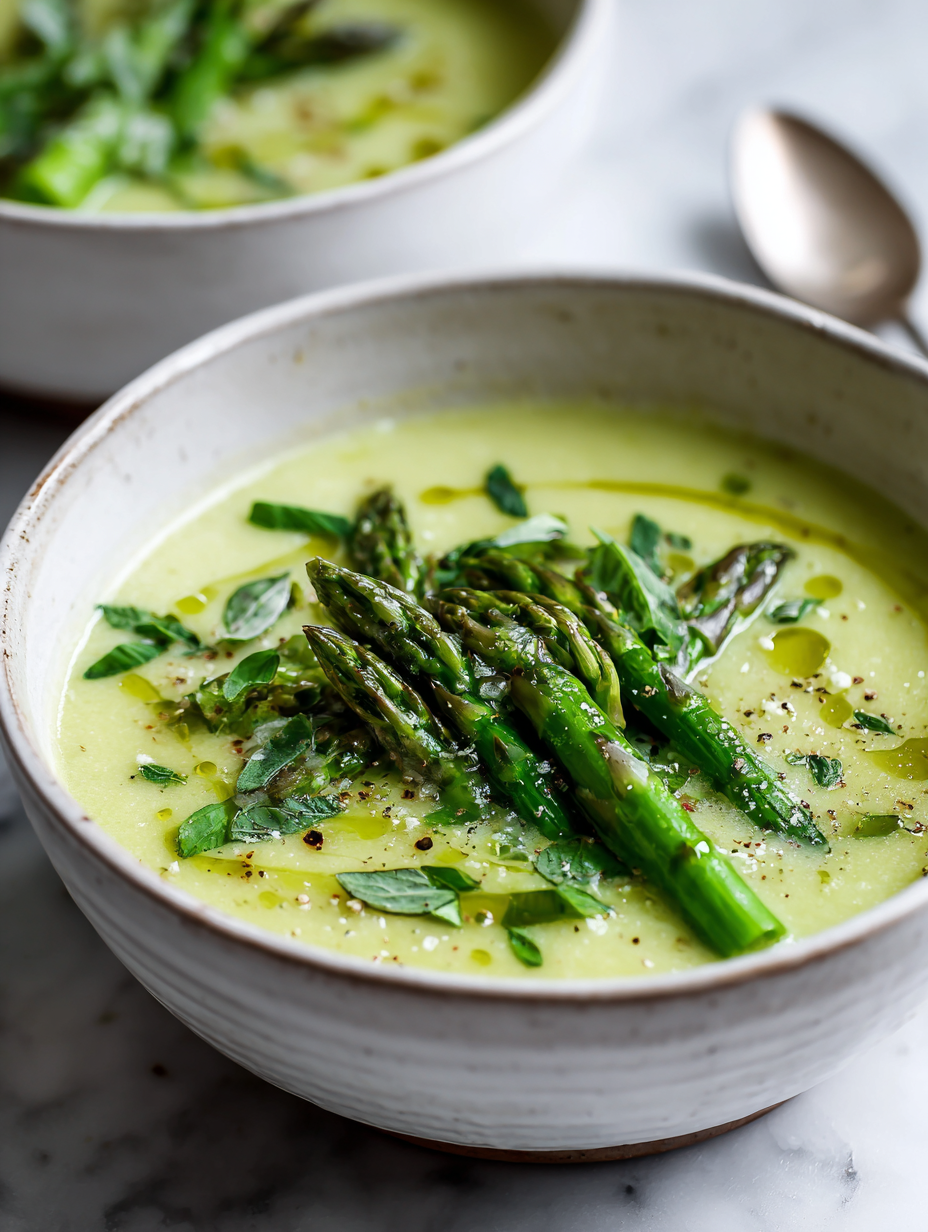
Spring Asparagus Potato Soup
Ingredients
Equipment
Method
- Start by preparing your vegetables: snap off the woody ends of the asparagus and cut the spears into 2-inch pieces. Peel and dice the potatoes into small cubes, and finely chop the onion and garlic.
- Heat the olive oil in a large heavy-bottomed pot over medium heat until shimmering and fragrant. Add the chopped onion and garlic, sautéing until the onion becomes translucent and releases a sweet aroma, about 2-3 minutes.
- Add the diced potatoes to the pot and cook, stirring occasionally, for 3-4 minutes until they start to soften and turn slightly golden. This enhances their flavor and prevents them from becoming pasty later.
- Pour in the vegetable broth and bring the mixture to a gentle simmer. Cover the pot partially and cook for about 15 minutes, or until the potatoes are tender and easily pierced with a fork.
- Add the asparagus pieces to the pot and continue simmering for another 5-7 minutes, until the asparagus is bright green and just tender. The aroma should be fresh and grassy.
- Remove the pot from heat. Use an immersion blender or transfer the soup carefully into a standing blender and blend until smooth and velvety, about 1-2 minutes. Be cautious with hot liquids during blending.
- Pour the blended soup back into the pot if using a standing blender. Stir in the heavy cream or coconut milk to add richness. Season with salt and pepper to taste, and warm gently over low heat for another 2 minutes.
- Adjust the soup's consistency if needed by adding a splash of hot broth or water. It should be silky, smooth, and pourable, not too thick or thin.
- Serve the soup hot, garnished with freshly chopped herbs, a drizzle of olive oil, or a squeeze of lemon for extra brightness. Enjoy the vibrant green color and comforting aroma.
Pro tips for perfect asparagus potato soup
- Sauté asparagus until just tender; avoid overcooking to keep that vibrant green and fresh aroma.
- Use immersion blender directly in the pot for a silky texture without transferring hot soup, minimizing mess.
- Add salt in stages—start with less and taste after blending to prevent overseasoning.
- When simmering potatoes, keep the lid slightly ajar to prevent foaming over and maintain gentle heat.
- For extra flavor, finish with a splash of lemon juice or zest—brightens the earthy sweetness of the soup.
- If the soup thickens too much upon cooling, stir in a bit of hot broth or water before reheating.
- Roast or char the garlic beforehand for a smoky depth that contrasts beautifully with the fresh asparagus flavor.
Common mistakes and how to fix them
- FORGOT to adjust heat after adding asparagus → simmer gently to preserve bright color.
- DUMPED all broth at once → add gradually, tasting for seasoning and consistency.
- OVER-TORCHED the garlic and onion → sauté on medium-low, watch for fragrant, golden hue.
- USED too much salt → start lightly, then adjust after blending for balanced flavor.
Quick fixes and pantry swaps
- If the soup is too thick, splash in hot broth and stir gently to loosen.
- When asparagus turns dull or overcooked, add a squeeze of lemon for brightness.
- Splash a bit of water if the soup becomes too gloopy after blending.
- Patch over salty soup with a dash of cream or a potato piece to balance flavors.
- Shield burnt garlic by removing it quickly and adding fresh garlic to revive aroma.
Prep, store, and reheat tips
- You can prep the vegetable chopping the night before; store in airtight containers in the fridge, and they’ll stay fresh for up to 24 hours, keeping the bright aroma intact.
- Cook the soup a day ahead and refrigerate for up to 2 days. Reheat gently on low, stirring occasionally until steaming and flavors meld—expect a slightly thicker texture that can be loosened with a splash of broth.
- For longer storage, freeze in portions for up to 3 months. Thaw overnight in the fridge, then reheat on the stove, checking for proper heat and adjusting seasoning as needed.
- When reheating, the soup may separate slightly—blend briefly with an immersion blender or stir vigorously to restore its smooth, velvety consistency, and enjoy that fresh, vibrant aroma again.
Top questions about Asparagus Potato Soup
1. Can I use frozen asparagus?
Fresh asparagus gives the soup a bright, grassy flavor that can’t be replicated with frozen or canned. Use in-season spears for the best aroma and texture.
2. Can I substitute frozen asparagus?
Yes, but expect a slightly milder flavor and softer texture. Thaw thoroughly and add a few minutes longer in the simmering stage.
3. Should I peel the potatoes?
Peeling potatoes isn’t necessary if they are Yukon Gold or similar thin-skinned varieties. For Russets, a quick peel can help avoid graininess.
4. How can I brighten the soup’s flavor?
A splash of lemon juice or zest brightens the flavor, especially if the soup sits for a bit. It adds a fresh, tangy note that complements the earthy sweetness.
5. What’s the best simmer temperature?
Use a gentle simmer around 85°C (185°F) to keep the flavors delicate and prevent the vegetables from breaking down too quickly.
6. When should I add herbs?
Stir in extra herbs, like chives, parsley, or dill, just before serving to keep their fresh aroma and vibrant color intact.
7. How do I fix a too-thick soup?
If the soup becomes too thick after blending, thin it with a little hot broth or water until it reaches your desired consistency.
8. Can I add smoky flavor?
For a smoky flavor, add a tiny splash of liquid smoke or smoked paprika during the final stir. It adds depth without overpowering the freshness.
9. How far ahead can I make this?
You can prepare the soup up to two days in advance. Reheat gently on the stove, stirring often, until steaming hot and flavors meld.
10. Can I freeze leftovers?
The soup is best enjoyed fresh, but can be frozen in airtight containers for up to 3 months. Thaw in the fridge overnight before reheating.
Making this asparagus potato soup feels like capturing a fleeting spring moment in a bowl. The fresh aroma of asparagus and the creamy texture remind me why simple ingredients can surprise you. It’s a dish that celebrates not just the season, but the quiet magic of everyday cooking.
When I ladle out that vibrant green, I always think about how fleeting these fresh flavors are. This soup is a reminder to slow down, savor each spoonful, and appreciate the seasonal bounty that’s right outside our door. Sometimes, the most unassuming ingredients turn into the most comforting, honest meals.

Hi, I’m Katie Dawson, the owner, cook, and storyteller behind Little More Lovely. I run a small café in a cozy corner of Seattle, where the smell of freshly baked bread meets the hum of neighborhood chatter. I’ve spent years learning how food can bring people together, both as a professional and as someone who loves to share meals with family and friends.