
There’s something almost hypnotic about roasting vegetables that transforms their familiar flavors into something richer and more complex. Carrots soften into sweet, jammy bites, while asparagus takes on a smoky, tender edge that’s hard to resist. When you toss them together, it’s like they’re having a quiet, flavorful conversation in the oven, each amplifying the other’s best qualities.
This recipe isn’t about complicated techniques or fancy ingredients. It’s about highlighting the natural sweetness of carrots and the slightly charred, tender bite of asparagus. Nothing beats the smell of roasting vegetables—those caramelized edges and fragrant aroma make the kitchen feel cozy, even on the busiest days. It’s honest, straightforward, and just right for those moments when you need something nourishing but uncomplicated.
Plus, roasting these two together makes a simple side feel special. A little olive oil, salt, and pepper, and you’re set—no fuss, just good vegetables. It’s a humble dish that reminds me how sometimes, the simplest ingredients cooked well can surprise you with their depth and harmony.
Focusing on the contrast between the earthy sweetness of roasted carrots and the tender, slightly smoky asparagus, highlighting how their textures and flavors deepen when roasted together, creating a simple yet surprising harmony.
The story behind this recipe
This dish came about during a late summer evening when I had a basket of fresh carrots and a bunch of asparagus that needed using up. Instead of their usual quick boil or stir-fry, I decided to roast them—something about the caramelization seemed right. The smell of roasting vegetables always pulls me back to childhood kitchens, where simple ingredients spoke of warmth and comfort. It’s a reminder that some of the best meals are born from just grabbing what’s on hand and letting the oven do the work.
Ingredient breakdown
- Carrots: I like to choose firm, bright orange carrots with a little taper—sweetness comes through more intensely when they caramelize. Skip the limp or dull ones; they won’t roast as well.
- Asparagus: Thinner spears seem to roast more evenly and develop a tender, slightly smoky edge. Thick stalks can be a bit fibrous; snap off the woody ends and consider halving thicker stalks for uniform cooking.
- Olive oil: I pour enough to lightly coat everything—just enough to help caramelize and prevent sticking. Extra virgin has a richer flavor, but a good light oil works fine if you prefer a milder taste.
- Salt & pepper: Don’t overlook this—season generously before roasting. The salt really enhances the natural sweetness and brings out the smoky notes. Freshly cracked pepper adds a lively bite.
- Lemon juice: A squeeze brightens the dish and cuts through the natural sweetness. Use fresh lemon and sprinkle it on right after roasting for that crisp, zingy contrast.
- Garlic (optional): Minced garlic tossed in before roasting adds a fragrant layer. Be careful not to burn it; add it halfway through if you prefer a milder, less bitter note.
- Herbs (like thyme or rosemary): Scatter fresh sprigs or chopped herbs over the vegetables before roasting. They release a subtle, fragrant aroma that elevates the dish without overpowering.
Spotlight on key ingredients
Carrots:
- I prefer firm, bright orange carrots because their sweetness intensifies when roasted; dull or limp ones won’t caramelize as well.
- Asparagus: Thinner spears roast more evenly and develop a tender, smoky edge. Thicker stalks can be fibrous; snap off the woody ends and halve if needed.
Olive oil & Seasonings:
- Olive oil: I use enough to lightly coat the vegetables—just enough to promote caramelization and prevent sticking. Extra virgin adds richness, but a milder oil works too.
- Salt & pepper: Season generously before roasting; salt enhances sweetness, and freshly cracked pepper adds a lively bite.
Notes for ingredient swaps
- Dairy-Free: Use tahini or avocado mash instead of butter or creamy dressings. Keeps the dish vegan and adds a nutty or creamy note.
- Oil Options: Swap olive oil for avocado or grapeseed oil for a milder, less fruity flavor that withstands high heat better.
- Salt Alternatives: Try smoked sea salt or seasoned salt blends to add a different depth without extra sodium.
- Herb Variations: Fresh basil or cilantro can replace thyme or rosemary for a brighter, more herbal freshness.
- Acid Boost: Instead of lemon, splash with a dab of balsamic vinegar or apple cider vinegar for a sweeter or tangier punch.
- Sweetener: Drizzle a touch of honey or maple syrup before roasting for an extra caramelized, sweet edge.
- Additional Vegetables: Toss in sliced parsnips or sweet potatoes for added sweetness and color variation.
Equipment & Tools
- Baking sheet: To hold and roast the vegetables evenly.
- Mixing bowl: To toss and coat vegetables with oil and seasonings.
- Sharp knife: To cut vegetables into uniform pieces.
- Parchment paper: To prevent sticking and make cleanup easier.
Step-by-step roasting guide
- Preheat your oven to 220°C (430°F). Gather a large baking sheet, a mixing bowl, and a sharp knife. Line the sheet with parchment for easy clean-up.
- Wash and peel the carrots if desired. Cut them into uniform 2-inch pieces so they roast evenly. Trim the woody ends of the asparagus, snapping off the tough parts.
- In the mixing bowl, toss the carrots and asparagus with 2-3 tablespoons of olive oil. Add salt, pepper, and optional herbs or garlic. Mix well until everything is coated.
- Spread the vegetables in a single layer on the prepared baking sheet. Ensure they’re not overcrowded; give them space to caramelize properly.
- Roast in the oven for 20-25 minutes. After 10 minutes, give the tray a gentle shake or flip the vegetables for even browning.
- Check the vegetables at 20 minutes. Carrots should be golden and tender; asparagus should be slightly charred and tender to the bite.
- If necessary, roast for an additional 3-5 minutes for deeper caramelization. Watch for burnished edges and a fragrant, smoky aroma.
- Remove from oven and let rest for 2-3 minutes. Squeeze fresh lemon juice over the top for brightness. Serve warm or at room temperature.
- For serving, transfer to a platter, garnish with extra herbs if desired, and enjoy those rich, tender bites with a hint of smoky sweetness.
Let the roasted vegetables rest for a few minutes to settle the flavors. Finish with a squeeze of lemon for brightness. Serve directly from the tray or transfer to a plate, garnished with fresh herbs if you like.
How to Know It’s Done
- Carrots are deeply caramelized with a rich amber hue.
- Asparagus is tender with charred, smoky tips.
- Vegetables emit a fragrant, roasted aroma indicating readiness.
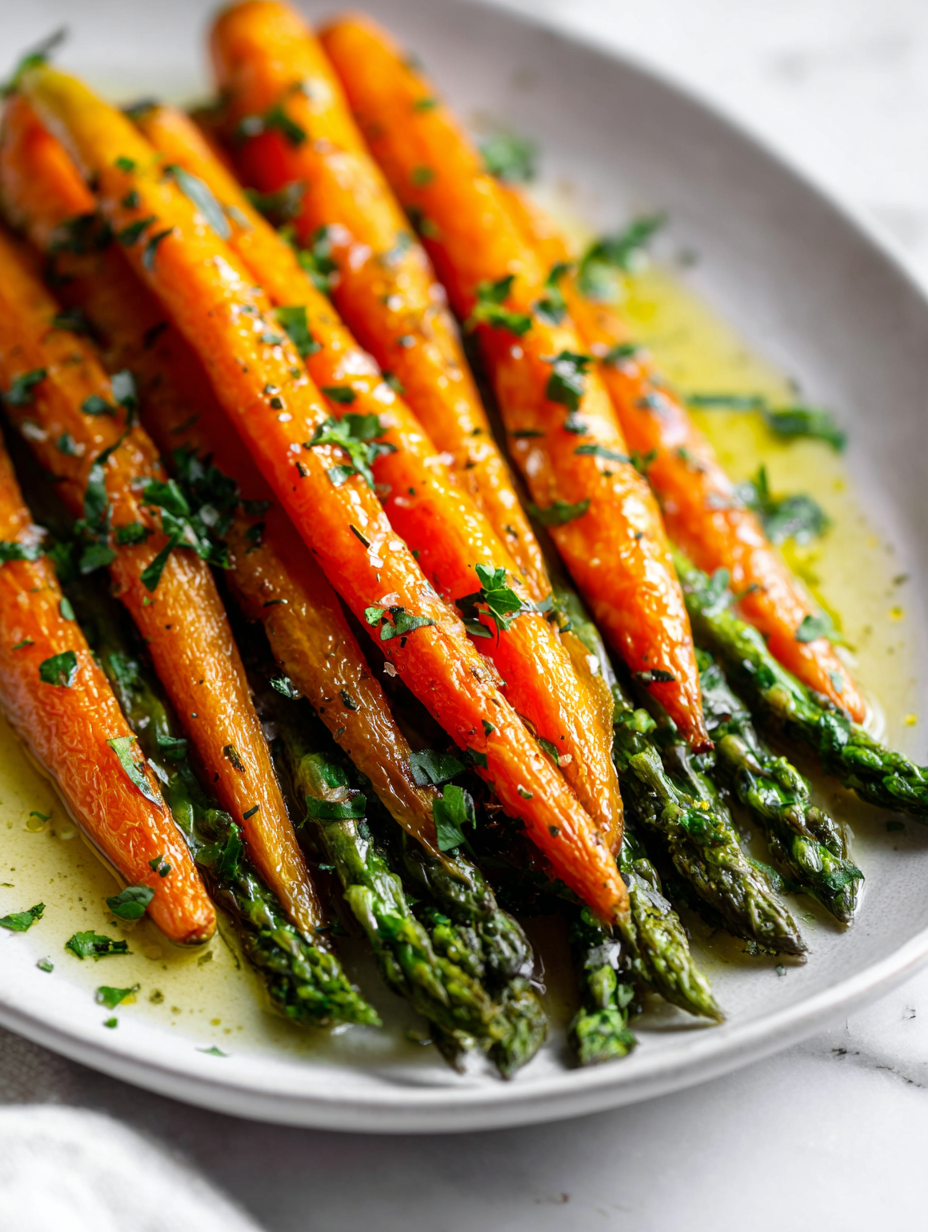
Simple Roasted Carrots and Asparagus
Ingredients
Equipment
Method
- Preheat your oven to 220°C (430°F). Line a baking sheet with parchment paper to prevent sticking and for easy cleanup.
- Wash and peel the carrots if desired, then cut them into uniform 2-inch pieces. Snap off the woody ends of the asparagus and halve thicker spears for even roasting.
- In a large mixing bowl, toss the carrots and asparagus with 3 tablespoons of olive oil, ensuring each piece is lightly coated. Add salt, pepper, minced garlic, and herbs if using, then toss again to distribute evenly.
- Spread the vegetables in a single layer on the prepared baking sheet, making sure they aren’t overcrowded so they can caramelize properly.
- Roast in the oven for about 20-25 minutes. After the first 10 minutes, gently shake the tray or use tongs to flip the vegetables for even browning and caramelization.
- Check for doneness: carrots should be golden and tender, and asparagus tips slightly charred and smoky. If needed, roast for an additional 3-5 minutes until they reach your preferred level of caramelization.
- Remove from the oven and immediately squeeze fresh lemon juice over the vegetables for brightness. Toss gently to combine and enhance their flavors.
- Transfer to a serving platter or serve directly from the baking sheet. Garnish with extra herbs if desired, and enjoy the warm, tender, and caramelized bites of this simple dish.
Pro tips for perfect roasting
- Bolded Mini-Head: Use high heat to encourage deep caramelization, around 220°C (430°F).
- Bolded Mini-Head: Toss vegetables thoroughly in oil so they roast evenly and don’t stick.
- Bolded Mini-Head: Flip or shake the tray halfway through to promote uniform browning.
- Bolded Mini-Head: Watch asparagus carefully; remove once tips are charred but not burnt.
- Bolded Mini-Head: Squeeze lemon immediately after roasting to preserve bright, fresh flavor.
- Bolded Mini-Head: For extra smoky flavor, sprinkle a pinch of smoked paprika before roasting.
- Bolded Mini-Head: For crisp edges, avoid overcrowding the tray—give veggies space to breathe.
Common mistakes and how to fix them
- FORGOT to pat vegetables dry → they steam instead of roast, leading to soggy texture.
- DUMPED oil directly on vegetables → toss thoroughly to avoid uneven roasting and sticking.
- OVER-TORCHED asparagus tips → remove early to prevent bitterness and burnt flavor.
- MISSED preheating oven → results in uneven cooking; always preheat at least 15 minutes.
Fast fixes for roasted veggies
- When vegetables look soggy, splash with a bit more oil and roast briefly again.
- If asparagus tips burn quickly, shield with foil during the last few minutes.
- DUMPED too much salt? Rinse vegetables quickly and pat dry before roasting again.
- Splash some lemon juice on undercooked veggies for an instant brightening boost.
- Patch over uneven roasting by briefly broiling for a crispy finish—just watch closely!
Prep, store, and reheat tips
- You can prep the vegetables a day ahead—wash, peel, and cut carrots and asparagus. Keep them in airtight containers in the fridge; they stay fresh for up to 24 hours, with minimal moisture loss.
- Store roasted carrots and asparagus in an airtight container in the fridge for up to 3 days. Reheat in a warm oven at 180°C (350°F) for about 10 minutes, until heated through and slightly crisp on the edges, with a fragrant aroma.
- The flavors deepen as the vegetables sit—they might become a bit sweeter. Be mindful that reheated veggies won’t have the same crispness as fresh roasting, but they’ll still deliver that smoky, tender bite.
- For best texture, reheat gradually. If they seem dry, splash with a tiny bit of olive oil or lemon juice to refresh the moisture and add brightness. The aroma should shimmer with that roasted sweetness again.
Top questions about roasted veggies
1. How do I choose the best carrots for roasting?
Look for firm, brightly colored carrots without cracks or limpness. They’ll caramelize better and taste sweeter.
2. What’s the best asparagus size for roasting?
Thin asparagus spears roast evenly and develop a smoky, tender tip. Thicker ones can be fibrous; snap off the woody ends and halve if needed.
3. How much oil should I use?
Use enough olive oil to lightly coat everything—about 2-3 tablespoons. It helps with caramelization and prevents sticking.
4. Do I need to season before roasting?
Season generously with salt and freshly cracked pepper before roasting. It enhances natural sweetness and adds flavor.
5. When should I add lemon juice?
Squeeze fresh lemon juice over the vegetables immediately after roasting to brighten flavors and add a zingy contrast.
6. Should I add garlic before or after roasting?
If using garlic, add it halfway through roasting to prevent burning and bitterness.
7. How do I know when the vegetables are done?
Look for deep golden or slightly charred edges on carrots and asparagus, and a fragrant roasted aroma indicating doneness.
8. Can I make this ahead?
Store leftovers in an airtight container in the fridge for up to 3 days. Reheat in a warm oven for best texture.
9. What if leftovers are soggy?
If vegetables seem soggy after reheating, splash with a little oil and roast briefly again to crisp them up.
10. Can I add other spices?
For extra smoky flavor, sprinkle a pinch of smoked paprika before roasting. It adds depth without overpowering.
Roasted carrots and asparagus are more than just a side—they’re a reminder that simplicity, when done well, can speak volumes. The smoky sweetness and tender bite make this a dish I come back to, especially during those quiet, reflective moments in the kitchen.
And honestly, it’s one of those recipes that feels like a small victory—nothing fancy, just vegetables transformed by heat and a little love. Perfect for those days when you want something honest, nourishing, and full of that roasted, caramelized magic.

Hi, I’m Katie Dawson, the owner, cook, and storyteller behind Little More Lovely. I run a small café in a cozy corner of Seattle, where the smell of freshly baked bread meets the hum of neighborhood chatter. I’ve spent years learning how food can bring people together, both as a professional and as someone who loves to share meals with family and friends.