
This lemon butter asparagus pasta is my go-to for those early spring nights when I crave something bright but still cozy. The lemon zest and juice lift the dish in a way that feels like a fresh breeze through the kitchen, but the butter keeps it grounded and satisfying. It’s not fancy, just honest ingredients coming together in a way that surprises you every time.
What I love about this recipe is how quick it comes together — in about 20 minutes, you’ve got a plate that’s lively and comforting at once. It’s perfect for a weeknight dinner when you want to eat something vibrant without fussing over complicated sauces or ingredients. Plus, it’s a great way to make a simple bunch of asparagus feel special, especially when fresh ones are in season and bursting with flavor.
Focusing on the bright, zingy contrast of lemon butter that elevates simple asparagus pasta into a dish that feels both comforting and unexpectedly refreshing, perfect for early spring evenings.
The story behind this recipe
- This dish was born out of a late spring evening, when I had just a handful of fresh asparagus and a lemon that was almost too ripe. I wanted something quick, bright, but still satisfying enough to serve at the table without fuss. The moment I melted butter and zested that lemon over the asparagus and pasta, I knew I was onto something special.
- It’s one of those recipes that feels like an accidental discovery — a happy accident that turned into a weekly ritual. I love how the lemon’s zing and butter’s richness balance perfectly, making every bite a little burst of fresh flavor. It’s honest cooking, the kind that sneaks into regular rotation because it’s so straightforward yet so vibrant.
- heading
- story_type
Key ingredients and tips
- Lemon: I love using fresh lemon zest and juice for that bright, zingy punch; it really wakes up the dish. If your lemon isn’t super juicy, add a bit more zest for flavor.
- Asparagus: I prefer thin spears—they cook faster and stay tender-crisp. When sautéing, watch for a vibrant green and slightly caramelized tips; that’s when they’re perfect.
- Butter: I stick to unsalted, preferably European-style for richness. If you want a lighter version, try olive oil—but you might miss that lush, velvety texture.
- Garlic: I add minced garlic early in the butter to bloom its aroma. If it starts to brown too fast, turn down the heat—bitter garlic is no good.
- Pasta: I use a good quality spaghetti or linguine—something that holds the sauce well. Cook it al dente, so it still has a slight bite and doesn’t turn to mush when mixed.
- Salt & Pepper: I season as I go, tasting for that perfect balance—think bright lemon, tender asparagus, and buttery richness in every bite.
- Parmesan (optional): I sprinkle freshly grated Parmesan last—adds umami and a salty, nutty finish. Skip if dairy-free, but don’t skip the final sprinkle for flavor.
Spotlight on key ingredients
Lemon:
- I love using fresh lemon zest and juice for that bright, zingy punch; it really wakes up the dish. If your lemon isn’t super juicy, add a bit more zest for flavor.
- Asparagus: I prefer thin spears—they cook faster and stay tender-crisp. When sautéing, watch for a vibrant green and slightly caramelized tips; that’s when they’re perfect.
- Butter: I stick to unsalted, preferably European-style for richness. If you want a lighter version, try olive oil—but you might miss that lush, velvety texture.
Asparagus:
- I prefer thin spears—they cook faster and stay tender-crisp. When sautéing, watch for a vibrant green and slightly caramelized tips; that’s when they’re perfect.
- Lemon: I love using fresh lemon zest and juice for that bright, zingy punch; it really wakes up the dish. If your lemon isn’t super juicy, add a bit more zest for flavor.
Notes for ingredient swaps
- Lemon: I love using fresh lemon zest and juice for that bright, zingy punch; it really wakes up the dish. If your lemon isn’t super juicy, add a bit more zest for flavor.
- Asparagus: I prefer thin spears—they cook faster and stay tender-crisp. When sautéing, watch for a vibrant green and slightly caramelized tips; that’s when they’re perfect.
- Butter: I stick to unsalted, preferably European-style for richness. If you want a lighter version, try olive oil—but you might miss that lush, velvety texture.
- Garlic: I add minced garlic early in the butter to bloom its aroma. If it starts to brown too fast, turn down the heat—bitter garlic is no good.
- Pasta: I use a good quality spaghetti or linguine—something that holds the sauce well. Cook it al dente, so it still has a slight bite and doesn’t turn to mush when mixed.
- Salt & Pepper: I season as I go, tasting for that perfect balance—think bright lemon, tender asparagus, and buttery richness in every bite.
- Parmesan (optional): I sprinkle freshly grated Parmesan last—adds umami and a salty, nutty finish. Skip if dairy-free, but don’t skip the final sprinkle for flavor.
Equipment & Tools
- Large sauté pan: To cook asparagus and toss pasta in one pan
- Large pot: Boil pasta efficiently
- Colander: Drain pasta and blanch asparagus if needed
- Zester and citrus press: Extract lemon zest and juice
- Wooden spoon or tongs: Mix ingredients evenly without breaking pasta
Step-by-step guide to lemon butter asparagus pasta
- Equip a large sauté pan (about 30cm/12 inches) and fill a pot with water. Bring water to a rolling boil—around 100°C (212°F).
- Trim the woody ends off a bunch of fresh asparagus (about 300g). Slice into 2-inch pieces, keeping tips whole for visual appeal.
- Cook the pasta in boiling water with a generous pinch of salt. Stir occasionally. Cook until al dente—about 8 minutes. Taste for firm but tender bite.
- While pasta cooks, melt 3 tbsp unsalted butter over medium heat (about 160°C/320°F). When melted, add minced garlic (2 cloves). Sauté until fragrant—about 30 seconds. Should smell like warm garlic, not burnt.
- Add the asparagus to the pan. Sauté until tender but still vibrant green—about 3-4 minutes. Tips should slightly caramelize and soften without losing bright color.
- Drain pasta, reserving ½ cup of cooking water. Toss pasta into the pan with asparagus. Mix well to coat everything evenly.
- Zest one lemon directly into the pan, then squeeze in 2 tbsp lemon juice. Stir quickly. The lemon should brighten everything immediately—aromatic and fresh.
- If the mixture feels dry, add a splash of reserved pasta water to loosen it up. Keep stirring until silky and well-coated. Taste and adjust salt and pepper.
- Remove from heat. Finish with a sprinkle of freshly grated Parmesan (optional). Serve immediately, garnished with extra lemon zest if desired.
- Let sit for 1 minute to meld flavors. Plate and enjoy the vibrant, buttery lemon scent.
Let the pasta sit for 1 minute off the heat to allow flavors to settle. Serve immediately on warmed plates, garnished with extra lemon zest or Parmesan if desired. The dish should be glistening, aromatic, and tender with a bright lemon punch.
How to Know It’s Done
- Pasta is tender but not mushy, with a slight bite.
- Asparagus is bright green and slightly caramelized at tips.
- Lemon aroma is fresh and zesty, with a glossy, silky sauce.
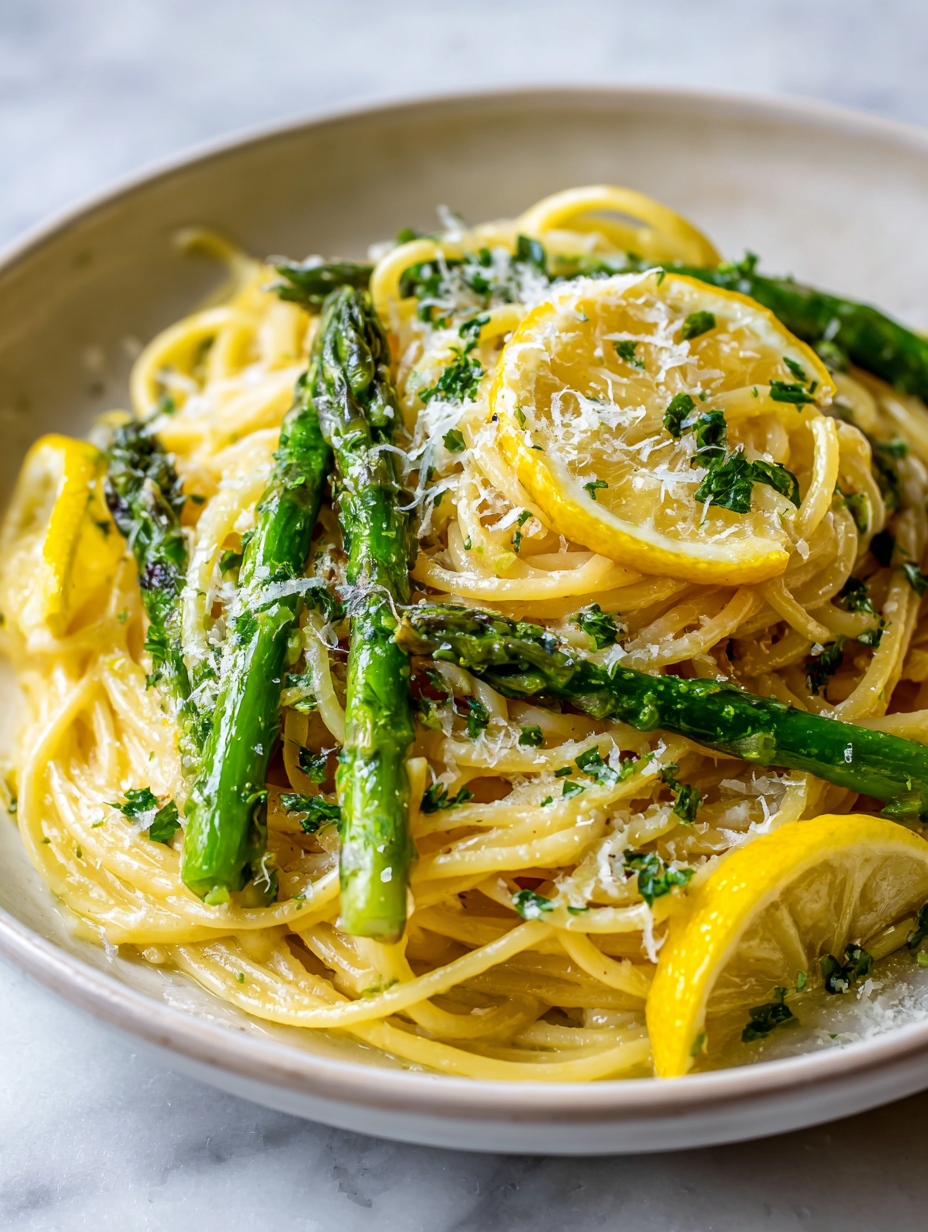
Lemon Butter Asparagus Pasta
Ingredients
Equipment
Method
- Bring a large pot of salted water to a boil and cook the pasta until al dente, about 8 minutes. Drain, reserving ½ cup of cooking water, and set aside.
- Trim the woody ends off the asparagus and slice into 2-inch pieces, keeping the tips whole for visual appeal.
- In a large sauté pan, melt the butter over medium heat until it begins to foam and smells nutty, about 1 minute.
- Add the minced garlic to the pan and sauté until fragrant, about 30 seconds, stirring constantly to prevent burning.
- Stir in the asparagus and sauté until tender but still vibrant green, about 3-4 minutes. The tips should slightly caramelize and become fragrant.
- Add the drained pasta to the pan with the asparagus, tossing to coat evenly in the buttery garlic mixture.
- Zest the lemon directly into the pan, then squeeze in the lemon juice. Quickly stir to combine, allowing the bright citrus aroma to infuse the dish.
- If the sauce feels thick, add a splash of the reserved pasta water, stirring until silky and well-coated. Season with salt and pepper to taste.
- Remove from heat and sprinkle with freshly grated Parmesan, if using. Toss gently to distribute the cheese evenly.
- Serve immediately, garnished with extra lemon zest or Parmesan if desired, and enjoy the vibrant, buttery flavors.
Pro tips for perfect lemon butter asparagus pasta
- the lemon: Use a Microplane for superfine zest, releasing bright citrus oils that really pop in the dish.
- SEAR asparagus lightly: Cook until tips are just starting to caramelize—this adds depth and smoky aroma.
- EMULSIFY butter: Whisk in a splash of pasta water when adding lemon to create a silky, cohesive sauce.
- CONTROL heat carefully: Keep the garlic gentle—bitter notes develop quickly if it browns too fast.
- TASTE as you go: Adjust salt and lemon juice in small increments for a balanced, zingy finish.
- SHIMMER the butter: Melt it gently over medium heat until it just starts to foam—this enhances richness without burning.
- GARNISH generously: Finish with extra lemon zest or a sprinkle of Parmesan for a fresh, crunchy contrast.
Common mistakes and how to fix them
- FORGOT to taste: Over-salting can ruin balance; always season gradually and taste as you go.
- DUMPED too much water: Excess water dilutes flavor; reserve pasta water before draining and use sparingly.
- OVER-TORCHED garlic: Burnt garlic tastes bitter; sauté over medium heat and add garlic after butter melts.
- MISSED lemon zest: Zest adds brightness; always include fresh lemon zest for a vibrant punch.
Quick fixes and pantry swaps
- If sauce separates, splash in a bit of hot pasta water to emulsify smoothly.
- When asparagus is overcooked, quickly shock in ice water to halt cooking and preserve color.
- Splash lemon juice if the dish tastes flat—brighten it up instantly with a quick squeeze.
- Patch burnt garlic by removing the pan from heat immediately and adding fresh garlic later.
- Shield delicate asparagus tips by cooking at a moderate heat to prevent burning and keep tender.
Prep, store, and reheat tips
- Pre-chop asparagus and store in an airtight container for up to 24 hours; it stays crisp if kept chilled and dry.
- Cook pasta ahead and toss with a teaspoon of olive oil to prevent sticking. Refrigerate in a sealed container for up to 1 day; reheat by tossing in hot water briefly.
- Prepare lemon zest and juice in advance; keep refrigerated in a small jar for up to 2 days to preserve brightness.
- The sauce can be made a few hours ahead—store in a jar in the fridge, then gently rewarm and whisk before mixing with pasta. Expect slight thickening, so add a splash of warm water to loosen.
- Reheating leftovers: gently warm in a skillet over low heat, stirring often. The sauce may thicken; add a little hot water or lemon juice to revive the shine and freshness.
Top questions about lemon butter asparagus pasta
1. Can I use bottled lemon juice instead of fresh?
Use fresh lemon zest and juice for the brightest flavor. If your lemon is not very juicy, add a little more zest for extra zing.
2. Is it okay to skip the lemon zest?
Yes, but fresh lemon provides a more vibrant, aromatic flavor that really lifts the dish. Bottled juice can taste dull and less lively.
3. What happens if I leave out the lemon zest?
The zest adds a burst of citrus aroma and a slight bitterness that balances the butter and asparagus. Skipping it makes the dish less bright.
4. Can I use thick asparagus instead?
Use thin asparagus spears—they cook faster and stay tender-crisp. Look for bright green, firm stalks with tight tips for the best texture.
5. How do I know when the asparagus is tender?
Thick spears will take longer to cook and may become mushy inside. Adjust cooking time accordingly and cut into smaller pieces.
6. How long should I cook the pasta?
Cook the pasta until al dente, about 8 minutes. It should be tender but still have a slight bite; taste test for perfect doneness.
7. My sauce is too thick, what do I do?
If the sauce seems too thick, stir in a little reserved pasta water until it’s silky. If it’s too thin, cook for another minute to reduce.
8. Can I make this vegan?
Yes, you can substitute olive oil for butter for a lighter, dairy-free version. It will be less rich but still flavorful with lemon and garlic.
9. What are good dairy-free swaps?
Dairy-Free: Use olive oil instead of butter for a lighter, less creamy texture. Nutritional yeast can add cheesy flavor if desired.
10. How do I prevent garlic from burning?
Make sure to not overcook the garlic; it should be fragrant and slightly golden, not burnt. Burnt garlic can taste bitter and ruin the dish.
This dish feels like a little slice of spring on a plate, with that zing of lemon cutting through the richness. It’s simple, honest, and quick—perfect for those nights you want fresh flavor without fuss. I keep coming back to it because it’s bright, satisfying, and somehow always just right.
In the end, it’s about those moments of balance—the tender asparagus, the silky butter, and that burst of lemon—coming together effortlessly. It’s a reminder that good, real food doesn’t need to be complicated to be memorable. Sometimes, the simplest things leave the biggest impression.

Hi, I’m Katie Dawson, the owner, cook, and storyteller behind Little More Lovely. I run a small café in a cozy corner of Seattle, where the smell of freshly baked bread meets the hum of neighborhood chatter. I’ve spent years learning how food can bring people together, both as a professional and as someone who loves to share meals with family and friends.