
Lobster is one of those special ingredients that feels like a rare treat, and I love elevating it with unexpected textures. The crunch from parmesan crust adds a salty, umami bite that contrasts beautifully with the tender, sweet lobster meat. It’s a simple twist that transforms the usual into something a little more indulgent, a bit more memorable.
This recipe is about embracing that crunchy, cheesy topping as part of the experience—not just a garnish. It’s about how a little crispy parmesan can amplify the richness of the lobster, giving every bite a surprising depth. I’ve made this for special occasions, but honestly, it’s so straightforward, it’s become a go-to for whenever I crave something fancy without the fuss.
Focusing on the unexpected crunch and umami depth that parmesan adds to the rich lobster meat, transforming a classic seafood dish into an indulgent, textural adventure.
The story behind this recipe
- I first tried a parmesan crust on lobster during a chilly winter dinner with friends. The crunch and cheesy aroma added a cozy, indulgent layer to the seafood that stuck with me. Since then, I’ve been tweaking it, trying to perfect that balance of crispy and rich.
- This recipe came from wanting to elevate lobster without going overboard. Just a simple crust that turns a humble shellfish into something unexpectedly fancy. It’s a reminder that small tweaks—like parmesan—can make a big difference. Plus, the smell of toasted cheese and lobster in the oven always makes me feel like I’ve set a special scene.
- heading: ‘The story behind this recipe’
Ingredient breakdown
- Parmesan cheese: I favor a sharp, aged Parmesan that melts into a crispy, golden crust—feel free to experiment with different Gruyère for a nuttier note.
- Lobster tails: Fresh, bright red lobster tails are the goal; frozen works, but look for ones that smell clean and ocean-like, not fishy or ammonia-y.
- Butter: I use unsalted butter to control the saltiness; it adds richness and helps the parmesan adhere and crisp up nicely—don’t skimp on it.
- Garlic: Finely minced garlic brings a pungent, aromatic kick that wakes up the crust—smash and chop just before mixing to keep it fragrant.
- Herbs & seasonings: A pinch of paprika or cayenne adds a smoky or spicy layer—use sparingly; too much can overpower the delicate lobster flavor.
- Breadcrumbs (optional): If you like extra crunch, a handful of panko adds a light, airy texture—toast them slightly for nuttiness before combining.
- Lemon zest: Bright and zesty, I love a sprinkle of lemon zest in the crust for a citrusy contrast—add just before baking for peak freshness.
Spotlight on key ingredients
Parmesan cheese:
- I favor a sharp, aged Parmesan that melts into a crispy, golden crust—feel free to experiment with different Gruyère for a nuttier note.
- Lobster tails: Fresh, bright red lobster tails are the goal; frozen works, but look for ones that smell clean and ocean-like, not fishy or ammonia-y.
- Butter: I use unsalted butter to control the saltiness; it adds richness and helps the parmesan adhere and crisp up nicely—don’t skimp on it.
Lobster tails:
- Bright, firm, with a sweet ocean scent—frozen can work but aim for fresh or well-preserved ones for the best flavor.
- Parmesan cheese: It should be dry, crumbly, with a pungent, nutty aroma—shred it just before mixing for maximum flavor release.
Notes for ingredient swaps
- Dairy-Free: Swap Parmesan for a nutty, aged vegan cheese—less salty, a bit milder, but still satisfying.
- Gluten-Free: Use crushed almonds or sunflower seeds instead of breadcrumbs for crunch and texture.
- Lemon Variations: Lime zest or orange zest can add a different citrus note—experiment for a twist.
- Herb Alternatives: Fresh thyme or chives can replace parsley—bring a different herbal brightness.
- Butter Options: Olive oil or clarified butter can be used if you want a lighter, different richness—watch for smoke points.
- Cheese Choices: Pecorino Romano or Grana Padano can replace Parmesan—each offers a unique salty, sharp flavor.
- Spice Level: Add a pinch of cayenne or smoked paprika for a smoky or spicy kick—start small, taste as you go.
Equipment & Tools
- Kitchen scissors: To cut the lobster shell cleanly.
- Baking sheet with rack: To ensure even cooking and crisping.
- Small mixing bowl: To combine parmesan crust ingredients.
- Basting brush or spoon: To apply the parmesan mixture evenly.
Step-by-step guide to parmesan crusted lobster
- Preheat your oven to 200°C (390°F). Place a rack inside a baking sheet. Ready your lobster tails, pat dry.
- Using kitchen scissors, cut down the top shell of each lobster tail, stopping just before the tail fin. Gently pry open to expose the meat.
- Mix grated Parmesan, minced garlic, a pinch of paprika, lemon zest, and melted butter in a small bowl until combined.
- Spread the parmesan mixture evenly over the exposed lobster meat, pressing lightly to adhere. For extra crunch, sprinkle a little panko if desired.
- Place the lobster tails on the rack, shell side down. Bake for 12-15 minutes, until the crust is golden and the meat is opaque.
- Check for doneness: the crust should be crispy and golden, and the lobster meat firm and opaque. If needed, broil for 1-2 minutes to deepen the color.
- Remove from oven, let rest for 2 minutes. Serve immediately with lemon wedges for an extra bright zing.
Let the lobster rest for 2 minutes to settle juices. Plate with lemon wedges and a sprig of parsley if desired. Serve hot to enjoy that crispy, cheesy crust with tender lobster meat.
How to Know It’s Done
- Crust is deeply golden and crispy.
- Lobster meat is opaque and firm, not translucent.
- Internal temperature reaches 60°C (140°F).
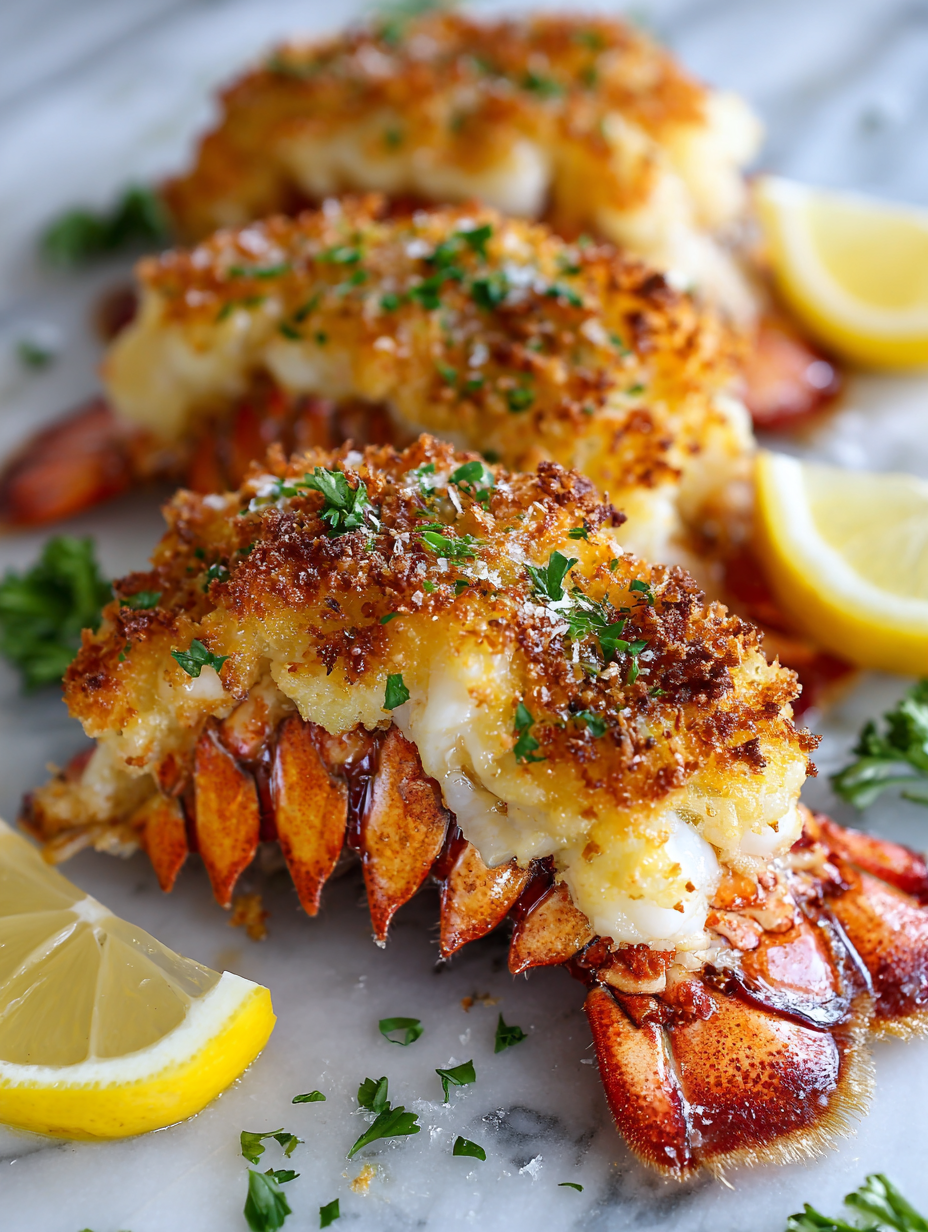
Parmesan-Crusted Lobster Tails
Ingredients
Equipment
Method
- Preheat your oven to 200°C (390°F). Place a rack inside a baking sheet, ready for the lobster.
- Using kitchen scissors, carefully cut down the top shell of each lobster tail, stopping just before the fin to expose the meat. Gently pry the shell apart to lift the meat slightly for better coverage.
- In a small bowl, combine the grated parmesan, minced garlic, lemon zest, paprika, and melted butter. Stir until the mixture is well blended and fragrant.
- Spread the parmesan mixture generously over the exposed lobster meat, pressing lightly to help it adhere evenly. If you like, sprinkle a little panko on top for added crunch.
- Place the lobster tails on the prepared rack, shell side down. Bake in the oven for about 12-15 minutes, until the crust turns golden and the lobster meat becomes opaque and tender.
- Check the lobster; the crust should be crispy and deeply golden, and the meat firm and opaque. For a richer color, you can broil for an additional 1-2 minutes, watching carefully to prevent burning.
- Remove the lobster from the oven, let it rest briefly for 2 minutes, then serve immediately with lemon wedges. Enjoy the crispy parmesan crust paired with sweet, juicy lobster meat.
Notes
Pro tips for parmesan crusted lobster
- Parmesan: Use freshly grated, aged Parmesan for a rich, umami-packed crust with a satisfying crunch.
- Crust Adhesion: Pat the lobster meat dry before spreading the crust to prevent slipping during baking.
- Even Browning: Broil at the end for a minute or two to deepen the golden color without burning the cheese.
- Temperature Check: The lobster should reach an internal temp of 60°C (140°F) for perfect doneness—use a probe.
- Crust Texture: For extra crunch, sprinkle a thin layer of panko on top and toast it lightly before baking.
- Flavor Boost: Add a tiny pinch of cayenne or smoked paprika to the crust for a subtle smoky or spicy kick.
- Rest Briefly: Let the lobster rest for 2 minutes after baking; this keeps juices in and crust crispy.
Common mistakes and how to fix them
- FORGOT to preheat oven → Preheat oven early to ensure even crust formation.
- DUMPED cheese mixture → Gently press crust to adhere, avoiding loose toppings.
- OVER-TORCHED crust → Reduce broil time or shift rack lower for even coloring.
- MISSED resting time → Rest lobster 2 minutes for juices to settle before serving.
Quick fixes and pantry swaps
- When sauce shimmers, add crust immediately to prevent sogginess.
- Splash a little lemon juice if cheese begins to brown too quickly.
- Patch a cracked shell with a toothpick and a dab of butter if lobster escapes.
- DUMPED salt on the crust? Rinse lightly and pat dry before baking again.
- Shield edges with foil if parmesan crust starts to burn in the oven.
Prep, store, and reheat tips
- Prepare the parmesan crust mixture a day in advance; store in an airtight container in the fridge for up to 24 hours. It will keep the cheese fragrant and the butter firm, making assembly quicker on the day.
- You can cut and clean the lobster tails up to 2 hours ahead. Keep them covered in the fridge to prevent drying out and avoid any fishy odors.
- Refrigerated lobster tails are best used within 24 hours of prep. The crust can be baked straight from cold, but let it sit at room temperature for 10 minutes for even cooking.
- Reheat leftovers in a 180°C (350°F) oven for 8-10 minutes until the crust crisps and the meat warms through. Keep an eye on the crust to prevent burning—look for that crispy, golden hue and smell of toasted cheese.
Frequently Asked Questions
1. How do I choose the best lobster tails?
Look for lobster tails that are bright red and firm to the touch. If they smell ocean-fresh, you’re good. Frozen ones should be thawed properly before cooking to avoid excess water and sogginess.
2. Can I use pre-grated Parmesan?
Use freshly grated Parmesan for the best melt and flavor. It should be dry, crumbly, and pungent. Pre-grated cheese often lacks the same aroma and melts unevenly.
3. What’s the perfect baking time and temperature?
Bake at 200°C (390°F) for about 12-15 minutes. The crust should be golden and crispy, and the lobster meat opaque and tender. Use a probe to check that it reaches 60°C (140°F).
4. Can I make this gluten-free?
Yes, you can substitute gluten-free panko or crushed almonds for breadcrumbs. This keeps the crunch but adds a different flavor and texture—experiment to find what suits your palate.
5. Should I add lemon or herbs?
Add a squeeze of lemon juice just before serving to brighten the flavor. The acidity cuts through the richness and enhances the cheesy crust with a zesty pop.
6. How do I make the crust extra crispy?
If the crust isn’t crispy enough, broil for an additional 1-2 minutes, watching carefully to prevent burning. For more crunch, sprinkle panko on top before baking and toast it lightly.
7. How do I store and reheat leftovers?
Store leftover lobster in an airtight container in the fridge for up to 24 hours. Reheat gently in a 180°C (350°F) oven until the crust is crisp and the meat is warmed through, about 8-10 minutes.
8. What if the crust burns or doesn’t crisp?
When the cheese mixture starts to brown too quickly, cover loosely with foil or lower the oven rack. A quick splash of lemon juice or a light spray of water can also help keep the crust from burning.
9. Any tips for even cooking and crust adhesion?
Always preheat your oven to ensure even cooking. Use a baking rack to promote crispy edges and avoid sogginess. Pat the lobster dry before applying the crust for better adherence.
10. Can I prepare this dish ahead of time?
Yes! You can prepare the parmesan mixture a day ahead and keep it refrigerated. The lobster can be cleaned and prepped a few hours in advance. Just assemble and bake when ready for a quick, impressive meal.
This dish feels like a small act of rebellion—luxurious, indulgent, but surprisingly simple to pull off. The crispy parmesan crust adds a satisfying crunch that complements the tender lobster meat, making it a memorable centerpiece for any special dinner.
In a way, this recipe reminds me that sometimes the best ideas come from just a little tweak—adding cheese here, crisping up the top there. It’s a reminder to keep experimenting, even with the classics, and to savor those moments when something extraordinary emerges from simple ingredients.

Hi, I’m Katie Dawson, the owner, cook, and storyteller behind Little More Lovely. I run a small café in a cozy corner of Seattle, where the smell of freshly baked bread meets the hum of neighborhood chatter. I’ve spent years learning how food can bring people together, both as a professional and as someone who loves to share meals with family and friends.