
Shrimp Pasta Primavera is my go-to when I want something that feels like a celebration of spring, even if it’s mid-winter. There’s something about tossing fresh, crisp vegetables with juicy shrimp and al dente pasta that lifts the whole mood. It’s simple, but the flavors punch through—bright, slightly sweet, and just enough herbal freshness to keep you coming back for bites.
I’ve learned that the secret to making this dish stand out is balancing the vegetables’ crunch with the tender shrimp and a splash of lemon to brighten everything up. It’s a dish that feels like a quick escape—just a handful of ingredients, cooked in one pan, and served hot. No fuss, but packed with flavor that makes you feel like you’re eating something special, even on a weeknight.
Focusing on how to perfectly balance the bright, fresh flavors of spring vegetables with the sweetness of shrimp, creating a vibrant yet comforting dish that captures the fleeting essence of early-season produce.
Balancing Brightness and Sweetness
- Cooking this dish always reminds me of spring mornings, the air filled with fresh herbs and citrus.
- I love how the vibrant colors of the vegetables make the plate look almost too pretty to eat.
- There’s a quiet joy in tossing everything together at the last minute, feeling the warmth and aroma mingle.
- This recipe has saved me on busy weeknights, quick to throw together but still feels special.
- It’s become a comfort food for me, a reminder that simple ingredients can create something lively and satisfying.
The inspiration behind this dish
This dish came about on a busy spring evening when I had a handful of fresh vegetables and some leftover shrimp. I wanted to create something vibrant and quick that celebrated the season’s produce without fussing over complicated techniques. The idea of combining the crispness of early vegetables with tender shrimp and a bright lemony sauce struck me as perfect for a weeknight lift. Over the years, I’ve tweaked it to emphasize the freshness and simplicity, making it a go-to when I need comfort and cheer in one plate.
History and Trivia of Primavera
- Shrimp Pasta Primavera originated in Italy, blending the country’s love for fresh vegetables with seafood dishes that highlight seasonal produce.
- The term ‘Primavera’ means ‘spring’ in Italian, emphasizing the dish’s focus on bright, early-season vegetables and light flavors.
- This dish gained popularity in American restaurants during the 1980s as a quick, colorful way to celebrate spring ingredients.
- Originally, it was a way to use up leftover vegetables, turning them into a vibrant, satisfying pasta meal.
- Modern twists often include a variety of herbs or a splash of white wine, but the core idea remains simple and fresh.
Key Ingredients Breakdown
- Shrimp: I prefer deveined, tail-off shrimp for quick cooking and less mess. Their sweet, briny aroma really shines when cooked just right—firm with a slight bounce. If your shrimp smell too fishy, give them a quick soak in lemon water before cooking.
- Pasta: I usually go for spaghetti or linguine—long, thin, and perfect for twirling. Cook until just al dente, about 8 minutes in boiling salted water. Overcooking makes it mushy, so set a timer and taste test early.
- Vegetables: I love using a mix of bell peppers, cherry tomatoes, and zucchini. Slice them thin so they stay crisp but soften slightly. For extra vibrance, add a handful of fresh basil right before serving—smells like summer.
- Garlic & Olive Oil: I crush fresh garlic cloves and sauté gently in good quality olive oil until golden and fragrant—about 1-2 minutes. If garlic burns, it turns bitter; turn down the heat and add a splash of water to cool it quickly.
- Lemon & Herbs: Bright lemon juice really lifts the dish—don’t skimp. I zest a little for extra zing and sprinkle chopped parsley or basil on top. The citrus should be bright and not overpowering, just enough to make the vegetables pop.
- Seasoning & Salt: Use kosher salt generously in the pasta water and to taste at the end. A pinch of red pepper flakes adds a subtle heat, so start small and adjust. Taste as you go—seasoning makes or breaks this dish.
- Optional Cheese: A sprinkle of grated Parmesan or Pecorino adds a salty, nutty finish. I only add it right before serving; too early and it melts into a greasy puddle, losing its texture and flavor.
Spotlight on Key Ingredients
Shrimp:
- I prefer deveined, tail-off shrimp for quick cooking and less mess. Their sweet, briny aroma really shines when cooked just right—firm with a slight bounce. If your shrimp smell too fishy, give them a quick soak in lemon water before cooking.
- Pasta: I usually go for spaghetti or linguine—long, thin, and perfect for twirling. Cook until just al dente, about 8 minutes in boiling salted water. Overcooking makes it mushy, so set a timer and taste test early.
Vegetables:
- I love using a mix of bell peppers, cherry tomatoes, and zucchini. Slice them thin so they stay crisp but soften slightly. For extra vibrance, add a handful of fresh basil right before serving—smells like summer.
- ingredient
Notes for ingredient swaps
- Dairy-Free: Swap Parmesan for nutritional yeast—adds umami without dairy, but less creamy texture.
- Vegetarian: Replace shrimp with grilled halloumi or firm tofu—maintains protein, different texture and flavor.
- Gluten-Free: Use gluten-free pasta—same shape, just watch cooking time as it varies.
- Vegan: Omit shrimp, add sautéed mushrooms or tempeh—rich umami flavor, different bite.
- Citrus: Substitute lemon with lime or orange zest—each adds a distinct bright, zesty note.
- Oil: Swap olive oil for avocado or grapeseed oil—milder flavor, high smoke point, same richness.
- Herbs: Use cilantro or dill instead of basil—different fresh flavor profiles, great for variety.
Equipment & Tools
- Large skillet: Cook vegetables and shrimp evenly.
- Large pot: Boil pasta efficiently.
- Tongs: Toss and serve ingredients without breaking them.
- Sharp knife: Prep vegetables and shrimp safely.
Step-by-step guide to Shrimp Pasta Primavera
- Equipment & Tools: Gather a large skillet (28cm/11in) for even heat, a large pot for boiling pasta, tongs, and a sharp knife for prep.
- Bring a large pot of salted water to a rolling boil (about 1 tbsp salt per liter). Cook pasta until just al dente (about 8 minutes). Drain and set aside, reserving ½ cup pasta water.
- While pasta cooks, heat the skillet over medium heat (around 160°C/320°F). Add 2 tbsp olive oil and swirl to coat.
- Add minced garlic (2 cloves) to the hot oil. Sauté until fragrant (about 30 seconds). Do not let it brown or it turns bitter.
- Toss in sliced bell peppers and zucchini (about 1 cup each). Cook, stirring often, until vegetables are crisp-tender (about 3-4 minutes). They should smell fresh and slightly smoky.
- Push vegetables to the side of the skillet. Add shrimp (about 1 pound, peeled and deveined). Cook until pink and opaque (about 2-3 minutes per side). Check for firmness; they should bounce back when pressed.
- Add cherry tomatoes (½ cup), lemon zest (½ tsp), and a squeeze of lemon juice (2 tbsp). Stir everything and cook until tomatoes soften slightly (1-2 minutes).
- Pour in the cooked pasta. Toss with vegetables and shrimp, adding reserved pasta water a little at a time until sauce is glossy and coats pasta evenly. It should shimmer slightly and smell lemon-bright.
- Taste and adjust seasoning with salt, pepper, and red pepper flakes (if using). Remove from heat.
- Rest for 1 minute. Plate immediately, garnishing with chopped fresh basil or parsley. Serve hot, enjoying the aroma and vibrant colors.
Serve immediately while hot. Garnish with fresh herbs and a squeeze of lemon. Keep warm if not eating right away, but best enjoyed fresh for the vibrant textures.
How to Know It’s Done
- Pasta is al dente, firm but not chalky.
- Shrimp is pink, firm, and slightly bouncy.
- Vegetables are crisp-tender, vibrant, and fragrant.
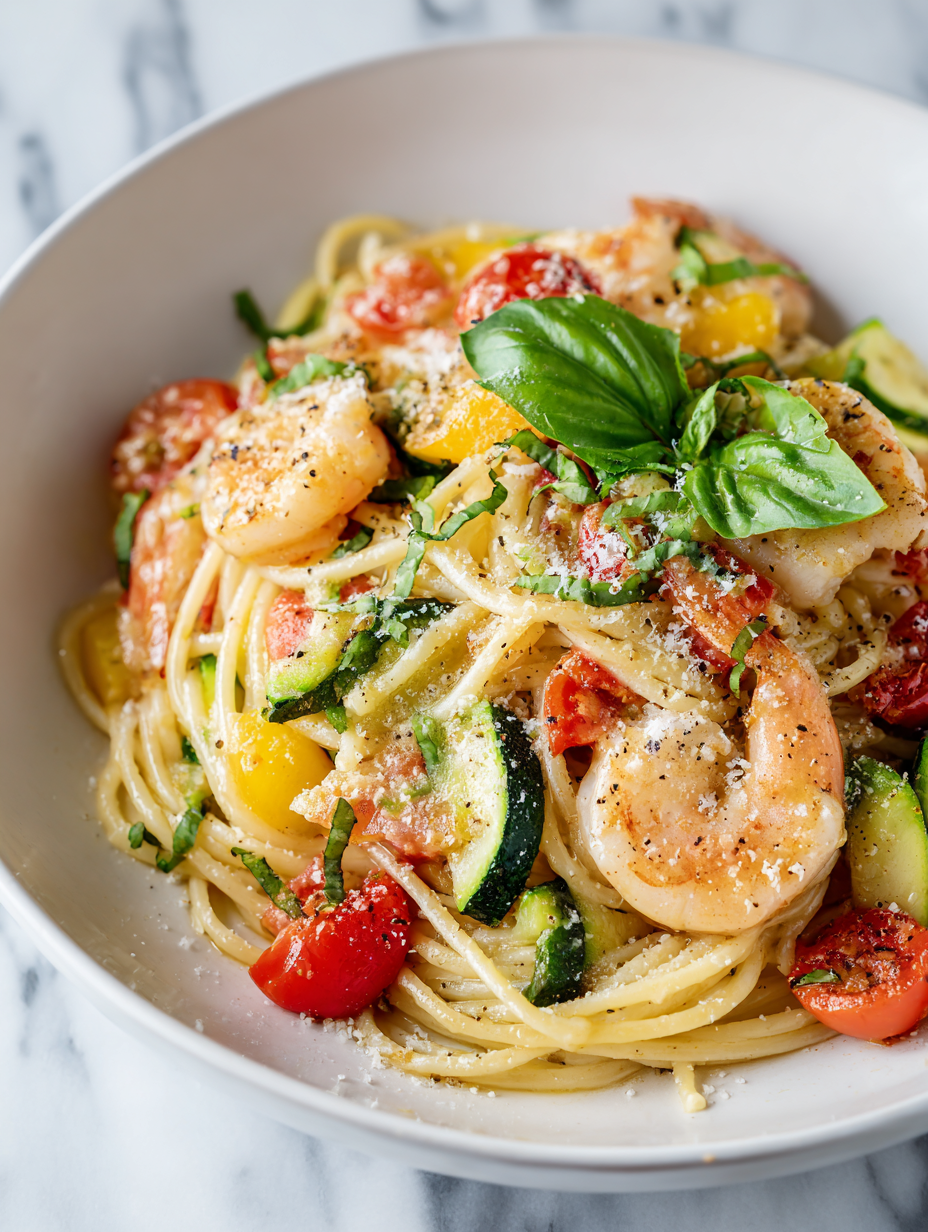
Shrimp Pasta Primavera
Ingredients
Equipment
Method
- Bring a large pot of salted water to a boil, then add the pasta and cook until just al dente, about 8 minutes. Drain, toss with a little olive oil to prevent sticking, and set aside.
- While the pasta cooks, heat a large skillet over medium heat and add 2 tablespoons of olive oil. Once shimmering, add the minced garlic and sauté until fragrant, about 30 seconds, smelling slightly nutty and golden.
- Add the sliced bell peppers and zucchini to the skillet. Cook, stirring often, until vegetables are crisp-tender and slightly caramelized, about 3-4 minutes. They should smell fresh and look vibrant.
- Push the vegetables to the side of the skillet and add the shrimp. Cook until pink and opaque, about 2-3 minutes per side, until they have a slight bounce when pressed. Season with salt, pepper, and red pepper flakes if using.
- Add the halved cherry tomatoes, lemon zest, and a squeeze of lemon juice to the pan. Stir everything together and cook for 1-2 minutes, just enough for the tomatoes to soften and release their juices.
- Pour the cooked pasta into the skillet with the vegetables and shrimp. Toss everything gently, adding reserved pasta water a little at a time until the mixture is glossy and well-coated. The sauce should shimmer and smell citrusy and fresh.
- Taste and adjust seasoning with additional salt, pepper, and lemon juice if needed. Remove from heat.
- Serve immediately, garnished with chopped fresh basil and grated Parmesan cheese, if desired. The dish should be hot, vibrant, and bursting with fresh flavors, perfect for a lively dinner.
Tips and Tricks for Perfect Primavera
- Bolded Tip: Use high heat when adding shrimp to quickly sear and lock in juices, avoiding overcooking.
- Bolded Tip: Toss vegetables in the pan only until just tender to maintain vibrant color and crispness.
- Bolded Tip: Reserve pasta water to loosen the sauce—its starchy goodness helps everything cling beautifully.
- Bolded Tip: Add garlic at the right moment—about 30 seconds in, until fragrant but not browned—to prevent bitterness.
- Bolded Tip: Brighten the dish with lemon zest right before serving—this fresh burst makes all the flavors pop.
- Bolded Tip: Don’t overcrowd the pan—cook shrimp and vegetables in batches if needed to ensure even searing.
- Bolded Tip: Taste and adjust seasoning at the end—salty, bright, and well-balanced makes all the difference.
Common mistakes and how to fix them
- FORGOT to adjust heat after adding shrimp → Sear shrimp over medium-high heat for even cooking.
- DUMPED pasta water without tasting → Reserve a bit for sauce consistency, taste for salt.
- OVER-TORCHED garlic → Sauté garlic until fragrant, about 30 seconds; remove if it browns too fast.
- MISSED the lemon zest → Add zest early for brightness, but adjust to taste before serving.
Quick Fixes and Pantry Swaps
- When sauce looks too thick → Splash in a bit of pasta water to loosen and shimmer.
- If shrimp turn rubbery → Ditch high heat; cook over medium for tender, juicy results.
- Splash with lemon if vegetables seem dull → Brighten flavors instantly with citrus shimmer.
- Patch over-salted broth with a squeeze of lemon and a pinch of sugar to balance.
- Shield delicate herbs from heat → Add fresh herbs at the end for maximum aroma and freshness.
Prep, store, and reheat tips
- Prep the vegetables: Slice bell peppers, zucchini, and tomatoes the night before. Keep in an airtight container in the fridge—vegetables stay crisp and fresh for up to 2 days.
- Cook the pasta ahead: Boil the pasta until just al dente, drain, toss with a little oil, and store in an airtight container for up to 24 hours. Reheat briefly in boiling water or microwave, tasting for texture.
- Cook and peel shrimp in advance: Sauté or boil the shrimp until just cooked, then chill in a sealed container. They keep well in the fridge for up to 2 days and reheat quickly—smell for freshness before use.
- Make the lemon herb sauce early: Mix lemon juice, zest, chopped herbs, and olive oil in advance. Store in the fridge for up to 24 hours. Bring to room temperature and give a quick stir before serving to restore brightness.
- Reheating notes: Gently reheat the pasta and shrimp in a skillet over low heat or in the microwave. Add a splash of water or olive oil if it looks dry. The dish should smell fresh, with the vegetables still vibrant and the shrimp tender.
- Flavor changes: The freshness of the vegetables diminishes slightly after storage, so it’s best to assemble and serve close to mealtime for maximum brightness and crunch.
Top questions about Shrimp Pasta Primavera
1. Can I use frozen shrimp?
Use fresh, deveined shrimp for quick cooking and sweet flavor. If they smell off, give them a lemon soak.
2. How do I know when the pasta is ready?
Cook pasta just until al dente, about 8 minutes. Overcooking makes it mushy and less vibrant.
3. Should vegetables be cooked fully?
Add vegetables only until they are crisp-tender, about 3-4 minutes, to keep their bright color and crunch.
4. When should I add lemon for best flavor?
Use lemon zest and juice right before serving to keep the dish fresh and bright in flavor.
5. Why reserve pasta water?
Reserve some pasta water to loosen the sauce if it gets too thick or sticky, for a glossy finish.
6. When do I add herbs?
Add fresh herbs at the very end, off heat, to preserve their aroma and bright flavor.
7. What size pan should I use?
Use a large skillet to give everything enough space for even searing and tossing without overcrowding.
8. How do I reheat this dish?
Reheat leftovers gently in a skillet with a splash of water or olive oil to keep everything moist and fresh.
9. Can I make this vegan?
For a vegan version, skip shrimp and add sautéed mushrooms or tofu for a similar meaty texture.
10. How do I fix a dull sauce?
If the sauce seems dull, add a squeeze of lemon and a pinch of red pepper flakes to brighten it up.
This dish really captures the essence of spring, even if it’s just a reminder of warmer days. The aroma of garlic, lemon, and fresh herbs lingering in the kitchen makes every bite feel like a small celebration. It’s a dish that’s forgiving, bright, and perfect for shifting seasons or simply craving a quick, vibrant meal.
Sharing it with someone special makes it even better—watching the colors pop and listening to the crunch of fresh vegetables. Sometimes, the simplest things turn out to be the most satisfying, especially when they remind us to enjoy the little moments around a shared plate.

Hi, I’m Katie Dawson, the owner, cook, and storyteller behind Little More Lovely. I run a small café in a cozy corner of Seattle, where the smell of freshly baked bread meets the hum of neighborhood chatter. I’ve spent years learning how food can bring people together, both as a professional and as someone who loves to share meals with family and friends.