
There’s something about the scent of fresh Thai basil that instantly lifts my spirits. It’s like a burst of green, slightly peppery, with hints of anise that somehow makes everything feel more alive. When I cook this dish, I always keep a handful of basil close by—its aroma is what truly makes this shrimp stir-fry special, transporting me straight to a busy street stall in Bangkok.
This recipe isn’t just about quick, flavorful food; it’s about capturing a moment of sensory joy. I love how the basil’s fragrance mingles with the sizzling shrimp and garlic, creating a fragrant cloud that fills the kitchen. It’s honest, unpolished cooking—something you can whip up in a flash, but that feels like a mini escape into another place, another time.
Focusing on how the aroma of fresh Thai basil elevates the simple shrimp stir-fry into a sensory experience that transports me back to bustling Bangkok street markets.
Aromas that Transport
- Cooking this dish always reminds me of lazy weekend mornings in Bangkok’s street markets, where the air is thick with basil and garlic.
- The smell of sizzling shrimp with fragrant basil is oddly comforting, like a familiar song I didn’t realize I missed so much.
- I love how a handful of fresh basil can turn simple seafood into a celebration—something so honest and quick, yet deeply satisfying.
The story behind this recipe
Cooking this dish always takes me back to a trip I took to Thailand, where the markets buzzed with the scent of fresh herbs and sizzling seafood. I remember standing by a stall, watching a cook toss shrimp with basil, garlic, and chili, the aroma wrapping around me like a warm blanket. That moment of pure sensory joy is what I chase every time I make this at home, trying to recreate that street market magic with just a few simple ingredients. It’s honest, unpolished food—fast, fragrant, and real—that connects me to a place I love.
Thai Basil’s Cultural Roots
- Thai basil, with its distinct peppery aroma and purple stems, is a staple in Thai cooking, dating back centuries.
- This recipe’s roots are in street food stalls where quick, fragrant dishes like this shrimp stir-fry became a daily ritual for locals.
- In Thailand, basil is considered a sacred herb, often associated with good luck and protection, which adds a layer of cultural meaning to the dish.
Key Ingredients Breakdown
- Thai basil: Its peppery, slightly anise aroma is what makes this dish pop. Use fresh, vibrant leaves for the best fragrance, and don’t skimp—this is the heart of the flavor.
- Shrimp: I prefer wild-caught, medium-sized shrimp that are firm and juicy. Sauté just until pink and slightly caramelized for that smoky sweetness, but avoid overcooking, or they turn rubbery.
- Garlic: Fresh garlic, minced fine, adds a punch of pungency. When you hear that initial crackle, you know it’s ready. Skip pre-minced to avoid that dull, processed flavor.
- Chili: Fresh Thai bird’s eye chilies give the heat and brightness. Adjust to your spice level, but remember, a little goes a long way—look for that shiny, red, fiery glow.
- Fish sauce: It’s the secret umami kick—salty and deeply savory with a hint of the ocean. Use sparingly at first, then taste and adjust, aiming for a rich, toasted aroma.
- Sugar: Just a touch balances the salt and spice with a subtle sweetness. I keep it simple—white sugar melts quickly and leaves no aftertaste, but honey can add a sticky, floral note if you like.
- Oyster sauce: Adds a slightly sweet, briny depth. Use a small drizzle, then taste—if you want more umami, sprinkle in a little extra, but don’t overpower the basil’s fresh aroma.
Spotlight on key ingredients
Thai basil:
- Its peppery, slightly anise aroma is what makes this dish pop. Use fresh, vibrant leaves for the best fragrance, and don’t skimp—this is the heart of the flavor.
- Basil during cooking: Watch how the basil wilts quickly and releases a bright, peppery scent. It turns vibrant green and fragrant almost instantly, so add it at the end for maximum aroma.
Shrimp:
- When cooking, they go from grey to a bright pink and firm. They jiggle slightly when done, and their smoky aroma hints at caramelization.
- Cooking shrimp: They can overcook fast—look for a slight jiggle and a uniform pink color. They’ll emit a sweet, briny aroma when perfectly cooked.
Notes for ingredient swaps
- Herbs: Fresh Thai basil is ideal for its peppery, slightly anise aroma. If unavailable, try sweet basil or basil with a splash of licorice extract, but the flavor won’t be quite the same.
- Seafood: Fresh or frozen medium shrimp work best. Frozen shrimp may release more water; thaw and pat dry thoroughly before cooking for better searing.
- Garlic: Use fresh garlic cloves for pungency and brightness. Pre-minced garlic in jars tends to be dull and processed, so peel and mince fresh whenever possible.
- Chili: Fresh Thai bird’s eye chilies give authentic heat. For milder spice, substitute with red jalapeños, but reduce the amount to taste to avoid overpowering the dish.
- Fish Sauce: It’s a salty, umami-rich staple. Tamari or soy sauce can be used as a vegetarian alternative, but expect less depth and complexity.
- Sugar: White granulated sugar melts quickly and balances spice. Honey or agave syrup can be substitutes for a floral, sticky sweetness, but adjust quantity to avoid overpowering.
- Oyster Sauce: Adds depth with a briny, sweet note. Mushroom-based stir-fry sauces are a good vegan swap, though the flavor will be slightly less rich.
Equipment & Tools
- Wok or large skillet: For quick, even high-heat cooking
- Spatula: For tossing and stirring ingredients
- Sharp knife: For precise chopping and mincing
- Cutting board: Surface for prepping ingredients
- Small bowl: Holding sauces or chopped herbs
Step-by-step guide to Thai Basil Shrimp
- Equipment & Tools: Use a wok or a large skillet for quick, even heat; a spatula for tossing; a sharp knife for prep; a cutting board; and a small bowl for sauces.
- Prep the ingredients: Mince 3 cloves garlic and 1-2 Thai bird’s eye chilies (adjust spice). Shell and devein 1 cup medium shrimp, keep cold. Chop a handful of Thai basil leaves coarsely.
- Heat the pan: Set over high heat until just smoking. Add 1 tablespoon oil (canola or vegetable).
- Sauté garlic and chilies: Toss in garlic and chilies immediately, cook for 15-20 seconds until fragrant and golden around edges. Crackle should be lively, smell bright.
- Cook the shrimp: Add shrimp in a single layer. Sear for 1-2 minutes without moving, then stir. Cook until pink and just firm, about 2 more minutes. They should jiggle slightly when done, with a smoky aroma.
- Add sauces: Stir in 1 tablespoon fish sauce, 1 teaspoon sugar, and 1 teaspoon oyster sauce. Mix well, cook for 30 seconds until glossy and fragrant. If shrimp overcooked, add a splash of water and toss quickly.
- Finish with basil: Remove from heat immediately. Toss in the basil leaves, stir until wilted and fragrant, about 10 seconds. Basil should turn bright green, releasing a peppery aroma.
- Rest & Plate: Transfer to a warm plate. Rest for 1 minute to let flavors meld. Serve immediately with steamed jasmine rice or alone as a quick snack.
- Checkpoints & How to Know It’s Done: Shrimp are pink and slightly opaque; basil is vibrant and fragrant; sauce is glossy and aromatic, not watery.
Serve immediately on a warm plate. Garnish with extra basil if desired. Rest for a minute before eating to let flavors settle.
How to Know It’s Done
- Shrimp are pink, firm, and slightly jiggle when touched.
- Basil leaves are bright green and aromatic.
- Sauce is glossy, fragrant, and coats shrimp evenly.
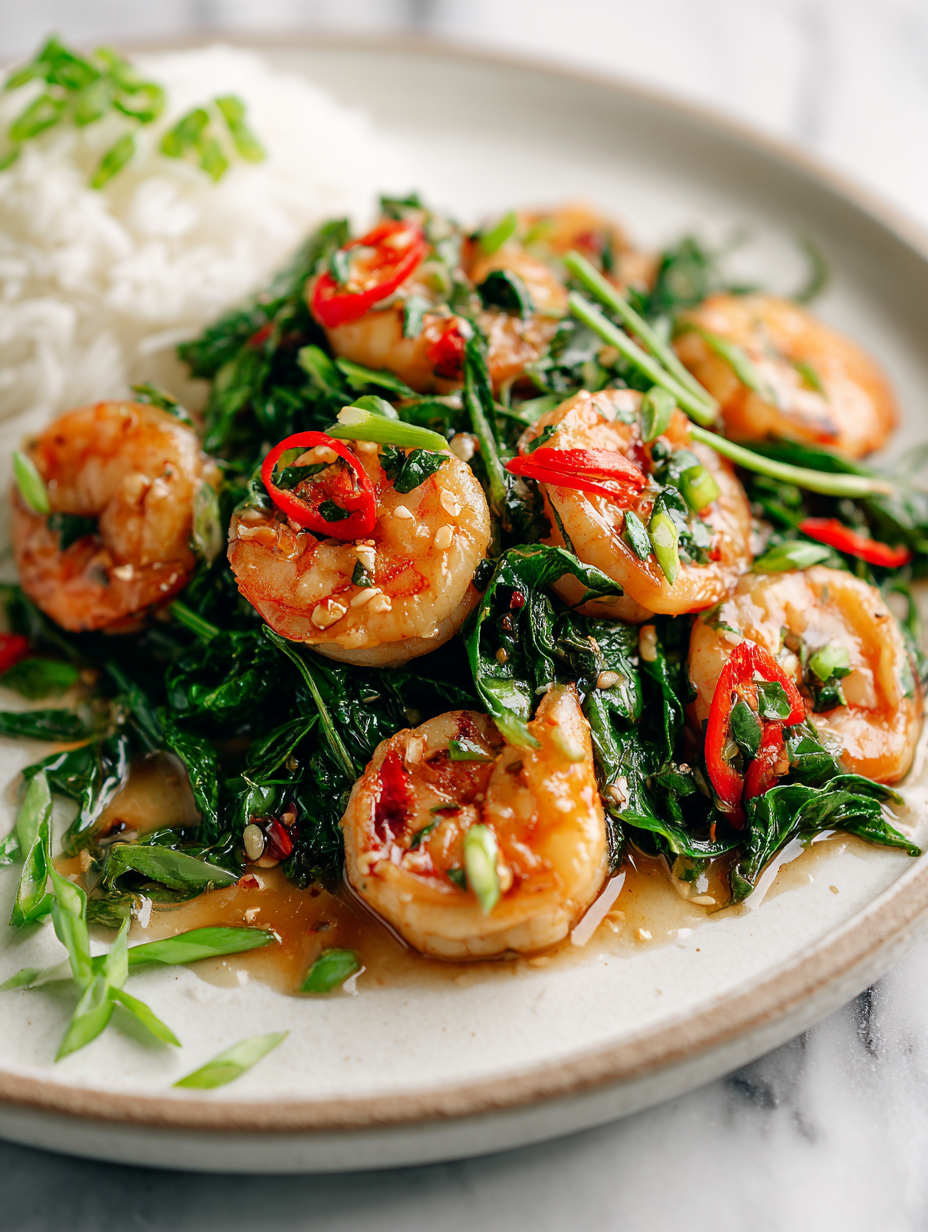
Thai Basil Shrimp Stir-Fry
Ingredients
Equipment
Method
- Start by mincing your garlic finely and slicing the Thai chilies thinly—this releases their aroma and heat. Shell and devein the shrimp, then set everything aside on your prep station.
- Heat your wok or large skillet over high heat until just smoking. Add the oil and swirl to coat the surface evenly.
- Toss in the minced garlic and sliced chilies immediately. Sauté for about 15 seconds until fragrant, hearing a lively crackle and smelling the bright, pungent aroma.
- Spread the shrimp in a single layer in the pan. Let them sear undisturbed for 1-2 minutes until they start turning pink and develop a slight caramelization on the edges.
- Stir the shrimp around and cook for another 2 minutes until they are fully pink and firm, with a smoky aroma wafting up from the pan.
- Pour in the fish sauce, add the sugar, and include the oyster sauce if using. Toss everything together quickly for about 30 seconds until the sauce becomes glossy and fragrant, coating the shrimp evenly.
- Remove the pan from heat immediately and toss in the chopped basil leaves. Stir for about 10 seconds until the basil wilts, turns bright green, and releases its peppery aroma.
- Transfer the stir-fry to a warm plate and let it rest for a minute to allow flavors to settle. Serve immediately, garnished with extra basil if desired.
Pro tips for Thai Basil Shrimp
- High heat: Preheat your pan until just smoking—this ensures a quick sear and locking in juices.
- Timing garlic: Add garlic just as the oil shimmers; it should crackle and turn golden in 15 seconds, not burn.
- Basil addition: Toss in basil at the very end; it wilts instantly and releases a bright, peppery aroma. Don’t overcook it.
- Shrimp searing: Sear shrimp undisturbed for 1-2 minutes on each side until pink and slightly caramelized—avoid overcrowding the pan.
- Sauce glaze: When adding fish and oyster sauces, cook for just 30 seconds until glossy—this intensifies flavor without overpowering basil.
- Taste as you go: Adjust fish sauce and sugar after initial toss; the balance is key to that bright, savory punch.
- Rest briefly: Let the finished dish sit for a minute; it allows flavors to meld and keeps the basil vibrant and fragrant.
Common mistakes and how to fix them
- FORGOT to adjust heat → Use medium-high heat if pan smokes excessively.
- DUMPED too much oil → Use just enough to coat the pan lightly.
- OVER-TORCHED basil → Add basil at the last second to prevent burnt flavor.
- SKIPPED tasting sauces → Always taste and adjust fish sauce and sugar before finishing.
Quick fixes and pantry swaps
- When sauce shimmers too much, splash in water to calm the boil.
- If basil turns dark, add it at the last second for fresh aroma.
- Splash a bit of lime juice if the dish feels too salty or dull.
- Patch overcook shrimp by tossing in a splash of broth and quick stir.
- Shield the pan with a splatter guard to contain sizzling oils and herbs.
Prep, store, and reheat tips
- You can prep the garlic, chilies, and basil leaves a few hours ahead. Store garlic and chilies in the fridge in airtight containers; basil wrapped in a damp paper towel inside a bag. The aromatics stay fresh and fragrant until cooking.
- Shrimp can be peeled and deveined up to a day in advance. Keep it chilled in an airtight container—fresh seafood keeps well for 24 hours, maintaining firmness and juiciness. Pat dry before cooking to ensure a good sear.
- The sauce components—fish sauce, oyster sauce, sugar—don’t change much over time. Mix and store in a small jar or bowl. The flavors deepen slightly overnight, but they’re still bright and pungent the next day.
- Cooked shrimp can be stored in the fridge for up to 2 days. Reheat gently in a hot pan or microwave, aiming for a crackle and plumpness that hints at freshness. Watch for rubbery texture if overdone during reheating.
- This dish is best eaten fresh, but if needed, leftovers can be kept for a day. Reheat in a hot skillet with a splash of water or oil, and add fresh basil for a burst of aroma. Expect some flavor mellowing but still vibrant with proper reheating.
Top questions about Thai Basil Shrimp
1. Can I use regular basil instead of Thai basil?
Use fresh Thai basil for that peppery, slightly anise aroma. Skip dried; it loses flavor.
2. How do I know when the shrimp are done?
Cook shrimp until they turn pink and firm, about 3-4 minutes total. Overcooked shrimp are rubbery.
3. How spicy is this dish?
Adjust chili quantity based on your spice tolerance. Start small; you can always add more.
4. What temperature should I cook this at?
Use a hot pan—around 200°C/400°F—to sear shrimp quickly and develop flavor without rubbery texture.
5. Can I skip fish sauce?
Fish sauce adds umami and saltiness. If you prefer a vegetarian version, soy sauce can work but will lack depth.
6. When should I add the basil?
Add basil at the very end, just before serving. It wilts quickly and loses aroma if cooked too long.
7. How long can I keep leftovers?
Store leftovers in an airtight container in the fridge for up to 2 days. Reheat gently to preserve texture.
8. What heat level is best for cooking this dish?
Use medium-high heat to get a good sear on the shrimp and to make the aromatics pop.
9. How can I add more smoky flavor?
For extra smoky flavor, toss shrimp in a little smoked paprika or use a cast-iron pan.
10. Can I substitute the shrimp?
Yes, you can swap shrimp for chicken or firm tofu; adjust cooking time accordingly.
This dish is more than just a quick stir-fry; it’s a snapshot of a bustling street market, a burst of fresh, fragrant basil that lifts the spirits. When I make it, I’m transported to those lively lanes, feeling the heat, hearing the sizzle, and smelling that unmistakable mix of herbs and seafood.
It’s honest, unpolished home cooking that captures a moment in time, a reminder of how simple ingredients can create something deeply satisfying. No matter how many times I make it, that first aromatic bite always feels like a tiny escape, a fleeting taste of Thailand right in my own kitchen.

Hi, I’m Katie Dawson, a paediatric speech-language pathologist by day and a passionate food storyteller by night. Based in Seattle but with a love for global flavours (and a soft spot for Indian chai), I created this blog to bridge the gap between therapeutic nutrition and the simple joy of eating.
