
This shrimp piccata is a little tribute to how citrus can really wake up a dish. I’ve always loved how lemon and capers can turn something simple into something lively, almost cheeky in its brightness. It’s one of those recipes that feels fancy but comes together in under 30 minutes, perfect for when you want to impress without the fuss.
What makes this dish special to me is how the lemon’s sharp tang cuts through the richness of the butter and olive oil. It’s like a quick burst of freshness that keeps the whole thing from feeling heavy, especially after a long day. Plus, the way the shrimp curl up and turn a tender pink while soaking up all those flavors—it’s pretty satisfying to watch and taste.
I’ve cooked this for friends, family, even just myself on a lazy weeknight, and it always feels like a little celebration. It’s simple but bright, comforting but lively—kind of like a reminder that good food doesn’t need to be complicated to be memorable.
Focusing on the underappreciated role of citrus in balancing richness, this shrimp piccata recipe highlights how lemon and capers transform simple ingredients into a bright, tangy dish that cuts through the buttery sauce, making it unexpectedly refreshing and lively.
The citrus secret to lively seafood
- This dish reminds me of summer evenings by the coast, where citrus and seafood are just meant to be together.
- I love how the lemon’s zing cuts through the richness, making every bite feel fresh and invigorating.
- Cooking this for friends always sparks a bit of nostalgia—simple ingredients, big flavor, shared around the table.
- There’s a quiet pride in turning humble shrimp and pantry staples into something that feels bright and special.
- Whenever I make this, I feel a little bit like I’ve captured a sunny moment to enjoy any day.
The story behind this recipe
- This recipe came together on a night when I was craving something bright and quick but didn’t want to settle for plain. I remembered a trip to Italy where I had a simple lemon and caper pasta, and it struck me how those flavors could easily elevate seafood. Shrimp, with their quick cook time and tender bite, seemed perfect to soak up that zesty punch. So I started experimenting, aiming for a balance of tangy, salty, and buttery, and this dish was born.
- It’s become my go-to when I want something impressive yet unfussy, especially after a long day. The lemon’s sharp brightness and the briny punch of capers make every bite lively—kind of like a little celebration on a plate. Over time, I’ve tweaked the sauce to be just enough buttery richness without overpowering the citrus. It’s a reminder that simple ingredients, combined thoughtfully, can deliver real comfort and a little bit of joy.
- heading: ‘The spark of citrus and simplicity’
Historical and Cultural Tidbits
- Shrimp piccata is a variation of the classic chicken or veal piccata, adapted for seafood lovers craving a brighter, citrus-forward dish.
- The use of capers and lemon in Italian cooking dates back centuries, where they were prized for their preservative qualities and bold flavors.
- In coastal Italy, seafood dishes like shrimp piccata became popular because fresh catches and citrus were abundant and affordable, inspiring quick, flavorful preparations.
Key Ingredients and Tips
- Shrimp: I prefer large, deveined shrimp with tails on for presentation and flavor. Their sweet, briny juice is the star, so avoid overcooking to keep that tender bite. If they turn rubbery, quicken the heat or cook for less time.
- Lemon: Fresh lemon juice brightens everything—look for plump, fragrant lemons with a zingy scent. Skip bottled lemon juice for the real deal; it’s the lively spark that cuts through the richness. For a subtler tang, start with half and add to taste.
- Capers: These tiny briny buds add a punch of salt and tang—rinsing them removes excess salt, making them more balanced. If you dislike the saltiness, reduce or skip, but don’t skip the briny pop. Their oozy texture adds a nice contrast.
- Butter: Use unsalted butter for control over salt; it melts into the sauce with a velvety sheen. For a richer sauce, bump up the butter a bit, but be mindful of balance. When sizzling, it should smell nutty and inviting, not burnt.
- Olive Oil: Good quality extra virgin olive oil lends a fruity depth. Keep it at medium heat to prevent smoking; it’s the base for sautéeing the shrimp and building flavor. If the oil shimmers but doesn’t crackle, you’re at the right temp.
- White Wine (Optional): Adds acidity and depth—if you skip it, just add a splash more lemon. Choose a dry white that you’d drink; it should smell crisp and slightly floral. Reduce it to about half to concentrate the flavor before adding butter.
- Flour (for dredging): I use a light dusting of all-purpose flour to help develop a golden crust on the shrimp. Shake off excess to prevent clumping. If you prefer gluten-free, cornstarch works but gives a different texture—less crispy, more tender.
Spotlight on key ingredients
Lemon:
- Shrimp: I prefer large, deveined shrimp with tails on for presentation and flavor. Their sweet, briny juice is the star, so avoid overcooking to keep that tender bite. If they turn rubbery, quicken the heat or cook for less time.
- Fresh lemon juice brightens everything—look for plump, fragrant lemons with a zingy scent. Skip bottled lemon juice for the real deal; it’s the lively spark that cuts through the richness. For a subtler tang, start with half and add to taste.
Capers:
- These tiny briny buds add a punch of salt and tang—rinsing them removes excess salt, making them more balanced. If you dislike the saltiness, reduce or skip, but don’t skip the briny pop. Their oozy texture adds a nice contrast.
- Butter: Use unsalted butter for control over salt; it melts into the sauce with a velvety sheen. For a richer sauce, bump up the butter a bit, but be mindful of balance. When sizzling, it should smell nutty and inviting, not burnt.
Notes for ingredient swaps
- Dairy-Free: Swap butter for olive oil or coconut oil. The sauce will be less creamy but still bright and flavorful.
- Gluten-Free: Use cornstarch instead of flour for dredging the shrimp. It crisps up nicely but may be slightly less golden.
- Vegan: Replace shrimp with thick slices of hearty mushrooms or tofu. Use a splash of vegetable broth instead of white wine.
- Low-Sodium: Rinse capers thoroughly and reduce added salt. Lemon juice and capers still deliver plenty of punch.
- Extra Tangy: Add a splash of white wine vinegar or a pinch of citric acid if lemon isn’t enough or for a sharper bite.
- Herb Variations: Incorporate fresh thyme or parsley into the sauce for a different aromatic profile. Keep the balance bright and fresh.
- Lemon Sub: Use lime or vinegar for acidity, but lemon offers that distinct, aromatic citrus punch that’s hard to replace.
Equipment & Tools
- Large skillet: Searing shrimp and making the sauce
- Tongs: Turning and removing shrimp
- Small bowl: Holding dredged shrimp or measuring ingredients
- Lemon squeezer: Extracting fresh lemon juice
- Spatula: Stirring and blending sauce ingredients
Step-by-step guide to shrimp piccata
- Gather all equipment: a large skillet (preferably stainless steel or cast iron), tongs, a small bowl, a lemon squeezer, and a spatula. Set everything within arm’s reach before starting.
- Pat the shrimp dry with paper towels. Season lightly with salt and pepper. Lightly dredge in flour, shaking off excess. This helps with browning and sauce adherence.
- Heat the skillet over medium-high heat until shimmering (about 180°C/356°F). Add a tablespoon of olive oil, swirling to coat. When oil shimmers and just starts to crackle, it’s ready.
- Add shrimp in a single layer. Cook for 2 minutes without moving, then flip. They should turn pink and develop a golden crust. If they stick or brown too quickly, lower the heat slightly.
- Remove shrimp and set aside. In the same pan, add 2 tablespoons of butter and the minced garlic. Sauté for about 30 seconds until fragrant—avoid burning the garlic.
- Pour in ¼ cup white wine (optional). Let it simmer for 2-3 minutes, stirring to deglaze the pan and lift up browned bits. This creates a flavorful base.
- Add the juice of one lemon, plus capers (about 2 tablespoons). Stir to combine. Cook for another minute till the sauce thickens slightly and smells bright and lemony.
- Return shrimp to the skillet. Toss gently to coat in the sauce, cooking for another 1-2 minutes until heated through. The shrimp should be tender and glistening.
- Finish with a tablespoon of cold butter, swirling into the sauce for a silky finish. Check for seasoning—add more lemon or salt if needed.
- Transfer shrimp and sauce to a warm plate. Rest for 1 minute. Garnish with fresh parsley or lemon slices if desired. Serve immediately for best flavor and texture.
Serve immediately on warm plates. Spoon sauce over shrimp. Garnish with fresh herbs or lemon slices for brightness.
How to Know It’s Done
- Shrimp are opaque and pink, with a slight curl, indicating doneness.
- Sauce has a shiny, slightly thickened appearance, with vibrant lemon aroma.
- Shrimp have a firm yet tender texture, not rubbery or mushy.
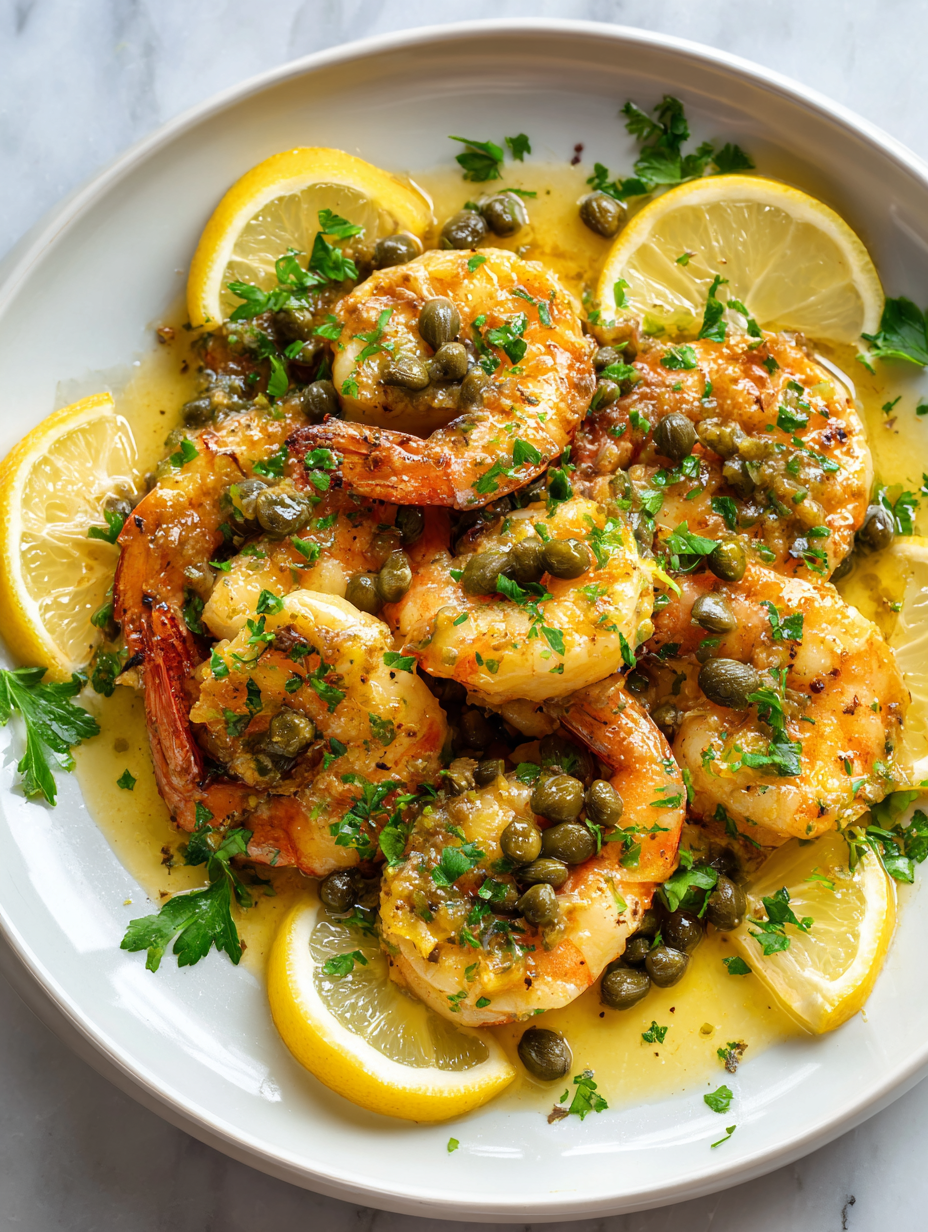
Lemon Capers Shrimp Piccata
Ingredients
Equipment
Method
- Pat the shrimp dry with paper towels, then season lightly with salt and pepper. Dredge each shrimp in flour, shaking off the excess—this will help them develop a golden crust.
- Heat a large skillet over medium-high heat until shimmering, then add the olive oil. Once hot and glistening, carefully add the shrimp in a single layer. Cook for about 2 minutes without moving, then flip and cook another 2 minutes until they turn pink and golden. Remove the shrimp and set aside.
- Add 1 tablespoon of butter to the same skillet, then toss in the minced garlic. Sauté for about 30 seconds until fragrant, with a nutty aroma filling the air and the garlic turning slightly golden.
- If using wine, pour in the white wine now, scraping the bottom of the pan with a spatula to loosen the browned bits. Let this simmer for 2-3 minutes until the liquid reduces slightly and the aroma becomes bright and aromatic.
- Squeeze the juice of one lemon into the skillet, then add the rinsed capers. Stir everything together and cook for another minute, allowing the sauce to thicken slightly and the flavors to meld.
- Return the cooked shrimp to the skillet, gently tossing to coat them in the sauce. Cook for another 1-2 minutes until the shrimp are heated through and glistening with sauce.
- Remove the skillet from heat and swirl in the remaining tablespoon of butter to create a glossy, silky sauce. Check the seasoning, adding more lemon juice or salt if needed for extra brightness and balance.
- Transfer the shrimp and sauce to a serving dish. Garnish with lemon slices or chopped parsley, and serve immediately while hot and vibrant.
Pro tips for perfect shrimp piccata
- Bolded: Use high heat to develop a golden crust quickly, avoiding overcooking the shrimp.
- Bolded: Keep the garlic fragrant but not burnt—sauté just until it releases a nutty aroma, about 30 seconds.
- Bolded: Deglaze the pan with wine or lemon juice to lift flavorful browned bits; this adds depth to the sauce.
- Bolded: When adding butter at the end, swirl it in off the heat for a glossy, silky sauce that clings to the shrimp.
- Bolded: For a brighter flavor, squeeze fresh lemon just before serving—avoid adding lemon juice too early which can dull the brightness.
Common mistakes and how to fix them
- FORGOT to dry the shrimp → Make sure shrimp are patted dry for even browning.
- DUMPED too much flour → Use a light dusting, excess can cause clumping and greasiness.
- OVER-TORCHED the sauce → Keep heat moderate; butter can burn quickly, ruining flavor.
- SKIPPED tasting the sauce → Always taste and adjust lemon or salt before serving.
Quick fixes and pantry swaps
- If shrimp turn rubbery, remove from heat immediately and serve to prevent further cooking.
- When sauce is too thin, simmer a bit longer or add a small pat of butter to thicken.
- Splash a touch more lemon if the dish lacks brightness after cooking.
- Patch over-salted capers by rinsing thoroughly or reducing their quantity in the sauce.
- Shield the garlic from burning by reducing heat after adding it to the pan.
Prep, store, and reheat tips
- Prep the shrimp: Devein and pat dry. Keep refrigerated in an airtight container for up to 24 hours for optimal freshness.
- Juice lemons in advance and store in a small jar in the fridge for up to 2 days. The bright citrus aroma will intensify over time.
- Make the sauce base: Mix garlic, capers, and lemon juice ahead. Keep chilled for up to 1 day; the flavors meld and become more vibrant.
- Reheating: Gently warm the shrimp and sauce in a skillet over low heat. Watch for overcooking and crackling; the shrimp should reheat without becoming rubbery.
- Sensory note: The aroma will deepen, and the sauce will thicken slightly. Add a splash of lemon or water if it thickens too much during reheating.
Top questions about shrimp piccata
1. What kind of shrimp should I use?
Use large, fresh shrimp for the best texture and flavor. Devein and keep tails on for presentation. Overcooked shrimp become rubbery, so keep an eye on the timing.
2. Can I use bottled lemon juice?
Fresh lemon juice brightens the dish with a tangy, aromatic punch. Bottled lemon juice lacks that fresh zing and can dull the flavor. Use a lemon squeezer for maximum juice extraction.
3. Are capers necessary?
Capers add a briny, slightly salty punch. Rinse them well to remove excess salt. If you dislike saltiness, reduce the amount or skip, but don’t skip the briny flavor.
4. Can I substitute butter with oil?
Use unsalted butter for control over salt and richness. It melts into the sauce, creating a smooth, velvety finish. If the sauce looks greasy, lower the heat or add a touch more lemon.
5. Is wine essential in this recipe?
White wine adds depth and acidity. Choose a dry wine you’d drink—look for a crisp, floral aroma. If you skip it, substitute with a splash of chicken or vegetable broth, or just extra lemon.
6. Should I flour the shrimp?
Dredge shrimp lightly in flour for a golden crust and better sauce adherence. Use gluten-free flour or cornstarch if needed. Too much flour makes the shrimp heavy and pasty.
7. How do I know when shrimp are done?
Cook the shrimp over medium-high heat until they turn pink and opaque, about 2 minutes per side. They should be firm yet tender. Under or overcooking affects texture and flavor.
8. Why deglaze the pan?
Deglazing the pan with wine or lemon juice lifts flavorful browned bits, adding depth to the sauce. Scrape the pan bottom to incorporate all those tasty caramelized bits.
9. How do I thicken the sauce?
Finish the sauce with a cold tablespoon of butter, swirling to create a glossy, silky texture. It enhances richness without greasiness and balances acidity with smoothness.
10. Can I make this ahead?
Serve immediately while the shrimp are tender and the sauce is bright and hot. Garnish with fresh herbs or lemon slices for extra freshness and visual appeal.
This shrimp piccata is a quick reminder that bright, citrusy flavors can elevate even the simplest ingredients. It’s perfect for those busy nights when you want something satisfying but not heavy, especially as lemon and capers bring a lively punch to the table.
Sharing this dish with friends or family always sparks a little joy—those tender shrimp coated in a glossy, tangy sauce feel like a small celebration. It’s one of those recipes that sticks around in your mind long after the plate is cleared, making everyday moments feel special.

Hi, I’m Katie Dawson, the owner, cook, and storyteller behind Little More Lovely. I run a small café in a cozy corner of Seattle, where the smell of freshly baked bread meets the hum of neighborhood chatter. I’ve spent years learning how food can bring people together, both as a professional and as someone who loves to share meals with family and friends.