
Making shrimp creole that tastes like it’s been simmering all day is a little trick I’ve picked up over years of messing around in my own kitchen. It’s about coaxing out deep, smoky flavors from pantry staples—canned tomatoes, paprika, a dash of cayenne—and letting them dance together in one pot. Even if you only have half an hour, you can still get that comforting, layered richness that makes you think of a slow Sunday in New Orleans.
There’s something about the way the bright acidity of the tomatoes and the smoky depth of the spices come together that feels like a warm hug. I love how the shrimp soak up all those flavors and turn tender, almost buttery, in the process. It’s straightforward enough for weeknights but special enough to serve when you’re craving something soulful and honest, no fuss needed.
Focusing on how to make shrimp creole that tastes like it’s been simmering all day, even when you only have 30 minutes. It’s about coaxing deep, smoky flavors from simple pantry staples, and learning to balance bright acidity with rich spice, so every bite feels like a warm hug from a Southern kitchen.
Deep Flavors from Simple Pantry Staples
- Cooking this dish always reminds me of lazy Sunday afternoons in the bayou, where the air is thick with spice and stories.
- There’s a strange pride in turning simple pantry ingredients into something that feels like a special occasion.
- I love how the shrimp soak up all those smoky, tangy flavors and become tender and juicy—it’s almost hypnotic to watch.
- This recipe is my go-to when I want comfort food that doesn’t require hours in the kitchen, just honest, soulful flavors.
The story behind this recipe
- This recipe is a little homage to a trip I took down to New Orleans years ago. I remember walking into a tiny, smoky kitchen where the air was thick with spices and stories. That’s when I first tasted shrimp creole that tasted like it had been simmering all day, even though it was made in a rush. Since then, I’ve been chasing that same depth of flavor, trying to recreate that soulful, layered goodness in my own kitchen.
- Every time I make this, I think about how the simplest ingredients—canned tomatoes, smoked paprika, a touch of cayenne—can come together to create something unexpectedly bold. It’s about coaxing smoky richness from staples I always keep around, and balancing it all with bright, lemony tang. It’s a dish that feels like a little bit of New Orleans magic, no matter where you are.
- heading: “The story behind this recipe”
Historical and Cultural Roots
- Shrimp Creole has roots in Louisiana’s Creole cuisine, blending French, Spanish, and African influences into a vibrant, spicy stew.
- This dish likely evolved from simpler tomato-based seafood stews, adapted by Creole cooks seeking bold flavors and quick, hearty meals.
- Historically, shrimp was abundant along the Gulf Coast, making it a natural, affordable protein source for coastal communities.
- The use of smoked paprika in modern recipes pays homage to Spanish influence, adding depth and smokiness reminiscent of old-world spice trade.
Ingredient breakdown: key components
- Shrimp: I prefer deveined, tail-on for ease and presentation—plus that slight chew I love in a good creole. Feel free to peel if you want less fuss.
- Canned tomatoes: I use whole peeled for richer flavor, crushing them by hand. If you want a smoother sauce, blitz them briefly before cooking.
- Bell peppers: Green for that classic sharpness, but red or yellow add a subtle sweetness—choose what suits your mood today.
- Onion: Yellow or white, diced fine—this is your flavor base. Sauté until translucent but not browned, or you’ll get bitter notes.
- Paprika: Smoked paprika brings that deep, smoky richness I crave. If you only have sweet paprika, add a dash of smoked chipotle for complexity.
- Cayenne: A pinch for heat, but don’t go overboard unless you like your tongue to tingle. Start small and adjust at the end.
- Garlic: Fresh minced garlic is best; it infuses the sauce with a pungent, aromatic kick. Roast it slightly if you want a mellow sweetness.
Spotlight on key ingredients
Shrimp:
- I prefer deveined, tail-on for ease and presentation—plus that slight chew I love in a good creole. Feel free to peel if you want less fuss.
- Canned tomatoes: I use whole peeled for richer flavor, crushing them by hand. If you want a smoother sauce, blitz them briefly before cooking.
- Bell peppers: Green for that classic sharpness, but red or yellow add a subtle sweetness—choose what suits your mood today.
Canned tomatoes:
- Paprika: Smoked paprika brings that deep, smoky richness I crave. If you only have sweet paprika, add a dash of smoked chipotle for complexity.
- Cayenne: A pinch for heat, but don’t go overboard unless you like your tongue to tingle. Start small and adjust at the end.
- Onion: Yellow or white, diced fine—this is your flavor base. Sauté until translucent but not browned, or you’ll get bitter notes.
Notes for ingredient swaps
- Shrimp: Fresh or frozen works, but fresh shrimp have a sweeter, brinier flavor. If using frozen, thaw thoroughly and pat dry for better searing.
- Canned tomatoes: Use fire-roasted for a smoky note or crushed San Marzano for a richer, sweeter base. Fresh tomatoes are too watery here unless cooked down first.
- Bell peppers: Red or yellow add sweetness, but green peppers give a sharper, more traditional bite. Use what you have for different flavor profiles.
- Onion: Yellow or white onions both work, but red onions add a touch of sweetness and color. Sauté until translucent for the best base.
- Paprika: Smoked paprika is ideal for depth, but sweet paprika can brighten the sauce. If you like extra smoky flavor, toss in a pinch of chipotle powder.
- Cayenne: For heat, start small—half a teaspoon or less. If you want more, add in stages to avoid overwhelming the dish.
- Garlic: Fresh minced garlic is best, but roasted garlic can add a mellow, caramelized sweetness—use sparingly to avoid overpowering.
Equipment & Tools
- Large skillet or cast-iron pan: To develop even heat and depth of flavor.
- Wooden spoon: For stirring and scraping flavorful bits from the pan.
- Knife and cutting board: To dice vegetables and prepare shrimp.
- Measuring spoons: To measure spices accurately.
Step-by-step guide to Shrimp Creole
- Gather your equipment: a large skillet or cast-iron pan, a wooden spoon, a sharp knife, a cutting board, and measuring spoons. The skillet is key for that deep, even heat that helps develop flavor.
- Heat the skillet over medium heat (~160°C / 320°F). Add a tablespoon of oil—vegetable or olive—until shimmering but not smoking.
- Add diced onion and bell peppers. Cook, stirring often, until softened and translucent, about 5-7 minutes. The smell should be sweet and slightly caramelized.
- Stir in minced garlic and smoked paprika. Cook for 30 seconds until fragrant—watch for a smoky aroma and a slight crackle. Be careful not to burn the garlic.
- Pour in crushed canned tomatoes and a splash of water or broth if needed. Bring to a simmer, then reduce heat to low (~80°C / 175°F). Let it simmer gently for 10-15 minutes, stirring occasionally. The sauce should thicken slightly and smell smoky and tangy.
- Add cayenne and season with salt and pepper. Taste and adjust spice levels. If the sauce is too acidic, a pinch of sugar can balance it out.
- Add the shrimp, tails on or off, evenly across the sauce. Cook for 3-4 minutes, stirring gently. Shrimp should turn pink and opaque, firm but tender.
- Check the shrimp: they should be opaque, slightly curled, and have a slight bounce when pressed. The sauce should be bubbling gently around the shrimp.
- Remove from heat. Rest for 2 minutes to allow flavors to meld. Garnish with chopped parsley or green onions if desired.
- Serve hot, ideally over rice or with crusty bread. The shrimp should be juicy and the sauce rich and smoky, with bright tomato acidity.
Once cooked, let the dish rest off heat for 2 minutes to let flavors settle. Serve immediately with rice or crusty bread, garnished with fresh herbs for a burst of freshness.
How to Know It’s Done
- Shrimp are opaque and firm, with a slight bounce when pressed.
- Sauce has thickened slightly, with a smoky, tangy aroma.
- Colors are vibrant: red tomatoes, green herbs, pink shrimp, and peppers.
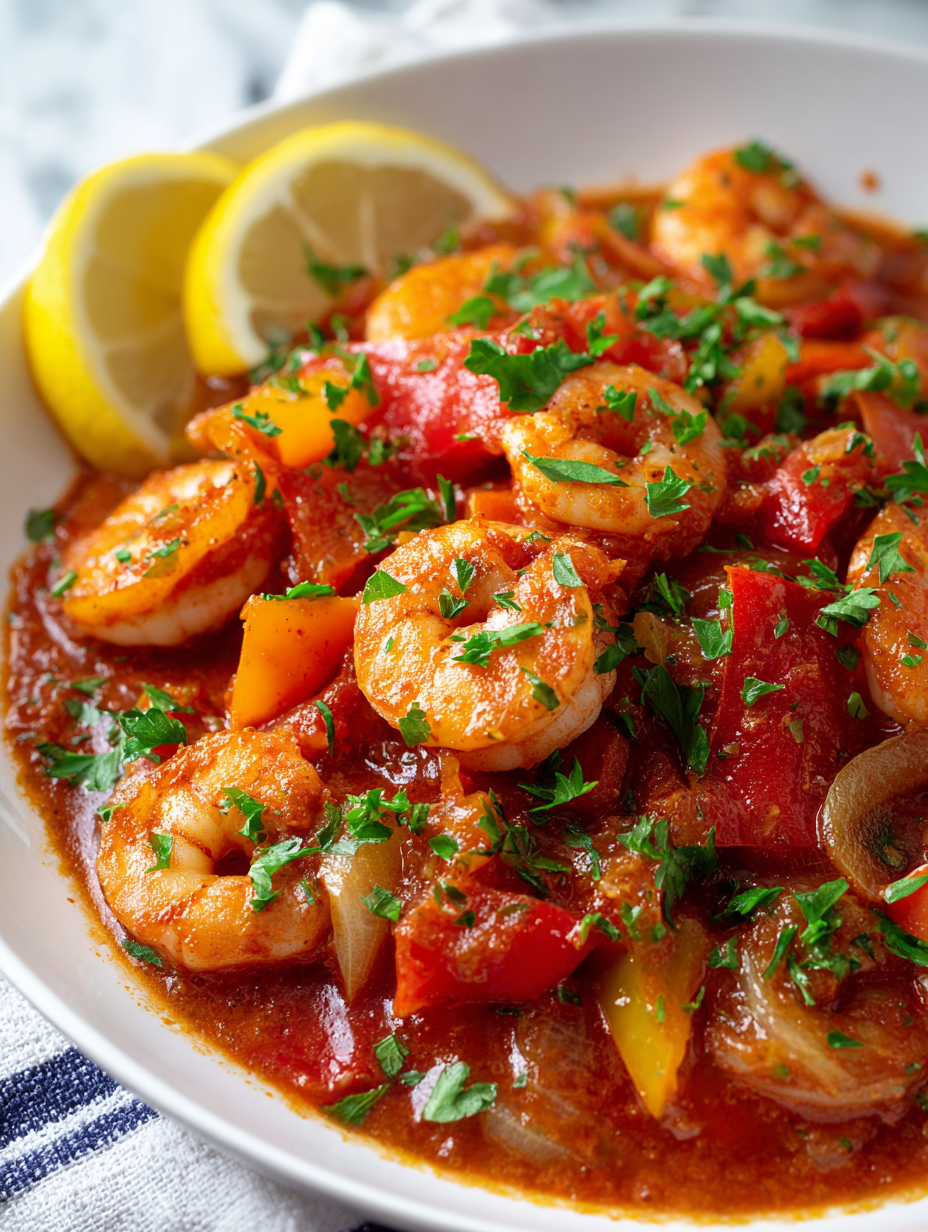
Shrimp Creole
Ingredients
Equipment
Method
- Start by heating a large skillet over medium heat and adding a tablespoon of olive oil until it shimmers.
- Add the diced onion and bell pepper to the skillet. Cook, stirring often, until they soften and become translucent, about 5-7 minutes. The aroma will turn sweet and inviting.
- Stir in the minced garlic and smoked paprika, cooking for another 30 seconds until fragrant and slightly smoky, being careful not to burn the garlic.
- Pour in the crushed canned tomatoes, crushing them further with your spoon if needed, and stir to combine everything. Let the mixture simmer gently on low heat for about 10 minutes until it thickens slightly and develops a rich, smoky aroma.
- Season the sauce with salt, pepper, and cayenne pepper. Taste and adjust the spice levels to your preference, adding a pinch of sugar if the acidity feels too sharp.
- Gently nestle the shrimp into the sauce, arranging them evenly. Cook for about 3-4 minutes, stirring gently, until the shrimp turn pink and opaque, and the sauce bubbles softly around them.
- Once the shrimp are cooked through, remove from heat and let sit for a couple of minutes. The sauce will thicken slightly, and flavors will meld beautifully.
- Serve the shrimp creole hot over steamed rice or with crusty bread, garnished with chopped herbs if desired, and enjoy the vibrant, smoky flavors with tender shrimp soaking in the rich sauce.
Pro tips for Shrimp Creole
- Bolded mini-head: Use high heat when searing the shrimp. The quick sizzle creates a tender, juicy texture.
- Bolded mini-head: Cook the vegetables until translucent. This releases natural sweetness and builds a flavorful base.
- Bolded mini-head: Add spices near the end of sautéing garlic. It intensifies their smoky aroma without burning them.
- Bolded mini-head: Use crushed canned tomatoes for a richer sauce. Crushing by hand preserves texture and flavor.
- Bolded mini-head: Taste and adjust the seasoning after adding shrimp. They absorb flavors quickly, so balance before serving.
- Bolded mini-head: Rest the dish for a couple of minutes after cooking. It allows flavors to meld and shrimp to firm up perfectly.
- Bolded mini-head: Finish with fresh herbs for a bright contrast. Parsley or green onions add a fresh, aromatic kick.
Common mistakes and how to fix them
- FORGOT to adjust heat after adding shrimp → turn off heat immediately to prevent overcooking.
- DUMPED in cold water to stop cooking → use residual heat and cover to gently finish shrimp.
- OVER-TORCHED spices → lower heat and add a splash of water or broth to mellow smoky flavors.
- MISSED the seasoning check → taste sauce before serving, adjust salt and spice accordingly.
Quick fixes and pantry swaps
- When sauce thickens too much, splash in a bit of water to loosen and shimmer.
- If shrimp overcooks and turns rubbery, toss them back in hot broth briefly to reheat.
- Splash lemon juice if sauce tastes dull or flat, adding brightness instantly.
- Patch a too-spicy sauce with a teaspoon of honey or sugar to mellow heat.
- Shield the pan with a lid if sauce splatters when simmering, saving cleanup time.
Prep, store, and reheat tips
- Prep the sauce ingredients—diced onions, peppers, and crushed tomatoes—a day in advance to deepen flavor. Store in airtight containers for up to 24 hours; the aroma will be richer and more layered.
- Cook the shrimp separately if you want to reheat later; they stay tender for about 2 days in the fridge. Keep in a sealed container and add to the sauce just before serving to prevent overcooking.
- Reheat gently on low heat (~80°C / 175°F), stirring often. The sauce may thicken slightly overnight, so add a splash of water or broth to loosen it. Shrimp reheats best if added fresh.
- For longer storage, freeze the sauce in freezer-safe containers for up to 2 months. Thaw in the fridge overnight and reheat slowly, watching for any signs of ice crystals or watery texture.
Common questions about Shrimp Creole
1. How do I tell if shrimp are fresh?
Look for shrimp that are firm, pink, and slightly translucent before cooking. They should smell fresh, not fishy.
2. Can I use fresh tomatoes instead of canned?
Use canned whole peeled tomatoes and crush them by hand for better flavor. Fresh tomatoes can work if they’re ripe and you cook them down well.
3. Can I replace shrimp with other seafood?
Yes, you can substitute other seafood like scallops or fish fillets, but adjust cooking times and ensure they’re cooked just right to stay tender.
4. How long should I simmer the sauce?
Cook the sauce over medium-low heat (~80°C / 175°F) until it thickens and the flavors meld, about 15 minutes. Shrimp go in last, just a few minutes until pink.
5. How do I control the spice in the dish?
Adjust the spice level by adding more or less cayenne or smoked paprika. Taste as you go and stop before it becomes overwhelming.
6. What should I serve with Shrimp Creole?
Serve over steamed rice, with crusty bread, or even with a side of sautéed greens. It’s all about balancing the smoky, tangy flavors.
7. How long can I keep leftovers?
Store leftovers in an airtight container in the fridge for up to 2 days. Reheat gently over low heat, adding a splash of water if needed.
8. Can I freeze Shrimp Creole?
Yes, freezing the sauce works well. Freeze in portions for up to 2 months. Thaw overnight in the fridge and reheat slowly to preserve flavor.
9. How do I avoid overcooking shrimp?
Overcooked shrimp turn rubbery. Remove them from heat as soon as they turn pink and opaque. They cook quickly, about 3-4 minutes.
10. What if my sauce tastes flat or too sour?
If sauce is too acidic, stir in a tiny pinch of sugar or honey. For dull flavors, a squeeze of lemon brightens everything up.
Making this shrimp creole is a little reminder that simple ingredients can create something unexpectedly bold and soulful. It’s a dish that tastes like it’s been simmering all day, even when you’ve only got half an hour to spare.
Whenever I serve it, I think about how the smoky depth and bright acidity come together to warm up any table—no fuss, just honest, layered flavors that stick with you long after the last bite.

Hi, I’m Katie Dawson, the owner, cook, and storyteller behind Little More Lovely. I run a small café in a cozy corner of Seattle, where the smell of freshly baked bread meets the hum of neighborhood chatter. I’ve spent years learning how food can bring people together, both as a professional and as someone who loves to share meals with family and friends.