
This Shrimp Basil Pasta isn’t about fancy ingredients or complicated techniques. It’s about that moment when you bite into a perfectly cooked shrimp, the herbs releasing their fragrant oils, and the brightness of fresh basil tying everything together. I’ve found that fresh basil, added at just the right time, can turn a simple dish into something memorable, especially when it’s warm and fragrant from the pan.
There’s a quiet joy in making this dish after a long day — the kind of meal that feels both satisfying and fresh. I love how the aroma of garlic and sizzling shrimp mingles with the sweet, peppery scent of basil, filling the kitchen with a sense of comfort and anticipation. It’s quick enough to whip up on a weeknight but special enough to serve for friends or a small family dinner.
In these notes, I’ll share how I pay close attention to the timing of basil, how I prefer my shrimp tender but not overcooked, and how the right pasta choice can make all the difference. It’s a dish that’s forgiving if you keep a close eye on your ingredients, and it’s a good reminder that fresh herbs can make or break a meal.
Focusing on the overlooked importance of fresh basil in elevating the dish, I want to highlight how the herb’s aroma and bright flavor can make or break this simple pasta. It’s not just an afterthought garnish; it’s the star that ties everything together, especially when added at just the right moment for maximum freshness.
The Herb That Elevates Everything
- Cooking this dish always reminds me of summer evenings on my balcony, where fresh basil and the sea breeze mingle.
- There’s a rush of pride in getting the shrimp just tender, not rubbery, each time I make this—like I’ve cracked a little secret.
- I love how the aroma of garlic and basil fills the kitchen, making even a simple meal feel like a small celebration.
- Every time I add that handful of basil at the end, I feel like I’m unlocking the dish’s full bright, herbal potential.
- This recipe has been my go-to when I want something quick, fresh, and deeply satisfying—no fuss, just flavor.
The inspiration behind this dish
This dish came about during a summer trip to Italy, where I watched a local chef toss fresh basil into a pan of shimmering shrimp and garlic. The simple act of adding herbs at just the right moment made me realize how much flavor a handful of fresh basil can bring to even the most straightforward pasta. Since then, I’ve been chasing that vibrant, fragrant burst in my own kitchen, especially when I want something quick but full of life. It’s a recipe born from those little moments of inspiration and a desire to keep things fresh and honest.
Contextual origin, trivia, or history
- This dish’s roots trace back to coastal Mediterranean regions, where fresh herbs and seafood are staples.
- The use of basil in pasta dishes gained popularity in Italy during the Renaissance, blending aromatic herbs with seafood.
- Shrimp and basil together evoke seaside markets, where the bright herb complements the briny sweetness of fresh shrimp.
- In some coastal Italian towns, this simple combination was a quick, everyday meal for fishermen returning home.
- The vibrant green of basil in this dish symbolizes freshness, a trait that’s been cherished in Mediterranean cooking for centuries.
Key Ingredients Breakdown
- Shrimp: I prefer tail-on, deveined shrimp for ease and flavor. The sweet scent of shrimp turning pink in the pan is irresistible. If you use frozen, thaw and pat dry thoroughly to avoid excess water.
- Fresh Basil: Nothing beats the bright, peppery aroma of fresh basil. Add it at the very end to preserve its vibrant scent and flavor. Dried basil just won’t give you that fresh, aromatic punch—save it for other dishes.
- Garlic: I love garlic that’s just starting to turn golden and releases that nutty, inviting aroma. Overcooking garlic makes it bitter, so keep an eye out and stir frequently.
- Olive Oil: Use good-quality extra virgin for a fruity, peppery note. If you only have light olive oil, it won’t add as much depth, but it still works. Warm the oil gently to release the garlic and shrimp flavors.
- Pasta: I favor spaghetti or linguine—long, tender, and perfect for twirling. Cook it al dente, just shy of tender, so it doesn’t get mushy when tossed. Save a splash of pasta water to loosen the sauce if needed.
- Lemon Juice: Brightens the dish with a splash of fresh lemon juice. I squeeze it right before serving for that zesty, citrusy pop. Skip it if you prefer a milder flavor or add a dash of lemon zest for more aroma.
- Salt & Pepper: Season generously but taste as you go. Freshly cracked black pepper adds a subtle heat and complexity, especially when sprinkled on just before serving for that fresh-sharp finish.
Spotlight on key ingredients
Shrimp:
- I prefer tail-on, deveined shrimp for ease and flavor. The sweet scent of shrimp turning pink in the pan is irresistible. If you use frozen, thaw and pat dry thoroughly to avoid excess water.
- Fresh Basil: Nothing beats the bright, peppery aroma of fresh basil. Add it at the very end to preserve its vibrant scent and flavor. Dried basil just won’t give you that fresh, aromatic punch—save it for other dishes.
Basil:
- Fresh Basil: Nothing beats the bright, peppery aroma of fresh basil. Add it at the very end to preserve its vibrant scent and flavor. Dried basil just won’t give you that fresh, aromatic punch—save it for other dishes.
- Cooking with basil releases essential oils that fill the kitchen with a fragrant, herbal aroma. Watch for it to turn slightly darker and become intensely fragrant as you add it at the end.
Notes for ingredient swaps
- Seafood-Free: Swap shrimp for sautéed mushrooms or tofu. You’ll get a hearty, umami flavor, though it will lack that sweet seafood note.
- Gluten-Free: Use rice or corn pasta instead of regular wheat. It cooks a bit faster and has a slightly different texture—less chewy but just as satisfying.
- Herb Variations: Substitute basil with fresh parsley or cilantro for a different herbal brightness. Basil’s peppery aroma is unique, so don’t skip it if you can.
- Oil Choices: Avocado or sesame oil can replace olive oil for a nuttier, richer taste. Keep in mind, sesame oil has a strong flavor—use sparingly.
- Lemon Alternative: Lime juice or a splash of white wine vinegar can brighten the dish if lemon isn’t available. The acidity level will vary, so taste as you go.
- Garlic Sub: Garlic powder or shallots can stand in if fresh garlic is missing. Fresh garlic gives more aroma, but powders work in a pinch.
- Pasta Type: Try using zucchini noodles or kelp noodles if you’re aiming for a low-carb or gluten-free option. They add a different texture but soak up flavors well.
Equipment & Tools
- Large pot: For boiling pasta to al dente.
- Large skillet: For searing shrimp and making the sauce.
- Tongs or pasta fork: To toss and combine ingredients easily.
- Measuring spoons: For accurate lemon juice and pasta water measurements.
- Cooking spoon: To stir and toss ingredients during cooking.
Step-by-step guide to Shrimp Basil Pasta
- Bring a large pot of salted water to a boil, about 100°C / 212°F. Add spaghetti or linguine and cook until just al dente, about 8 minutes. Drain, reserving 1/4 cup pasta water.
- While pasta cooks, heat a large skillet over medium-high heat, about 180°C / 356°F. Add 2 tbsp olive oil and swirl to coat.
- Pat shrimp dry and season lightly with salt and pepper. Add to skillet. Sear for about 2 minutes per side, until pink and opaque. Remove shrimp and set aside.
- In the same skillet, lower heat to medium, about 160°C / 320°F. Add 2 minced garlic cloves. Cook for 30 seconds until fragrant and lightly golden, stirring constantly to prevent burning.
- Return shrimp to skillet. Toss in 1/4 cup reserved pasta water, a squeeze of lemon juice, and a handful of chopped basil. Cook for 1-2 minutes until everything is well coated and fragrant.
- Add cooked pasta to skillet. Toss gently to combine, letting the pasta soak up the flavors. Adjust seasoning with salt and pepper if needed.
- Taste and check the aroma—should be bright, garlic-y, with fresh basil notes. The shrimp should be tender but not rubbery, and the pasta coated with a glossy sauce.
- Turn off heat. Let rest for a minute. Transfer to plates, garnish with extra basil if desired, and serve immediately.
Serve immediately while warm, with a final sprinkle of fresh basil. Let the dish rest for a minute to settle flavors before plating. Garnish with additional basil or lemon zest if desired for extra brightness.
How to Know It’s Done
- Shrimp is pink, opaque, and tender.
- Aromas of garlic, basil, and lemon are vibrant and fresh.
- Pasta is coated with a glossy, fragrant sauce.
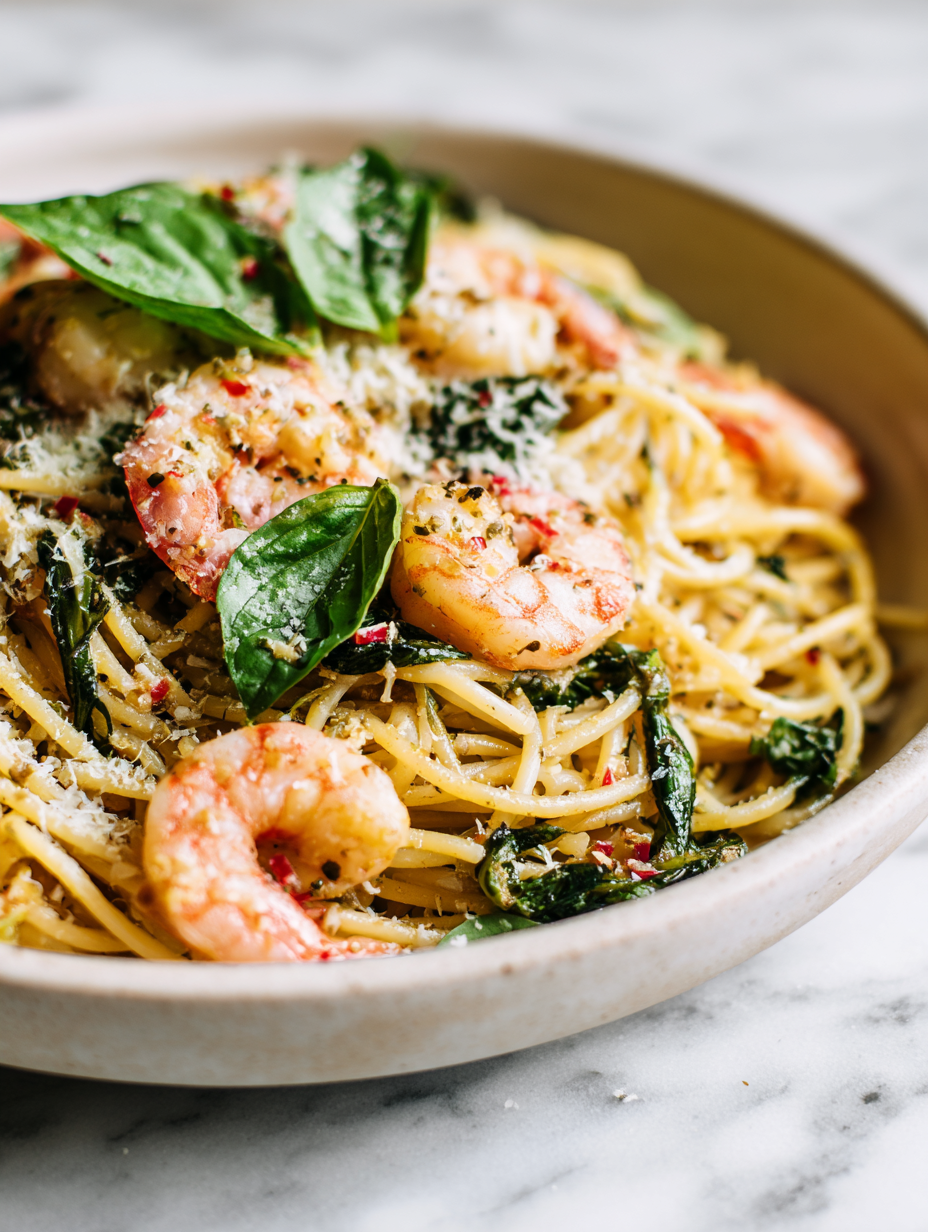
Shrimp Basil Pasta
Ingredients
Equipment
Method
- Bring a large pot of salted water to a rolling boil, then add the pasta and cook until just al dente, about 8 minutes. Drain and set aside, reserving a splash of pasta water.
- While the pasta cooks, heat a large skillet over medium heat and pour in the olive oil, swirling to coat the bottom. Add the minced garlic and cook for about 30 seconds, until fragrant and just starting to turn golden.
- Pat the shrimp dry with paper towels and season lightly with salt and pepper. Add them to the skillet and sear for about 2 minutes per side, until they turn pink, opaque, and develop a slight golden crust. Remove the shrimp and set aside.
- Lower the heat to medium-low, then return the shrimp to the skillet. Add the reserved pasta water, lemon juice, and half of the chopped basil. Toss gently, cooking for another 1-2 minutes until everything is fragrant and well coated.
- Add the cooked pasta to the skillet and toss gently with tongs to coat it evenly with the sauce, herbs, and shrimp. If the mixture seems dry, add a little more reserved pasta water to loosen it up.
- Turn off the heat and stir in the remaining fresh basil, allowing its aroma to fill the kitchen. Taste and adjust seasoning with more salt, pepper, or lemon juice if desired.
- Serve immediately, garnished with extra basil leaves if you like, and enjoy the bright, fragrant flavors of this simple seafood pasta dish.
Pro tips for perfect shrimp basil pasta
- Bolded mini-head: Use fresh basil at the last moment to preserve its bright, peppery aroma and vibrant color.
- Bolded mini-head: Pat your shrimp dry thoroughly before cooking to get that perfect sear and avoid splattering.
- Bolded mini-head: Sauté garlic gently over medium heat until just golden, then remove quickly to prevent bitterness.
- Bolded mini-head: Reserve some pasta water; its starchy quality helps loosen the sauce and makes it cling better.
- Bolded mini-head: Add lemon juice right before serving for a fresh, zesty burst that elevates all the flavors.
- Bolded mini-head: Toss the pasta with the shrimp and herbs off the heat to keep basil fragrant and prevent overcooking.
- Bolded mini-head: Use tongs to gently toss ingredients; it helps coat the pasta evenly without breaking delicate shrimp.
Common mistakes and how to fix them
- FORGOT to check shrimp color → overcooked shrimp turns rubbery, fix by removing from heat early.
- DUMPED too much oil → causes greasiness, use less oil and swirl to coat evenly.
- OVER-TORCHED garlic → burns quickly, cook on lower heat and stir constantly.
- MISSED to season pasta water properly → add enough salt for flavorful pasta, about 1 tbsp per quart.
Quick Fixes and Pantry Swaps
- When sauce looks too thick, splash in a bit more pasta water and stir gently.
- If shrimp isn’t pink enough, give it an extra 30 seconds on high heat—watch carefully.
- Splash lemon juice at the end to brighten flavors if the dish feels dull.
- Patch over-salted sauce with a tiny pinch of sugar and stir well.
- Shield basil from direct heat when adding to preserve its vibrant aroma and flavor.
Prep, store, and reheat tips
- Prep the shrimp: peel and devein up to one day ahead, then store covered in the fridge. Fresh shrimp stays bright and sweet for about 24 hours.
- Chop basil and garlic in advance: store basil loosely in a damp paper towel inside a container for up to 2 days; garlic can be minced and kept airtight for 1 day. Aromas will mellow if prepped too early.
- Cook pasta ahead: boil until just shy of al dente, drain, toss with a little olive oil, and refrigerate in an airtight container for up to 24 hours. Reheat briefly in hot water to restore texture.
- Reheat leftovers: gently warm in a skillet over low heat, adding a splash of pasta water or olive oil to revive the sauce and keep the shrimp tender. Expect the basil aroma to fade slightly after refrigeration.
- Shelf life: cooked pasta and shrimp are best enjoyed within 1 day. Fresh herbs lose vibrancy after 2 days in the fridge, so plan to add basil fresh at serving for maximum brightness.
Top questions about Shrimp Basil Pasta
1. Can I use dried basil instead of fresh?
Use fresh basil for the best flavor and aroma. Dried basil won’t give the same bright, herbal punch. Add it at the end to preserve its fragrance.
2. How do I know when shrimp are cooked perfectly?
Cook shrimp until they turn pink and opaque, about 2-3 minutes per side. Overcooked shrimp become rubbery and lose their delicate texture.
3. Can I swap shrimp for other seafood?
Yes, you can substitute with scallops or firm fish like cod. Keep in mind, the cooking time and flavor profile will change slightly.
4. What kind of olive oil should I use?
Use a good quality extra virgin olive oil for a fruity, rich base. If you only have light olive oil, the flavor will be milder but still workable.
5. How long should I cook the pasta?
Cook pasta until just al dente, about 8 minutes. It should be tender but still have a slight bite, not mushy.
6. When should I add lemon juice?
Add lemon juice right before serving for a bright, zesty flavor. It elevates the dish and enhances the herbs and seafood.
7. How do I store leftovers?
Yes, you can store cooked shrimp and pasta separately in the fridge for up to 24 hours. Reheat gently in a skillet with a splash of water or oil.
8. What if the sauce gets too thick?
If the sauce becomes too thick, splash in a little reserved pasta water and stir gently to loosen it up.
9. How do I prevent garlic from burning?
Overcooking garlic makes it bitter. Cook it over medium heat just until fragrant and lightly golden, then remove from heat.
10. Any tips for mixing ingredients?
Use tongs to toss pasta with shrimp and herbs. This gentle method coats everything evenly without breaking delicate shrimp or crushing basil.
Cooking this shrimp basil pasta is a small act of rebellion against the rush of daily life. The fresh herbs, tender shrimp, and al dente pasta come together in a way that feels both simple and deeply satisfying.
And really, it’s the kind of dish that reminds me how much flavor you can get from just a handful of fresh ingredients, if you pay attention to timing and technique. It’s quick, honest, and perfect for those moments when you need something nourishing but not complicated.

Hi, I’m Katie Dawson, the owner, cook, and storyteller behind Little More Lovely. I run a small café in a cozy corner of Seattle, where the smell of freshly baked bread meets the hum of neighborhood chatter. I’ve spent years learning how food can bring people together, both as a professional and as someone who loves to share meals with family and friends.