
Cooking with shrimp always feels like a quick win, especially when you want something spicy but not overwhelming. This Shrimp Arrabbiata is a good example—simple ingredients, bold flavors, and a heat level you can fine-tune to your taste. It’s one of those dishes that’s perfect after a long day, when you want comfort but also a little kick.
What I love about this recipe is how the chili heat balances out the sweetness of ripe tomatoes and the briny punch of fresh shrimp. It’s a dance of flavors, quick to come together, and satisfying in a way that makes you want to keep spooning more. It’s honest, unpolished, and exactly what I need when I want dinner that hits all the right notes.
As a cook who’s always chasing that perfect heat without losing the tomato’s bright, sunny flavor, this dish became my go-to. It’s a reminder that a few good ingredients, a little patience, and a pinch of chili can turn a simple pasta into something memorable. Plus, it’s one of those meals that tastes better the day after—if it lasts that long.
Focusing on the balance of heat and sweetness in Shrimp Arrabbiata, this recipe explores how the right chili level can transform a simple dish into a truly memorable experience.
Balancing Heat and Sweetness in Cooking
- I love how this dish turns up the heat just enough to make your nose tingle without overwhelming the tomato’s sweetness.
- There’s a rush of pride when I see the shrimp turn opaque and pink, signaling it’s perfectly cooked.
- Cooking this reminds me of lazy summer nights, the aroma filling the kitchen and pulling everyone to the table.
- Sometimes, I toss in a splash of white wine—just a faint shimmer that adds a subtle depth I can’t resist.
- It’s one of those meals that feels like a little rebellion, spicy but still familiar, quick to make but rich in flavor.
The story behind this recipe
- This recipe came together on a whim, inspired by a trip to Italy where I had a fiery, simple pasta that stuck with me. I kept thinking about how the heat from the chili could elevate a humble tomato sauce, making it memorable. It’s a dish born from that moment of craving something spicy, quick, and full of flavor, with just enough heat to make your cheeks tingle.
- I started experimenting with different chili types and amounts, trying to find that perfect balance. Over time, I realized that the magic was in how the shrimp and sauce come together—fast, fiery, and honest. It’s become my go-to after busy days when I want comfort with a punch of spice, and a reminder that simple ingredients can deliver complex joy.
- heading: The story behind this recipe
Historical and Cultural Roots
- This dish has roots in Italian cuisine, where ‘arrabbiata’ means ‘angry’—a nod to its fiery chili kick.
- Legend has it that Roman pasta chefs added extra chili to spice up simple tomato sauces, giving birth to this fiery classic.
- Shrimp Arrabbiata isn’t just about heat; it’s a modern twist that emerged from coastal Italy, blending seafood with spicy sauce.
- In some regions, this dish was historically a quick, inexpensive meal for fishermen and working-class families craving bold flavors.
Key Ingredients Breakdown
- Garlic: I love how minced garlic releases a fragrant, almost nutty aroma as it hits hot oil—don’t skimp on the garlic, but watch it so it doesn’t burn and turn bitter.
- Chili flakes: I prefer a generous pinch for that fiery kick, but start small if you’re sensitive—remember, you can always add more, never take it out.
- San Marzano tomatoes: The oozy, sweet-tart richness of these crushed tomatoes makes the sauce shine—if unavailable, high-quality canned plum tomatoes work well but skip the bargain bin.
- Shrimp: Fresh, pink, and briny—look for firm, opaque shrimp. If you’re using frozen, thaw thoroughly, pat dry, and add to the pan with a little extra cook time.
- Olive oil: A good splash of fruity extra virgin oil at the start coats everything in richness—if you want less fuss, a decent vegetable oil can stand in, but flavor takes a hit.
- Fresh parsley: Brightens the final dish with a fresh, grassy note—if fresh isn’t available, a sprinkle of dried parsley adds a subtle hint, though it’s not quite the same.
- Pasta: I use spaghetti, but bucatini or linguine can hold the sauce beautifully—boil in salted water until al dente, that’s just tender with a slight chew.
Spotlight on key ingredients
Garlic:
- I love how minced garlic releases a fragrant, almost nutty aroma as it hits hot oil—don’t skimp on the garlic, but watch it so it doesn’t burn and turn bitter.
- Chili flakes: I prefer a generous pinch for that fiery kick, but start small if you’re sensitive—remember, you can always add more, never take it out.
- San Marzano tomatoes: The oozy, sweet-tart richness of these crushed tomatoes makes the sauce shine—if unavailable, high-quality canned plum tomatoes work well but skip the bargain bin.
Shrimp:
- Fresh, pink, and briny—look for firm, opaque shrimp. If you’re using frozen, thaw thoroughly, pat dry, and add to the pan with a little extra cook time.
- Olive oil: A good splash of fruity extra virgin oil at the start coats everything in richness—if you want less fuss, a decent vegetable oil can stand in, but flavor takes a hit.
Notes for ingredient swaps
- Dairy-Free: Skip butter or cheese; focus on tomato’s acidity and fresh herbs for brightness.
- Gluten-Free: Use rice or corn pasta instead of wheat; expect a slightly different texture but same flavor punch.
- Seafood Swap: Substitute scallops or firm white fish if shrimp isn’t available; keep cook time short to avoid overcooking.
- Vegan Version: Replace shrimp with sautéed mushrooms or tofu; add a dash of smoked paprika for depth.
- Sweetness Balance: If tomatoes taste too acidic, stir in a teaspoon of honey or a splash of balsamic vinegar.
- Heat Level: Adjust chili flakes or use fresh chopped chili for more control; seeds add extra heat if desired.
- Herb Variations: Basil or oregano can replace parsley; fresh herbs brighten the dish, dried will add an earthy note.
Equipment & Tools
- Large skillet: Cook the sauce and shrimp evenly.
- Pasta pot: Boil pasta to al dente.
- Tongs: Toss and serve the pasta.
- Sharp knife: Finely chop garlic and parsley.
- Cutting board: Prepare ingredients.
Step-by-step guide to Shrimp Arrabbiata
- Gather your equipment: a large skillet (preferably non-stick), tongs, a sharp knife, a cutting board, and a pasta pot. Fill the pot with water, add a generous pinch of salt, and bring to a rolling boil (around 100°C / 212°F).
- Peel and devein the shrimp if not already prepped. Pat dry with paper towels—moisture will cause splattering. Set aside.
- Dice 4-5 cloves of garlic finely. Measure 1 teaspoon of chili flakes, adjusting to your heat preference.
- In the skillet, heat 2 tablespoons of good-quality olive oil over medium heat (about 160°C / 320°F). When shimmering, add the garlic. Cook for 30 seconds until fragrant, not browned. You’re aiming for a subtle golden hue and a fragrant aroma.
- Add the chili flakes to the garlic and oil. Stir quickly—if the garlic starts to darken or smell bitter, turn down the heat immediately. Cook for 15 seconds to release their heat and aroma.
- Pour in one 28-ounce can of crushed San Marzano tomatoes. Stir well, and bring to a gentle simmer. Let it cook uncovered for about 15 minutes, stirring occasionally, until the sauce thickens slightly and deepens in color. The aroma should be smoky and bright with tomato and chili notes.
- While sauce simmers, cook the pasta in boiling salted water until al dente (about 8-10 minutes). Drain, reserving a cup of pasta water.
- In the meantime, add the shrimp to the simmering sauce. Cook for 2-3 minutes, turning them pink and opaque. If they’re still translucent, give them another minute. The shrimp should be firm and juicy, with a slight bounce when pressed.
- Check the sauce: it should be vibrant red, slightly thickened, with a fragrant chili and garlic aroma. If it’s too thick, add a splash of pasta water to loosen it—stir and simmer for another minute.
- Add the cooked pasta directly into the sauce. Toss gently to coat every strand evenly. Let it cook together for 1-2 minutes so flavors meld—smell the smoky chili, bright tomato, and fresh seafood.
- Finish with a handful of chopped fresh parsley for brightness. Taste and adjust salt if needed. The sauce should cling nicely to the pasta, with a lively spicy kick and a hint of sweetness from the tomatoes.
- Serve immediately, garnished with extra parsley or chili flakes if desired. Rest for 1 minute before plating—this helps the flavors settle and prevents burning your tongue.
Toss the pasta with the sauce in the skillet off heat, let sit for 1 minute. Serve hot, garnished with extra parsley or chili flakes for an added kick.
How to Know It’s Done
- Sauce is deep red, slightly thickened, with a smoky aroma.
- Shrimp are firm, opaque, and pink, with a slight bounce.
- Pasta is al dente, coated evenly with sauce, and flavorful.
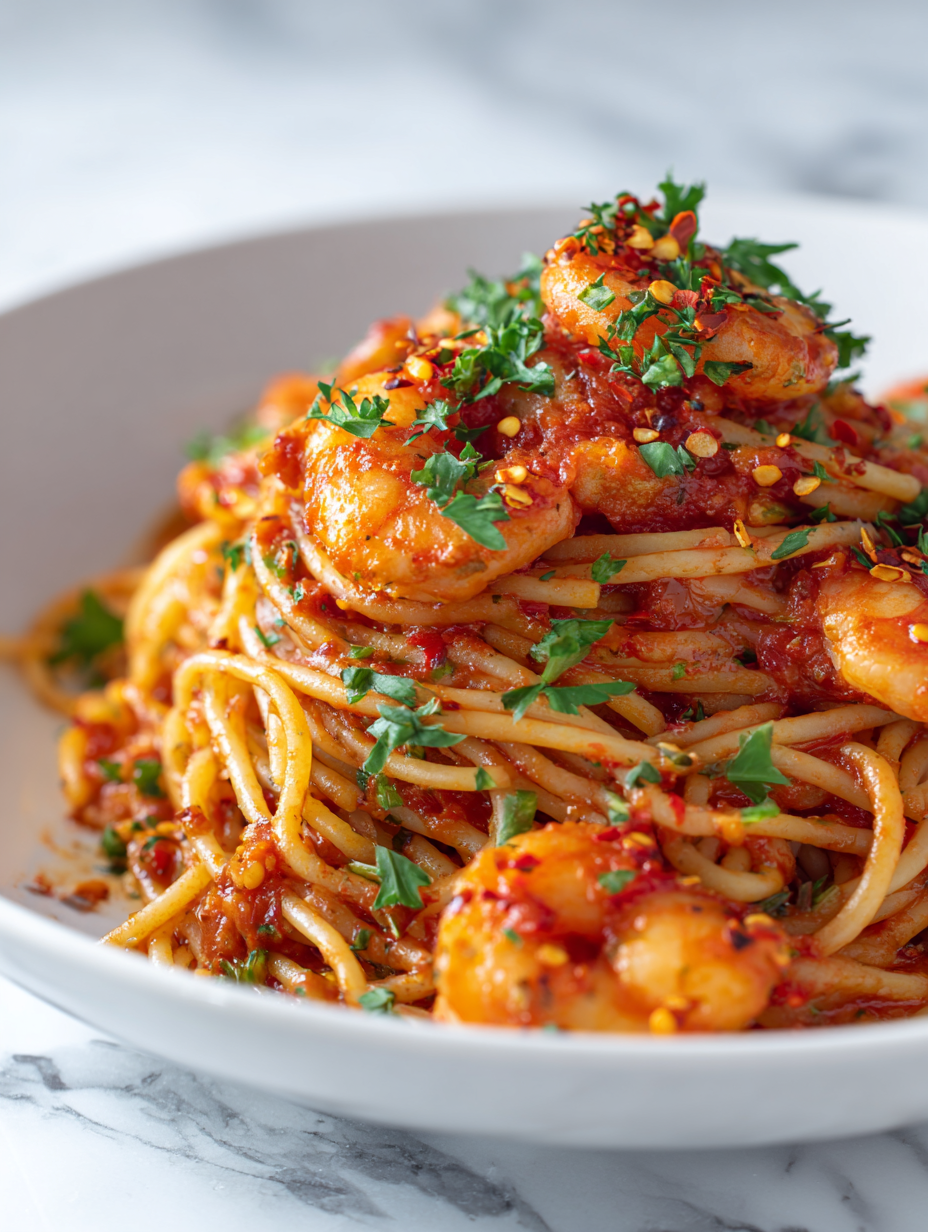
Shrimp Arrabbiata
Ingredients
Equipment
Method
- Bring a large pot of salted water to a boil, then add the pasta. Cook until just al dente, about 8-10 minutes, then drain and set aside.
- While the pasta cooks, peel and devein the shrimp if needed, then pat them dry with paper towels to remove excess moisture.
- Finely chop the garlic cloves and measure out a teaspoon of chili flakes. Prepare fresh parsley by chopping roughly.
- Heat the olive oil in a large skillet over medium heat until shimmering, then add the minced garlic. Sauté for about 30 seconds until fragrant and slightly golden, filling the kitchen with a warm aroma.
- Add the chili flakes to the garlic and oil, stirring quickly to release their smoky heat for about 15 seconds, taking care not to burn the garlic.
- Pour in the crushed tomatoes, stirring well, and bring the mixture to a gentle simmer. Let it cook uncovered for about 15 minutes until the sauce thickens slightly and deepens in color, filling the air with a bright, smoky tomato aroma.
- While the sauce simmers, add the shrimp to the skillet. Cook for 2-3 minutes, turning them pink and opaque, until they are perfectly tender and juicy.
- Check the sauce: it should be vibrant red and slightly thickened. If it’s too thick, stir in a splash of reserved pasta water to loosen it, then cook for another minute.
- Add the cooked pasta to the skillet, tossing gently to coat each strand evenly with the spicy tomato sauce. Let everything cook together for 1-2 minutes to meld the flavors.
- Finish by sprinkling the chopped parsley over the pasta, giving it a bright, herbal lift. Taste and adjust the seasoning with salt or more chili flakes if desired.
- Serve immediately, garnished with extra parsley or chili flakes for an added kick. Enjoy the fiery, flavorful shrimp arrabbiata while hot!
Pro tips for perfect Shrimp Arrabbiata
- chili flakes: Use a generous pinch to build heat, then taste and add more if needed.
- Fragrant garlic: Cook garlic gently until golden and fragrant, avoiding bitter burnt bits.
- Layer flavors: Add chili flakes after garlic to release their smoky heat without burning.
- Use pasta water: Reserve some starchy water to loosen sauce if it thickens too much.
- Shrimp timing: Add shrimp once sauce is simmering; cook until just opaque and pink for juiciness.
- Taste regularly: Adjust salt and heat at the end for balanced, vibrant flavor.
- Finish with herbs: Toss in fresh parsley at the last second to preserve brightness and aroma.
Common mistakes and how to fix them
- FORGOT to taste and adjust seasoning before serving—always check for balance.
- DUMPED too much chili at once—start small, add more gradually.
- OVER-TORCHED garlic—cook on medium heat, remove as soon as fragrant and golden.
- MISREAD pasta cooking time—taste frequently for perfect al dente texture.
Quick Fixes for Shrimp Arrabbiata
- When sauce is too thick, splash in a bit of pasta water and stir gently.
- If shrimp are overcooked, quickly toss them in hot sauce to reheat without drying out.
- Splash olive oil if chili flakes burn too fast and turn bitter.
- Patch bland sauce by adding a pinch of salt or a squeeze of lemon for brightness.
- Shield burnt garlic by removing from heat immediately and adding fresh garlic later.
Prep, store, and reheat tips
- Prep the shrimp: peel and devein ahead of time; store in an airtight container in the fridge for up to 24 hours. The aroma of fresh seafood makes all the difference when cooking.
- Make the sauce: prepare the tomato, garlic, and chili mixture a day in advance. Keep in a sealed jar in the fridge for up to 2 days. It develops richer, deeper flavors with a little time.
- Cook the pasta: boil and drain just before serving or store cooked pasta in a sealed container in the fridge for up to 24 hours. It can turn a little sticky, so toss with a splash of water or oil before reheating.
- Reheating: gently warm the sauce in a skillet over medium-low heat (around 120°C / 250°F). Add a splash of pasta water or broth if it thickens or sticks. Reheat shrimp separately if you want to keep their texture firm, then stir in just before serving.
- Shelf life: the sauce will keep well for 1-2 days in the fridge. The shrimp are best fresh, but if needed, cooked shrimp can be stored for up to 24 hours and reheated gently. The flavors deepen overnight, making leftovers even tastier.
Top questions about Shrimp Arrabbiata
1. Can I use frozen shrimp?
Use fresh or thawed shrimp, pink and firm, for the best texture and flavor.
2. How spicy is this dish?
Adjust chili flakes according to your heat tolerance; start small and taste as you go.
3. Can I substitute canned tomatoes?
San Marzano tomatoes are ideal for their sweet, rich flavor, but good-quality canned plum tomatoes work too.
4. How do I know when garlic is ready?
Cook the garlic until fragrant and golden, but not burnt, to avoid bitterness in the sauce.
5. Why add pasta water?
Reserve some pasta water to loosen the sauce if it thickens during mixing.
6. What equipment do I need?
Use a large skillet for even cooking of sauce and shrimp, and a pot for boiling pasta.
7. Can I omit parsley?
Finish with fresh parsley for brightness; dried herbs can work but won’t add the same freshness.
8. How do I know when shrimp are cooked?
The shrimp are done when they turn opaque, pink, and slightly firm—about 2-3 minutes after adding to the sauce.
9. How do I store and reheat?
Reheat leftovers gently in a skillet over low heat with a splash of water or broth to keep moisture.
10. Should I taste before serving?
Taste and adjust seasoning before serving; a squeeze of lemon can brighten the flavors instantly.
This Shrimp Arrabbiata isn’t just about spice—it’s about that perfect balance of heat and sweetness that makes every bite memorable. When the aroma of garlic, chili, and tomatoes fills the kitchen, I know I’ve hit the right note. It’s a dish that reminds me that simplicity, when done right, can be truly satisfying.
In a world of fast meals and fleeting trends, this one feels grounding—something honest and unpolished. Whether it’s for a quick weeknight dinner or a small gathering, it’s a recipe that keeps the focus on good ingredients and a little bit of heat. Sometimes, that’s all I need to feel a little more connected to the kitchen.

Hi, I’m Katie Dawson, the owner, cook, and storyteller behind Little More Lovely. I run a small café in a cozy corner of Seattle, where the smell of freshly baked bread meets the hum of neighborhood chatter. I’ve spent years learning how food can bring people together, both as a professional and as someone who loves to share meals with family and friends.