
Radishes and carrots might seem like humble roots, but roasting them unlocks a secret sweetness that’s easy to overlook. When the natural sugars caramelize in the oven, they turn into something unexpectedly rich and vibrant, almost candy-like in flavor. It’s a simple trick that transforms everyday vegetables into a side dish that feels special without any fuss.
I love how the oven does most of the work here—no need for complicated sauces or seasonings. Just toss, roast, and wait for that perfect charred edge and deep aroma. It’s a reminder that sometimes, the best flavors come from letting the ingredients speak for themselves, especially when they’re in their simplest form.
Focusing on the overlooked sweetness of roasted radishes and carrots, highlighting how their natural sugars caramelize and deepen during roasting, transforming humble roots into a unexpectedly flavorful and vibrant side.
The story behind this recipe
- This recipe started from a stubborn drawer of radishes I kept ignoring. One day, I tossed them in the oven with carrots just to see what would happen. The sweetness that emerged surprised me so much I kept tweaking the method, trying to get that perfect caramelized edge. It’s funny how humble vegetables can surprise you when you stop fussing and let the heat do its thing.
- I remember a winter evening, the kitchen filled with the smell of roasting roots—sweet, smoky, a little earthy. That moment made me realize how simple ingredients can become a cozy, memorable dish with just a little patience and good heat. Now, it’s become my go-to for quick, satisfying side that feels like a little treat.
- heading:
Ingredient breakdown: key components
- Radishes: I love how their peppery bite mellows and sweetens when roasted, turning into tender, honeyed bites—if yours turn too bitter, try trimming the greens first.
- Carrots: Their natural sugar caramelizes beautifully in the oven, creating a smoky-sweet flavor—cut thicker slices if they cook too quickly or burn on the edges.
- Olive oil: I use a good splash for a shiny coating that crisps the edges—skip or reduce if you want a lighter finish, but the flavor might dull.
- Salt: Just a pinch helps bring out the natural sweetness—if you prefer a less salty dish, start small and taste as you go.
- Pepper: Freshly cracked adds a punch of heat and depth—don’t skimp, but consider adding a pinch of smoked paprika for extra smoky complexity.
- Herbs (like thyme or rosemary): I toss in a sprig or two for earthy aroma—dried herbs work too, but use a little less to prevent overpowering the natural root flavors.
- Lemon juice: A squeeze after roasting brightens the dish—skip if you want a more mellow, caramel-focused flavor, but it adds a lively zing that balances sweetness.
Spotlight on key ingredients
Radishes:
- Their peppery bite mellows as they roast, turning tender and honeyed—if yours turn bitter, trim the greens first.
- Carrots: Their natural sugars caramelize into smoky sweetness, creating a rich flavor—cut thicker if edges burn too quickly.
Olive oil & Salt:
- Olive oil: Provides a shiny, crisp coating that helps edges caramelize—use a good quality oil for best flavor.
- Salt: Enhances natural sweetness; start with a little and adjust—too much can drown delicate flavors.
Notes for ingredient swaps
- Dairy-Free: Swap butter for olive oil or avocado oil; keeps the dish vegan and still flavorful, though you might miss some richness.
- Herb Variations: Fresh thyme or rosemary can replace dried; fresh herbs add a brighter aroma but wilt faster during roasting.
- Sweetener Options: A drizzle of honey or maple syrup can enhance caramelization; skip for a more savory profile.
- Vinegar Splash: A splash of balsamic vinegar before roasting adds depth and a touch of tang, but can darken the vegetables more quickly.
- Spice Boost: Add a pinch of smoked paprika or cayenne for smoky heat; use sparingly if sensitive to spice or prefer milder flavor.
- Root Switch: Parsnips or sweet potatoes can replace carrots; offer sweetness and earthiness, but adjust roasting time accordingly.
- Salt Alternatives: Sea salt flakes or flaky finishing salt add texture and burst of flavor; regular salt works fine but less dramatic on presentation.
Equipment & Tools
- Baking sheet: To hold and roast the vegetables evenly.
- Mixing bowl: To toss vegetables with oil and seasonings.
- Spatula: To toss and turn vegetables during roasting.
- Kitchen tongs: To handle hot vegetables safely.
- Lemon squeezer (optional): To add fresh lemon juice after roasting.
Step-by-step guide to roasting
- Preheat your oven to 200°C (390°F). Gather a large baking sheet, preferably rimmed, and a mixing bowl.
- Trim the tops and greens from the radishes and carrots. Cut the carrots into uniform 2-inch pieces; halve the radishes if large.
- In the mixing bowl, toss radishes and carrots with about 2-3 tablespoons of olive oil until evenly coated. Add salt, pepper, and any herbs you like. Toss again.
- Spread the vegetables in a single layer on the baking sheet. Avoid overcrowding to ensure proper caramelization.
- Roast for 25-30 minutes. Halfway through, toss the vegetables gently with a spatula to promote even browning.
- Check for color and aroma. They should be golden at the edges and fragrant with caramelized notes. If they still look pale, roast a few more minutes.
- Once done, remove from oven. Let rest for 5 minutes to settle flavors and slightly cool, making them easier to serve.
- Finish with a squeeze of lemon or a sprinkle of fresh herbs if desired. Plate and enjoy while warm.
Let the roasted vegetables rest for about 5 minutes. Finish with a squeeze of lemon or fresh herbs for brightness. Plate and serve warm, ideally on a rustic platter to showcase their caramelized edges.
How to Know It’s Done
- Vegetables are golden and caramelized on edges.
- Aromatic smell of roasted roots fills the kitchen.
- Vegetables are tender when pierced with a fork.
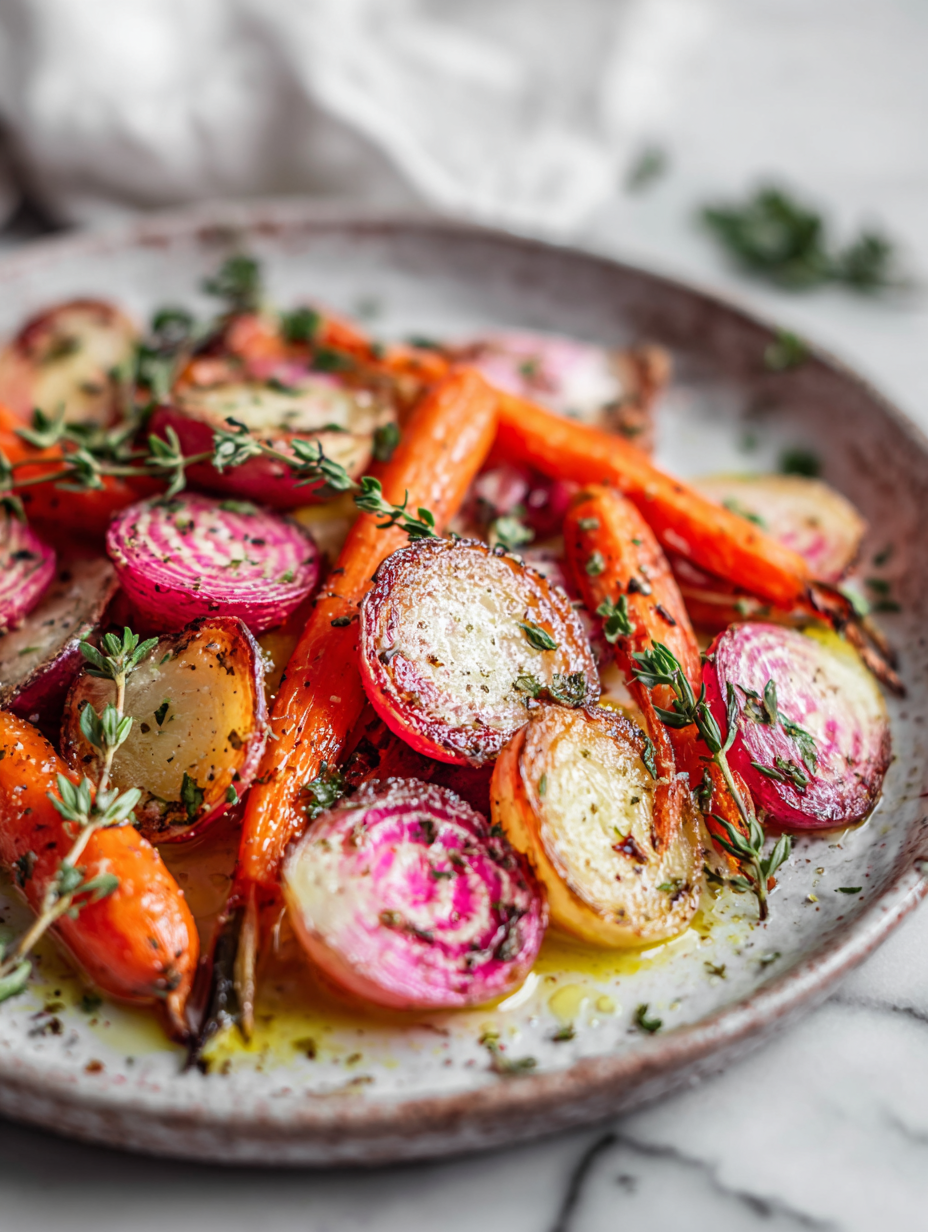
Roasted Radishes and Carrots
Ingredients
Equipment
Method
- Preheat your oven to 200°C (390°F). Place a large baking sheet in the oven to heat up as well.
- Trim the greens off the radishes and halve any large radishes to ensure even cooking. Peel the carrots and cut them into 2-inch pieces for uniform roasting.
- In a mixing bowl, toss the radishes and carrots with olive oil until they are evenly coated, about 2 tablespoons. Sprinkle with salt, pepper, and add the thyme or rosemary. Toss again to distribute the seasonings.
- Carefully remove the hot baking sheet from the oven and spread the vegetables in a single layer, ensuring they are not overcrowded. This helps them caramelize properly.
- Roast the vegetables for about 25 to 30 minutes, tossing them halfway through with a spatula. You’ll hear a gentle sizzle and see the edges start to turn golden and slightly charred.
- Check that the vegetables are tender and have deep golden, caramelized edges. If they need more color, roast for an additional 2-3 minutes, keeping a close eye to prevent burning.
- Once roasted, transfer the vegetables to a serving dish. Squeeze fresh lemon juice over them for brightness, if using, and toss gently to combine.
- Serve immediately while warm, enjoying the crispy edges and tender, sweet interior of the vegetables.
Notes
Pro tips for roasting radishes and carrots
- Bolded tip: Use high heat—aim for 200°C (390°F)—to get those edges crispy and caramelized quickly.
- Bolded tip: Toss vegetables halfway through roasting—this ensures even browning and prevents burning on one side.
- Bolded tip: Keep an eye on the color—look for a deep golden hue, not just browned, for perfect caramelization.
- Bolded tip: Salt vegetables before roasting—this helps draw out moisture and enhances natural sweetness.
- Bolded tip: For extra crunch, broil for the last 2 minutes—watch carefully to avoid charring.
- Bolded tip: Use a wide baking sheet—more surface area equals better caramelization and less steaming.
- Bolded tip: Add a splash of lemon juice right after roasting—brightens flavors and balances the sweetness.
Common mistakes and how to fix them
- FORGOT to trim radish greens → leaves bitterness, trim for sweetness.
- DUMPED vegetables too close → overcrowding causes steaming, spread out for caramelization.
- OVER-TORCHED edges → reduce heat or check earlier to avoid burnt spots.
- SKIPPED resting period → rest vegetables 5 minutes for better flavor absorption.
Quick fixes and pantry swaps
- When vegetables are soggy, increase oven temperature and spread out for quicker crisping.
- If radishes turn bitter, trim greens and reduce roasting time to mellow flavor.
- Splash a pinch of vinegar before roasting to enhance sweetness and add brightness.
- Patch burnt edges by scraping or serving only the tender parts, avoiding charred bits.
- Shield delicate carrots with foil if edges over-brown during extended roasting.
Prep, store, and reheat tips
- Prep vegetables by trimming greens and cutting into uniform pieces a day in advance. Store in an airtight container in the fridge; they’ll stay fresh for up to 24 hours and are ready for quick roasting when needed.
- Roasted radishes and carrots can be made ahead and kept in an airtight container in the fridge for up to 3 days. Expect some natural moisture to develop, but reheating restores their warmth and flavor.
- For reheating, spread the vegetables on a baking sheet and roast at 180°C (355°F) for 8-10 minutes until heated through. The edges may crisp up again, and you’ll regain that roasted aroma.
- If you notice vegetables have become a bit soft or soggy, a quick broil for 2 minutes can refresh their crispness and deepen the caramelized notes, just keep a close eye to prevent burning.
Top questions about roasted radishes and carrots
1. How do I prevent radishes from becoming bitter?
Radishes can taste bitter if overcooked or if the greens aren’t trimmed. Trim greens and roast at high heat for sweetness.
2. Can I substitute carrots with other root vegetables?
Yes, you can use baby carrots or sliced regular carrots. Adjust roasting time if using thicker pieces.
3. How do I roast radishes and carrots properly?
Preheat your oven to 200°C (390°F). Toss vegetables with oil and seasonings, then spread in a single layer. Roast for about 25-30 minutes until golden and tender.
4. What kind of oil should I use?
Use a good drizzle of olive oil for crisp edges and flavor. Sprinkle with sea salt and fresh herbs after roasting for best taste.
5. How should I store leftovers?
Roasted vegetables keep well in the fridge for up to 3 days. Reheat in the oven at 180°C (355°F) for 8-10 minutes until warmed and slightly crispy.
6. What if the vegetables burn or stay underdone?
If vegetables are over-browned, cover with foil or lower the oven temperature slightly. For undercooked, extend roasting time or increase heat slightly.
7. How can I add more flavor after roasting?
Add a splash of lemon juice or vinegar after roasting for brightness. A sprinkle of fresh herbs also lifts the flavor.
8. Can I customize the seasonings?
Yes, you can roast them in a covered dish to retain moisture or toss with a little honey or balsamic before roasting for extra sweetness.
9. What equipment is best for roasting?
Use a wide baking sheet to ensure even roasting and avoid overcrowding, which causes steaming instead of caramelizing.
10. Can I adapt this recipe for different oven temperatures or times?
Yes, roasting is flexible. Adjust timing based on vegetable size and desired doneness. Keep an eye for that deep golden color and fragrant aroma.
Roasted radishes and carrots are a quiet reminder that simple ingredients can surprise us with their natural sweetness when given time and heat. The aroma of caramelized roots, a little smoky and deeply earthy, feels like a small gift in the middle of a busy day. It’s a humble dish, but one that feels like a subtle celebration of what’s in season and in reach.
Whenever I make this, I think about how often we overlook the quiet power of everyday vegetables. Roasting transforms them into something unexpectedly vibrant, almost like a secret kept between the heat and the ingredients. It’s a dish that’s honest, straightforward, and just a little bit special in its own unassuming way.

Hi, I’m Katie Dawson, the owner, cook, and storyteller behind Little More Lovely. I run a small café in a cozy corner of Seattle, where the smell of freshly baked bread meets the hum of neighborhood chatter. I’ve spent years learning how food can bring people together, both as a professional and as someone who loves to share meals with family and friends.