
There’s something quietly satisfying about roasting asparagus until its tips get slightly charred and the stalks soften. It’s a simple process that reveals a depth of flavor—smoky, slightly sweet, with a whisper of bitterness that balances the tangy balsamic glaze. I love how the imperfections—wrinkled tips or uneven stalks—add a rustic charm that feels honest and unpretentious.
This dish isn’t about perfection; it’s about celebrating what’s readily available and transforming it into something special with minimal fuss. The balsamic glaze acts like a mirror, echoing the caramelized notes of the roasted spears, making each bite feel like a small, thoughtful act of kitchen patience. It’s the kind of recipe that’s perfect for a weekday dinner or a casual get-together, where you want something flavorful but not complicated.
Focusing on the overlooked beauty of simple, imperfectly roasted asparagus, highlighting how its charred edges and slightly wrinkled tips tell a story of patience and natural sweetness, with the balsamic glaze acting as a sweet, tangy mirror to its rustic charm.
The story behind this recipe
A few years ago, I was craving something bright and simple after a long week—just fresh vegetables and a punchy glaze. Roasting asparagus seemed like a no-brainer, but I wanted to elevate it beyond the usual. The balsamic glaze was a happy accident that stuck—its tangy sweetness balancing the charred, smoky edges of the asparagus. It’s become my go-to, especially when I want something quick yet satisfying, with a little bit of that rustic, imperfect charm I love to celebrate in everyday cooking.
Key ingredients and tips
- Asparagus: I love the slightly wrinkled tips and smoky char—look for fresh stalks with firm, bright green stems. Skip the overly woody ends, or trim them off for tenderness.
- Balsamic vinegar: The rich, sweet-tangy aroma when it hits the pan is addictive. Use a good-quality balsamic for depth, but if you want more punch, a splash of aged balsamic reduces into a syrupy glaze.
- Olive oil: A drizzle of good extra virgin olive oil makes everything glisten and helps with even roasting. If you prefer a milder flavor, light-tasting oil works too, but don’t skip oil altogether.
- Salt & pepper: I prefer flaky sea salt for that crunchy burst, and freshly cracked black pepper adds a subtle heat. Adjust the seasoning at the end, tasting for balance—don’t overdo it.
- Optional garlic: Thin slices or minced garlic can add a fragrant punch during roasting. Be careful not to burn it; toss it in halfway through roasting to prevent bitterness.
- Additional toppings: A sprinkle of Parmesan or crushed red pepper flakes can elevate the dish. Use sparingly; let the asparagus shine as the main star.
- Baking sheet: Use a rimmed sheet lined with parchment or a silicone mat for easy cleanup and even heat distribution. A sturdy pan helps prevent uneven charring.
Spotlight on key ingredients
Asparagus:
- I love the slightly wrinkled tips and smoky char—look for fresh stalks with firm, bright green stems. Skip the overly woody ends, or trim them off for tenderness.
- Balsamic vinegar: The rich, sweet-tangy aroma when it hits the pan is addictive. Use a good-quality balsamic for depth, but if you want more punch, a splash of aged balsamic reduces into a syrupy glaze.
Balsamic vinegar:
- The rich, sweet-tangy aroma when it hits the pan is addictive. Use a good-quality balsamic for depth, but if you want more punch, a splash of aged balsamic reduces into a syrupy glaze.
- ingredient
- Balsamic vinegar
Notes for ingredient swaps
- Dairy-Free: Skip any cheese or dairy-based toppings—this keeps the focus on the smoky, tangy flavor of the asparagus and glaze.
- Vinegar Alternatives: Use apple cider vinegar or red wine vinegar for a slightly different tang, but avoid balsamic substitutes that lack sweetness.
- Oil Choices: Avocado oil or light vegetable oil can replace olive oil without altering the roasting process—just aim for a neutral flavor.
- Sweetener Swap: A touch of honey or maple syrup can substitute for balsamic glaze if you prefer a different kind of sweetness, but it won’t have the same depth.
- Herb Variations: Toss in fresh thyme or rosemary before roasting for an herbal twist that complements the smoky char.
- Add-Ins: Crushed red pepper flakes or chopped nuts can add texture and heat—just sprinkle after roasting for best crunch.
- Asparagus Types: Use green, white, or purple asparagus depending on availability—adjust roasting time slightly for thicker stalks.
Equipment & Tools
- Baking sheet: To hold and roast the asparagus evenly.
- Parchment paper or silicone mat: For easy cleanup and preventing sticking.
- Small saucepan: To reduce the balsamic into a glaze.
- Tongs or a spatula: To toss and transfer the asparagus.
- Measuring spoons: To measure oil and vinegar accurately.
Step-by-step guide to roasted asparagus
- Preheat your oven to 220°C (430°F). Line a baking sheet with parchment paper or a silicone mat for easy cleanup.
- Trim the woody ends off the asparagus, about 1-2 inches from the bottom. Aim for uniform thickness for even roasting.
- Arrange the asparagus spears in a single layer on the prepared baking sheet. Drizzle generously with olive oil, about 1-2 tablespoons per bunch.
- Toss the spears lightly to coat evenly, then sprinkle with flaky sea salt and freshly cracked black pepper. Add thin slices of garlic if using.
- Roast in the oven for 12-15 minutes. Check after 10 minutes—look for tender stalks with slightly charred tips and smoky edges.
- While the asparagus roasts, pour ¼ cup of good-quality balsamic vinegar into a small saucepan. Bring to a gentle simmer over medium heat.
- Reduce the balsamic vinegar, stirring frequently, until it thickens into a syrupy glaze, about 8-10 minutes. Remove from heat and set aside.
- Once roasted, transfer asparagus to a serving platter. Drizzle the balsamic glaze over the hot spears, allowing it to shimmer and soak in slightly.
- Let the asparagus rest for 2-3 minutes to absorb the flavors and finish caramelizing. Serve immediately, garnished with extra sea salt if desired.
Allow the roasted asparagus to rest for a couple of minutes to let flavors meld. Drizzle with balsamic glaze just before serving. Serve hot or at room temperature, garnished with a pinch of sea salt for extra crunch.
How to Know It’s Done
- Asparagus tips are charred and slightly wrinkled, with a tender stalk and smoky aroma.
- Balsamic glaze is thickened, glossy, and coats the back of a spoon with a syrupy consistency.
- Roasted spears are evenly browned, with a slight crackle when pressed and fragrant aroma.
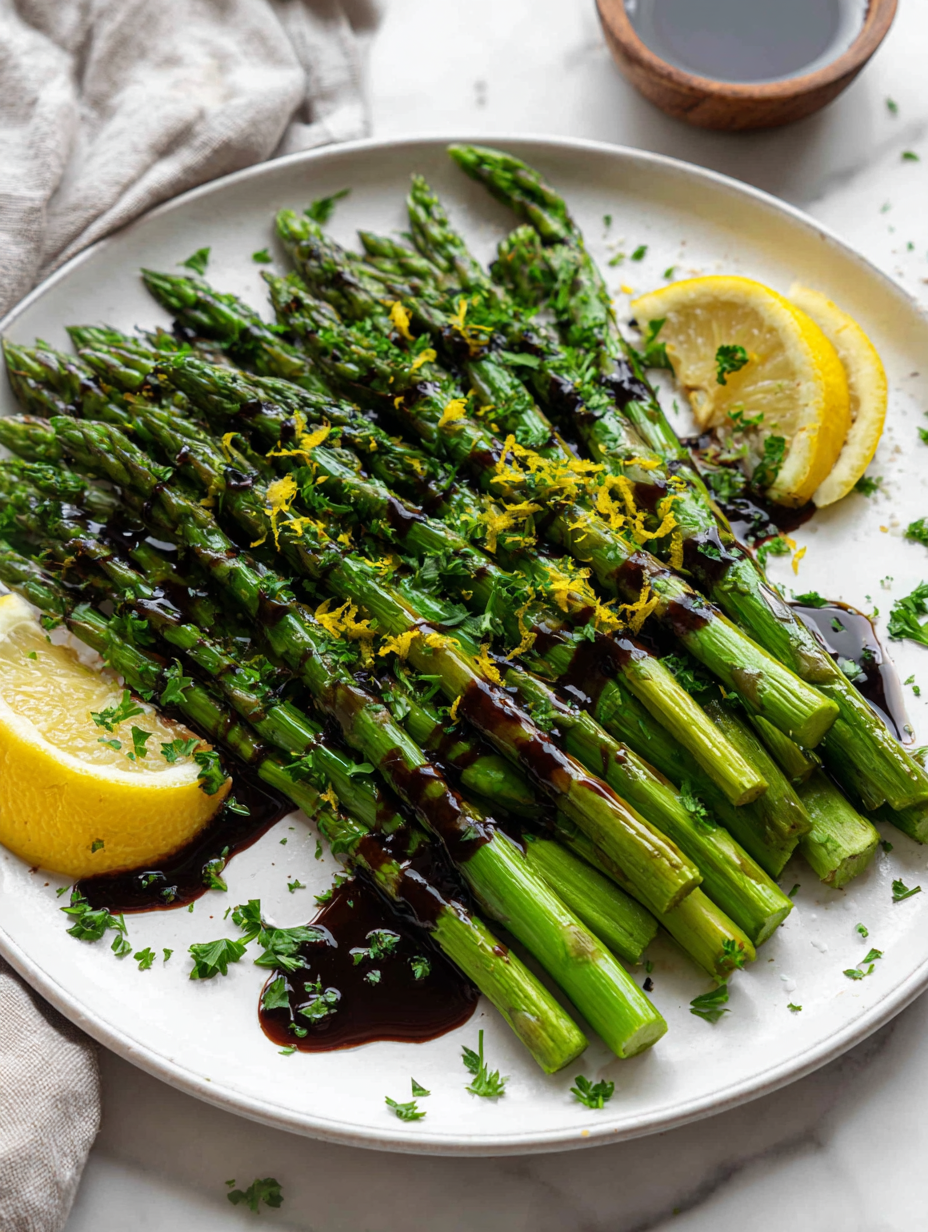
Roasted Asparagus with Balsamic Glaze
Ingredients
Equipment
Method
- Preheat your oven to 220°C (430°F) and line a baking sheet with parchment paper or a silicone mat for easy cleanup.
- Trim the woody ends off the asparagus, about 1-2 inches from the bottom, leaving the spears uniform for even roasting.
- Arrange the asparagus in a single layer on the prepared baking sheet. Drizzle with 1-2 tablespoons of olive oil and gently toss to coat all sides evenly.
- Sprinkle with flaky sea salt and freshly cracked black pepper to taste. If using garlic slices, scatter them over the spears now for an aromatic boost.
- Roast in the oven for 12-15 minutes, checking around the 10-minute mark. The tips should be slightly charred and crispy, while the stalks are tender.
- Meanwhile, pour the balsamic vinegar into a small saucepan and bring to a gentle simmer over medium heat. Let it cook, stirring occasionally, until it thickens into a glossy syrup, about 8-10 minutes.
- Once the asparagus are roasted to your liking, transfer them to a serving platter. Drizzle the warm balsamic glaze over the hot spears, allowing it to soak in and add a shiny, caramelized finish.
- Let the asparagus rest for 2-3 minutes, then taste and adjust seasoning if needed. Serve immediately to enjoy the smoky aroma and glossy presentation.
Notes
Tips for perfect roasted asparagus
- Bolded mini-head: Use a hot oven—220°C (430°F)—to get that quick, smoky char on the asparagus tips.
- Bolded mini-head: Toss with oil thoroughly—ensure every spear is lightly coated but not drenched to prevent steaming.
- Bolded mini-head: Watch the asparagus closely—start checking at 10 minutes for tender, slightly charred edges.
- Bolded mini-head: Reduce balsamic slowly—let it simmer gently until it thickens into a glossy, syrupy glaze, about 8-10 minutes.
- Bolded mini-head: Drizzle the glaze while the asparagus is hot—this helps it soak in and cling for a shiny finish.
- Bolded mini-head: Use tongs to turn the spears—avoid overcrowding the pan for even roasting and caramelization.
- Bolded mini-head: Rest briefly before serving—2-3 minutes helps flavors settle and prevents sogginess from residual steam.
Common mistakes and how to fix them
- FORGOT: To trim woody ends, resulting in uneven roasting → FIX: Trim ends for tender, even spears.
- DUMPED: Balsamic glaze too early, losing shine and flavor → FIX: Drizzle just before serving for maximum gloss.
- OVER-TORCHED: Asparagus tips, leading to bitterness → FIX: Keep an eye after 12 minutes, remove when charred but not burnt.
- MISSED: Resting time causes soggy texture → FIX: Let the asparagus sit 2-3 minutes to absorb flavors and crisp slightly.
Quick fixes and pantry swaps
- When asparagus tips scorch, splash a little water to cool and prevent burning.
- If glaze is too thin, simmer longer until it shimmers and coats the back of a spoon.
- DUMPED too much oil? Pat with paper towels before roasting for less smoke and crispness.
- Overcooked the asparagus? Rest briefly, then toss with a splash of lemon juice to refresh flavor.
- Splash balsamic glaze on the stove for 5 seconds to loosen and drizzle evenly over spears.
Prep, store, and reheat tips
- Trim and prep the asparagus the night before—store in a paper towel-lined container in the fridge to keep them crisp.
- The balsamic glaze can be made a day ahead; reheat gently until just warm and glossy, releasing a sweet, tangy aroma.
- Roasted asparagus is best enjoyed within 24 hours; store in an airtight container in the fridge, where it will stay flavorful but slightly less smoky.
- To reheat, warm in a 180°C (350°F) oven for 5-7 minutes until just heated through, watching for slight caramelization and the familiar crackle of the tips.
Top questions about roasted asparagus with balsamic glaze
1. How do I pick good asparagus?
Look for bright green, firm stalks with slightly wrinkled tips for the best char and flavor.
2. What kind of balsamic should I use?
Use a high-quality balsamic vinegar; the richer, the more depth it adds when reduced into a glaze.
3. How do I know when the asparagus is done?
Roast until the tips are charred and slightly shriveled, about 12-15 minutes, for that smoky flavor.
4. When should I add the balsamic glaze?
Drizzle the balsamic glaze over the hot, roasted spears so it soaks in and glistens.
5. Do I need to trim the asparagus?
Trim off the tough woody ends before roasting; they can be chewy and bitter if left on.
6. Can I add garlic or other seasonings?
For extra flavor, toss in garlic slices halfway through roasting to prevent burning and bitterness.
7. How long can I keep roasted asparagus?
Store leftovers in a sealed container in the fridge for up to a day; reheat gently to keep texture.
8. What if my balsamic glaze is too runny?
If the glaze is too thin, simmer it longer until it thickens into a syrupy consistency.
9. How do I handle the asparagus during roasting?
Use tongs to turn the spears for even roasting without breaking them apart.
10. Can I use a different cooking method?
For a more intense smoky flavor, broil the asparagus for the last 2 minutes, watching carefully.
This roasted asparagus with balsamic glaze isn’t just a side; it’s a little reminder to embrace simplicity and imperfect beauty in cooking. The smoky char and sweet tang make it a dish I keep coming back to, especially during this season of fresh greens and bright flavors.
In the end, it’s about those small moments—watching the glaze shimmer or the tips crackle—that turn a humble vegetable into something memorable. No matter how often I make it, it still surprises me how such straightforward ingredients can create a dish with so much character.

Hi, I’m Katie Dawson, the owner, cook, and storyteller behind Little More Lovely. I run a small café in a cozy corner of Seattle, where the smell of freshly baked bread meets the hum of neighborhood chatter. I’ve spent years learning how food can bring people together, both as a professional and as someone who loves to share meals with family and friends.