
This pea and potato curry is one of those dishes that sneaks into your weekly rotation without fuss. It’s humble, sure, but the way the potatoes soak up the spices and the peas burst with bright sweetness always surprises me. It’s the kind of meal that feels comforting yet fresh, a little nostalgic but also quick enough to make on busy nights.
I grew up with versions of this curry simmering on the stove, the smell wafting through the house, turning simple ingredients into something warm and satisfying. Over the years, I’ve tweaked it, adding a splash of lime or a dash of chili, but the heart of it remains honest—potatoes and peas, transformed with bold spices and a good pinch of patience.
What I love most is how adaptable it is. Leftovers turn into a perfect filling for wraps or a quick side dish the next day. It’s one of those recipes that reminds me that sometimes, the simplest things—just potatoes, peas, and a handful of spices—can deliver the most comforting, everyday magic.
Focusing on how this humble pea and potato curry can be both a nostalgic comfort and a quick, adaptable weeknight meal that transforms everyday ingredients into something unexpectedly satisfying.
The story behind this recipe
- This pea and potato curry came from a messy Sunday afternoon in my childhood kitchen, where my mom would toss together whatever was in the fridge. I remember the smell of cumin and the soft, almost sweet burst of peas as they cooked down. It’s funny how such simple ingredients can hold so many nostalgic memories, like a warm hug after a long day.
- Over the years, I’ve played around with the recipe, trying to capture that cozy feeling but also making it flexible for weeknights. Sometimes I add a little coconut milk for creaminess, other times I squeeze lemon at the end for brightness. Still, the core—the humble potatoes and bright peas—remains the heart of it all, making it feel familiar yet fresh.
- heading: ‘The story behind this recipe’
Key ingredients and tips
- Potatoes: I prefer starchy Yukon Golds—they get soft and fluffy, soaking up spices. Swap for red potatoes if you want a firmer bite.
- Peas: Bright green, sweet, and quick to cook. Fresh peas bring a pop of sweetness, but frozen work fine if you’re short on time.
- Onion: I always use yellow onions—they caramelize beautifully and add depth. Red onion can be a milder alternative if you like a softer flavor.
- Tomatoes: I like ripe, juicy tomatoes for richness. Canned diced tomatoes can stand in if fresh aren’t in season, just add a splash of water.
- Spices: Garam masala, cumin, turmeric—these warm the dish. I toast the spices first to release their aroma, but skip if you’re in a rush.
- Coconut milk: For creaminess, I love the silky texture. You can swap with regular milk or broth, but it’ll lose that lush, velvety feel.
- Oil: I use vegetable or mustard oil for a subtle kick and depth. Olive oil works if that’s what you have, just don’t let it smoke.
Spotlight on key ingredients
Potatoes:
- I prefer starchy Yukon Golds—they get soft and fluffy, soaking up spices. Swap for red potatoes if you want a firmer bite.
- Peas: Bright green, sweet, and quick to cook. Fresh peas bring a pop of sweetness, but frozen work fine if you’re short on time.
- Onion: I always use yellow onions—they caramelize beautifully and add depth. Red onion can be a milder alternative if you like a softer flavor.
Peas:
- Bright green, sweet, and quick to cook. Frozen peas retain their vibrancy and sweetness, adding a fresh burst to the dish.
- Tomatoes: Ripe, juicy tomatoes create a rich, tangy base. Canned diced tomatoes are a handy stand-in when fresh aren’t available.
Notes for ingredient swaps
- Potatoes: I prefer starchy Yukon Golds—they get soft and fluffy, soaking up spices. Swap for red potatoes if you want a firmer bite.
- Peas: Bright green, sweet, and quick to cook. Fresh peas bring a pop of sweetness, but frozen work fine if you’re short on time.
- Onion: I always use yellow onions—they caramelize beautifully and add depth. Red onion can be a milder alternative if you like a softer flavor.
- Tomatoes: I like ripe, juicy tomatoes for richness. Canned diced tomatoes can stand in if fresh aren’t in season, just add a splash of water.
- Spices: Garam masala, cumin, turmeric—these warm the dish. I toast the spices first to release their aroma, but skip if you’re in a rush.
- Coconut milk: For creaminess, I love the silky texture. You can swap with regular milk or broth, but it’ll lose that lush, velvety feel.
- Oil: I use vegetable or mustard oil for a subtle kick and depth. Olive oil works if that’s what you have, just don’t let it smoke.
Equipment & Tools
- Large heavy-bottomed pan: Even heat distribution for simmering the curry.
- Wooden spoon: Stirring without scratching the pan.
- Sharp knife: Precise, clean cuts for potatoes and onions.
- Cutting board: Safe, stable surface for chopping.
- Measuring cup: Accurate measurement of liquids and spices.
Simple steps to a hearty pea and potato curry
- Gather all your equipment: a large heavy-bottomed pan, a wooden spoon, a sharp knife, a cutting board, and a measuring cup. The pan needs to hold enough for the curry to simmer comfortably.
- Peel and dice 3 medium potatoes into roughly 1-inch chunks. Keep them uniform for even cooking. Rinse under cold water and set aside.
- Chop 1 large onion finely. Measure out 2 teaspoons of cumin seeds and 1 teaspoon of garam masala. Have 1 can (14 oz) of diced tomatoes ready, along with 1 cup of frozen peas.
- Heat 2 tablespoons of oil over medium heat (about 160°C/320°F). Once shimmering, add cumin seeds. When they crackle and turn golden, add the onions.
- Sauté the onions, stirring occasionally, until they soften and turn a light golden (about 5-7 minutes). The smell should be sweet and fragrant.
- Add the diced potatoes to the pan. Stir well to coat with the spices and oil. Cook for 3-4 minutes, just starting to get a little color.
- Pour in the diced tomatoes, with juice. Stir to combine, scraping up any browned bits. Let this simmer for 10 minutes, uncovered, on medium-low heat. The potatoes should be tender and the mixture slightly thickened.
- Sprinkle in garam masala, turmeric, and a pinch of chili powder if desired. Stir and cook for another 2 minutes, allowing the spices to bloom and the aroma to intensify.
- Add the frozen peas. Mix thoroughly and cook for 3-4 more minutes until peas are bright green and heated through. If the curry looks too thick, splash in a little water and simmer briefly.
- Taste and adjust salt or spice levels. If the curry is too tangy, a pinch of sugar can mellow the acidity. If it’s too thick, thin with a splash of water or broth.
- Turn off the heat and let the curry rest for 2-3 minutes, allowing flavors to settle. Serve hot with rice or flatbread.
Let the curry sit off heat for 2-3 minutes. Serve hot, garnished with fresh cilantro if desired. Pair with fluffy rice or warm flatbread for a complete meal.
How to Know It’s Done
- Potatoes are soft and easily pierced with a fork.
- Curry has a fragrant, spicy aroma with a slightly thickened sauce.
- Peas are vibrant green and tender but not mushy.
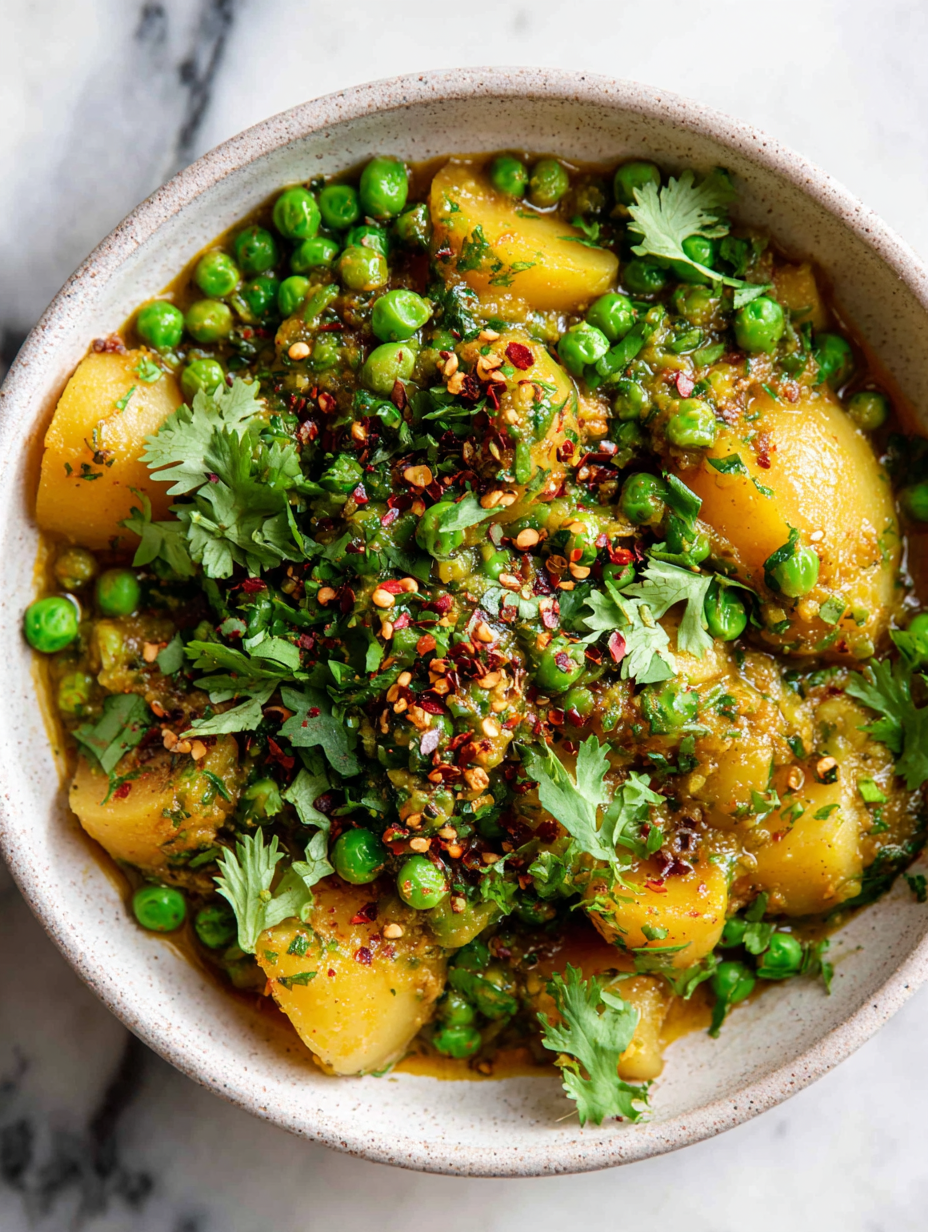
Pea and Potato Curry
Ingredients
Equipment
Method
- Peel and dice the potatoes into roughly 1-inch chunks, then rinse and set aside. Finely chop the onion and measure out your spices and tomatoes.
- Heat the oil in a large heavy-bottomed pan over medium heat until shimmering. Add the cumin seeds and cook until they crackle and turn golden, filling the kitchen with a warm, toasted aroma.
- Add the chopped onion to the pan and sauté, stirring occasionally, until it softens and turns a light golden color, about 5-7 minutes. The onion should smell sweet and fragrant as it cooks.
- Stir in the diced potatoes, coating them with the spiced oil and onion mixture. Cook for about 3-4 minutes, allowing the potatoes to start developing a slight color.
- Pour in the canned diced tomatoes along with their juice, stirring to combine everything evenly. Increase the heat slightly and let the mixture simmer uncovered for about 10 minutes, until the potatoes are tender and the sauce thickens a little.
- Sprinkle in the garam masala, turmeric, and a pinch of salt. Stir well and cook for another 2 minutes to allow the spices to bloom and deepen their aroma.
- Stir in the frozen peas, mixing thoroughly. Cook for 3-4 more minutes until the peas are bright green and heated through. If the curry seems too thick, add a splash of water and simmer briefly to loosen it.
- Taste and adjust the seasoning with additional salt if needed. Remove from heat and let the curry rest for a couple of minutes to allow flavors to meld.
- Serve the pea and potato curry hot, garnished with fresh herbs if desired, alongside rice or flatbread for a comforting meal.
Pro tips for pea and potato curry
- Bolded spice: Toast spices in oil until fragrant and slightly darker to unlock maximum aroma.
- Bolded onion: Sauté onions slowly over medium heat until they turn a deep golden for sweetness.
- Bolded peas: Add peas towards the end to keep their bright color and fresh, crisp texture.
- Bolded potatoes: Cut potatoes into uniform chunks; they cook evenly and absorb flavors better.
- Bolded simmer: Keep the curry at a gentle simmer, not boil, to prevent potatoes from breaking down too much.
- Bolded seasoning: Always taste and adjust salt or spice levels after resting; flavors deepen as it sits.
Common mistakes and how to fix them
- FORGOT to taste and adjust seasoning before serving for balance.
- DUMPED in all spices at once instead of toasting for aroma.
- OVER-TORCHED the spices, leading to bitterness; lower heat and stir constantly.
- MISSED the step of resting the curry; it benefits from a brief pause to meld flavors.
Quick fixes and pantry swaps
- When sauce is too thick, splash in hot water and stir until silky.
- If peas look dull, add them later to preserve their bright color and bite.
- Splash lemon juice if curry turns too rich or dull in flavor.
- Patch over burning spices by removing from heat immediately and adding fresh ingredients.
- Shield sensitive spices from over-torching by stirring constantly and lowering heat.
Prep, store, and reheat tips
- Peas and potatoes can be prepped a day ahead; peel and dice potatoes, and measure out peas. Keep refrigerated to prevent spoilage and preserve freshness.
- The curry can be made up to 2 days in advance; store it in an airtight container in the fridge. The flavors deepen, and the aroma becomes more complex overnight.
- Reheat gently on the stove over low heat, stirring occasionally. The sauce may thicken; add a splash of water or broth to loosen it and bring back the silky texture. The smell should be fragrant, and the dish should be heated through in about 10 minutes.
- Shelf life: Keep refrigerated for up to 2 days. For longer storage, freeze in portions for up to 1 month. Thaw overnight in the fridge before reheating.
- When reheating, check that the curry is steaming hot all the way through, with no cold spots. The potatoes should remain tender, and the peas bright green.
Top questions about pea and potato curry
1. Can I use frozen peas instead of fresh?
Use fresh or frozen peas; both work well, but fresh peas give a brighter pop. Add them at the end to keep their vibrant color and crispness.
2. Should I peel the potatoes?
Peeling potatoes is optional; leaving the skin on adds texture and nutrients. Just wash them thoroughly first.
3. Can I add lemon during cooking?
Yes, adding a squeeze of lemon or lime brightens the dish and balances the spices. Do this after cooking for the best flavor.
4. How long does it take to cook the curry?
Cooking the curry on low to medium heat ensures the potatoes soften evenly without breaking apart. It usually takes about 20-25 minutes total.
5. What if the curry is too thick?
If the curry gets too thick, stir in a little hot water or broth to loosen it. It should be silky and coat the potatoes and peas nicely.
6. What kind of pan is best?
Use a heavy-bottomed pan to prevent sticking and ensure even heat. A good lid helps control moisture and simmering.
7. Should I toast the spices first?
Stir spices into hot oil to release their aroma and deepen their flavor. Toasting them briefly makes a noticeable difference.
8. Can I cook the potatoes separately?
Yes, pre-cooking the potatoes slightly before adding liquids helps them absorb flavors better and prevents mushiness.
9. When should I taste and adjust seasoning?
Adjust the seasoning after resting the curry for 5 minutes. It allows flavors to meld, making the dish more balanced.
10. How do I reheat the curry?
Leftovers keep well in the fridge for up to 2 days. Reheat gently on the stove, stirring to re-emulsify the sauce and rediscover that savory aroma.
This humble pea and potato curry is more than just a quick meal; it’s a bridge to childhood memories and simple, honest flavors. It reminds me that comfort can come from the most unassuming ingredients, prepared with a little care and patience.
Whenever I make it, I feel a quiet satisfaction, knowing that this dish can adapt with what I have on hand and still deliver warmth and nourishment. It’s a reminder that sometimes, the best meals are the ones that feel familiar yet still surprise you with their depth.

Hi, I’m Katie Dawson, the owner, cook, and storyteller behind Little More Lovely. I run a small café in a cozy corner of Seattle, where the smell of freshly baked bread meets the hum of neighborhood chatter. I’ve spent years learning how food can bring people together, both as a professional and as someone who loves to share meals with family and friends.