
This lemon pea pasta came about on a whim, driven by a craving for something bright and fresh but still cozy enough for a weeknight. I love how a simple handful of ingredients can come together into something that feels unexpectedly special—no heavy sauces or complicated steps, just a quick toss in the pan. The burst of lemon cuts through the sweetness of the peas, making every bite lively and almost sparkly on the tongue.
It’s one of those dishes I turn to when I need a little brightness in my day, especially in spring when peas and fresh herbs are at their peak. The aroma of lemon zest and toasted pasta fills the kitchen and lifts my mood instantly. There’s no fuss, no fussiness—just honest, straightforward cooking that rewards you with vibrant, comforting flavors.
Focusing on the bright, unexpected burst of flavor from fresh lemon and sweet peas, this dish transforms simple pasta into a vibrant, spring-inspired meal that’s both quick to make and unexpectedly comforting.
The inspiration behind this dish
- This lemon pea pasta was born out of a lazy Sunday afternoon when I had a handful of fresh peas and a lemon that needed using up. I wanted something quick, bright, and satisfying—no heavy cream or cheese involved, just pure, clean flavors. The idea of balancing the sweet freshness of peas with sharp lemon zest struck me suddenly, and I cooked it up in a rush, surprised by how lively and effortless it felt.
- Every time I make this, I think of spring mornings and the kind of simple joy that comes from bright flavors. It’s become my go-to when I want comfort but also crave that zing of citrus. The smell of lemon zesting into hot pasta still makes me smile, reminding me that sometimes, the best dishes come from just a few honest ingredients put together with a bit of care.
- story_type
- paragraph
Ingredient breakdown: key components
- Frozen peas: I love how they burst with sweetness and bright color, even after a quick thaw. If fresh peas are available, use them for a more tender bite, but frozen works just fine for speed and convenience.
- Lemon: The zest and juice bring that lively, tangy punch. I always zest directly over the pasta to catch those aromatic oils—skip the zest if you prefer a subtler citrus note, but don’t skip the juice, it’s the bright spark.
- Pasta: I opt for a good-quality spaghetti or linguine—something with a bit of bite. If your pasta is too soft or overcooked, the dish loses its lively texture, so cook it al dente and save some pasta water for the sauce.
- Olive oil: Extra virgin for that peppery, fruity note that coats everything. If you only have light olive oil, just be mindful it might lack a bit of depth, but it’ll still do the job. Toast it slightly in the pan for extra flavor.
- Garlic: I prefer thin slices for even cooking and a more delicate flavor—crushed garlic can overpower. When it hits the hot oil, it should sizzle gently and smell fragrant within 30 seconds, not burn or turn bitter.
- Parmesan (or Pecorino): I use freshly grated cheese for that melty, salty finish. If dairy-free, nutritional yeast adds a cheesy umami boost, though it won’t melt like cheese. Keep some on hand to sprinkle just before serving for that extra umami pop.
Spotlight on key ingredients
Lemon:
- Frozen peas: They burst with sweet, fresh flavor and pop with color, even after a quick thaw. Use fresh if you want a tenderer bite, but frozen is quick and reliable.
- The zest and juice bring that zingy, bright aroma. I zest directly into the pan to catch those fragrant oils—skip zest if you want milder citrus, but don’t skip the juice, it’s the punch.
Pasta & Olive Oil:
- Pasta: I prefer a sturdy spaghetti or linguine—something with bite. Overcooked pasta gets mushy, so cook al dente and save some pasta water to loosen the sauce if needed.
- Olive oil: Use good-quality extra virgin—fruity, peppery, with a slight green hue. It adds depth and helps sauté the garlic gently, avoiding any bitter burnt notes.
Notes for ingredient swaps
- Dairy-Free: Nutritional yeast can replace Parmesan, offering a cheesy umami flavor, but it won’t melt into the sauce.
- Vegetarian: Swap out traditional pasta for gluten-free or veggie-based noodles—same cooking time, different texture.
- Vegan: Use olive oil instead of butter, and nutritional yeast or vegan cheese for a cheesy kick.
- Fresh Herbs: Fresh basil or mint can brighten the dish even more—add just before serving for maximum aroma.
- Lemon: Lime zest and juice work well if lemons are out of reach—brings a slightly different but still lively citrus note.
- Peas: Snap peas or snow peas add crunch and a slightly different sweetness—add a minute earlier if you want softer peas.
Equipment & Tools
- Large pot: Boil pasta evenly in plenty of salted water.
- Deep skillet or sauté pan: Cook garlic, peas, and combine flavors.
- Colander: Drain pasta without breaking it.
- Wooden spoon or tongs: Toss pasta and ingredients without breaking strands.
- Microplane or zester: Extract fine lemon zest for maximum aroma.
Step-by-step to lemon pea pasta
- Equip a large, deep skillet or sauté pan—preferably stainless steel—to evenly distribute heat. Fill a pot with 4 liters (or quarts) of water, add a generous pinch of salt, and bring to a rolling boil at 100°C (212°F).
- Add 250 grams (about 8 oz) of spaghetti or linguine. Cook until just al dente, about 8-10 minutes, stirring occasionally. Taste for a slight bite—if it’s soft, it’s overdone. Drain, reserving about ½ cup of pasta water, and set aside.
- While pasta cooks, heat 2 tablespoons of good-quality olive oil over medium heat—around 160°C (320°F). When shimmering, add 2 finely sliced garlic cloves. Sauté until fragrant, about 30 seconds—do not let it brown or turn bitter.
- Add 1 cup (about 150 grams) of frozen peas directly to the pan. Stir for about 1 minute until just thawed, then pour in the zest and juice of 1 large lemon. Cook for another 2 minutes, allowing the peas to absorb the lemon aroma. If the mixture seems dry, add a splash of reserved pasta water.
- Toss the cooked pasta into the pan. Mix thoroughly, coating every strand with the lemony oil and peas. If the sauce seems too thick, loosen it with a splash of the reserved pasta water, stirring gently. Cook for 1-2 minutes until everything is heated through and flavors meld.
- Taste and adjust seasoning. Add more lemon juice for brightness or a pinch of salt if needed. For a cheesy finish, sprinkle with freshly grated Parmesan or Pecorino. Remove from heat, and give everything one last gentle toss.
Serve immediately in warm bowls. Garnish with extra lemon zest or herbs if desired. A quick drizzle of olive oil on top adds a glossy finish. For best texture, eat while hot—pasta can clump if cooled too long.
How to Know It’s Done
- Pasta should be al dente, with a slight bite.
- Peas should be bright green and tender but not mushy.
- Lemon aroma should be fresh and zesty, not burnt or bitter.
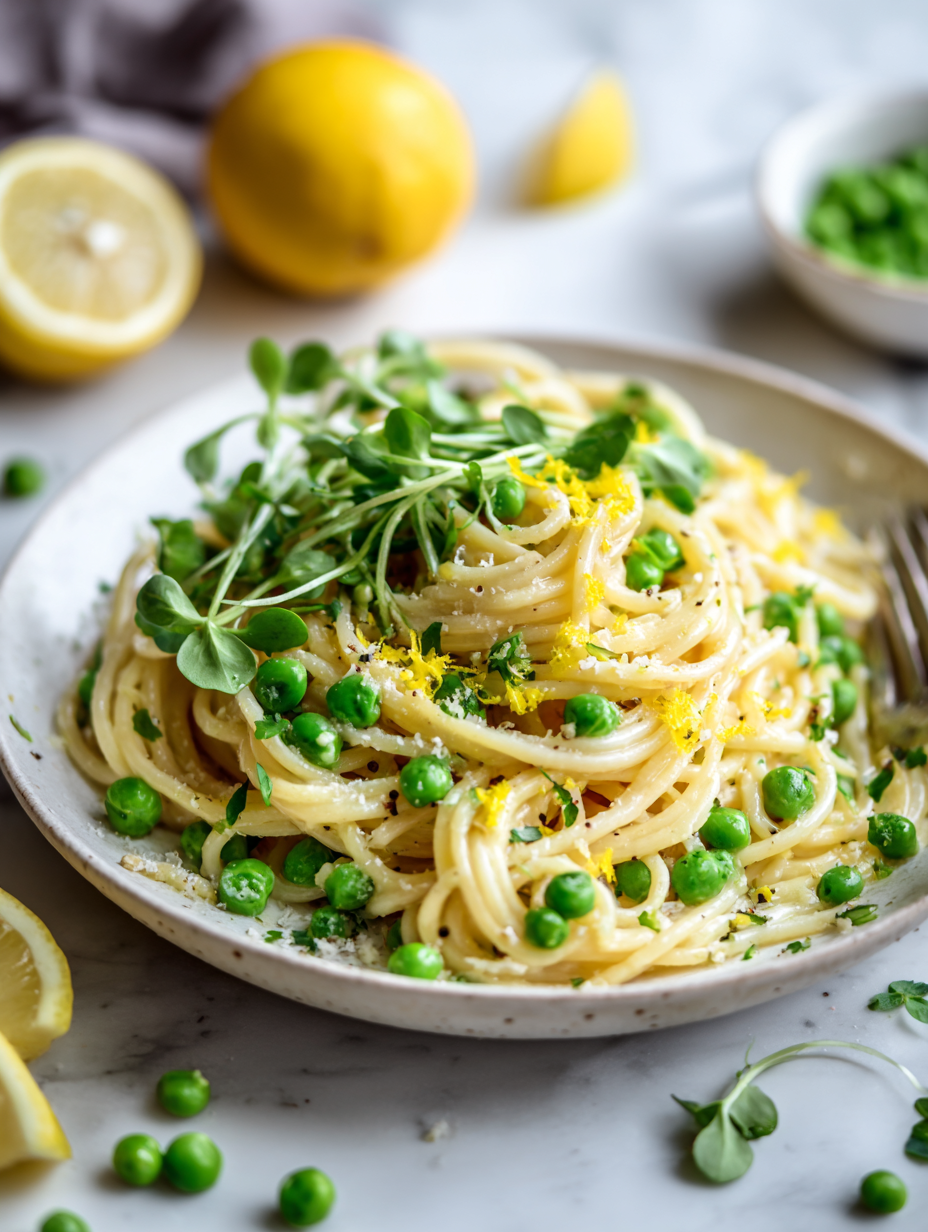
Lemon Pea Pasta
Ingredients
Equipment
Method
- Bring a large pot of salted water to a rolling boil. Add the pasta and cook until just al dente, about 8-10 minutes. Drain, reserving ½ cup of pasta water, and set aside.
- While the pasta cooks, heat the olive oil in a deep skillet over medium heat until shimmering and fragrant. Add the sliced garlic and sauté gently for about 30 seconds, until it turns light golden and smells aromatic—avoid browning.
- Add the frozen peas directly into the skillet. Stir for about 1 minute until they are thawed and slightly softened, then add the lemon zest and squeeze in the lemon juice. Cook for another 2 minutes, allowing the flavors to meld and the peas to brighten in color.
- Toss the drained pasta into the skillet with the lemon and peas. Mix thoroughly, coating the pasta in the lemony oil. If the mixture seems dry, gradually add a splash of the reserved pasta water until it becomes glossy and silky.
- Cook for another minute over low heat to allow the flavors to combine. Taste and adjust with additional lemon juice or salt if needed. Remove from heat and sprinkle with freshly grated Parmesan or Pecorino if desired.
- Serve immediately in warm bowls, garnished with extra lemon zest or herbs if you like. Drizzle a little olive oil on top for a beautiful finish, and enjoy the vibrant, fresh flavors of this simple pasta.
Tips for perfect lemon pea pasta
- Bolded mini-head: Use the zest immediately after grating to lock in that bright, citrus aroma.
- Bolded mini-head: Toast the garlic gently until fragrant—avoid browning to prevent bitterness.
- Bolded mini-head: Add pasta water gradually to loosen the sauce—look for a silky, slightly glossy finish.
- Bolded mini-head: Toss peas into the pan just until heated through—avoid overcooking to keep their pop and color.
- Bolded mini-head: Finish with a squeeze of lemon juice off heat—preserves that lively, tangy brightness.
- Bolded mini-head: Serve immediately to enjoy the contrast of warm pasta and fresh, vibrant flavors.
Common mistakes and how to fix them
- FORGOT to adjust heat → Keep an eye on garlic to prevent burning and bitterness.
- DUMPED pasta water → Save some before draining to loosen and enrich the sauce.
- OVER-TORCHED garlic → Sauté until fragrant, not browned, to avoid bitterness.
- MISSED lemon zest → Zest before juicing for maximum aroma and flavor.
Quick fixes for lemon pea pasta
- If sauce feels too thick → Splash in warm water and stir until silky.
- When lemon zest is missing → Add a splash of lemon juice for brightness.
- Splash hot oil on garlic → To prevent burning and bitterness.
- Patch overcooked peas → Toss with cold water to stop cooking and refresh color.
- Shield the pasta from sticking → Toss with a bit of olive oil if it clumps after draining.
Prep, store, and reheat tips
- Prep the lemon zest and juice, along with chopped herbs if using, up to a day ahead; store in airtight containers in the fridge. Brightens the dish and saves time.
- Freeze leftover cooked pasta in a sealed container for up to 2 months. Thaw in the fridge overnight before reheating. Texture may soften slightly, but flavor remains lively.
- Cooked peas can be blanched and frozen for up to 3 months; thaw under running water or in the microwave, then add to the dish just before serving to preserve their pop.
- Reheat leftovers gently in a skillet over low heat with a splash of water or olive oil. Cover and stir frequently—look for a shimmering, fragrant appearance, not soggy or dried out.
- The lemon flavor mellows slightly after storage; add an extra squeeze of fresh lemon just before serving to brighten the dish again and reawaken those lively citrus notes.
Top questions about lemon pea pasta
1. Can I use fresh peas instead of frozen?
Use frozen peas straight from the freezer; no need to thaw first, just add a minute earlier to the pan.
2. How much lemon juice should I add?
Lemon juice brightens the dish instantly, but if you prefer less acidity, start with half and add more to taste.
3. How do I know when the pasta is done?
Overcooking the pasta makes it mushy; cook just until al dente, and save some pasta water to loosen the sauce.
4. What if the sauce turns out too thick?
If your sauce gets too thick, stir in a bit of reserved pasta water until smooth and glossy.
5. Can I substitute regular olive oil?
Use a good-quality extra virgin olive oil for flavor; a less flavorful oil will still work but won’t add as much depth.
6. Can I make this vegan or dairy-free?
For a dairy-free version, nutritional yeast provides cheesy flavor, but it won’t melt like cheese does.
7. Why is lemon zest important in this recipe?
Zest the lemon before juicing; the zest is aromatic and adds a bright, fresh punch that can’t be replaced afterward.
8. How do I prevent garlic from burning?
Cook garlic gently until fragrant, about 30 seconds—burnt garlic adds bitterness, so keep the heat moderate.
9. Can I make this ahead and reheat?
Serve immediately while the pasta is warm; if needed, reheat gently with a splash of water and a quick toss.
10. How do I fix the flavor if it’s bland?
Taste and adjust seasoning just before serving—sometimes a squeeze of lemon or a pinch of salt makes all the difference.
This lemon pea pasta is a reminder that simple ingredients can create something unexpectedly lively. The burst of citrus and the sweet peas make it perfect for spring, but honestly, I crave it anytime I need a quick brightness fix. It’s honest, unpretentious, and always makes the kitchen smell like a fresh morning.
In the end, it’s about those honest flavors—fresh lemon, tender peas, and good pasta—that come together without fuss. It’s a dish I keep returning to, especially when the pantry’s looking sparse but I want something comforting and vibrant in a flash.

Hi, I’m Katie Dawson, the owner, cook, and storyteller behind Little More Lovely. I run a small café in a cozy corner of Seattle, where the smell of freshly baked bread meets the hum of neighborhood chatter. I’ve spent years learning how food can bring people together, both as a professional and as someone who loves to share meals with family and friends.