
This leek and spinach pasta isn’t just about the flavors; it’s about capturing that soft, sweet whisper of seasonal greens in a bowl. I find myself reaching for it on quiet nights when I want something familiar but with a little twist of earthiness and gentle sweetness. It’s simple, honest, and feeds the soul without fuss.
The trick is in how the leeks soften until they almost melt into the pasta, releasing that mild, honeyed aroma that makes the whole kitchen smell like cozy comfort. Paired with tender spinach, it’s like a little garden in every bite. No need for heavy sauces — just a splash of good olive oil and a pinch of salt, and you’re set.
Focusing on how the gentle sweetness of leek and the earthiness of spinach transform a simple pasta into a comforting, seasonal dish that feels like a cozy whisper from the kitchen.
The story behind this recipe
This recipe came together on a rainy afternoon when I had a bunch of leeks and spinach that needed using up. I wanted something quick, cozy, and with a bit of a rustic feel. The idea of combining gentle, sweet leeks with earthy spinach in a simple pasta has always felt like a warm hug for me. It’s a meal that’s more about the quiet, honest flavors than fuss, and it reminds me of my grandma’s kitchen where she’d toss whatever she had into a pot and somehow make it special.
Key ingredients and their quirks
- Leeks: I love how they turn sweet and tender as they cook, releasing a buttery aroma. For a milder flavor, rinse thoroughly to remove grit; skip the wash if using young, fresh leeks.
- Spinach: Fresh spinach wilts quickly and adds a tender, earthy depth. Use baby spinach for a softer bite, or hearty kale if you want more chew and a slightly bitter contrast.
- Pasta: I prefer long, thin spaghetti for twirling, but penne or fettuccine work just as well. Cook until al dente—firm but with a gentle bite—so it holds up well with the greens.
- Olive oil: Good extra virgin oil makes all the difference, adding a fruity, peppery note. Use a little more if the pan seems dry; it helps coat every strand of pasta and greens evenly.
- Garlic: I toss in a generous clove, crushed and lightly sautéed until fragrant—just enough to infuse the oil without burning, which can turn bitter and overpower the delicate greens.
- Lemon juice: Brightens everything up with a zesty pop. Squeeze fresh right before serving, so it’s vibrant and fresh, not dull or flat.
- Salt & pepper: Don’t underestimate the power of seasoning—adjust to taste after tossing everything together, and remember, a pinch of flaky sea salt can really elevate the dish.
Spotlight on key ingredients
Leek And Spinach:
- Leeks: I love how they turn sweet and tender as they cook, releasing a buttery aroma. For a milder flavor, rinse thoroughly to remove grit; skip the wash if using young, fresh leeks.
- Spinach: Fresh spinach wilts quickly and adds a tender, earthy depth. Use baby spinach for a softer bite, or hearty kale if you want more chew and a slightly bitter contrast.
Notes for ingredient swaps
- Dairy-Free: Omit butter and cheese, use olive oil and nutritional yeast for a cheesy, umami kick. Slightly different creaminess.
- Gluten-Free: Swap regular pasta for rice or corn-based varieties. Keep in mind, texture may vary slightly, and cooking times differ.
- Vegan: Replace Parmesan with nutritional yeast or vegan cheese. The flavor will be nuttier and less salty.
- Nut-Free: Avoid pesto or nut-based toppings; stick to herbs and lemon to brighten the dish without nuts.
- Fresh Herbs: Substitute basil or parsley for a different herbal brightness. Fresh herbs add a lively, aromatic punch.
- Leeks: Use shallots or sweet onion if leeks aren’t available. They bring a similar mild sweetness but with a slightly different aroma.
- Spinach: Kale or Swiss chard can stand in. They add more bite and earthiness, especially if cooked longer.
Equipment & Tools
- Large pot: To boil pasta efficiently in plenty of salted water.
- Deep skillet: For sautéing leeks and wilted greens, and tossing everything together.
- Tongs: To lift and toss pasta and greens without breaking delicate strands.
- Wooden spoon: To stir gently and scrape the skillet bottom, preventing sticking.
- Lemon squeezer: For bright, juice that’s free of seeds and pulp.
Step-by-step guide to pasta prep
- Equipment & Tools: Boil-proof large pot for pasta, deep skillet for greens, tongs for tossing, and a wooden spoon for stirring.
- Fill a large pot with 4 liters (4.2 quarts) water, add a generous tablespoon of salt, and bring to a rolling boil at 100°C (212°F).
- While water heats, clean and thinly slice 2 large leeks (white and light green parts only). Rinse well to remove grit, then set aside.
- In the skillet, heat 2 tablespoons of good olive oil over medium-low heat (about 150°C/300°F). Add sliced leeks and a pinch of salt. Cook gently, stirring occasionally, for about 10 minutes until soft and sweet-smelling, with edges just starting to caramelize.
- Meanwhile, add 300 grams (10.5 oz) of spaghetti or your choice pasta to the boiling water. Cook until just al dente—about 8 minutes. Stir occasionally to prevent sticking. Taste for bite; it should be tender but still firm.
- Drain pasta, reserving a cup of pasta water. While pasta cooks, add 3 cups of fresh spinach to the skillet with leeks. Toss and cook for 2-3 minutes until wilted and vibrant green. If the skillet dries out, splash in a tablespoon of reserved pasta water.
- Add the drained pasta to the skillet with greens. Toss gently to coat everything in the fragrant leek oil. Squeeze in juice of half a lemon for brightness. Adjust seasoning with salt and freshly cracked black pepper.
- Check for doneness: the pasta should be tender, greens wilted but lively, and everything well-coated with a glossy, fragrant oil. If too dry, add a splash more pasta water and toss again.
- Rest for 1-2 minutes, then plate immediately. Finish with a drizzle of olive oil and a sprinkle of flaky sea salt if desired. Serve hot, with a lemon wedge on the side.
Serve immediately hot, garnished with a drizzle of olive oil and flaky salt. Rest for a minute to let flavors meld, then enjoy while fresh and fragrant.
How to Know It’s Done
- Pasta is al dente, with a slight bite when tasted.
- Leeks are tender and sweet, with no harsh raw flavor.
- Pasta water is starchy and coats the greens smoothly, adding gloss.
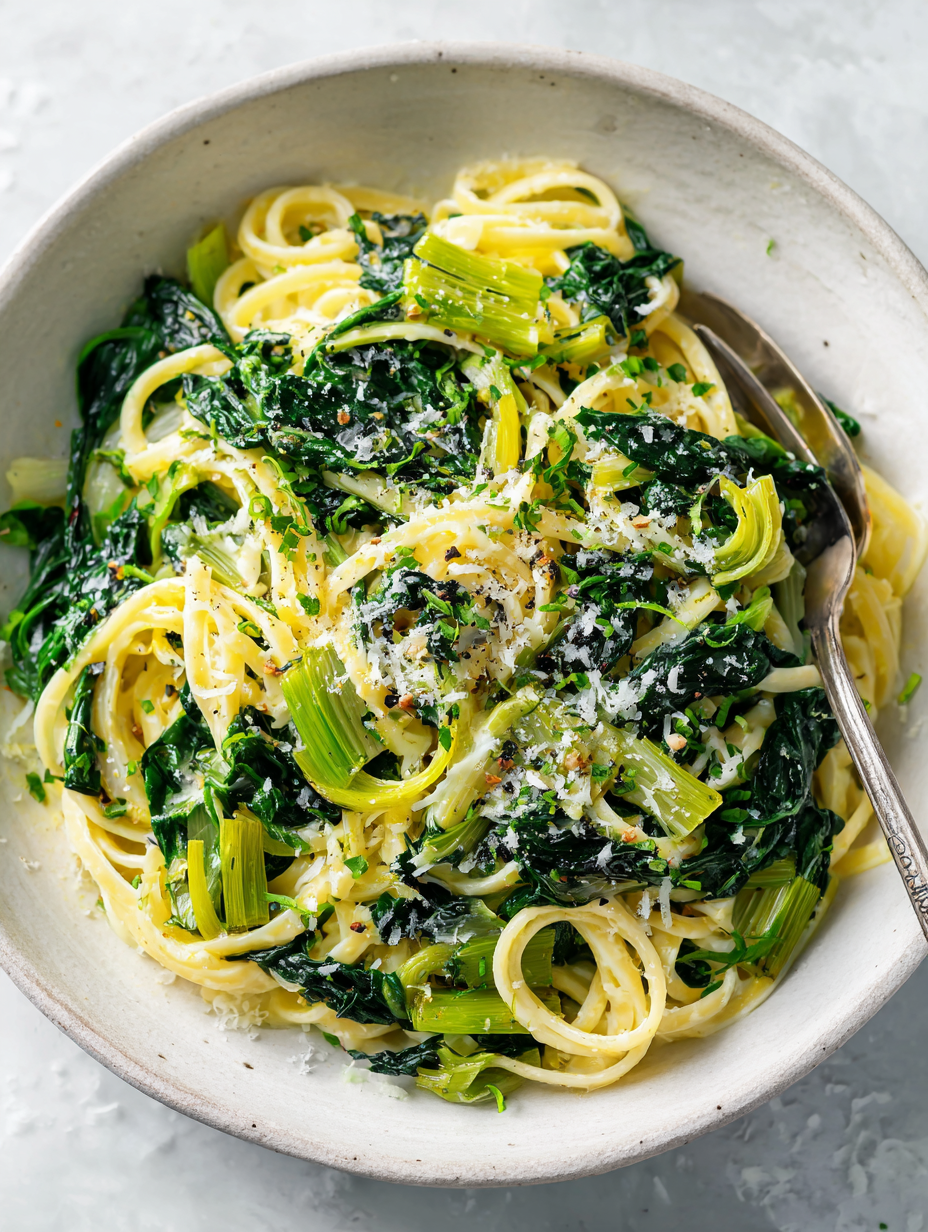
Leek and Spinach Pasta
Ingredients
Equipment
Method
- Start by bringing a large pot of salted water to a rolling boil. Add the spaghetti and cook until just al dente, about 8 minutes. Drain, reserving a cup of pasta water, and set aside.
- While the pasta cooks, thinly slice the cleaned leeks, ensuring all grit is washed away. Gently heat 2 tablespoons of olive oil in a deep skillet over medium-low heat, and add the sliced leeks. Sauté slowly, stirring occasionally, until they turn soft and translucent, about 10 minutes, releasing a sweet aroma.
- Once the leeks are tender and fragrant, add the crushed garlic to the skillet. Cook for about 1 minute until fragrant, being careful not to let it burn.
- Throw in the fresh spinach, stirring gently, and cook for 2-3 minutes until wilted and vibrant green. If the mixture looks dry, add a splash of the reserved pasta water to loosen and create a glossy sauce.
- Add the drained pasta to the skillet with the greens. Toss gently with tongs or a wooden spoon to coat all the strands evenly in the leek and spinach mixture. Squeeze the juice of half a lemon over the pasta, then season with salt and pepper to taste.
- Check the dish for seasoning; adjust with more salt, pepper, or lemon juice if needed. If it seems a little dry, stir in a bit more reserved pasta water until it’s glossy and well-coated.
- Serve the leek and spinach pasta immediately, garnished with a drizzle of olive oil if desired. Enjoy the warm, tender greens and flavorful pasta while still fresh and fragrant.
Pro tips for perfect leek and spinach pasta
- Bolded mini-head: Use a gentle heat when cooking leeks to develop their natural sweetness without burning.
- Bolded mini-head: Add pasta directly to the greens in the skillet to absorb all those flavorful leek oils.
- Bolded mini-head: Reserve a splash of pasta water to loosen the dish if it feels too dry or clumpy.
- Bolded mini-head: Toss in lemon juice at the end to brighten the earthy flavors and add a fresh shimmer.
- Bolded mini-head: Keep an eye on the leeks; they should turn soft and translucent, not browned or crispy.
- Bolded mini-head: Use tongs to toss the pasta and greens gently — this prevents breaking delicate strands and ensures even coating.
- Bolded mini-head: Finish with a drizzle of good olive oil and flaky sea salt right before serving for added richness.
Common mistakes and how to fix them
- FORGOT to adjust heat after adding greens → Sear on medium-low, avoid burnt edges.
- DUMPED pasta water too early → Save some for sauce to enhance flavor and texture.
- OVER-TORCHED the garlic → Sauté on low, fragrant smell signals perfect doneness.
- MISSED stirring the leeks → Stir gently but consistently for even caramelization.
Quick Fixes for Pasta Perfection
- When sauce looks too thick → Splash in hot pasta water to loosen and shimmer.
- If greens are bitter → Blanch briefly in boiling water, then shock in cold to mellow.
- Splash extra olive oil when pasta sticks → Coat immediately to prevent clumping.
- Patch over overcooked leeks → Add a squeeze of lemon for brightness and freshness.
- Shield delicate greens from burning → Cook on low heat and stir gently for even softness.
Prep, store, and reheat tips
- Chop and rinse leeks the day before; store in an airtight container in the fridge for up to 24 hours, keeping them crisp and fresh.
- Wash and drain spinach in advance; refrigerate in a sealed bag for up to two days to maintain its vibrant color and tender texture.
- Cook pasta al dente, then toss with a little olive oil to prevent sticking; store in an airtight container for up to 24 hours, reheating with a splash of water or broth.
- Reheat the pasta and greens gently in a skillet over low heat, stirring until warmed through and fragrant—avoid overcooking to keep texture lively.
- The flavors deepen slightly after a day; the leek sweetness becomes more pronounced, and greens develop a tender, earthy note—best enjoyed fresh but still good the next day.
Top questions about leek and spinach pasta
1. How do I clean leeks properly?
Leeks can be gritty; rinse thoroughly, especially the white and light green parts, to remove dirt and sand. Skip rinsing if using very fresh, clean leeks.
2. When should I add spinach to the dish?
Spinach wilts quickly; add it towards the end of cooking to keep it tender and vibrant green. Use fresh, firm leaves for the best flavor.
3. How do I know when the pasta is done?
Cook pasta until just al dente, about 8 minutes. It should be tender but still have a slight bite, not mushy.
4. What if the pasta feels too dry?
If the pasta seems dry after tossing with greens, add a splash of reserved pasta water to loosen it up and add gloss.
5. Can I use a different oil?
Use good quality extra virgin olive oil for a fruity, peppery flavor that coats the greens and pasta evenly.
6. How important is lemon juice?
Lemon juice brightens the dish with fresh acidity. Squeeze it right before serving for the best zing.
7. When should I season the dish?
Adjust seasoning after tossing everything together. A pinch of flaky sea salt really enhances the earthiness of the greens.
8. Can I use different greens?
You can substitute kale or Swiss chard for spinach. They add more chew and earthy flavor, especially if cooked longer.
9. How do I avoid overcooking the leeks?
Overcooking the leeks can make them mushy. Cook on low heat until soft, about 10 minutes, for a sweet, tender result.
10. How do I store and reheat leftovers?
Leftovers can be stored in the fridge for up to 24 hours. Reheat gently in a skillet with a splash of water for best texture.
This dish isn’t just about the ingredients; it’s about the quiet moments of turning simple greens into something warm and satisfying. It’s perfect for those nights when you want a meal that feels like a small, cozy victory.
In the end, it’s about the smell of softened leeks and wilted spinach mingling with garlic and lemon, filling the kitchen with a gentle, inviting aroma. A humble dish, but honest and deeply comforting in its own way.

Hi, I’m Katie Dawson, the owner, cook, and storyteller behind Little More Lovely. I run a small café in a cozy corner of Seattle, where the smell of freshly baked bread meets the hum of neighborhood chatter. I’ve spent years learning how food can bring people together, both as a professional and as someone who loves to share meals with family and friends.