
This recipe was born from a craving to truly nourish after a long week. It’s about making every ingredient count—bones, veggies, herbs—turning simple leftovers into something restorative. I like to think of it as a slow, gentle hug in a bowl, meant to heal from the inside out.
Why I Keep Coming Back to This Healing Chicken Soup
It’s the slow process, the aroma filling the kitchen—reminding me that good things take time. When I need comfort or a boost, this soup’s gentle warmth always feels like a quiet hug. It’s a simple act of care I can do for myself, again and again.
Breaking Down the Healing Chicken Soup Ingredients
- Chicken bones: I use leftover carcasses or roasted bones for depth.: They release collagen and marrow, making a richer, more nutritious broth.
- Onion: Adds sweetness and umami—opt for yellow or white.: Aromatic base that balances the richness.
- Garlic: For a pungent, healing boost—crush to activate enzymes.: Lends a smoky, fragrant note.
- Thyme: Fresh sprigs infuse herbal brightness.: A classic healing herb, aromatic and earthy.
- Apple cider vinegar: A splash helps extract minerals from bones.: Brightens the broth and adds a subtle tang.
- Carrots & celery: Bring sweetness and crunch—add early or late.: Their natural sugars mellow the broth and add color.
- Salt & pepper: Season at the end for control.: Enhances all flavors without overpowering.
Tools & Equipment for a Healing Chicken Soup
- Heavy-bottomed stockpot: To evenly simmer the broth without burning or boiling over.
- Fine mesh strainer: To strain out bones and solids for a clear broth.
- Ladle: To serve and taste-test the broth.
- Cutting board & sharp knife: To prep aromatics and vegetables.
Step-by-Step for a Bone-Broth Inspired Healing Chicken Soup
Step 1: Start with a large, heavy-bottomed pot—something that can hold a good 4 liters. Gather your chicken bones, preferably roasted or leftover, for a richer flavor.
Step 2: Pour cold water over the bones—enough to cover by a couple of inches—and bring to a gentle simmer over medium heat, about 90°C (194°F).
Step 3: Skim off any foam or impurities that rise to the top in the first 15 minutes; this keeps the broth clear and clean.
Step 4: Add aromatics: a halved onion, a couple of garlic cloves, a few sprigs of thyme, and a splash of apple cider vinegar. Let it simmer, gently, for at least 4 hours, uncovered, on low heat.
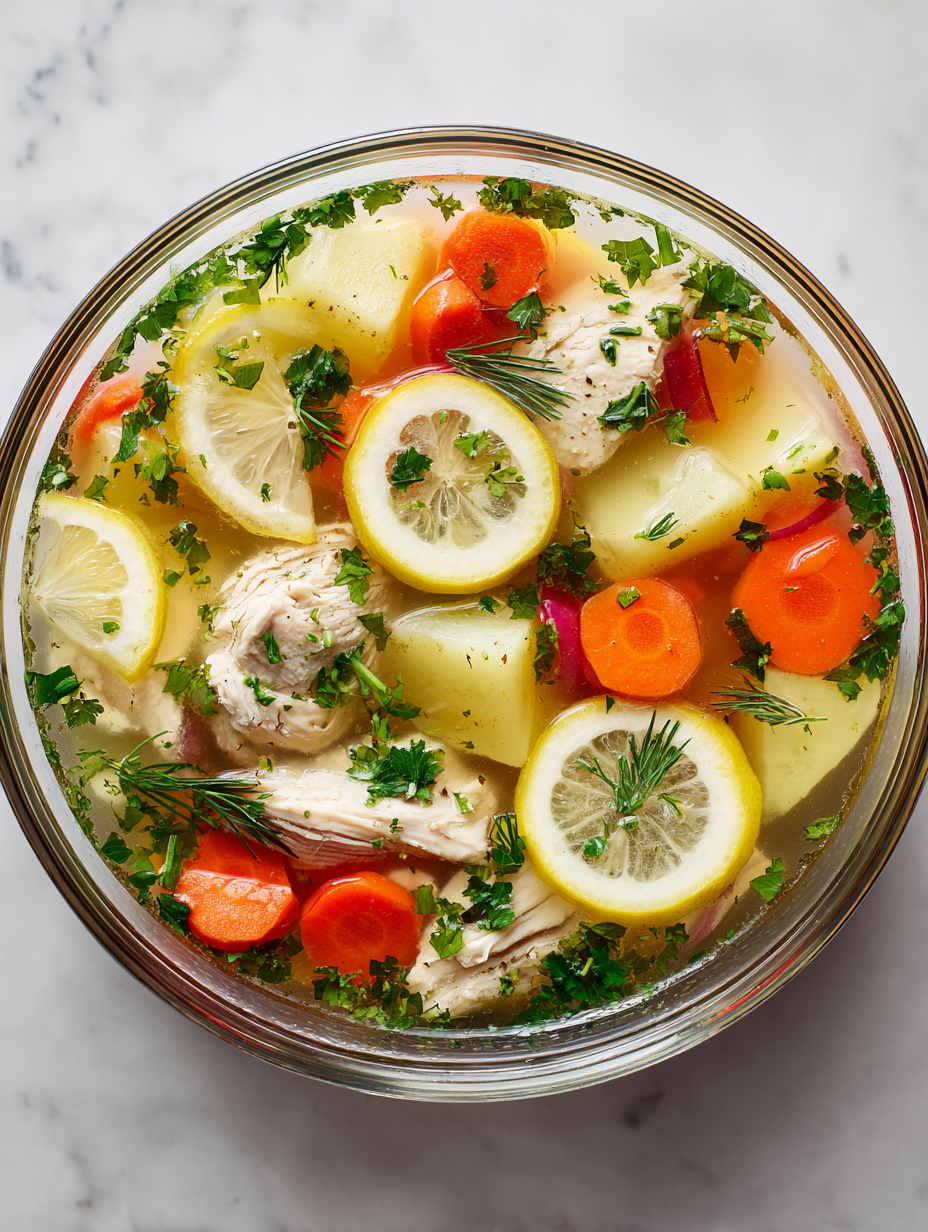
Healing Chicken Soup
Ingredients
Equipment
Method
- Place the chicken bones into a large, heavy-bottomed stockpot and cover with cold water, about 4 liters. Bring to a gentle simmer over medium heat, and skim off any foam that rises in the first 15 minutes.
- Add the halved onion, crushed garlic cloves, thyme sprigs, and splash of apple cider vinegar to the pot. Lower the heat to maintain a gentle simmer, uncovered, for at least 4 hours, allowing the flavors to meld and the broth to deepen.
- After simmering, turn off the heat and carefully strain the broth through a fine mesh strainer into another large pot or bowl, discarding solids. Set aside.
- While the broth is still warm, add sliced carrots and celery to the strained stock. Return to low heat and simmer gently for another 30 minutes, until the vegetables are tender and the broth is flavorful.
- Taste the broth and season with salt and pepper as needed, adding slowly to control the flavor. Let the soup sit for a few minutes to allow flavors to meld.
- Serve the healing chicken soup hot, with a clear, golden broth filled with soft vegetables and herbal notes, offering a comforting, nourishing experience.
Cooking Checkpoints & Tips for a Perfect Healing Chicken Soup
- Broth should be clear, not cloudy. Skim often to remove foam and impurities.
- Meat should fall off the bones easily, indicating it’s tender and infused.
- Aromatics should smell fragrant, not burnt; adjust heat if necessary.
- Broth temperature should stay around 90°C (194°F) during simmering for optimal extraction.
Common Mistakes & How to Fix Them in Your Healing Chicken Soup
- Skipping skimming during initial simmer.? Skim foam regularly to keep broth clear; unskimmed broth turns murky.
- Adding herbs at the start and losing their fresh aroma.? Add aromatics early for deeper flavor; late addition leaves it dull.
- Boiling vigorously, clouding the broth.? Keep heat low to prevent boiling; a gentle simmer yields better broth.
- Not enough water, leading to concentrated, bitter broth.? Ensure bones are covered with water; top up if needed.
This soup isn’t just about nourishing the body—it’s about creating a little ritual of patience and care. Letting those bones simmer slowly pulls out every ounce of flavor and healing properties. As you ladle it into bowls, feel the warmth seep into your bones, not just your belly. Make it your own—add greens, noodles, or a squeeze of lemon—and enjoy every spoonful.

Hi, I’m Katie Dawson, a paediatric speech-language pathologist by day and a passionate food storyteller by night. Based in Seattle but with a love for global flavours (and a soft spot for Indian chai), I created this blog to bridge the gap between therapeutic nutrition and the simple joy of eating.
