
Spring bursts into this green pea risotto with its vivid color and sweet, fresh flavor that seems to seep right into each grain of rice. There’s something about the way the peas soften and release their bright juices—it’s like a little celebration in every bite, honest and unpretentious. I love how this dish pulls me back to simple, sunny afternoons in early spring, where the air smells of fresh earth and tender shoots.
This recipe isn’t about fuss or fancy techniques; it’s about highlighting what’s in season and letting it shine. I’ve made this with a handful of ingredients, trusting each one to do its part—peas for sweetness, parmesan for salt and richness, a good broth for depth. It’s honest cooking that feels just right, especially when you need something comforting but not heavy.
Focusing on the bright, fresh sweetness of green peas, this risotto celebrates the peak of spring in a dish that’s simple and honest, highlighting how a handful of fresh ingredients can turn humble rice into something vibrant and comforting.
The story behind this recipe
- I first made this risotto on a rainy spring afternoon, trying to capture the fleeting sweetness of fresh peas before they vanish. The kitchen filled with that unmistakable, slightly grassy aroma that only fresh peas can bring. It’s a dish born from a moment of wanting something simple, vibrant, and honest, no fuss necessary.
- One spring, I visited a farmers’ market and picked up the first batch of tiny, almost translucent peas. Seeing them piled in that basket, I realized they deserved to be the star—not hidden or overcooked. That day, I learned that sometimes, the most straightforward ingredients deliver the brightest flavor, if you let them.
- heading: The story behind this recipe
Ingredient breakdown: key components
- Frozen peas: I love the burst of sweetness they bring, but fresh peas taste even brighter—use what’s in season and give them a quick blanch if frozen. Their vivid green hue is the first thing you’ll notice.
- Arborio rice: It’s the backbone, soaking up all the good broth and releasing that creamy starch. Don’t rinse it; keep the surface starchy for the best texture. Toast it lightly in the pan to heighten the nutty aroma.
- Parmesan: I prefer a sharp, aged variety—adds a salty, umami punch that balances the peas’ sweetness. Grate it fresh right before adding to keep that gooey, melty goodness intact.
- Vegetable broth: Use a good quality homemade or store-bought broth—warm it before adding. It’s the silent hero that ties everything together with a savory depth and a faint aroma of herbs.
- Butter: A splash at the end enriches the risotto with a silky sheen and rounds out the flavors. Keep it cold until the last minute so it melts slowly into the rice, releasing a gentle, fragrant aroma.
- Olive oil: A drizzle at the start helps toast the rice evenly. Use a good extra virgin for a fruity, slightly peppery note that complements the freshness of the peas.
- Lemon zest (optional): Adds a bright, citrusy lift that makes the dish feel lively. Just a touch at the end—don’t skip it if you want that extra zing to contrast the creamy richness.
Spotlight on key ingredients
Green peas:
- Frozen peas: I love their quick pop of sweetness and vivid color, but fresh peas taste even brighter—try to use in season and give a quick blanch if frozen to bring out their best.
- Parmesan: I prefer a sharp, aged cheese—its salty, umami punch is essential. Grate it fresh right before mixing to keep that gooey, melty texture and vibrant flavor.
Risotto rice:
- Arborio rice: It’s got that high starch content, which makes the risotto creamy. Toast it lightly in the pan for a nutty aroma before adding broth, and don’t rinse it to preserve the surface starch.
- Parmesan: Aged Parmesan is best for depth and richness. It melts into the hot rice, creating that signature silky coating that makes risotto so luscious.
Notes for ingredient swaps
- Frozen peas: I love the burst of sweetness they bring, but fresh peas taste even brighter—use what’s in season and give them a quick blanch if frozen. Their vivid green hue is the first thing you’ll notice.
- Arborio rice: It’s the backbone, soaking up all the good broth and releasing that creamy starch. Don’t rinse it; keep the surface starchy for the best texture. Toast it lightly in the pan to heighten the nutty aroma.
- Parmesan: I prefer a sharp, aged variety—adds a salty, umami punch that balances the peas’ sweetness. Grate it fresh right before adding to keep that gooey, melty goodness intact.
- Vegetable broth: Use a good quality homemade or store-bought broth—warm it before adding. It’s the silent hero that ties everything together with a savory depth and a faint aroma of herbs.
- Butter: A splash at the end enriches the risotto with a silky sheen and rounds out the flavors. Keep it cold until the last minute so it melts slowly into the rice, releasing a gentle, fragrant aroma.
- Olive oil: A drizzle at the start helps toast the rice evenly. Use a good extra virgin for a fruity, slightly peppery note that complements the freshness of the peas.
- Lemon zest (optional): Adds a bright, citrusy lift that makes the dish feel lively. Just a touch at the end—don’t skip it if you want that extra zing to contrast the creamy richness.
Equipment & Tools
- Wide, heavy-bottomed pan: Ensures even heat and prevents sticking.
- Wooden spoon: Gentle stirring to release rice starch.
- Ladle: To add hot broth gradually.
- Small pot: To keep broth warm and ready for addition.
Step-by-step guide to green pea risotto
- Equipment & Tools: Gather a wide, heavy-bottomed pan (for even heat), a wooden spoon (for gentle stirring), a ladle (to add broth), and a small pot (to warm broth).
- Heat 1 tbsp olive oil over medium heat (about 160°C / 320°F). Add 1 small chopped onion, cook until translucent and fragrant—about 3-4 minutes, stirring occasionally.
- Add 1 cup Arborio rice to the pan. Toast it gently, stirring constantly, until edges turn slightly translucent and it smells nutty—about 2-3 minutes. If it starts to brown too much, lower the heat.
- Pour in 1/2 cup dry white wine (optional), cook until mostly evaporated, about 1-2 minutes. This adds brightness and depth.
- Start adding warm broth, about 1/2 cup at a time. Stir constantly until the liquid is mostly absorbed before adding more. Keep the heat steady at medium, adjusting if necessary. Continue this process for 20-25 minutes.
- When the rice is just tender but still has a slight bite (al dente), stir in 1 cup thawed frozen peas or fresh peas that have been blanched. Cook for 2 more minutes, letting the peas release their bright juices.
- Remove from heat. Stir in 1/2 cup grated Parmesan, 1 tbsp cold butter, and a pinch of lemon zest if using. Adjust seasoning with salt and pepper. Let it rest for 2 minutes to allow flavors to meld.
- Serve immediately, garnished with extra Parmesan and a drizzle of olive oil. The risotto should be creamy, with a slight jiggle, and vibrant green from the peas.
Let the risotto rest off heat for 2 minutes. Finish with a drizzle of good olive oil, extra Parmesan, and lemon zest for brightness. Plate immediately to enjoy its creamy texture and vibrant color.
How to Know It’s Done
- The rice is tender yet firm to bite (al dente).
- The risotto is creamy and coats the back of a spoon without being runny.
- Peas are bright, tender, and burst with sweetness when bitten.
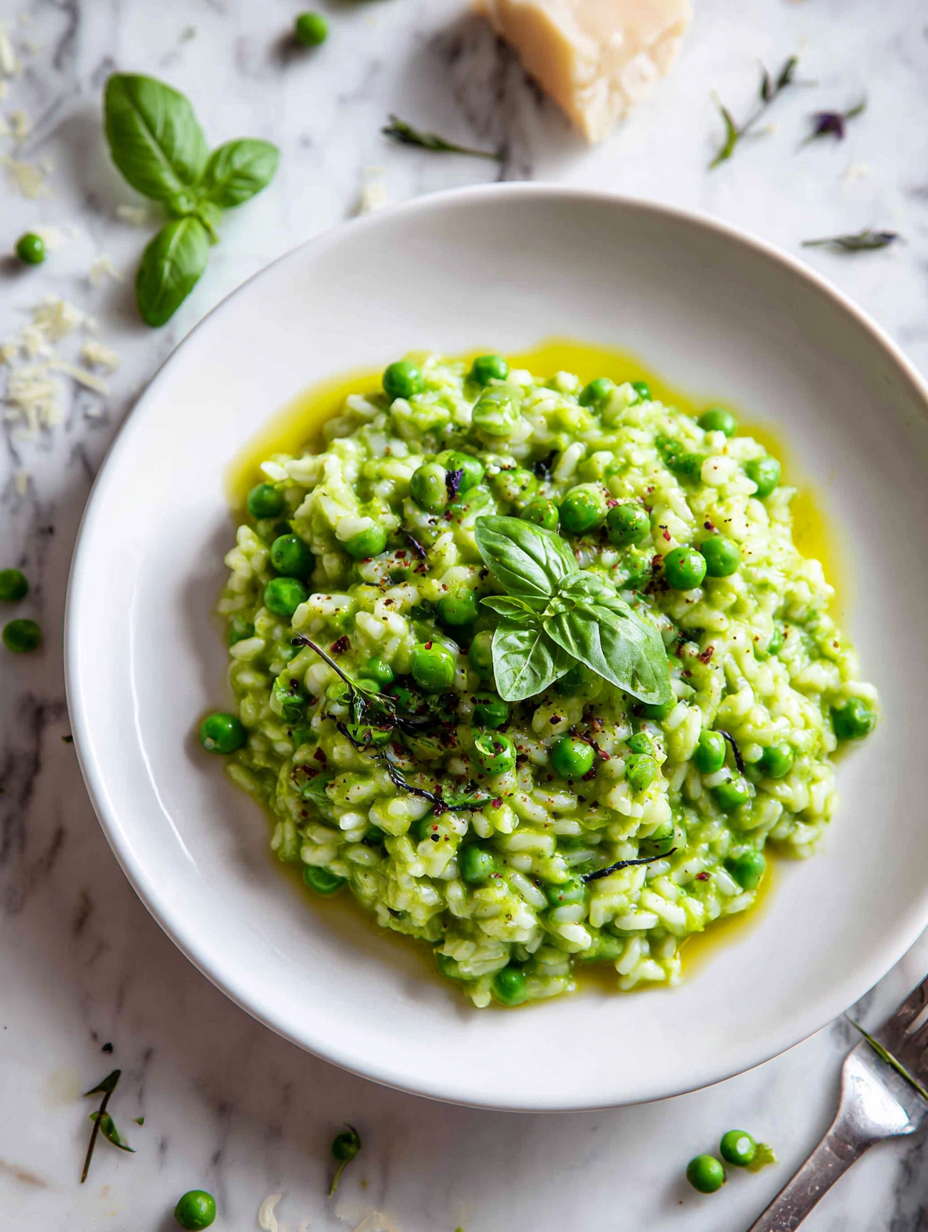
Spring Green Pea Risotto
Ingredients
Equipment
Method
- Heat the olive oil in the wide pan over medium heat until shimmering and fragrant. Add the finely chopped onion and cook, stirring occasionally, until translucent and soft—about 3-4 minutes, with a gentle sizzle and sweet aroma filling the air.
- Add the Arborio rice to the pan. Stir constantly, toasting the rice lightly until its edges turn slightly translucent and it starts to smell nutty—about 2-3 minutes. You'll notice a gentle crackling as the rice toasts.
- If using, pour in the white wine. Stir until the wine is mostly absorbed, about 1-2 minutes, and the rice begins to look glossy and plump.
- Start adding the warm vegetable broth, about half a cup at a time. Stir constantly, allowing each addition to be absorbed before adding the next. This slow process, with gentle bubbling, will take about 20 minutes, during which the rice gradually becomes tender and creamy.
- When the rice is just tender but still has a slight bite (al dente), gently fold in the thawed or blanched green peas. Continue stirring for another 2 minutes, letting the peas release their bright juices and color.
- Remove the pan from heat. Stir in the grated Parmesan cheese and cold butter until melted and creamy—this adds richness and a silky finish. If using, sprinkle the lemon zest over the top for a fresh, citrusy brightness.
- Allow the risotto to rest for 2 minutes, uncovered. This helps the flavors meld and the texture to set to a luscious, velvety consistency.
- Give it a final gentle stir, then serve immediately, garnished with extra Parmesan or a drizzle of olive oil if desired. The dish should be vibrant green, creamy, and inviting with a slight jiggle on the plate.
Pro tips for perfect risotto
- Use a wide pan to maximize surface area, helping rice cook evenly and absorb flavors faster.
- Toast the rice lightly before adding broth to develop a nutty aroma and improve texture.
- Stir constantly when adding broth to release starch, creating that creamy risotto consistency.
- Lighten the dish with a splash of wine early on—adds brightness and depth to the flavor.
- Taste as you go—pears of the rice should be tender with a slight bite, not mushy.
- Finish with cold butter and freshly grated Parmesan off heat for a silky, flavorful finish.
- Don’t skip resting for 2 minutes—allows flavors to meld and improves creaminess.
Common mistakes and how to fix them
- FORGOT to adjust heat, rice sticks or overcooks—keep heat gentle after initial to prevent burning.
- DUMPED too much broth at once—add gradually, stirring constantly to control creaminess and prevent mush.
- OVER-TORCHED the rice—stir frequently and lower heat if rice starts to brown or crackle.
- MISSED the taste check—taste frequently, adjust seasoning before final rest for balanced flavor.
Quick fixes and pantry swaps
- If peas turn dull or soggy, splash a little lemon juice to revive color and brightness.
- When rice sticks, patch with a splash of hot broth and stir vigorously.
- Splash a bit of olive oil if risotto becomes too thick or dry.
- Shield overcooked rice by adding a touch more warm broth, then stir gently.
- When in doubt, swap frozen peas with fresh in season for a brighter, more tender bite.
Prep, store, and reheat tips
- Prep the broth and grate Parmesan ahead of time; store in airtight containers in the fridge for up to 2 days. The flavors will meld better, and you’ll save time during cooking.
- You can blanch and freeze peas for up to 3 months; thaw in the fridge overnight or add directly to hot risotto, but expect a slightly softer texture and less vibrancy.
- Cook the rice partially (about 80%) and refrigerate for up to 1 day. Finish cooking with broth and peas just before serving to maintain freshness and creaminess.
- Reheat leftovers gently on the stovetop over low heat, stirring in a splash of hot broth or water. The risotto will thicken, and gentle reheating preserves the creamy texture, but expect a softer bite.
- For best sensory results, reheat until the risotto is steaming and the peas are still bright green, with the aroma of Parmesan and toasted rice lingering invitingly.
Top questions about green pea risotto
1. Can I use frozen peas instead of fresh?
Fresh peas give the risotto a sweeter, brighter flavor and a more vibrant color, but frozen peas work well in a pinch. Just blanch frozen ones quickly before adding.
2. Is store-bought broth okay?
Use a good quality vegetable broth, warmed before adding. It’s the flavor base that makes everything taste cohesive and rich. Homemade broth is ideal if you have it.
3. How do I make risotto creamy?
Stir continuously while adding broth to help release the rice’s starch, creating that creamy texture. Keep the heat steady at medium to prevent sticking.
4. When should I add cheese and butter?
Add the Parmesan and butter off the heat, then let the risotto rest for a couple of minutes. It helps the flavors meld and the texture to set perfectly.
5. How do I know when the risotto is done?
Taste the rice frequently—aim for tender with a slight bite (al dente). The color should be bright green from the peas, and the risotto should be silky and slightly jiggly.
6. Should I add lemon or acid?
A splash of lemon zest or juice at the end adds a fresh, citrusy note that brightens the dish and balances the richness of the cheese.
7. What equipment do I need?
Using a wide, heavy pan allows the rice to cook evenly and helps it absorb flavors faster. A good wooden spoon is gentle and effective for stirring.
8. What if my risotto gets too thick?
If the risotto becomes too thick or sticks, splash in some hot broth and stir vigorously. This helps loosen it up without losing creaminess.
9. Can I make it ahead?
Refrigerate leftovers in an airtight container for up to 2 days. Reheat gently on the stove with a splash of broth, stirring until steaming and creamy again.
10. How do I fix dry risotto?
Use a splash of good olive oil or a little extra broth if the risotto seems dry when reheated. The key is gentle heat and stirring to restore its silky texture.
Making this green pea risotto with Parmesan feels like capturing a fleeting spring moment—bright, simple, and honest. It’s a dish that celebrates the season’s sweetness in every bite, reminding me how good ingredients can truly shine when treated with care.
Sharing it around the table, I’m reminded that food isn’t just sustenance—it’s a way to slow down, savor, and connect. Sometimes, all it takes is a handful of fresh peas and a bit of patience to turn humble rice into something memorable.

Hi, I’m Katie Dawson, the owner, cook, and storyteller behind Little More Lovely. I run a small café in a cozy corner of Seattle, where the smell of freshly baked bread meets the hum of neighborhood chatter. I’ve spent years learning how food can bring people together, both as a professional and as someone who loves to share meals with family and friends.