
Focusing on how the fragrant garlic herb butter elevates the lobster tail, turning it into a sensory experience that balances richness with herbal brightness, feels like sharing a secret with every bite. It’s not just a fancy dish; it’s a moment of making something special feel approachable and vivid. The smell alone—garlic roasting, herbs blooming—can turn an ordinary dinner into a celebration.
This recipe is about more than just cooking lobster; it’s about the ritual of creating a fragrant butter that seeps into every nook and cranny. I love how a simple brush of warm, herby butter transforms the meat into a buttery, aromatic experience that’s both indulgent and fresh. It’s surprisingly forgiving, and once you get the hang of that garlic-herb combo, it becomes your go-to for impressing without fuss.
Focusing on how the fragrant garlic herb butter elevates the lobster tail, turning it into a sensory experience that balances richness with herbal brightness.
The story behind this recipe
This recipe sprouted from a lazy summer evening when I wanted something indulgent yet easy. I remember the scent of garlic roasting softly, mixing with fresh herbs from my windowsill—the kind of aroma that makes you pause and breathe it all in. Lobster was a splurge, but turning it into something fragrant and herby felt like sharing a secret with anyone lucky enough to sit at my table. It’s a reminder that simple ingredients, when treated with a little love, can turn into a memorable meal.
Ingredient breakdown
- Lobster tail: I love how the natural sweetness is intensified by the butter, but make sure not to overcook—look for a firm, opaque flesh that just gives under gentle pressure.
- Garlic: The fragrant, slightly nutty aroma when sautéing garlic is my cue to add herbs, but avoid burning it; keep the heat medium and stir constantly until golden.
- Herbs: Fresh parsley and thyme bring brightness, but if you only have dried, use half the amount—dried herbs can become overpowering if too much.
- Butter: I prefer clarified butter for a richer, cleaner flavor, but regular unsalted works fine; the key is to melt it slowly to avoid browning and to let it foam gently.
- Lemon: A squeeze at the end brightens everything up, and the citrus aroma is what tells me it’s time to plate—don’t skip it for that fresh, zingy finish.
- Olive oil: Just a splash when searing the lobster, it helps prevent sticking and adds a subtle fruity note, but stick to good-quality oil for the best flavor.
- Sea salt: I like flaky sea salt sprinkled on top right before serving—adds a satisfying crunch and amplifies all those rich, herbal flavors.
Spotlight on key ingredients
Lobster tail:
- I love how the natural sweetness is intensified by the butter, but make sure not to overcook—look for a firm, opaque flesh that just gives under gentle pressure.
- Garlic: The fragrant, slightly nutty aroma when sautéing garlic is my cue to add herbs, but avoid burning it; keep the heat medium and stir constantly until golden.
Herbs and Butter:
- Herbs: Fresh parsley and thyme bring brightness, but if you only have dried, use half the amount—dried herbs can become overpowering if too much.
- Butter: I prefer clarified butter for a richer, cleaner flavor, but regular unsalted works fine; the key is to melt it slowly to avoid browning and to let it foam gently.
Notes for ingredient swaps
- Dairy-Free: Swap butter for coconut oil or vegan butter. It will alter the richness slightly, but still give a good flavor.
- Herbs: Fresh thyme and parsley are ideal, but dried herbs can be used—use half the amount to prevent overpowering.
- Garlic: Fresh garlic is best for aroma and punch, but garlic powder can work in a pinch—use about a third less.
- Lemon: Lemon juice can be replaced with lime juice for a slightly different citrus brightness, or skip for less zing.
- Olive Oil: Use avocado oil or grapeseed oil if you prefer a milder, less fruity oil for searing.
- Sea Salt: Himalayan pink salt or kosher salt can be used as a direct substitute; just adjust the amount based on saltiness.
- Herb Variations: Swap parsley and thyme for tarragon or chives for a different herbal note—keep in mind the flavor profile changes.
Equipment & Tools
- sharp chef’s knife: To cut and prepare the lobster tails easily.
- baking sheet with rim: To hold the lobster for baking evenly.
- basting brush: To apply the garlic herb butter smoothly.
- small saucepan: To melt and infuse the butter with garlic and herbs.
- skillet: To sear the lobster for a caramelized finish.
Step-by-step guide to garlic herb lobster
- Gather your equipment: a sharp chef’s knife, a baking sheet with a rim, a basting brush, and a small saucepan for the butter.
- Preheat your oven to 200°C (390°F) and set a large skillet over medium heat on the stove.
- Prepare the lobster tails: use scissors to cut down the top shell lengthwise, exposing the meat but leaving it attached at the tail end. Gently lift the meat, resting it on top of the shell, and pat dry.
- Make the garlic herb butter: melt ½ cup unsalted butter in the saucepan over low heat. Add 4 minced garlic cloves, a teaspoon of chopped parsley, thyme, and a pinch of salt. Let it simmer for 2-3 minutes until fragrant but not browned.
- Brush the lobster meat generously with the garlic herb butter, ensuring some gets into the nooks. Place the tails on the baking sheet, cut side up.
- Bake in the preheated oven for about 12-15 minutes, or until the lobster meat is opaque and slightly firm to the touch. While baking, heat a little olive oil in the skillet until shimmering.
- In the skillet, sear the lobster tails for 1-2 minutes per side until golden and caramelized. Baste with more garlic herb butter during searing for extra flavor.
- Once cooked, transfer the lobster tails to a plate, drizzle with a little lemon juice, and spoon over any remaining herb butter. Let rest for 2 minutes before serving.
- Finish with a sprinkle of flaky sea salt and extra chopped herbs for brightness. Serve hot with lemon wedges.
Let the lobster rest for 2 minutes after cooking to allow juices to settle. Serve immediately, drizzled with extra herb butter and lemon. Presentation is simple—plate cut-side up, with herbs sprinkled on top for color and aroma.
How to Know It’s Done
- Lobster meat is opaque and firm, not translucent or mushy.
- Butter is fragrant, slightly nutty, and not browned or burnt.
- Lobster shells are golden around the edges with a slight char.
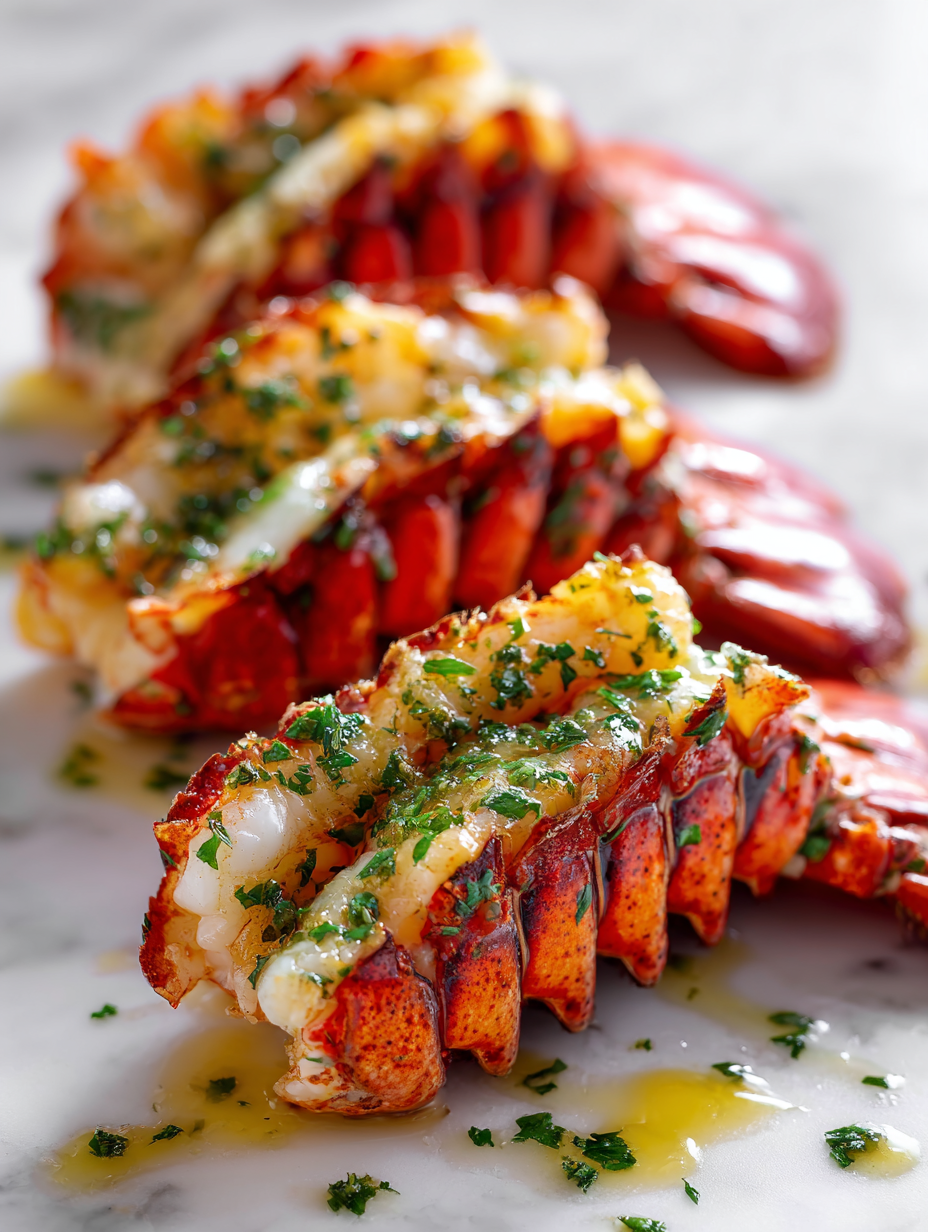
Garlic Herb Lobster Tails
Ingredients
Equipment
Method
- Start by preheating your oven to 200°C (390°F). Use a sharp chef's knife to carefully cut down the top shell of each lobster tail lengthwise, exposing the meat but leaving it attached at the tail end. Gently lift the meat, resting it on top of the shell, and pat dry with a paper towel.
- In a small saucepan, melt the butter over low heat. Add the minced garlic, chopped parsley, thyme, and a pinch of sea salt. Let it simmer gently for 2-3 minutes until fragrant, but avoid browning the garlic.
- Brush the lobster meat generously with the fragrant garlic herb butter, ensuring some gets into the nooks. Place the lobster tails on a rimmed baking sheet, cut side up.
- Bake the lobster tails in the preheated oven for about 12-15 minutes, or until the meat is opaque and just firm to the touch. While they bake, heat the olive oil in a skillet over medium heat until shimmering.
- Once baked, transfer the lobster tails to the hot skillet and sear each side for 1-2 minutes until golden and caramelized, spooning more garlic herb butter over the meat for extra flavor.
- Remove the lobster from the skillet and place on a serving plate. Squeeze fresh lemon juice over the meat, and spoon any remaining herb butter from the pan onto the lobster for a luscious finish.
- Sprinkle with flaky sea salt and chopped herbs for added brightness. Serve immediately with lemon wedges on the side for an extra citrus zing.
Pro tips for garlic herb lobster
- Bolded garlic: Gently press and chop to release maximum aroma before cooking.
- Herb infusion: Warm butter with herbs over low heat to unlock their fragrant oils.
- Butter basting: Use a spoon to regularly baste the lobster for even flavor absorption.
- Color check: Aim for a light golden edge on the lobster shells for perfect doneness.
- Crackling sound: Listen for a gentle sizzle when searing, signaling caramelization.
- Lemon squeeze: Add just before serving for a bright, citrus burst that lifts the richness.
- Rest briefly: Let the lobster rest for 2 minutes to settle juices and enhance tenderness.
Common mistakes and how to fix them
- FORGOT to adjust heat → use medium-low to prevent burning garlic.
- DUMPED the herbs too early → add herbs at the end for bright flavor.
- OVER-TORCHED the lobster → keep oven at 200°C (390°F), watch closely.
- UNDER-seasoned butter → add more salt or lemon for enhanced flavor.
Quick fixes and pantry swaps
- When shells crackle and smell nutty, rescue with a quick squeeze of lemon to brighten.
- Splash a little water into the pan if butter burns, then swirl to rescue flavor.
- Patch over-salted lobster by serving with a squeeze of fresh lemon or a dollop of unsalted butter.
- When garlic turns dark too fast, lower heat immediately to prevent bitterness and burnt taste.
- Use pantry swap: olive oil instead of butter for a lighter, smoky aroma if butter isn’t available.
Prep, store, and reheat tips
- Prepare the garlic herb butter a day in advance; store in the fridge in an airtight container. The aroma will deepen overnight.
- Cut and clean the lobster tails up to 24 hours ahead; keep them covered and chilled in the fridge. Freshness is key for optimal texture.
- Refrigerated lobster will start to lose some firmness after a day, so cook within 24 hours for best bite.
- Reheat the cooked lobster gently in a warm (not hot) oven or a covered skillet to preserve moisture. Watch for steam and bubbly butter aroma to gauge readiness.
- The garlic herb butter can be gently reheated, but avoid boiling—just warm until fragrant and silky, about 1-2 minutes on low heat.
Frequently Asked Questions
1. How do I know when lobster is cooked properly?
Look for a firm, opaque flesh that just gives under gentle pressure. The lobster should be tender and not mushy.
2. What’s the best way to tell if lobster is done?
Use a sharp knife to cut into the shell, and watch for the meat turning a bright white or pinkish hue.
3. How do I fix overcooked lobster?
If the meat starts to look rubbery or the shell turns overly dark, it’s overcooked. Remove from heat immediately.
4. How can I tell if garlic is fresh?
Fresh garlic should smell fragrant and slightly nutty; avoid using garlic that smells sour or has dark spots.
5. Can I use dried herbs instead of fresh?
Use fresh herbs like parsley and thyme for vibrant flavor. Dried herbs work, but use half the amount to prevent overpowering.
6. How do I ensure my garlic herb butter doesn’t burn?
Butter should foam gently and smell nutty, not burnt. Keep the heat low and stir often to prevent burning.
7. Should I add lemon during cooking or at the end?
A squeeze of lemon brightens the dish and balances the richness. Add just before serving for maximum zing.
8. What if my lobster overbakes and gets too dark?
If the lobster shells turn dark or charred, reduce oven temperature or shorten baking time. Keep an eye on them.
9. How can I prevent lobster shells from cracking during cooking?
To prevent shell cracking, avoid sudden temperature changes and handle lobster gently when cutting and baking.
10. How do I reheat cooked lobster without drying it out?
Reheat lobster gently in a low oven or covered skillet until just warmed through. Watch for steam and butter aroma.
Cooking this garlic herb lobster tail is more than just a meal; it’s about that intoxicating aroma of garlic and herbs filling the air, making any ordinary evening feel special. The way the butter seeps into the tender meat, releasing a fragrant, buttery richness, always feels like a small victory.
It’s a dish that reminds me how simple ingredients, treated with care, can turn into something memorable. No matter how often I make it, each bite still brings a little thrill—just enough salt, lemon brightness, and herbal punch to keep me coming back for more.

Hi, I’m Katie Dawson, the owner, cook, and storyteller behind Little More Lovely. I run a small café in a cozy corner of Seattle, where the smell of freshly baked bread meets the hum of neighborhood chatter. I’ve spent years learning how food can bring people together, both as a professional and as someone who loves to share meals with family and friends.