
This carrot and potato curry isn’t about perfection; it’s about the joy of turning simple, humble ingredients into something unexpectedly vibrant. I love how a handful of spices can completely transform the everyday into a dish that feels like a warm hug after a long day. It’s not fancy, but it’s honest, with a little chaos and a lot of flavor in every spoonful.
There’s something satisfying about peeling carrots and potatoes while thinking about how they’ll soak up all those fragrant spices. This recipe started as a way to clear out the fridge and ended up being a go-to for chilly nights when I need something comforting but lively. The best part? No fancy ingredients—just everyday stuff, but cooked with a little curiosity and a lot of taste.
This recipe focuses on how the humble carrot and potato curry can be a canvas for experimenting with unexpected spices and textures, turning everyday ingredients into a vibrant, soul-warming dish that surprises even seasoned cooks.
The story behind this recipe
- This recipe started from a tiny kitchen experiment. I was low on ingredients but craving something warm and familiar. Peeling carrots and potatoes always takes me back to childhood, helping me find comfort in the simplest acts. I never expected that a humble curry would become a staple on my table, especially with just a handful of pantry spices and a bit of curiosity.
- Cooking this dish reminds me that good flavors often come from improvisation. The first time I made it, I tossed in some leftover coconut milk and a dash of lime, which made all the difference. Now it’s my go-to when I want something honest, straightforward, and unexpectedly bright. It’s a reminder that even simple ingredients can surprise you with their versatility.
- heading: ‘The story behind this recipe’
Key ingredients and tips
- Carrots: I prefer using organic, vibrantly orange carrots for their natural sweetness and crunch. You can swap with parsnips if you want a milder, earthier flavor that softens beautifully.
- Potatoes: Russets are my go-to—they break down slightly and add creaminess. For a firmer bite, try Yukon Golds; just remember they hold shape better during simmering.
- Coconut Milk: I love the rich, velvety texture it brings, especially the full-fat kind. If you want a lighter curry, use light coconut milk or even almond milk, but expect a thinner sauce.
- Spices: A mix of cumin, coriander, and turmeric is my default—warm, fragrant, with a hint of earthiness. Feel free to add a pinch of cinnamon or a dash of chili powder for extra complexity.
- Onions & Garlic: The base of flavor—sauté until golden and fragrant, around 5 minutes. If you’re short on time, garlic can be added later to prevent burning, which turns bitter.
- Fresh Herbs: A handful of cilantro adds brightness and a fresh, herbal note. Basil or mint can also work, especially if you want a different aromatic punch at the end.
- Oil & Salt: Use a neutral oil like vegetable or canola for sautéing. Salt helps bloom the spices and balance the sweetness of the carrots and potatoes—don’t skimp!
Spotlight on key ingredients
Carrots:
- I love their natural sweetness and crunch when fresh, but they soften beautifully and develop a smoky, caramelized flavor as they cook. Opt for vibrant, firm carrots for the best texture.
- Potatoes: Russets break down slightly, adding creaminess, while Yukon Golds hold shape better. Their starchy profile helps thicken the curry, and they absorb spices well.
Coconut Milk:
- The velvety richness it imparts is my favorite part. When simmered, it becomes lush and fragrant, with a subtle sweetness that balances spices. Use full-fat for depth, light if you prefer a thinner sauce.
- It can split if overheated—stir gently and keep at gentle simmer to maintain that silky texture.
Notes for ingredient swaps
- Dairy-Free: Use coconut yogurt instead of cream for richness—adds a tangy note and keeps it vegan-friendly.
- Gluten-Free: Ensure your spice blends are gluten-free; most are, but double-check if you’re sensitive.
- Vegetable Swap: Sweet potatoes can replace regular potatoes—bring a sweeter, softer element with a caramelized edge.
- Herb Variations: Fresh mint or basil can brighten the dish differently—try each for a unique herbal twist.
- Spice Adjustments: If you like heat, add a dash of cayenne or red pepper flakes—builds warmth without overpowering.
- Oil Choices: Swap vegetable oil for ghee or clarified butter—richer, nuttier flavor with a slightly different aroma.
- Coconut Milk: Light coconut milk keeps it lighter, but full-fat gives a creamier, more indulgent sauce.
Equipment & Tools
- Large skillet or Dutch oven: To evenly cook and simmer the curry.
- Sharp knife: For peeling and chopping vegetables.
- Cutting board: To prep ingredients safely.
- Measuring spoons: To accurately add spices and liquids.
Step-by-step guide to carrot and potato curry
- Equip your large, heavy-bottomed skillet or Dutch oven; it needs to hold heat evenly. Have a sharp knife, a cutting board, and measuring spoons ready.
- Peel 2 large carrots and 2 medium potatoes; cut into bite-sized chunks. Keep them uniform for even cooking, about 1-inch pieces.
- Heat 2 tablespoons of oil over medium heat (about 160°C/320°F). When shimmering, add 1 diced onion. Sauté until golden and fragrant, about 5 minutes.
- Stir in 1 teaspoon cumin, 1 teaspoon coriander, ½ teaspoon turmeric. Cook until spices release a warm aroma, about 30 seconds.
- Add the carrots and potatoes to the pan. Stir well to coat them with spices and oil. Cook for 3-4 minutes, letting the vegetables start to soften.
- Pour in 1 can (400ml) of coconut milk. Bring to a gentle simmer, then reduce heat to low (about 90°C/194°F). Cover and cook for 20-25 minutes, stirring occasionally.
- Check the curry’s consistency—vegetables should be tender, and the sauce slightly thickened. If too runny, uncover and simmer for 5 more minutes. If too thick, add a splash of water.
- Taste and adjust salt, maybe a squeeze of lemon or lime for brightness. Garnish with chopped cilantro just before serving. Rest for 5 minutes to let flavors meld.
Let the curry rest off heat for 5 minutes. Then, sprinkle with fresh cilantro and serve directly from the pot for a rustic presentation.
How to Know It’s Done
- Vegetables are tender and easily pierced with a fork.
- Sauce has a velvety, slightly thickened appearance with rich aroma.
- Color is vibrant, with a hint of golden hue from spices.
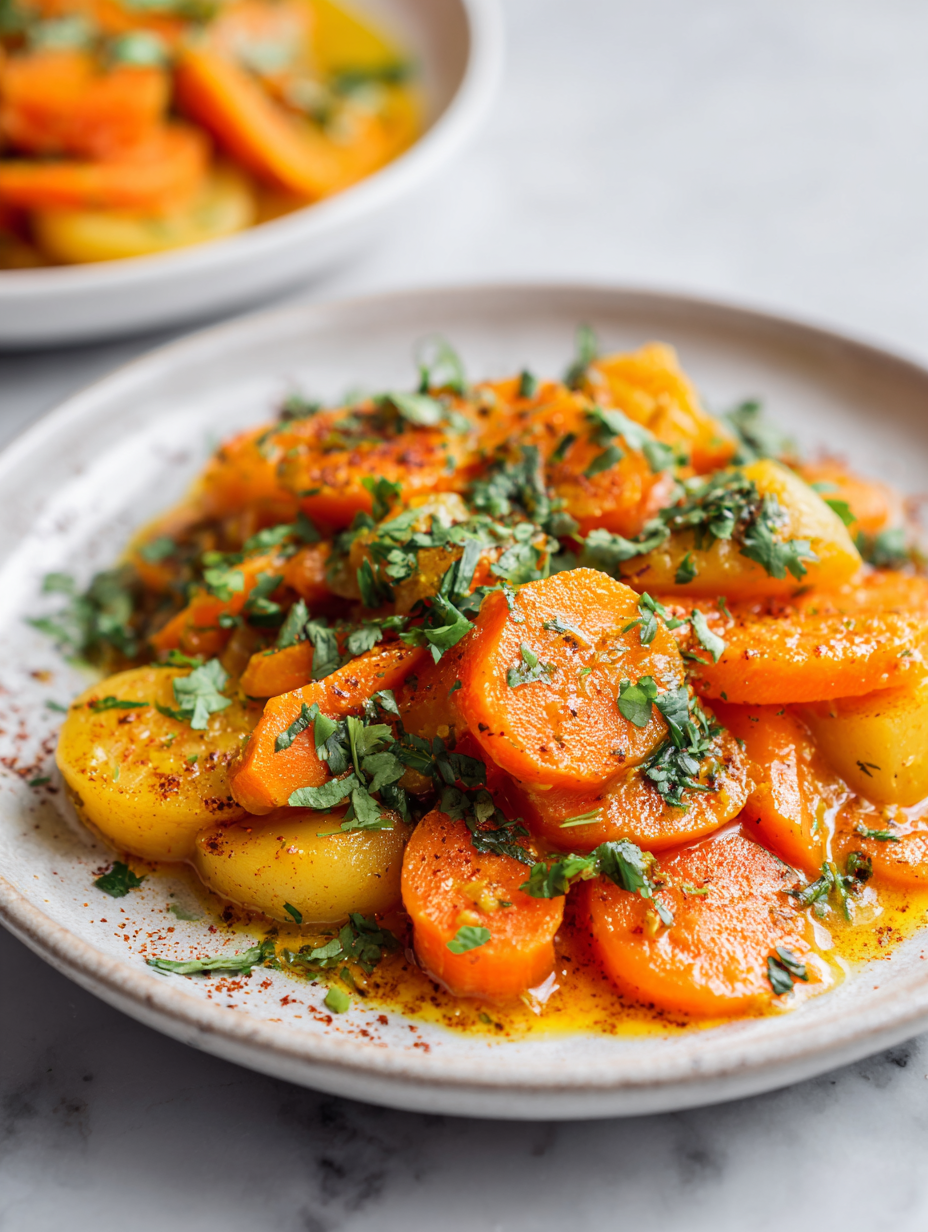
Simple Carrot and Potato Curry
Ingredients
Equipment
Method
- Peel the carrots and potatoes, then cut them into roughly 1-inch chunks for even cooking. Set aside.
- Heat the oil in a large skillet or Dutch oven over medium heat until shimmering, and then add the diced onion. Sauté, stirring often, until the onion turns golden and fragrant, about 5 minutes.
- Add the cumin, coriander, and turmeric to the onions. Stir constantly for about 30 seconds until the spices release their aroma and turn a warm color.
- Stir in the chopped carrots and potatoes, making sure they are coated well with the fragrant spices. Cook for 3-4 minutes, allowing the vegetables to start softening and soak up the flavors.
- Pour in the coconut milk, then gently stir to combine everything. Bring the mixture to a gentle simmer, then reduce the heat to low, cover, and let it cook for about 20-25 minutes, stirring occasionally.
- Check the vegetables; they should be tender and the sauce slightly thickened. If it’s too thin, uncover and simmer for another 5 minutes to thicken. If it’s too thick, stir in a splash of water or more coconut milk.
- Taste the curry and add salt as needed. Squeeze a little lemon or lime for brightness if desired. Remove from heat and let it rest for a few minutes to allow flavors to meld.
- Serve the curry hot, garnished with chopped cilantro for a fresh herbal touch. Enjoy the comforting, vibrant flavors with rice or bread.
Pro tips for perfect curry
- Sauté spices first: Toast cumin, coriander, and turmeric until fragrant to unlock their full aroma and flavor.
- Use a heavy-bottomed pan: It prevents hot spots, ensuring even cooking and avoiding burnt spices or vegetables.
- Simmer gently: Keep the curry at a low simmer (around 90°C/194°F) to develop flavors without overcooking the vegetables.
- Add coconut milk last: Stir in after simmering to maintain its velvety texture and prevent splitting.
- Taste and adjust: Always check salt and acidity at the end—a squeeze of lime brightens the whole dish.
- Rest before serving: Let the curry sit off heat for 5 minutes; it helps flavors meld and intensify.
- Vegetable size matters: Keep carrot and potato chunks uniform for even cooking and a better bite.
Common mistakes and how to fix them
- FORGOT to adjust heat → Vegetables may burn; reduce heat and stir frequently.
- DUMPED ingredients too early → Let spices toast until fragrant for depth of flavor.
- OVER-TORCHED spices → Lower heat immediately and add a splash of water to cool pan.
- SKIPPED tasting → Always taste and adjust seasoning before finishing the dish.
Quick fixes and pantry swaps
- If the curry is too thick, splash in warm water and stir gently to loosen.
- When spices burn, immediately lower heat and add a teaspoon of oil to cool the pan.
- Splash a bit of lemon juice if the dish lacks brightness—brightens up the flavors instantly.
- Patch over a split coconut milk sauce with a spoonful of mashed potato or cashew cream.
- Shield vegetables from overcooking by reducing heat once they’re tender, preserving texture.
Prep, store, and reheat tips
- Peel and chop carrots and potatoes the day before; store in an airtight container in the fridge for up to 24 hours. The vegetables stay fresh and firm, ready to absorb spices.
- The curry can be made a day ahead; store in a sealed container in the fridge for up to 2 days. Flavors deepen overnight, with the sauce mellowing into a richer, more integrated taste.
- Reheat gently on the stovetop over low heat, stirring occasionally. The aroma of spices should reawaken, and the sauce will thicken slightly—add a splash of water if needed.
- For best texture, avoid freezing the curry, as coconut milk can sometimes split or develop a grainy texture once thawed. Keep it refrigerated and consume within 48 hours for optimal flavor.
Top questions about carrot and potato curry
1. Can I use frozen carrots and potatoes?
Use fresh carrots for crunch and sweetness, but frozen can work if chopped finely. Potatoes should be starchy for creaminess or firmer if you prefer texture.
2. Should I thaw frozen vegetables first?
You can, but fresh vegetables give a better texture and flavor. Frozen tend to be softer and less vibrant when cooked.
3. Can I skip thawing the frozen vegetables?
Absolutely. Thaw them in the fridge overnight or run under cold water to speed up. This prevents excess moisture from diluting the curry.
4. How do I make it more flavorful?
Add more spices if you want it bolder, or a squeeze of lemon for brightness. Start with small adjustments to suit your taste.
5. How do I know when the curry is ready?
Simmer until vegetables are tender, about 20-25 minutes. The sauce should be slightly thickened and fragrant, with a velvety texture.
6. What if the sauce is too thick or too thin?
If the sauce is too thin, simmer uncovered for a few more minutes. If it’s too thick, stir in a splash of water or coconut milk.
7. Can I swap sweet potatoes?
Yes, you can substitute with sweet potatoes for a sweeter flavor or yams for a more earthy taste. Adjust cooking time accordingly.
8. Can I use a different kind of milk?
Use light coconut milk if you want a thinner, less rich sauce, or full-fat for a creamier, more indulgent dish.
9. How do I avoid overcooking the vegetables?
Overcooking can make vegetables mushy and lose flavor. Cook just until tender—test with a fork for doneness.
10. What’s the ideal simmer temperature?
Adjust heat carefully—too high can burn spices, too low may prolong cooking. Keep at a gentle simmer for best flavor development.
This humble curry is more than just a quick meal; it’s a reminder that simple ingredients can surprise us with their versatility. The warm aroma of spices and the tender vegetables make every bite a small comfort, especially when the weather turns cooler or life feels a bit chaotic.
Sharing this dish feels honest—no fuss, just honest flavors and a bit of improvisation. It’s one of those recipes I turn to when I need a cozy moment in the kitchen, something reliable enough to make on repeat but still full of little surprises.

Hi, I’m Katie Dawson, the owner, cook, and storyteller behind Little More Lovely. I run a small café in a cozy corner of Seattle, where the smell of freshly baked bread meets the hum of neighborhood chatter. I’ve spent years learning how food can bring people together, both as a professional and as someone who loves to share meals with family and friends.