
Making this salad means boiling pasta, then rinsing it under cold water until it stops steaming, which leaves it slick and chilled in your hands. You’ll scoop out a generous dollop of pesto, then smear it over the noodles, watching the green spread and cling as you toss. It’s a messy, tactile process—no precision needed, just lots of scraping and mixing.
Eating it involves slurping up noodles coated in bright, oily pesto while the cold hits your cheeks. The crunch of raw veggies—if you toss them in—adds a fresh snap, and the whole dish feels like a quick, no-fuss fix on a hot day.
The satisfying scrape of a spoon against the creamy pesto, scraping every last bit from the bowl, as you prepare to toss the pasta and watch the vibrant green coat every strand.
What goes into this dish
- Fresh basil: I crush it between my fingers, releasing that sweet, herbaceous aroma—skip if you’re out of basil, but it really brightens the pesto’s flavor.
- Pesto: I use store-bought for convenience, but homemade with toasted pine nuts and good olive oil can add a smoky richness you’ll notice immediately.
- Pasta: I prefer rotini or farfalle—something that catches pesto in all those nooks. Whole wheat works if you want more chew, but plain is fine.
- Cherry tomatoes: Bright, juicy pops of flavor—skip if you want more of a pure pesto vibe, but they add a refreshing tang and color.
- Olive oil: I drizzle a little extra for sheen and silkiness—use a robust, fruity oil if you want more pungency, or skip if you prefer less richness.
- Lemon juice: Brightens everything, especially after chilling—if you don’t have lemon, a splash of vinegar can mimic that tang, but it’s not quite the same.
- Parmesan: I grate it fresh over the top—skip if dairy’s an issue, but it adds a salty, umami kick that pulls the dish together.
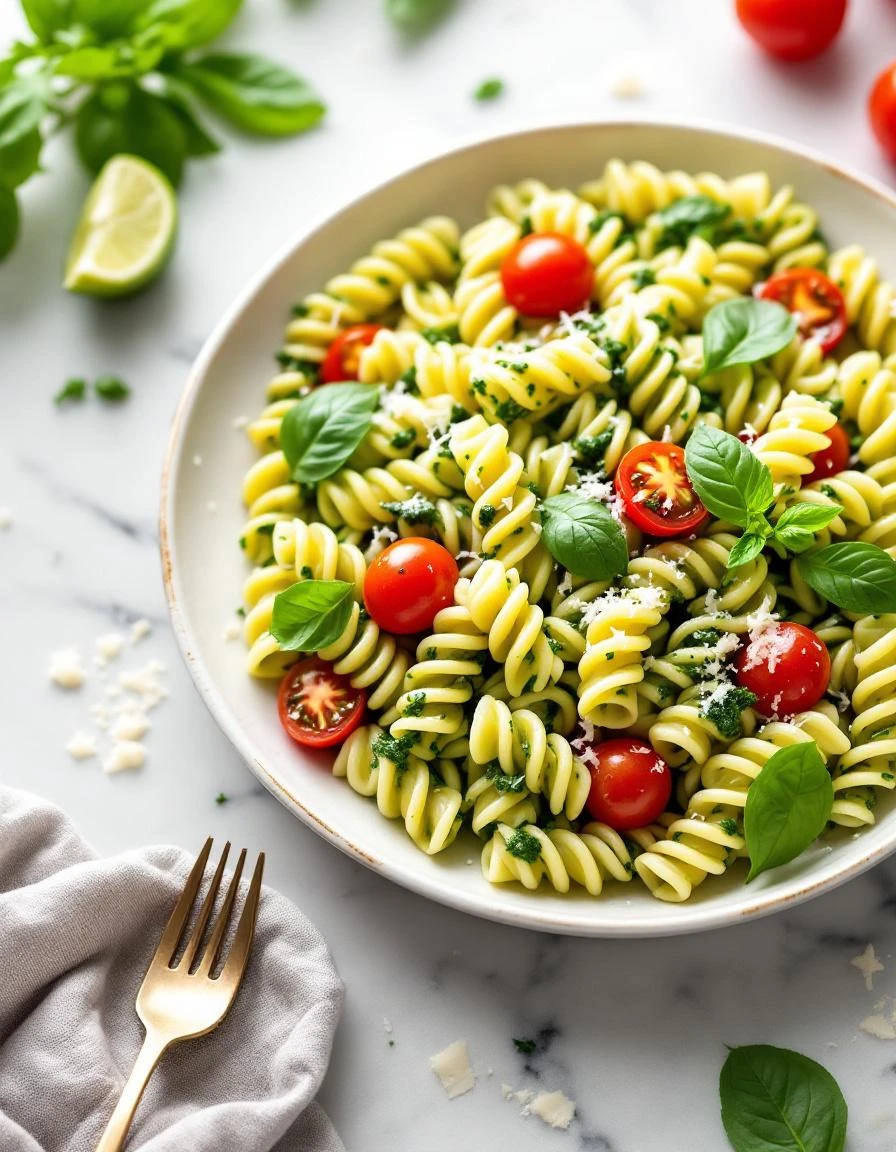
Chilled Pesto Pasta Salad
Ingredients
Equipment
Method
- Bring a large pot of salted water to a boil, then add the pasta and cook until al dente, about 8-10 minutes. Drain and rinse the noodles under cold water until chilled and no longer steaming, then set aside.
- In a large mixing bowl, scoop out the pesto and drizzle in the olive oil and lemon juice. Stir until the pesto is smooth and slightly loosened, creating a glossy, vibrant green sauce.
- Add the cooled pasta to the bowl and toss gently, scraping the pesto over all the noodles. Use a spoon or spatula to thoroughly coat each strand with the bright green sauce, watching the pesto cling and spread as you mix.
- Halve the cherry tomatoes and add them to the pasta, giving everything a gentle toss to distribute the fresh bursts of flavor and color throughout the dish.
- Sprinkle the grated Parmesan cheese over the top, then season with salt and pepper to taste. Toss again to evenly distribute the cheese and seasoning.
- Finish by drizzling a little extra olive oil over the salad for sheen, then give it one final gentle toss. Serve immediately for the freshest flavor and best texture, or chill in the fridge if making ahead.
Common mistakes and how to fix them
- FORGOT to taste the pesto before mixing—adjust salt and lemon for bright balance.
- DUMPED hot pasta into cold water without stirring—causes uneven cooling, stir immediately for even chill.
- OVER-TORCHED the pasta in boiling water—set timer, taste test early for perfect al dente.
- MISSED the chance to season the pasta water—add salt generously for better flavor absorption.
Make-Ahead and Storage Tips
- You can prep the pasta and wash the veggies a few hours ahead; keep everything chilled separately to prevent sogginess.
- Pesto can be made in advance—store it in an airtight container in the fridge for up to 3 days; stirring before use helps reincorporate oils.
- The salad tastes best when assembled just before serving, but you can combine everything a couple of hours ahead for deeper flavor infusion.
- Fridge time for fully mixed salad: up to 24 hours, but expect the noodles to absorb some pesto and lose a bit of texture.
- Refrigerated leftovers will develop a slightly oilier, more concentrated pesto flavor—best eaten within a day or two.
- To reheat, gently warm the pasta in a skillet or microwave, adding a splash of water or olive oil; check for warmth and freshness in smell and texture.
FAQs
1. How does this dish feel when eating?
The cold hits your cheeks sharply, and the pasta’s slick with pesto, each bite bright and oily. It’s refreshing and satisfying on a hot day.
2. What texture should the pasta have?
It’s best to use freshly cooked and rinsed pasta, which feels firm and slightly chewy, with a cooling, slippery coating of pesto in your mouth.
3. What are key flavors in this salad?
Use bright, fresh basil for a punch of herbal aroma, and add lemon juice for a citrusy zing that wakes up your senses.
4. How long can I keep it refrigerated?
Storing it too long makes the pesto oil separate, and noodles soak up flavors, turning softer and more oily after a day in the fridge.
5. How do I reheat leftovers?
Reheat by gently warming in a skillet or microwave, adding a splash of water or oil. Listen for the noodles warming and smell the pesto’s bright, oily aroma.

Hi, I’m Katie Dawson, the owner, cook, and storyteller behind Little More Lovely. I run a small café in a cozy corner of Seattle, where the smell of freshly baked bread meets the hum of neighborhood chatter. I’ve spent years learning how food can bring people together, both as a professional and as someone who loves to share meals with family and friends.