
Radishes often get a bad rap for their sharp bite and crunchy texture, but when you sauté them gently in butter, something magical happens. Their edges soften, their bite mellows out, and they develop a tender, almost sweet nuance that’s easy to overlook. This dish is a quiet reminder that even the most straightforward root vegetable can surprise you with its hidden layers.
Cooking radishes this way transforms their usual sharpness into a mellow, buttery flavor that pairs well with just about anything. It’s a simple, humble side that feels a little indulgent, yet refreshingly honest. I love making this when I want something comforting but not heavy, especially in those seasons when radishes are at their freshest and most vibrant.
Focusing on the overlooked beauty of radishes when cooked, revealing their hidden sweetness and tender texture, transforming a sharp, crunchy root into a mellow, buttery side dish.
The story behind this recipe
- A few years back, I was rummaging through my grandmother’s old cookbook, and I found a crumpled note tucked between the pages. It was her handwritten recipe for sautéed radishes—simple, unassuming, but packed with nostalgia. That moment made me realize how overlooked radishes are, especially when cooked—they turn into something entirely different, tender and subtly sweet.
- Ever since, I’ve played with that idea—taking radishes beyond their raw crunch and sharp bite. The simplicity of butter melting over hot radishes, transforming their flavor, feels like a small act of culinary rebellion. It’s honest home cooking, unpolished but deeply satisfying.
- heading: ‘The story behind this recipe’
Ingredient breakdown: key components
- Radishes: I love choosing small, firm radishes with bright red skin—they’re sweeter and more tender when sliced thinly, and their crisp bite is still present even after sautéing. Skip the large, dull ones for this dish.
- Butter: I use unsalted butter for that rich, creamy flavor that coats each radish perfectly. If you want a slightly nuttier note, try browned butter—just watch it carefully to avoid burning.
- Salt: A pinch of flaky sea salt really enhances the natural sweetness of the radishes. Don’t skip this step—trust me, it makes all the difference in balancing the dish.
- Pepper: Freshly ground black pepper adds a gentle heat and contrast. I like to sprinkle a little at the end for a subtle kick—don’t overdo it, let the radishes shine.
- Optional herbs: A sprinkle of chopped dill or chives can brighten the dish, but I often skip herbs if I want the pure radish-butter flavor to stand out. Experiment to find your favorite accent.
- Lemon juice: A squeeze of lemon brightens the whole plate, especially if the radishes are a bit dull in flavor. Add just before serving for a fresh, zesty lift.
- Cooking oil (optional): If your pan tends to stick, a tiny splash of neutral oil like canola can help. I prefer sticking to butter for that silky, rich finish—just keep an eye on the heat so it doesn’t burn.
Spotlight on key ingredients
Radishes:
- I pick small, firm radishes with vibrant skin—these are sweeter and more tender after sautéing. Skip dull, large ones for this dish.
- Radishes soften considerably when cooked, losing their raw crunch but gaining a tender, almost sweet edge that’s surprisingly mellow.
Butter:
- I prefer unsalted butter for its rich, creamy melt. If you want a nuttier flavor, try browned butter—just watch it carefully.
- The butter’s aroma—nutty and inviting—really defines the dish, coating each radish with a silky finish. Don’t skimp on it.
Notes for ingredient swaps
- Dairy-Free: Swap butter for olive oil or coconut oil; adds a different richness, slightly fruitier or nuttier in flavor.
- Vegan: Use vegan butter or a splash of sesame oil; offers a nutty aroma and similar creamy texture.
- Herb Variations: Substitute dill or chives with parsley or tarragon for a fresher, greener note.
- Salt Alternatives: Replace flaky sea salt with kosher salt or Himalayan pink salt; just adjust the quantity slightly.
- Add Heat: Toss in a pinch of red pepper flakes or a dash of smoked paprika for a smoky, spicy kick.
- Lemon Brightness: Use lime juice or a splash of vinegar if lemon isn’t available; maintains that zingy freshness.
- Cooking Fat: Try rendered bacon fat or duck fat for a richer, more decadent flavor profile.
Equipment & Tools
- Heavy skillet (cast iron preferred): Provides even heat for caramelization.
- Spatula or tongs: Turns radishes gently without breaking.
- Sharp knife and cutting board: Slices radishes uniformly for even cooking.
- Lemon squeezer: Adds fresh lemon juice for brightness.
Step-by-step guide to sautéing radishes
- Gather a small, heavy skillet—preferably cast iron—and set it over medium heat. You want it hot but not smoking before adding butter.
- While the pan heats, prepare your radishes. Trim the greens if attached, then rinse thoroughly. Slice them into thin, even rounds about 1/8 inch thick for uniform cooking.
- Add 2 tablespoons of unsalted butter to the hot skillet. Let it melt completely, swirling the pan to coat the surface evenly. Watch for a gentle sizzle and a nutty aroma as it melts.
- Once the butter is foaming and fragrant, carefully add the sliced radishes. Spread them in a single layer, making sure not to overcrowd the pan. Cook for about 3-4 minutes without stirring, until edges start to turn golden.
- Gently flip the radishes using tongs or a spatula. Cook for another 3-4 minutes, until they’re tender but still hold a slight bite. You should see a soft, translucent center with a caramelized rim.
- Season with a pinch of flaky sea salt and freshly ground black pepper. If the pan looks dry, add a small pat of butter or a teaspoon of water to create steam and help them soften.
- Check for doneness: radishes should be tender when pierced, with a slightly smoky aroma and a golden edge. They should jiggle gently but not be mushy.
- Remove from heat and squeeze a little fresh lemon juice over the radishes. Let them rest for a minute in the pan to absorb any remaining butter and flavors.
- Transfer to a serving plate, drizzle with any remaining butter from the pan, and finish with a final grind of black pepper. Serve warm, ideally with crusty bread or as a side to roasted meats.
Let the radishes rest in the pan for a minute to absorb flavors, then transfer to a plate. Drizzle with pan juices, add a spritz of lemon, and serve immediately while warm.
How to Know It’s Done
- Edges are golden and slightly caramelized.
- Radishes are tender when pierced with a fork.
- A fragrant, smoky aroma indicates proper caramelization.
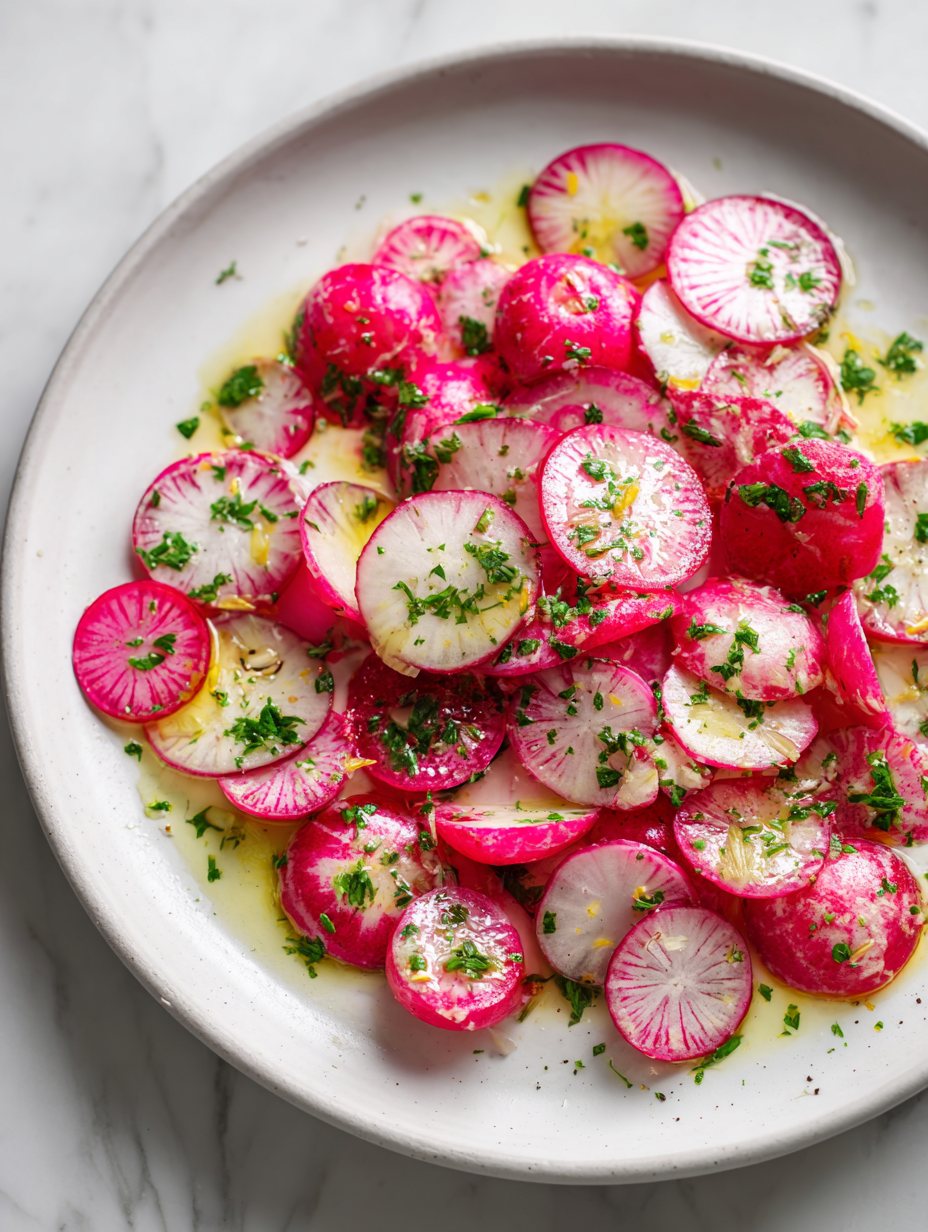
Sautéed Radishes with Butter and Lemon
Ingredients
Equipment
Method
- Trim any greens from the radishes and rinse them thoroughly under cold water to remove dirt. Pat them dry with a kitchen towel, then slice into thin rounds about 1/8 inch thick for even cooking and tender texture.
- Heat a heavy skillet over medium heat until hot, then add the butter. Let it melt completely, swirling the pan to coat the surface evenly. You’ll smell a nutty aroma as the butter warms.
- Add the sliced radishes to the skillet in a single layer. Cook without stirring for about 3-4 minutes, until the edges start to turn golden and the radishes become slightly translucent around the edges.
- Gently flip the radishes using tongs or a spatula, then cook for another 3-4 minutes. They should soften further, with a tender, almost melt-in-your-mouth texture and caramelized rims.
- Sprinkle a pinch of flaky sea salt and freshly ground black pepper over the radishes. If the pan looks dry, add a small pat of butter or a teaspoon of water to help them soften and develop flavor.
- Squeeze the juice of half a lemon directly over the radishes, then give everything a gentle stir to coat and brighten the flavors. Let them cook for another minute to absorb the citrus.
- Remove the skillet from heat and transfer the radishes to a serving plate, letting any remaining butter and juices drizzle over the top. Serve warm as a simple, elegant side dish.
Notes
Pro tips for sautéed radishes
- Bolded Mini-Head: Use high heat at the start to quickly sear radishes, locking in their sweet juices.
- Bolded Mini-Head: Slice radishes evenly; thinner slices caramelize faster and create a tender bite.
- Bolded Mini-Head: Swirl the pan constantly when melting butter to prevent burning and promote even coating.
- Bolded Mini-Head: Add a splash of water or lemon juice at the end to deglaze and brighten flavors.
- Bolded Mini-Head: Don’t overcrowd the pan; cook in batches if needed to achieve proper caramelization.
- Bolded Mini-Head: Keep an eye on the edges—they should turn a soft golden brown, signaling perfect doneness.
- Bolded Mini-Head: Finish with a sprinkle of flaky salt and fresh herbs for a flavor boost just before serving.
Common mistakes and how to fix them
- FORGOT to monitor heat, causing burnt butter—reduce to medium-low and stir often.
- DUMPED too much oil; stick to butter for authentic flavor and better caramelization.
- OVER-TORCHED radishes—remove from heat immediately to prevent bitterness and tough texture.
- UNDERESTIMATED cooking time—radishes need 6-8 minutes total for tender, caramelized edges.
Quick fixes and pantry swaps
- When radishes release too much moisture, splash a little more butter to crisp them up.
- DUMPED in cold butter—patch with a teaspoon of warm butter and stir quickly.
- If they smell burnt, immediately remove from heat to prevent bitterness.
- Splash some lemon juice if radishes turn dull or too mild in flavor.
- When pan sticks, add a tiny drizzle of oil to help loosen and shimmer the surface.
Prep, store, and reheat tips
- Prep the radishes by trimming and slicing thinly; store in an airtight container in the fridge for up to 24 hours. They stay crisp and fresh, ready to sauté.
- You can melt the butter ahead of time and keep it in a jar in the fridge for up to 3 days. Reheat gently until melted and fragrant before using.
- Cooked radishes can be stored in a covered container in the fridge for up to 2 days. They will soften further but still retain their buttery flavor.
- Reheat leftovers in a skillet over low heat, adding a small pat of butter if needed. Watch for steam and gentle sizzling—avoid overcooking, which makes them mushy.
- For best sensory results, reheat until the radishes are just warmed through, with a slight shimmer of butter and the aroma of melted butter gently filling the kitchen.
Top questions about sautéed radishes
1. What does sautéed radishes taste like?
Sautéed radishes develop a tender, slightly sweet flavor with a buttery aroma, softening their usual sharp bite.
2. Can I slice radishes thicker?
Yes, slicing them thin helps them cook evenly and quickly, creating a silky texture with caramelized edges.
3. What kind of radishes should I choose?
Use small, fresh radishes with vibrant skin for the best flavor and texture after cooking.
4. Why cook radishes in butter?
Cooking radishes in butter brings out their natural sweetness and creates a rich, mellow flavor profile.
5. Should I add lemon juice?
Adding lemon juice at the end brightens the dish, balancing the richness and enhancing the radishes’ subtle sweetness.
6. How long do I sauté radishes?
Cook radishes over medium heat for about 6-8 minutes until tender and caramelized on the edges.
7. Can I make this dairy-free?
You can substitute olive oil or coconut oil for butter to make it dairy-free; expect a slightly different flavor and texture.
8. What if I want a nuttier flavor?
Using browned butter adds a nutty aroma, but be careful not to burn it—use medium-low heat and watch closely.
9. Can I skip the pepper?
Freshly ground black pepper adds a subtle heat, but you can skip it or substitute with a pinch of chili flakes for spice.
10. Should I rest the radishes before serving?
Rest the radishes for a minute after cooking to let flavors meld, then serve warm with a drizzle of pan juices.
This simple radish dish is proof that humble ingredients can surprise with their quiet charm. The buttery softness and gentle sweetness make it a perfect sideline when you’re craving something honest and fresh. Sometimes, the simplest things turn out to be the most memorable.
In a season full of bold flavors and elaborate plates, this dish offers a breath of honest, understated pleasure. It’s a reminder that a few good ingredients, cooked with care, can still shine brightest on the plate. No fuss, just radishes and butter, in their purest form.

Hi, I’m Katie Dawson, the owner, cook, and storyteller behind Little More Lovely. I run a small café in a cozy corner of Seattle, where the smell of freshly baked bread meets the hum of neighborhood chatter. I’ve spent years learning how food can bring people together, both as a professional and as someone who loves to share meals with family and friends.