
Lobster tails often feel like an occasion on their own, but sometimes, all they need is a simple, honest touch to shine. This recipe focuses on that unassuming beauty—a tender, buttery lobster paired with bright lemon that feels both fancy and accessible. It’s a reminder that good ingredients, treated right, turn into something special with minimal fuss.
I love how a generous drizzle of lemon butter can turn a humble lobster tail into a comforting, almost nostalgic dish. No complicated sauces or fancy techniques—just honest cooking that lets the lobster’s sweetness and that zesty, rich butter do all the talking. It’s perfect for a quiet weekend dinner or a little celebration when you want something impressive but straightforward.
Focusing on the overlooked beauty of lobster tails, this recipe highlights how a simple lemon butter can transform a fancy seafood into a comforting, approachable dish. It’s about elevating everyday ingredients with honest technique, turning a special occasion into a relaxed, family-friendly meal.
The story behind this recipe
- This recipe comes from a night when I was craving something rich but didn’t want to fuss in the kitchen. I remembered a trip to Maine where lobster was just part of the scenery—simple, fresh, and bursting with flavor. That memory stuck with me, and I started experimenting with how minimal ingredients could still deliver a punch of bright, buttery goodness.
- Lemon butter isn’t just a sauce here; it’s the star that elevates the lobster without overshadowing its natural sweetness. It’s honestly about finding that balance—rich, zesty, and just a little bit indulgent—without making it complicated. Sometimes, the simplest things make the biggest impression, especially when they come from a place of honest cooking and a little bit of nostalgia.
- heading: ‘The story behind this recipe’
Key ingredients and tips
- Lobster tail: I love how the fresh, briny aroma hits me as soon as I crack it open. If yours smells overly fishy, it’s best to skip or recheck freshness.
- Lemon: The zest and juice bring that bright, zingy punch. Use a microplane for zest—trust me, it releases more scent—and don’t forget to taste for balance.
- Butter: I prefer unsalted, but if you only have salted, cut back a bit on added salt. The silky richness melts beautifully and coats the lobster perfectly.
- Garlic: Sautéed until golden and fragrant, it adds a mellow, nutty note. If you burn it, the bitter edge ruins the butter—keep it gentle and low.
- Parsley: Fresh chopped parsley finishes the dish with a pop of green and earthiness. Skip it if you want a more streamlined, minimalist look, but it brightens the plate.
- Olive oil: Just a splash to help the butter and lemon coat evenly during cooking. Use a good quality oil—less fuss, more flavor.
- White wine (optional): Adds a subtle acidity and depth. If you skip it, a tiny splash of chicken broth can offer a similar lift without the alcohol.
Spotlight on key ingredients
Lemon:
- Lobster tail: I love how the fresh, briny aroma hits me as soon as I crack it open. If yours smells overly fishy, it’s best to skip or recheck freshness.
- The zest and juice bring that bright, zingy punch. Use a microplane for zest—trust me, it releases more scent—and don’t forget to taste for balance.
- Butter: I prefer unsalted, but if you only have salted, cut back a bit on added salt. The silky richness melts beautifully and coats the lobster perfectly.
Garlic:
- Sautéed until golden and fragrant, it adds a mellow, nutty note. If you burn it, the bitter edge ruins the butter—keep it gentle and low.
- Parsley: Fresh chopped parsley finishes the dish with a pop of green and earthiness. Skip it if you want a more streamlined, minimalist look, but it brightens the plate.
- Olive oil: Just a splash to help the butter and lemon coat evenly during cooking. Use a good quality oil—less fuss, more flavor.
Notes for ingredient swaps
- Dairy-Free: Swap butter for coconut oil or a dairy-free margarine. Expect a slightly different richness and a hint of coconut aroma.
- Low-Sodium: Use a reduced-salt butter or skip added salt. The dish will be less salty but still bright with lemon and garlic.
- Herb Variations: Replace parsley with dill or chives for a different fresh note—each brings a unique brightness to the dish.
- Citrus Swap: Lime or orange zest and juice can replace lemon for a sweeter or more floral citrus flavor.
- Wine Alternative: Use apple cider vinegar mixed with a little water or chicken broth instead of white wine for acidity without alcohol.
- Butter Type: Clarified butter (ghee) can be used for a nuttier, more intense flavor and higher smoke point, but it’s richer.
- Garlic: Roasted garlic instead of raw adds sweetness and mellow aroma, but reduces pungency and bite.
Equipment & Tools
- Paring knife: To cut and pry open the shell precisely.
- Baking sheet with wire rack: For even baking and easy cleanup.
- Basting brush: To coat lobster with lemon butter.
- Small saucepan: To melt and infuse the butter with garlic and lemon.
Step-by-step guide to Lemon Butter Lobster
- Equipment & Tools: Gather a sharp paring knife, a baking sheet with a wire rack, a basting brush, and a small saucepan. The knife for precise cuts, the rack for even cooking, and the saucepan for melting butter.
- Preheat your oven to 200°C (390°F). Line the baking sheet with foil and set the wire rack on top. This setup ensures even heat and easy cleanup.
- Prepare the lobster tails: Use the paring knife to cut down the top shell lengthwise, about 1/4 inch from the edge, stopping before the tail fin. Carefully pry open the shell and lift the meat, keeping it attached at the tail end.
- Season generously with salt and a pinch of pepper. Rinse briefly if needed, then pat dry with paper towels. This boosts flavor and helps the butter stick.
- Make lemon butter: In the saucepan, melt 1/2 cup unsalted butter over low heat. Stir in 2 cloves minced garlic, zest and juice of 1 lemon, a pinch of salt, and a splash of white wine if using. Simmer for 2-3 minutes until fragrant.
- Brush the lobster meat generously with the lemon butter, ensuring every inch is coated. Place the tails on the wire rack, shell side down, for even heat distribution.
- Bake for 12-15 minutes, basting once or twice with more lemon butter. The lobster should turn opaque and firm, with edges slightly caramelized.
- Check doneness: The meat should be opaque and firm to the touch, with a golden edge. The internal temperature should reach 60°C (140°F).
- Rest for 2 minutes: Let the lobster tails rest briefly. Drizzle with a final squeeze of lemon, sprinkle chopped parsley if desired, and serve hot.
- Serve immediately, optionally with extra lemon wedges and a side of crusty bread. The butter should be bubbling lightly and smell bright and buttery.
Let the lobster rest for 2 minutes to settle juices. Finish with a squeeze of lemon and chopped parsley for freshness. Serve immediately while the butter is still warm and fragrant.
How to Know It’s Done
- Lobster meat turns opaque and is firm to the touch.
- Edges of the meat are lightly caramelized and golden.
- Internal temperature reaches 60°C (140°F).
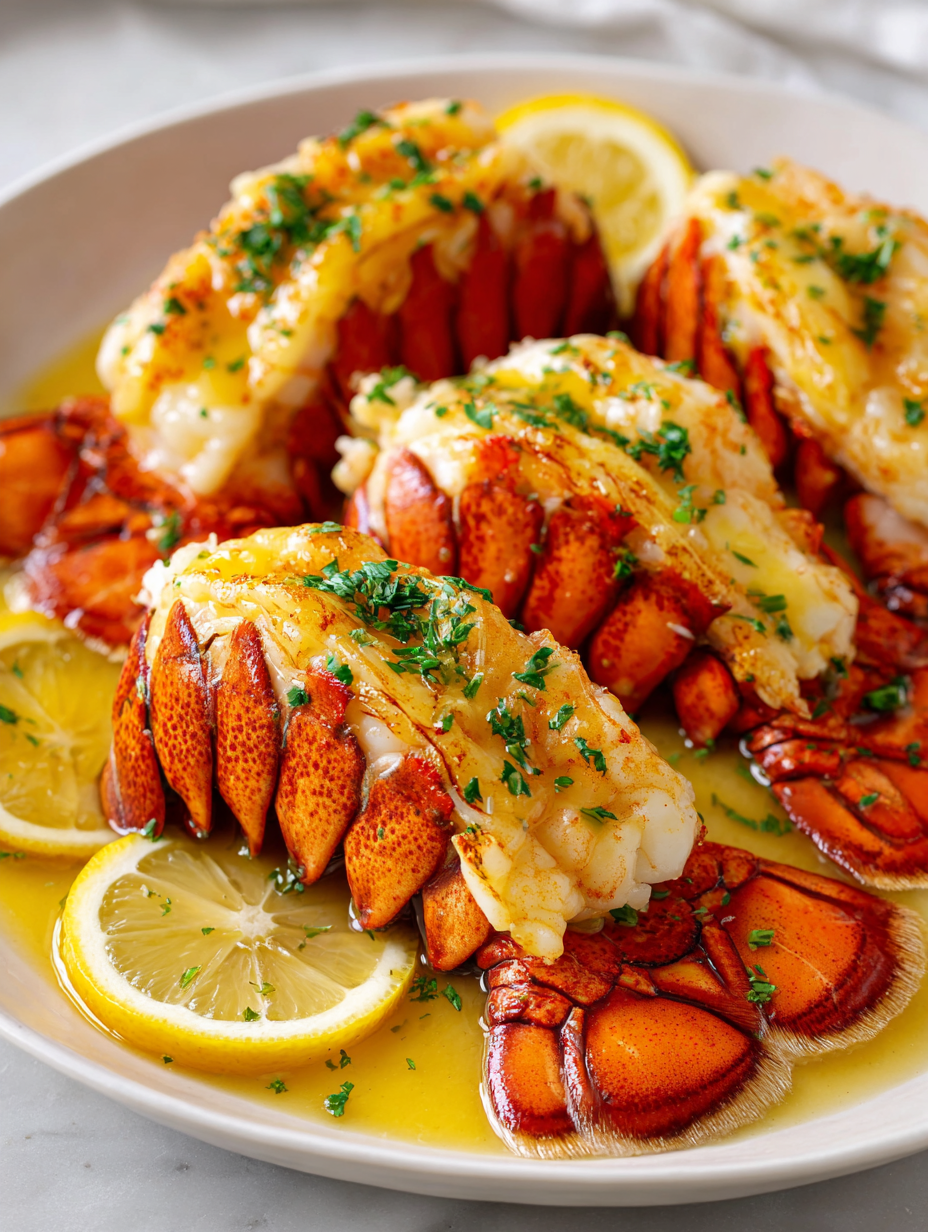
Lemon Butter Lobster Tails
Ingredients
Equipment
Method
- Preheat your oven to 200°C (390°F) and line a baking sheet with foil, placing a wire rack on top to promote even cooking.
- Using a paring knife, carefully cut down the top shell of each lobster tail, stopping just before the tail fin. Gently pry the shell open and lift the meat, keeping it attached at the tail end so it rests on top of the shell.
- Pat the lobster meat dry with paper towels and season lightly with salt and pepper for enhanced flavor.
- In a small saucepan, melt the butter over low heat, then add the minced garlic and cook gently until fragrant, about 2 minutes. Stir in lemon zest, lemon juice, and white wine, simmering briefly until the mixture is well combined.
- Brush the lobster meat generously with the warm lemon butter, making sure to coat all sides evenly for maximum flavor.
- Place the lobster tails shell side down on the wire rack. Bake in the preheated oven for about 12-15 minutes, basting once or twice with more lemon butter, until the meat is opaque and slightly golden at the edges.
- Remove from the oven, let rest for a couple of minutes, then squeeze a little fresh lemon over the top and sprinkle with chopped parsley for a bright finish.
- Serve immediately with extra lemon wedges and enjoy the tender, buttery lobster with its vibrant citrus notes.
Pro tips for perfect lobster tails
- Bolded mini-head: Use a microplane for lemon zest to unlock maximum bright aroma.
- Bolded mini-head: Gently sauté garlic over low heat until fragrant—burned garlic adds bitterness, so stay gentle.
- Bolded mini-head: Baste lobster with lemon butter halfway through baking to keep it moist and flavorful.
- Bolded mini-head: Check lobster doneness by its opaque color and firm texture—avoid overcooking.
- Bolded mini-head: For a richer butter, melt slowly over low heat to prevent separation and burning.
- Bolded mini-head: Rest the lobster briefly after baking to allow juices to redistribute for maximum tenderness.
- Bolded mini-head: Finish with a squeeze of lemon and a sprinkle of parsley for a fresh, vibrant contrast.
Common mistakes and how to fix them
- FORGOT to preheat oven → Ensure oven is fully heated before baking.
- DUMPED too much lemon → Use fresh lemon and measure carefully for balanced brightness.
- OVER-TORCHED butter → Melt butter gently over low heat to prevent burning.
- SKIPPED resting time → Let lobster rest briefly for juices to settle, preventing rubbery texture.
Quick fixes and pantry swaps
- When sauce seizes → Splash in a teaspoon of warm water to loosen it.
- If lobster is overcooked → Drench in hot lemon butter for extra moisture.
- Dumped too much lemon → Use a bit of honey or sugar to balance acidity.
- When butter browns too quickly → Lower heat immediately to prevent burnt flavor.
- Splash with a splash of white wine → Adds brightness if sauce feels dull.
Prep, store, and reheat tips
- Prep the lemon butter ahead by melting and combining ingredients; store in an airtight container for up to 2 days. The bright aroma will deepen overnight.
- Clean and partially cut the lobster tails in advance. Keep them covered in the fridge for up to 24 hours; avoid soaking in water to prevent sogginess.
- You can assemble the lobster on the baking sheet (shell side down) and refrigerate for up to 4 hours before baking. The butter may firm up—bring to room temp for easier basting.
- Reheat leftovers gently: warm in a covered skillet over low heat until butter shimmers and lobster is just warmed through. Avoid high heat to prevent rubbery texture.
- The lemon butter flavor intensifies over time, so taste and adjust lemon or salt just before serving for the freshest punch.
FAQs about Lemon Butter Lobster Tail
1. Can I use frozen lobster tails?
Use fresh, raw lobster tails for the best flavor. Frozen ones can be okay if thoroughly thawed and rinsed, but fresh is brighter and sweeter.
2. How do I select a good lobster tail?
A good lobster tail should feel firm and heavy for its size. The shell should be shiny and without cracks, and the meat should be translucent and resilient when pressed.
3. How do I know when lobster is cooked?
Cooking times vary with size, but generally 12-15 minutes at 200°C (390°F) is enough. The meat turns opaque and firm, with edges slightly golden.
4. What’s the internal temperature for perfect lobster?
Use a reliable kitchen thermometer; lobster is done at about 60°C (140°F). The meat should be opaque and not gel-like or translucent.
5. How can I avoid overcooking the lobster?
To prevent overcooking, keep an eye on the color and texture. Baste with butter during baking to keep it moist and shiny.
6. How should I finish and serve the lobster?
A squeeze of fresh lemon at the end brightens the dish, and a sprinkle of parsley adds color and herbal freshness. Serve immediately for the best experience.
7. Can I prepare this recipe in advance?
You can prepare the lobster tails a day ahead, keep in the fridge, and bake just before serving. The sauce can be made in advance and reheated gently.
8. What if my lemon butter sauce thickens or separates?
If the butter sauce seizes or thickens unexpectedly, whisk in a splash of warm water or lemon juice to loosen it up.
9. What should I do if the lobster cooks unevenly?
When the shell or meat looks unevenly cooked, baste again or cover loosely with foil to retain moisture and heat evenly.
10. How can I boost the flavor if the sauce is bland?
Splash a little white wine or broth into the sauce if it seems dull or lacks brightness. It adds a fresh, tangy note that complements the lemon butter.
Cooking lobster with lemon butter feels like a small celebration in itself. The bright aroma of lemon mixed with the rich, buttery meat makes every bite memorable, even if the kitchen is a bit chaotic. It’s a dish that reminds me how simple ingredients, treated with honesty, can turn an ordinary day into something special.
In the end, it’s about the little moments—squeezing that fresh lemon over the warm lobster, listening for the gentle crackle of butter, and sharing it with someone who appreciates honest, straightforward cooking. That’s what makes this dish stick in my memory, long after the plates are cleared and the table is empty.

Hi, I’m Katie Dawson, the owner, cook, and storyteller behind Little More Lovely. I run a small café in a cozy corner of Seattle, where the smell of freshly baked bread meets the hum of neighborhood chatter. I’ve spent years learning how food can bring people together, both as a professional and as someone who loves to share meals with family and friends.