
This shrimp garlic pasta isn’t just about quick comfort; it’s about how garlic, when cooked right, turns into a fragrant, almost nutty oil that coats every strand of pasta and tender shrimp. I’ve always loved how a simple ingredient like garlic can elevate a dish from basic to memorable, especially when it’s allowed to slowly infuse the oil with its aroma. It’s that moment—when the garlic starts to sizzle and smell warm and toasty—that sets the tone for everything that follows.
I stumbled on this recipe during a busy week when I needed something satisfying but not overthought. The magic happens in the way the garlic oil creates a layered aroma—rich, slightly smoky, with a hint of sweetness—that makes the whole dish feel like a special treat. It’s honest, straightforward, no fuss, but every bite is packed with flavor that feels like a little celebration in the middle of a weekday.
Focusing on how the garlic infuses the oil, creating a fragrant base that transforms the simple shrimp and pasta into a layered, aromatic experience.
The aromatic magic of garlic oil
- Cooking this dish always reminds me of summer evenings by the coast, where garlic and shrimp mingle with sea breeze scents.
- I felt such pride when I finally nailed the perfect balance of garlic and heat—every bite bursting with flavor.
- There’s a nostalgic rush each time I make this—reminds me of family dinners and carefree weekends.
- This recipe became my go-to when I needed comfort, the aroma alone lifts my mood instantly.
- I love how the simple act of sautéing garlic can turn a humble pasta into something truly memorable.
The aroma that keeps me coming back
- This dish came together on a night when I was craving something quick but full of flavor. I remember rummaging through my kitchen, finding some frozen shrimp, a clove of garlic that smelled particularly pungent, and a nearly empty jar of good olive oil. The moment I started sautéing garlic and hearing that gentle crackle, I knew I was onto something special.
- It’s funny how a simple combination like garlic and shrimp can spark a rush of memories—lazy summer evenings, family gatherings, and the quiet joy of a meal that feels both spontaneous and satisfying. That’s what makes this recipe stick around; it’s honest, unpolished, and packed with layers of aroma and flavor, just like those perfect, unplanned nights.
- heading: The aroma that keeps me coming back
Historical and Cultural Notes
- This dish’s roots trace back to coastal Italy, where fresh seafood and garlic were staples for quick, flavorful meals.
- Garlic-infused oils have been a culinary secret for centuries, used to elevate simple pasta and seafood dishes alike.
- The combination of shrimp and garlic gained popularity in Mediterranean cooking, celebrated for its bold aroma and satisfying taste.
- In some coastal regions, this dish was traditionally made with locally caught shrimp and homemade pasta, emphasizing freshness.
- Modern takes often include a splash of lemon or herbs, but the core idea of garlic and seafood remains timeless.
Ingredient breakdown
- Shrimp: I prefer peeled, deveined shrimp with tails off; they cook quickly and stay tender. For a richer flavor, buy fresh or frozen wild shrimp. The aroma of cooked shrimp should be sweet and briny, like the ocean itself.
- Garlic: I use fresh garlic cloves, sliced thin for even sautéing. When it hits the hot oil, it should sizzle gently and release a fragrant, slightly nutty aroma. If it starts to burn, turn down the heat immediately to avoid bitterness.
- Olive Oil: Extra virgin olive oil is my go-to for its fruity, peppery notes. It’s the base of my garlic oil. A splash of good oil makes all the difference—look for a vibrant greenish hue and a fresh, grassy scent.
- Pasta: I usually opt for spaghetti or linguine—something that holds onto the sauce well. Cook it al dente—firm but not hard. When you bite, it should give with a slight chew, and the surface should shimmer slightly with oil.
- Lemon Juice: Freshly squeezed lemon brightens everything. I add it at the end, and it should smell zesty and clean, with a slight shimmer of acidity that cuts through the richness of the garlic oil.
- Red Pepper Flakes: Just a pinch for heat—don’t overdo it unless you love spice. They should crackle softly when they hit the hot oil, releasing a smoky aroma that mingles with garlic.
- Parsley: Fresh chopped parsley adds color and freshness. It should smell grassy and slightly peppery, and when sprinkled on hot pasta, it releases a bright aroma that lifts the dish.
Spotlight on key ingredients
Shrimp:
- I prefer peeled, deveined shrimp with tails off; they cook quickly and stay tender. For a richer flavor, buy fresh or frozen wild shrimp. The aroma of cooked shrimp should be sweet and briny, like the ocean itself.
- Garlic: I use fresh garlic cloves, sliced thin for even sautéing. When it hits the hot oil, it should sizzle gently and release a fragrant, slightly nutty aroma. If it starts to burn, turn down the heat immediately to avoid bitterness.
Garlic:
- I use fresh garlic cloves, sliced thin for even sautéing. When it hits the hot oil, it should sizzle gently and release a fragrant, slightly nutty aroma. If it starts to burn, turn down the heat immediately to avoid bitterness.
- Olive Oil: Extra virgin olive oil is my go-to for its fruity, peppery notes. It’s the base of my garlic oil. A splash of good oil makes all the difference—look for a vibrant greenish hue and a fresh, grassy scent.
Notes for ingredient swaps
- Dairy-Free: Skip butter or cheese; your pasta will be less creamy but still flavorful with extra garlic and herbs.
- Gluten-Free: Use gluten-free pasta—just keep an eye on cooking time as it may vary; texture might be slightly different.
- Shellfish Variations: Substitute scallops or chunks of firm white fish if shrimp isn’t available; watch cooking times carefully.
- Oil Choices: Avocado or vegetable oil can replace olive oil; they won’t have the same fruity note but will work in a pinch.
- Lemon Juice: Lime juice offers a similar bright acidity, but it’s slightly more tart and less sweet than lemon.
- Spice Level: Adjust red pepper flakes or add fresh chili for more heat; balance with a squeeze of lemon to tame the spice.
- Herbs: Cilantro or basil can replace parsley for a different fresh note; add at the end for maximum aroma.
Equipment & Tools
- Large skillet or sauté pan: Cook shrimp and make the sauce
- Large pot: Boil pasta
- Slotted spoon: Remove shrimp and drain pasta
- Microplane or grater: Finely grate garlic
- Measuring spoons: Measure lemon juice and spices
Step-by-step guide to Shrimp Garlic Pasta
- Equipment: Use a large, deep skillet or a wide sauté pan—about 30cm (12 inches)—to give the shrimp space to cook evenly. Have a pasta pot ready for boiling, a slotted spoon for shrimp removal, and a fine grater or microplane for garlic.
- Bring a large pot of salted water to a rolling boil—about 100°C (212°F). Cook your pasta until just al dente—about 8 minutes for spaghetti, until it gives slightly under your bite. Drain, reserving a cup of pasta water.
- While pasta cooks, heat 2 tablespoons of olive oil over medium heat (about 160°C/320°F). When shimmering, add thinly sliced garlic (about 2-3 cloves). Sauté until fragrant, light golden, and slightly toasted—about 30 seconds to 1 minute. Watch carefully to prevent burning.
- Add the shrimp to the pan (about 200g or 7 oz). Cook for 2-3 minutes per side, until they turn pink and opaque. They should jiggle slightly in the middle but hold their shape. If they curl tightly or turn gray, they’re overcooked. Remove shrimp to a plate and set aside.
- Deglaze the pan with a splash of pasta water (about 1/4 cup). Scrape up any browned bits. Add lemon juice (about 1 tablespoon) and red pepper flakes (a pinch). Stir to combine, then add the cooked pasta. Toss to coat, adding more pasta water if needed to loosen the sauce and create a silky coating.
- Return the shrimp to the pan. Toss everything gently, allowing the flavors to meld—about 1 minute. Adjust seasoning with salt if needed. Finish with freshly chopped parsley, a drizzle more olive oil if desired, and a squeeze of lemon for brightness.
- Plate immediately. Rest for 1 minute to let flavors settle. Serve hot, with extra lemon wedges on the side for an extra zing.
Serve immediately, garnished with extra parsley and lemon wedges. Let sit for a minute to settle flavors and prevent burning your mouth on hot pasta.
How to Know It’s Done
- Shrimp are fully opaque and pink, with a slight jiggle in the middle.
- Pasta is al dente—firm to the bite, with a glistening surface coated in sauce.
- The garlic oil is fragrant, toasted, and not burnt, with a nutty aroma.
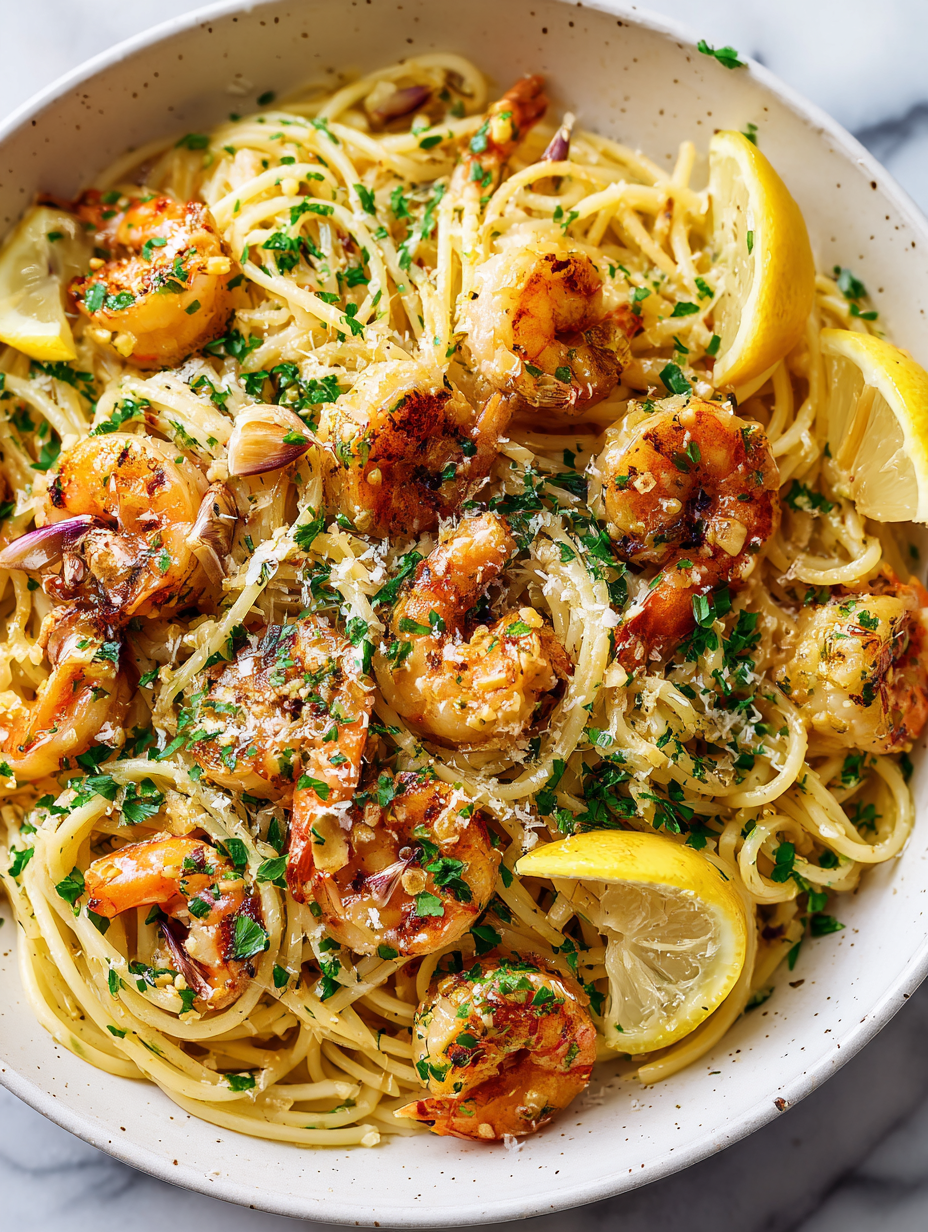
Shrimp Garlic Pasta
Ingredients
Equipment
Method
- Bring a large pot of salted water to a rolling boil, then cook the pasta until just al dente, about 8 minutes. Drain and set aside, reserving a splash of pasta water.
- While the pasta cooks, heat 2 tablespoons of olive oil in a large skillet over medium heat. When shimmering and fragrant, add the sliced garlic, and sauté gently until it turns golden and releases a warm, nutty aroma—about 1 minute.
- Add the shrimp to the skillet in a single layer. Cook for 2-3 minutes per side, until they turn pink, opaque, and slightly firm. Remove the shrimp from the pan and set aside.
- Deglaze the pan with a splash of the reserved pasta water, scraping up any browned bits. Stir in the lemon juice and red pepper flakes, then add the cooked pasta to the skillet. Toss everything together gently to coat the pasta in the fragrant garlic oil, adding more pasta water if needed for a silky sauce.
- Return the cooked shrimp to the skillet, tossing them with the pasta. Sprinkle with chopped parsley and drizzle with a little more olive oil if desired. Give everything a final gentle toss until well combined and heated through.
- Serve immediately, garnished with extra parsley and lemon wedges if desired. The dish should be glossy, aromatic, and bursting with flavor.
Tips & Tricks for Perfect Pasta
- Bolded Mini-Head: Use a gentle heat when sautéing garlic; this keeps it fragrant without burning.
- Bolded Mini-Head: Sauté garlic until just golden; smell it turn nutty and feel the oil warm but not smoking.
- Bolded Mini-Head: Add shrimp while the garlic oil is still fragrant; they cook quickly and should turn pink and opaque.
- Bolded Mini-Head: When tossing pasta with sauce, add reserved water gradually; it helps create a silky coating.
- Bolded Mini-Head: Don’t overcook the shrimp; they are done when they’re firm, pink, and jiggle slightly in the middle.
- Bolded Mini-Head: Finish with lemon juice off heat; it brightens and balances the richness of the garlic oil.
- Bolded Mini-Head: Toss in fresh parsley last; it releases aroma and keeps its bright green color.
Common mistakes and how to fix them
- OVERCOOKED SHRIMP: Turn off heat immediately; they turn rubbery if cooked too long.
- BURNED GARLIC: Remove from heat once fragrant; burnt garlic turns bitter quickly.
- SOGGY PASTA: Drain thoroughly and toss in hot oil to prevent clumping and sogginess.
- LACK OF FLAVOR: Add a pinch of salt at every stage; enhance with fresh herbs for brightness.
Fast Fixes for Common Issues
- When sauce is too thin, splash in a bit more pasta water and simmer until glossy.
- If garlic burns, remove pan from heat immediately and start over with fresh garlic.
- Dull shrimp? Sauté in a hotter pan for a minute longer, but avoid overcooking.
- Splash more lemon if dish feels flat; the bright acidity lifts all flavors instantly.
- Patch over salty sauce with a small knob of unsalted butter or a pinch of sugar.
Prep, store, and reheat tips
- Prep the shrimp: peeled and deveined shrimp can be cleaned a day ahead; keep refrigerated for up to 24 hours, maintaining their fresh briny scent.
- Slice garlic in advance: store sliced garlic in an airtight container in the fridge; it retains aroma but should be used within 1-2 days to prevent bitterness.
- Cook pasta ahead: cook until just al dente, drain, toss with a little olive oil, and store in an airtight container in the fridge for up to 24 hours—expect a slight firm texture upon reheating.
- Reheat gently: warm leftovers in a skillet over low heat, adding a splash of water or oil; the dish should shimmer and smell fragrant, not burnt.
- Shelf life: best enjoyed within 1-2 days; after that, flavors fade and pasta can become mushy, so plan accordingly for freshness.
Top questions about Shrimp Garlic Pasta
1. How do I know when the shrimp are done?
Cook the shrimp just until they turn pink and opaque, about 2-3 minutes per side. Overcooked shrimp turn rubbery and lose their delicate texture.
2. Can I use garlic powder instead of fresh garlic?
Use fresh garlic for the best aroma; sliced thin so it infuses the oil evenly without burning quickly. Burnt garlic adds a bitter taste.
3. Should I rinse the pasta after boiling?
Cook pasta until just al dente, then toss it with the garlic oil immediately to absorb the flavors. Overcooking pasta makes it mushy and less flavorful.
4. When do I add lemon juice for the best flavor?
Add lemon juice at the end of cooking to brighten the dish and balance the richness of the garlic oil. It should shimmer and smell zesty.
5. Can I substitute vegetable oil for olive oil?
Use good quality extra virgin olive oil; it provides a fruity, peppery note that’s essential for the garlic oil’s aroma. A dull oil won’t impart the same depth.
6. My sauce is runny, what can I do?
If the sauce is too thin, add a bit more pasta water and toss again; it helps create a silky, clingy coating. If too thick, loosen with extra water.
7. Can I make this dish vegetarian?
Fresh parsley added at the end keeps its bright aroma and color. For a different twist, basil or cilantro can work but will change the flavor profile.
8. How much salt should I add?
Avoid over-seasoning early; taste and adjust salt and spice at the end to keep the flavors balanced and fresh.
9. Can I reheat this dish?
Reheat leftovers gently in a skillet over low heat, adding a splash of water to revive the sauce’s silky texture. Avoid microwave reheating to prevent sogginess.
10. How long does the dish stay fresh?
This dish is quick to prepare but best enjoyed fresh. The aroma of garlic and shrimp fades after a day or so in the fridge.
Cooking this shrimp garlic pasta reminds me how simple ingredients can come alive with a little heat and patience. The aroma of garlic sizzling in oil and the vibrant pop of fresh shrimp make every kitchen session feel like a small celebration.
It’s a dish that’s honest and unpretentious, perfect for when you want comfort without fuss. Right now, in the midst of busy days and fleeting seasons, it’s nice to have a meal that feels both familiar and invigorating, straight from the pan to the plate.

Hi, I’m Katie Dawson, the owner, cook, and storyteller behind Little More Lovely. I run a small café in a cozy corner of Seattle, where the smell of freshly baked bread meets the hum of neighborhood chatter. I’ve spent years learning how food can bring people together, both as a professional and as someone who loves to share meals with family and friends.