
Making marinara from scratch feels like peeling back layers of a story you’ve heard a hundred times but now get to tell in your own way. The aroma of slowly simmering tomatoes, garlic, and herbs fills the kitchen, making even the simplest dinner feel special. It’s not just about the sauce—it’s about reclaiming that nostalgic, homey scent and turning it into a dish that feels both familiar and new.
Shrimp marinara is one of those dishes that’s easy to overlook because it looks so straightforward. But when you make your own sauce, it’s like giving the dish a soul. That balance of sweet, tangy, and umami flavors from a sauce you’ve nurtured from scratch can turn an everyday meal into something worth savoring.
Focusing on a homemade, from-scratch marinara sauce that balances sweet, tangy, and umami layers, elevating the shrimp dish beyond quick fix to a comforting, nostalgic meal.
A Seafood Classic Reclaimed
- Cooking this dish reminds me of lazy summer evenings by the coast, the scent of sea air mixing with garlic and herbs.
- There’s a quiet pride in making my own marinara—seeing it bubble and thicken feels like nurturing a small miracle.
- Every time I serve this, I remember the first time I nailed the perfect balance of sweetness and acidity in the sauce.
- It’s a dish that brings back the chaos of family dinners and the comfort of shared, messy plates.
- Making this from scratch feels like reclaiming a lost art, turning simple ingredients into something soulful.
A Seafood Classic Reclaimed
This shrimp marinara recipe came together after a trip to Italy where I watched a local cook simmer her sauce for hours, using just fresh tomatoes, garlic, and a splash of wine. I wanted that same depth of flavor without the fuss, so I started experimenting with quick simmer times and a handful of pantry staples. Turns out, a simple, well-balanced marinara can be just as rich and satisfying in under 30 minutes, especially when the shrimp are fresh and juicy, soaking up all those bright, garlicky notes. It’s a dish that’s become my go-to for weeknights, offering comfort and a little taste of Italy right at home.
Historical and Cultural Roots
- Shrimp marinara has roots in Italian coastal cuisine, where fresh seafood and tomato sauces were staples for seaside families.
- The dish gained popularity in American homes in the mid-20th century, especially as quick, flavorful weeknight dinners.
- Historically, marinara sauce was a humble, peasant-style recipe, made with simple ingredients like tomatoes, garlic, and herbs.
- The combination of shrimp and marinara reflects a fusion of land and sea flavors, common in Mediterranean cooking traditions.
- Making your own marinara sauce from scratch is a practice that dates back centuries, emphasizing freshness and seasonal ingredients.
Key Ingredients Breakdown
- Shrimp: I prefer shell-on because it adds flavor during cooking, plus it’s easier to peel at the table for a bit of interactive fun. Try deveining and keep the shells on for more aroma.
- San Marzano Tomatoes: Their sweet, bright acidity makes the sauce sing. If unavailable, use good-quality canned plum tomatoes, but avoid watery ones that dilute the sauce’s richness.
- Garlic: Fresh garlic gives a punch of aromatic sharpness. Sauté until just golden to avoid bitterness—nothing worse than burnt garlic in a marinara.
- Olive Oil: Use a good extra virgin for that fruity, peppery kick. It’s the base of flavor—don’t skimp, but do watch the heat to prevent smoking and bitterness.
- Herbs: Fresh basil and oregano lift the sauce. Add basil at the end for brightness, and oregano early for that earthy, savory note. Dried can work in a pinch but won’t be quite as vibrant.
- White Wine: Adds depth and a hint of acidity. Use a decent, dry white—nothing too sweet. Let it simmer away to cook off the alcohol and concentrate the flavor.
- Crushed Red Pepper: Just a pinch for heat. It’s the secret to making the sauce lively, so don’t hold back if you like a little kick—your nose will tell you when it’s enough.
Spotlight on Key Ingredients
Shrimp:
- I prefer shell-on because it adds flavor during cooking, plus it’s easier to peel at the table for a bit of interactive fun. Try deveining and keep the shells on for more aroma.
- San Marzano Tomatoes: Their sweet, bright acidity makes the sauce sing. If unavailable, use good-quality canned plum tomatoes, but avoid watery ones that dilute the sauce’s richness.
- Garlic: Fresh garlic gives a punch of aromatic sharpness. Sauté until just golden to avoid bitterness—nothing worse than burnt garlic in a marinara.
Herbs:
- Olive Oil: Use a good extra virgin for that fruity, peppery kick. It’s the base of flavor—don’t skimp, but do watch the heat to prevent smoking and bitterness.
- Fresh basil and oregano lift the sauce. Add basil at the end for brightness, and oregano early for that earthy, savory note. Dried can work in a pinch but won’t be quite as vibrant.
Notes for ingredient swaps
- Seafood Swap: Use scallops or chunks of firm white fish instead of shrimp for a different texture and flavor. They cook quickly, so adjust timing accordingly.
- Tomato Base: If canned tomatoes aren’t available, use fresh, ripe tomatoes blended until smooth. Expect a fresher, slightly chunkier sauce.
- Herb Variations: Fresh parsley or thyme can replace basil or oregano. They offer a milder, earthy note, but skip dried herbs for a more vibrant fresh flavor.
- Olive Oil: Swap for avocado oil if you prefer a milder taste. It’s less fruity but still adds richness without overpowering the dish.
- Wine Alternative: Use a splash of chicken or vegetable broth with a dash of vinegar (like sherry) if you don’t want alcohol. It adds acidity without the kick.
- Spice Level: Replace red pepper flakes with smoked paprika for a deeper, smoky heat or omit entirely for milder flavor.
- Gluten-Free Pasta: Serve over spiralized zucchini or other veggie noodles if you’re avoiding carbs or gluten. They soak up the sauce beautifully.
Equipment & Tools
- Large skillet: Cook the sauce and shrimp evenly.
- Sharp knife: Prep shrimp and herbs.
- Cutting board: Provide a stable surface for prep.
- Wooden spoon: Stir sauce without scratching pan.
- Small bowl: Hold peeled and deveined shrimp.
Step-by-step Guide to Shrimp Marinara
- Equipment & Tools: Gather a large skillet (preferably stainless steel), a sharp knife, a cutting board, a wooden spoon, and a small bowl for shrimp prep.
- Peel and devein the shrimp if not already done. Pat dry with paper towels. Set aside.
- Heat 2 tbsp olive oil over medium heat (about 160°C/320°F) in the skillet. When shimmering, add minced garlic (about 3 cloves, finely chopped).
- Sauté garlic until fragrant, about 30 seconds to 1 minute, until it turns golden but not brown. Watch for a sweet aroma and slight sizzle.
- Pour in ½ cup white wine (120 ml). Let it simmer for 2-3 minutes, stirring occasionally, until reduced by half. The smell should intensify with a hint of acidity.
- Add crushed San Marzano tomatoes (1 can, 400g). Stir well, breaking up the tomatoes with the spoon. Bring to a gentle simmer, about 5 minutes, until sauce thickens slightly. Should be bubbling gently with a rich tomato scent.
- Season with salt, freshly ground black pepper, and a pinch of red pepper flakes. Add a handful of chopped fresh basil and dried oregano. Stir and simmer for another 5 minutes, allowing flavors to meld.
- Push sauce to one side of the skillet. Increase heat slightly and add the shrimp in a single layer. Cook for 2-3 minutes per side, until pink and opaque. The shrimp should jiggle slightly when done, with a subtle smoky aroma.
- Toss the shrimp in the sauce, cook for 1 minute to absorb flavors. Taste and adjust seasoning if needed. If sauce reduces too much, add a splash of water or wine to loosen.
- Resting & Finishing: Turn off heat. Let sit for 2 minutes. Serve hot, garnished with extra basil leaves. Plate with crusty bread or over cooked pasta. The sauce should cling to the shrimp and have a bright, garlicky scent.
Once plated, let the dish rest for a minute to settle flavors. Garnish with fresh basil leaves and serve immediately, ideally with warm bread or over pasta to catch every drop of sauce.
How to Know It’s Done
- Shrimp are opaque and pink with a slight jiggle.
- Sauce is thickened, vibrant red, with a fragrant tomato aroma.
- Garlic is golden and fragrant, not burnt or bitter.
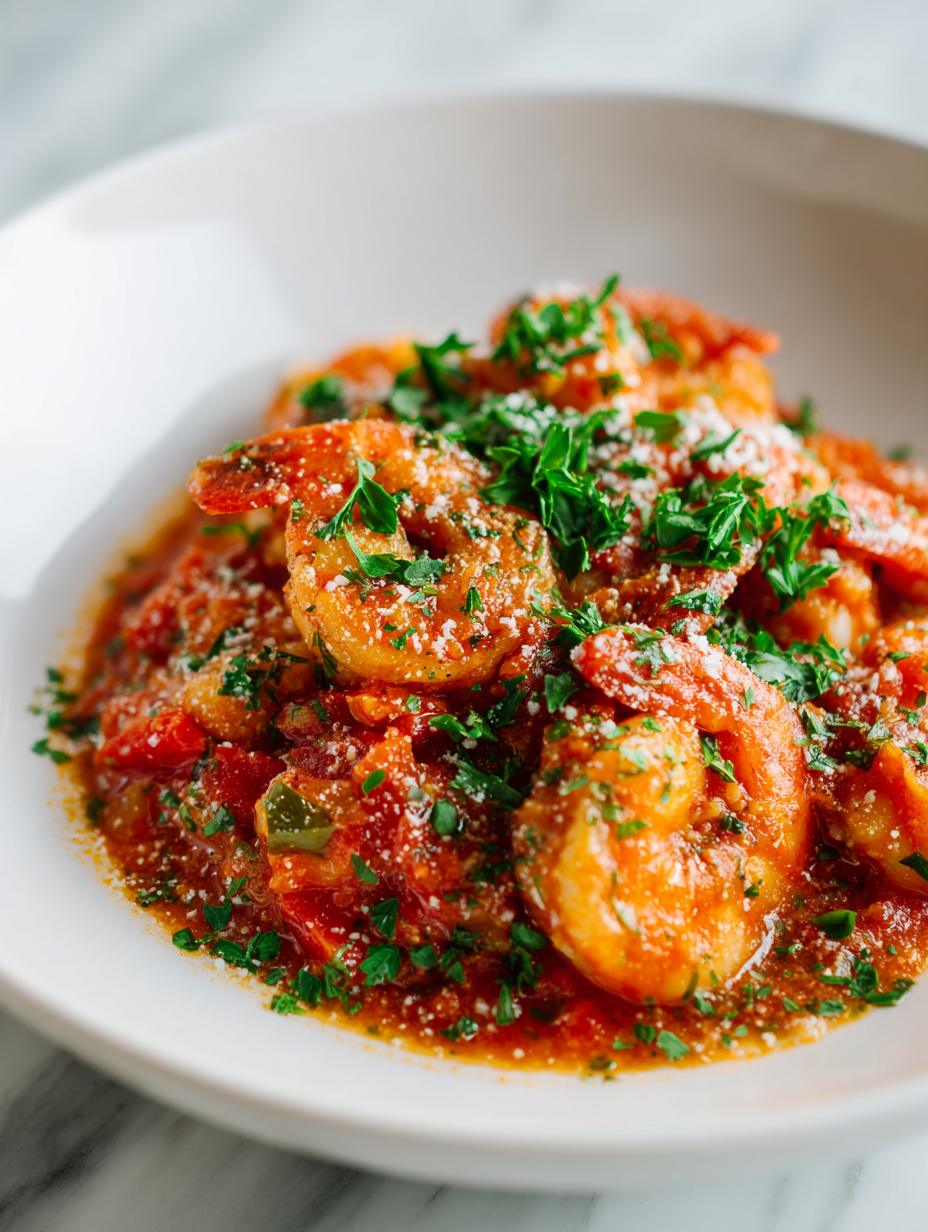
Shrimp Marinara
Ingredients
Equipment
Method
- Peel and devein the shrimp if not already done. Pat them dry with paper towels and set aside.
- Heat two tablespoons of olive oil in a large skillet over medium heat until shimmering and fragrant.
- Add the finely chopped garlic and sauté for about 30 seconds to 1 minute, until it turns golden and releases a fragrant aroma.
- Pour in the white wine and let it simmer for 2-3 minutes, stirring occasionally, until the liquid reduces by half and the smell becomes bright and slightly tangy.
- Add the crushed San Marzano tomatoes to the skillet, stirring to combine. Bring the mixture to a gentle simmer and cook for about 5 minutes, allowing the sauce to thicken slightly and fill the kitchen with a rich, tomato scent.
- Season the sauce with salt, black pepper, dried oregano, and crushed red pepper flakes. Add chopped fresh basil, stir well, and let simmer for another 5 minutes to meld the flavors.
- Push the sauce to one side of the skillet and increase the heat slightly. Place the shrimp in a single layer and cook for about 2-3 minutes per side, until they turn pink, opaque, and develop a slight smoky aroma.
- Toss the shrimp in the sauce and cook together for another minute, allowing the flavors to meld and the shrimp to absorb the sauce's brightness.
- Remove from heat, garnish with extra basil leaves, and serve immediately over pasta or with crusty bread, enjoying the vibrant, fragrant, and hearty dish.
Tips and Tricks for Perfect Marinara
- Bolded mini-head: Use high heat when sautéing garlic to quickly release aroma without burning.
- Bolded mini-head: Add wine after garlic has softened to deglaze the pan and deepen flavor.
- Bolded mini-head: Simmer the tomato sauce gently until it thickens and the flavors meld, about 15 minutes.
- Bolded mini-head: Don’t overcrowd the pan when cooking shrimp; cook in batches if needed for even searing.
- Bolded mini-head: Adjust seasoning and spice levels at the end, tasting for brightness and heat.
- Bolded mini-head: Let the sauce rest for a minute after cooking to enhance flavor absorption before serving.
Common mistakes and how to fix them
- FORGOT to adjust heat after adding wine → simmer longer for richer flavor.
- DUMPED all tomato sauce at once → add gradually, tasting for balance.
- OVER-TORCHED garlic → reduce heat immediately and add a splash of water.
- MISSED peeling shrimp → peel for better texture and cleaner presentation.
Quick Fixes and Pantry Swaps
- When sauce seizes, splash in a bit of water and stir gently to loosen.
- If shrimp overcooks, quickly add a splash of lemon juice to brighten flavor.
- Splash extra virgin olive oil to revive dull sauce texture and add shine.
- Patch a burnt garlic base by removing the burnt bits and adding fresh garlic.
- Shield delicate shrimp from overcooking by removing from heat as soon as they turn pink.
Prep, store, and reheat tips
- Peel and devein the shrimp ahead of time; keep refrigerated for up to 24 hours to maintain freshness and prevent odor absorption.
- Prepare the marinara sauce up to a day in advance; store in an airtight container in the fridge for 1-2 days, allowing flavors to meld.
- Reheat the sauce gently over low heat, stirring occasionally, until warmed through and bubbly—about 5-7 minutes. The aroma should be bright and inviting.
- Shrimp are best cooked fresh, but if needed, cooked shrimp can be stored in the fridge for up to 2 days. Reheat briefly in hot water or a skillet to warm without overcooking, until just opaque and firm.
- For longer storage, freeze the cooked sauce in portions for up to 3 months. Thaw in the fridge overnight, then reheat as above. The sauce may darken slightly but will retain its flavor.
Top questions about Shrimp Marinara
1. Should I peel and devein the shrimp before cooking?
Peel and devein the shrimp beforehand; it prevents a rubbery texture and makes eating easier.
2. Can I substitute fresh tomatoes for canned in the sauce?
Use good-quality canned San Marzano tomatoes for a naturally sweet, bright, and slightly smoky flavor.
3. How do I avoid burning the garlic?
Cook the garlic just until fragrant and lightly golden; burnt garlic adds bitterness and ruins the sauce.
4. When should I add the shrimp to the sauce?
Add the shrimp only in the last few minutes to keep them tender and juicy, avoiding overcooking.
5. How long should I simmer the marinara sauce?
Simmer the sauce gently until it thickens and the flavors meld; this takes about 15 minutes.
6. Can I use regular olive oil instead of extra virgin?
Use a high-quality extra virgin olive oil for a fruity, peppery base that enhances the sauce’s richness.
7. How do I know if my sauce is seasoned correctly?
Adjust seasoning and spice levels at the end of cooking; taste for brightness and heat before serving.
8. How should I reheat the marinara sauce?
Reheat the sauce slowly over low heat, stirring occasionally, until it’s hot and fragrant—about 5-7 minutes.
9. When is the best time to serve the dish?
Serve immediately after cooking for the best flavor and texture, garnished with fresh basil or parsley.
10. How do I tell if the shrimp are cooked properly?
Overcooked shrimp will be tough and rubbery; cook just until they turn pink and opaque, about 2-3 minutes per side.
Cooking this shrimp marinara feels like a small act of rebellion—taking something simple and turning it into a memory. The vibrant tomato aroma, the tender shrimp coated in rich sauce, it all comes together in a way that’s honest and satisfying. It’s a reminder that good, homemade food doesn’t need to be complicated to be meaningful.
Every time I make it, I’m reminded of how much flavor can come from just a few well-chosen ingredients and a little patience. It’s a dish that’s perfect for right now, when fresh seafood and bright, tangy sauces feel especially right on the season’s cusp. No matter the night, it’s a plate that feels like a small celebration of everyday life.

Hi, I’m Katie Dawson, the owner, cook, and storyteller behind Little More Lovely. I run a small café in a cozy corner of Seattle, where the smell of freshly baked bread meets the hum of neighborhood chatter. I’ve spent years learning how food can bring people together, both as a professional and as someone who loves to share meals with family and friends.