
Sun-dried tomatoes aren’t just a pantry staple; they’re the secret weapon in this shrimp pasta. Their smoky, concentrated sweetness brings a depth that makes even the simplest ingredients feel rich and complex. It’s a flavor punch that sneaks up on you, almost like a hidden treasure in everyday cooking.
I’ve always loved how sun-dried tomatoes can transform a dish—bringing a chewy, tangy bite along with that smoky aroma. Paired with tender shrimp and al dente pasta, they create a balanced, multi-layered flavor profile that’s both comforting and a little unexpected. This dish is a reminder that a handful of pantry ingredients can go a long way in elevating your meal.
It’s one of those recipes I turn to when I want something satisfying but not complicated. The smoky-sweetness of the tomatoes plays off the briny shrimp perfectly, making every bite feel special. Plus, it’s quick enough for a weeknight but impressive enough to serve to guests — a little magic from simple ingredients.
Focusing on how sun-dried tomatoes add a concentrated, smoky sweetness that transforms simple shrimp pasta into a dish with a rich, umami punch, almost like a secret ingredient that elevates everyday cooking.
The hidden smoky sweetness
- I love how the smoky depth of sun-dried tomatoes lingers long after the plate is empty.
- There’s a nostalgic rush—reminds me of rustic Italian kitchens, simple ingredients, bold flavors.
- Cooking this dish feels like a small act of rebellion against bland, over-complicated meals.
- The burst of briny shrimp paired with chewy, concentrated tomatoes always surprises my taste buds.
- I get a little proud when I see how such humble pantry staples can turn into something memorable.
The inspiration behind this dish
- This dish was born out of a lazy weekend rummage through my pantry, where sun-dried tomatoes caught my eye. I wanted something that packed a smoky, tangy punch but still felt easy enough to pull together after a long day. The moment I tasted it, I knew I’d stumbled onto something that could become a regular go-to.
- The idea of combining the concentrated sweetness of sun-dried tomatoes with tender shrimp and pasta came from a memory of rustic Italian flavors I love—simple, bold, and just a little unexpected. It’s like rediscovering an old favorite in a new form, a little treasure in my own kitchen.
Historical and cultural tidbits
- Sun-dried tomatoes have been a staple in Italian preservation methods since the Middle Ages, offering a concentrated burst of flavor in a small package.
- This dish subtly nods to coastal Italian cuisine, where fresh seafood and sun-kissed ingredients blend into effortless, vibrant meals.
- The smoky sweetness of sun-dried tomatoes was once considered a luxury, used sparingly in sauces and antipasti, now a pantry hero for quick weeknight dinners.
Key ingredients and tips
- Shrimp: I prefer large, deveined shrimp for that satisfying chew—look for a firm, pink hue and a slight bounce. Swap with scallops if you want a sweeter, tender bite.
- Sun-Dried Tomatoes: Their chewy, tangy richness is key—opt for oil-packed ones for easier chopping, or dry-packed if you like a more concentrated, smoky flavor. Be careful not to overdo; they can overpower.
- Garlic: I love how minced garlic releases a fragrant, almost nutty aroma as it heats—use fresh for the best punch. Dried garlic flakes work in a pinch, but less pungent.
- Olive Oil: I go for good-quality extra virgin—its grassy, peppery notes shine through. If you’re out, a neutral oil can save the day, though flavor will be muted.
- Pasta: I prefer spaghetti or linguine—long, thin noodles soak up the sauce well. Whole wheat adds a nutty note, but traditional keeps that classic lightness.
- Herbs & Seasonings: Fresh basil or parsley add bright, herbal freshness—if unavailable, a pinch of dried works, but fresh really lifts the dish’s aroma.
- Lemon: Brightens the smoky sweetness with a zesty pop—use freshly squeezed for vibrancy. Skip if you prefer a milder, less tangy flavor.
Spotlight on key ingredients
Sun-Dried Tomatoes:
- I love their chewy, tangy richness—when heated, they become smoky and almost syrupy, infusing the dish with concentrated flavor. Use oil-packed for ease, but dry-packed offers a more intense, smoky punch.
- Shrimp: I prefer large, firm, pink shrimp that have a slight bounce and scent of the sea. They cook quickly, turning opaque and tender, and add a satisfying bite that balances the smoky tomatoes.
Shrimp:
- I love their chewy texture and briny aroma—watch for bright pink and a little jiggle when cooked perfectly. They turn tender and opaque fast, so don’t overcook, or they turn rubbery.
- Sun-Dried Tomatoes: Their concentrated, smoky sweetness deepens during cooking—watch for a glossy, slightly oily sheen that signals they’re ready to add a smoky, tangy burst to each bite.
Notes for ingredient swaps
- Dairy-Free: Use coconut milk or omit cheese; the dish remains rich but loses creaminess.
- Gluten-Free: Swap regular pasta for rice noodles or gluten-free spaghetti; watch for slight textural differences.
- Shellfish-Free: Replace shrimp with sautéed mushrooms or tofu; they absorb flavors and add umami.
- Vegan: Use sun-dried tomato oil and skip seafood; add sautéed zucchini or eggplant for body.
- Extra Protein: Add cooked pancetta or bacon bits for smoky richness; keep an eye on salt levels.
- Lemon: Use bottled lemon juice if fresh lemons aren’t available; it’s less vibrant but works fine.
- Herbs: Substitute fresh basil or parsley with dried herbs; use sparingly to avoid overpowering.
Equipment & Tools
- Large skillet: Cook shrimp and sauce components evenly
- Large pot: Boil pasta efficiently
- Tongs: Toss and serve pasta
- Sharp knife: Chop garlic, sun-dried tomatoes, herbs
Step-by-step guide to shrimp pasta
- Gather your equipment: a large skillet, a pot for boiling pasta, tongs, and a sharp knife. Set everything within reach before you start.
- Bring a large pot of salted water (about 4 liters, 1 gallon) to a rolling boil at 100°C / 212°F. Add your pasta and cook until just al dente, about 8 minutes. Drain and set aside, save a cup of pasta water.
- While pasta cooks, heat 2 tablespoons of good-quality olive oil in the skillet over medium heat (about 160°C / 320°F). Add 3-4 minced garlic cloves. Sauté until fragrant, about 30 seconds. Do not let it brown or it turns bitter.
- Add the shrimp: 300g (about 10 oz) of large, deveined shrimp. Cook for about 2-3 minutes per side, until they turn pink and opaque. Remove from pan and set aside.
- In the same skillet, toss in chopped sun-dried tomatoes (about 1/4 cup if oil-packed). Stir for 1-2 minutes, allowing their smoky, concentrated aroma to develop. If using dry-packed, soak briefly in warm water first.
- Deglaze the pan with a splash of pasta water (about 1/4 cup). Scrape up any browned bits. Add the cooked pasta, shrimp, and a squeeze of fresh lemon juice (about 1 tablespoon). Toss everything together over medium heat until combined and heated through, about 2 minutes.
- Adjust the sauce consistency with reserved pasta water if needed, for a silky coating. Season with salt, freshly ground black pepper, and chopped fresh herbs like basil or parsley. Remove from heat before overcooking the shrimp.
- Rest the pasta for 1 minute to let flavors settle. Plate immediately, garnishing with extra herbs and a drizzle of olive oil if desired.
Let the pasta rest for 1 minute after plating to allow flavors to meld. Finish with a drizzle of olive oil and fresh herbs for aroma and brightness.
How to Know It’s Done
- Shrimp are firm, opaque, and pink when done.
- Pasta is al dente with a slight bite, not mushy or overcooked.
- Sauce is glossy, well-coated, with a fragrant aroma of garlic and sun-dried tomatoes.
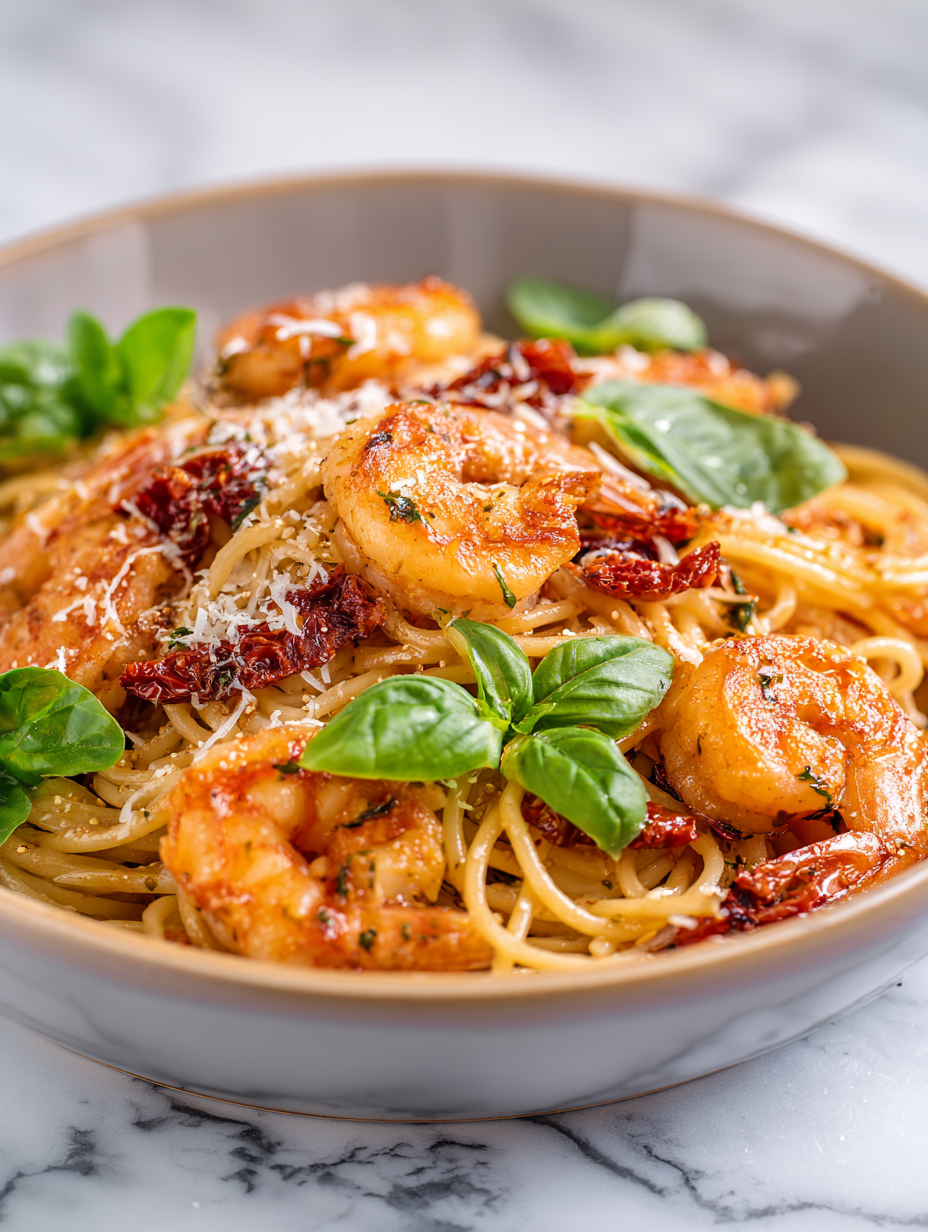
Sun-Dried Tomato and Shrimp Pasta
Ingredients
Equipment
Method
- Bring a large pot of salted water to a boil, then add your pasta and cook until just al dente, about 8 minutes. Drain, reserving a cup of pasta water, and set aside.
- While the pasta cooks, heat the olive oil in a large skillet over medium heat. Add the minced garlic and sauté until fragrant, about 30 seconds, until it releases a nutty aroma and turns slightly golden.
- Add the shrimp to the skillet and cook for about 2-3 minutes per side, until they turn pink, firm, and opaque. Remove the shrimp from the skillet and set aside.
- Toss the chopped sun-dried tomatoes into the skillet and stir for 1-2 minutes, allowing their smoky, concentrated aroma to develop and their chewy texture to soften slightly.
- Deglaze the pan with a splash of reserved pasta water, scraping up any browned bits from the bottom. Let it bubble for a few seconds until glossy.
- Add the cooked pasta to the skillet, along with the cooked shrimp, and squeeze in the fresh lemon juice. Toss everything together over medium heat until well combined and heated through, about 2 minutes.
- If the sauce feels too thick, add a little more reserved pasta water, one tablespoon at a time, until it’s silky and coats the noodles evenly.
- Season with salt and freshly ground black pepper to taste. Toss in chopped fresh herbs like basil or parsley for a burst of herbal freshness.
- Remove from heat, plate the pasta, and garnish with extra herbs and a drizzle of olive oil if desired. Serve immediately to enjoy the smoky, tangy flavors at their best.
Notes
Pro tips for perfect shrimp pasta
- Use the oil from sun-dried tomatoes to build flavor early in the sauté—adds smoky depth.
- Sauté garlic gently over medium heat until just fragrant—browning quickly turns bitter.
- Add pasta water gradually to achieve a silky sauce—rescue if sauce feels thick or sticky.
- Cook shrimp just until opaque and pink—resist the urge to overdo, or they turn rubbery.
- Toss everything in the pan over medium heat for a quick, even heat—avoids uneven cooking or sticking.
- Finish with fresh herbs and lemon juice off-heat—brightens and balances smoky richness.
- Rest the plated pasta for a minute—allows flavors to meld and enhances aroma.
Common mistakes and how to fix them
- FORGOT to taste for salt before serving → Always taste and adjust seasoning at the end.
- DUMPED all the sun-dried tomatoes in at once → Add gradually, tasting for smoky intensity.
- OVER-TORCHED the garlic → Sauté garlic until fragrant, not browned, to prevent bitterness.
- MISSED the pasta water reserve → Save pasta water to adjust sauce consistency if needed.
Quick fixes and pantry swaps
- When sauce is too thick, splash in warm pasta water and stir until silky.
- If shrimp overcooks, quickly chill in ice water, then reheat gently in the pan.
- Splash a bit of lemon juice if sun-dried tomatoes seem dull or muted in flavor.
- Patch a smoky flavor gap by adding a tiny pinch of smoked paprika or chipotle powder.
- Shield the garlic from burning by adding it after the oil heats up, not at the very start.
Prep, store, and reheat tips
- Chop garlic and sun-dried tomatoes the night before for quicker assembly, their flavors intensify as they sit.
- Store cooked pasta in an airtight container in the fridge for up to 2 days; reheat gently to avoid mushiness, with a splash of water or oil.
- Cook and peel shrimp ahead; keep covered in the fridge for up to 24 hours, then toss quickly in hot oil to reheat, smelling fragrant and fresh.
- Sun-dried tomatoes and herbs can be prepared in advance and kept in small jars or containers for up to a week, the smoky aroma deepening over time.
- Reheat leftovers in a skillet over low heat, stirring often, until warmed through and fragrant—avoid high heat to prevent drying out.
Top questions about shrimp pasta
1. How do I tell when shrimp are cooked?
Look for shrimp that are firm, pink, and have a slight bounce. They should smell fresh, like the sea. Overcooked shrimp turn rubbery, so keep an eye on their color and texture.
2. Can I use dry sun-dried tomatoes?
Use sun-dried tomatoes packed in oil for easier chopping and richer flavor. Dry-packed ones are more concentrated and smoky but need soaking first.
3. How do I know when the pasta is ready?
Cook pasta until just al dente, about 8 minutes. It should be firm but not hard. Drain and toss with the sauce quickly to stop cooking.
4. What if the sauce is too thick?
Add pasta water a little at a time to loosen the sauce if it’s too thick. It makes the sauce glossy and helps everything cling better.
5. Can I substitute dried garlic?
Use fresh garlic for the best aroma—mince it finely and sauté gently until fragrant, about 30 seconds. Dried garlic flakes work but have less punch.
6. How do I brighten the dish at the end?
Finish with a squeeze of fresh lemon juice and chopped herbs like basil or parsley. It brightens the smoky, savory flavors and adds freshness.
7. What if my shrimp are tough?
If shrimp turn rubbery, quick chill them in ice water, then reheat gently in the skillet. Do not overcook initially to keep them tender.
8. Can I use a different oil?
Use high-quality extra virgin olive oil for a grassy, peppery aroma that complements the smoky tomatoes. Neutral oil can be used but dulls flavor.
9. How long does this dish take to make?
This dish is quick, about 20 minutes from start to finish. Preparing ingredients ahead, like chopping garlic and soaking sun-dried tomatoes, saves time.
10. How do I store and reheat leftovers?
Leftovers can be stored in the fridge up to 2 days. Reheat gently on the stove with a splash of water or oil until fragrant and heated through.
This shrimp sun-dried tomato pasta isn’t just a quick meal; it’s a reminder that simple pantry ingredients can create something unexpectedly rich and satisfying. The smoky sweetness of the tomatoes paired with tender shrimp feels like a little celebration in every bite. It’s perfect for those nights when you want comfort, but with a bit of an edge.
Whenever I make this, I’m reminded of how a handful of well-chosen ingredients can turn an ordinary dinner into a memorable moment. It’s a dish that’s as honest as it is flavorful, and that’s exactly what I need right now—something honest, straightforward, and deeply tasty.

Hi, I’m Katie Dawson, the owner, cook, and storyteller behind Little More Lovely. I run a small café in a cozy corner of Seattle, where the smell of freshly baked bread meets the hum of neighborhood chatter. I’ve spent years learning how food can bring people together, both as a professional and as someone who loves to share meals with family and friends.