
This shrimp coconut curry isn’t just about the flavors; it’s about how a handful of simple ingredients can come together to create something surprisingly complex. I love how the heat from chili and the richness of coconut play off each other, balancing fiery warmth with soothing sweetness. It’s a dish that feels like a little celebration every time I make it, even on a quiet weeknight.
What drew me to this recipe originally was the idea of transforming humble shrimp into something vibrant and comforting without much fuss. The magic really happens in the simmer—how the spices bloom and the coconut thickens into a silky sauce that clings to every juicy piece of shrimp. It’s a reminder that sometimes, the simplest dishes have the most profound stories to tell.
This curry is my way of holding onto summer’s brightness while embracing the cozy, spicy vibes of fall. It’s perfect for those nights when you want something hearty but not heavy, something that warms your hands and your heart in equal measure. Every spoonful feels like a small escape—bright, spicy, and just a little indulgent.
Focusing on the transformative power of balancing spicy heat with the natural sweetness of coconut, this recipe highlights how a simple dish can evoke a spectrum of emotions through careful ingredient harmony.
Balancing heat and sweetness
- This dish always surprises me with how quickly it comes together, yet how layered it feels on the palate.
- I love the moment when the coconut milk starts to simmer, releasing a sweet, fragrant aroma that fills the kitchen.
- There’s a quiet pride in mastering a recipe that feels both exotic and completely approachable, perfect for any weeknight.
- The first time I made this, I was struck by how the heat from the chili balanced perfectly with the coconut’s creaminess, making my whole house smell like a tropical escape.
- Every spoonful reminds me that simple ingredients, treated honestly, can turn into something deeply satisfying and nourishing.
The story behind this recipe
- This dish came about on a rainy afternoon when I was craving something warm but also bright enough to lift my spirits. I started playing with coconut milk and a handful of spices, aiming for a balance that felt both comforting and lively. The first time I nailed that perfect simmer, I knew I had to share it.
- There’s a memory of a tropical trip, where I tasted a similar curry at a tiny beachside shack. That burst of heat, sweetness, and freshness stuck with me. I wanted to recreate that feeling at home, in my own way, with ingredients I always keep on hand.
- Cooking this recipe feels like a small ritual—measuring spices, watching the coconut thicken, and waiting for the perfect moment when the shrimp just turn pink and juicy. It’s a reminder that simple, honest cooking can evoke a world of flavor and emotion.
Trivia and historical tidbits
- This curry’s roots trace back to coastal regions where coconut and seafood are staples, blending local flavors into a vibrant dish.
- Historically, coconut milk was a luxury ingredient, so this recipe reflects a creative use of available tropical resources.
- In some parts of Southeast Asia, similar curries are traditional comfort foods, passed down through generations with little variation.
- The combination of shrimp and coconut became popular in colonial trade routes, spreading across Asian and Caribbean cuisines.
Key ingredients and tips
- Shrimp: I like them peeled and deveined, with tails on for presentation—fresh and firm, they’re the star. Swap for scallops if you want a more delicate bite.
- Coconut Milk: Look for full-fat, rich and silky. Canned is best—avoid the carton unless it’s thickened. If you want lighter, use half coconut milk and half broth.
- Red Curry Paste: It’s the flavor backbone—bright, spicy, and aromatic. Use a good-quality brand, or blend your own for a fresher punch. Adjust heat by adding more or less.
- Lime Juice: Brightens everything—freshly squeezed, it lifts the dish with a zesty punch. Skip if you prefer a milder flavor or substitute with a splash of vinegar.
- Sweetener (like honey or sugar): Balances the spice—just a touch, enough to round out the heat. Use maple syrup for a smoky note or skip for a more pungent curry.
- Vegetables (bell peppers, spinach): Add color and texture—crisp peppers or wilted spinach, your call. Fresh is best, but frozen works in a pinch if you want convenience.
- Oil (vegetable or coconut): For sautéing—neutral flavor, high smoke point. Coconut oil adds a subtle aroma if you want an extra coconutty kick.
Spotlight on key ingredients
Shrimp & Coconut Milk:
- Shrimp: I prefer them peeled and deveined, with tails on for presentation. They’re firm and juicy, absorbing flavors beautifully during simmering.
- Coconut Milk: Full-fat, silky, and rich. The canned kind is best—avoid the carton unless it’s thickened. It’s the creamy backbone that ties everything together.
Notes for ingredient swaps
- Dairy-Free: Use almond or cashew milk instead of coconut milk. It’s lighter, less creamy, but still adds a nutty undertone.
- Shellfish Alternative: Swap shrimp for firm tofu or tempeh for a vegetarian version. Keep in mind, it won’t have that sweet seafood flavor.
- Sweetener: Replace honey with maple syrup or agave nectar. Each adds a different subtle flavor nuance—maple brings a smoky note.
- Lime Juice: Substitute with lemon juice or a splash of vinegar for brightness. Lemon’s a bit sharper, vinegar more tangy.
- Vegetables: Use frozen spinach or bell peppers if fresh aren’t available. They won’t have as much crunch but still add color and texture.
- Curry Paste: If you don’t have red curry paste, try a yellow or green one, but expect different spice profiles and heat levels.
- Oil: Switch vegetable oil for coconut oil for a more pronounced coconut aroma, or use avocado oil for a neutral, high-smoke option.
Equipment & Tools
- Deep skillet or wok: For even heat distribution and ample space to cook the curry.
- Wooden spoon: To stir ingredients gently without scratching the pan.
- Sharp knife: For chopping vegetables and prepping shrimp cleanly.
- Measuring spoons and cups: To ensure accurate ingredient quantities.
- Lime squeezer: For fresh, efficient citrus juice.
Step-by-step guide to Shrimp Coconut Curry
- Gather all equipment: a deep skillet or wok for even heat distribution, a wooden spoon for stirring, and a sharp knife for prep.
- Heat 1 tbsp coconut oil over medium heat (about 160°C / 320°F) until shimmering. Add 1 tbsp red curry paste; cook for 1 minute until fragrant, stirring constantly.
- Add 1 cup chopped onion and 2 minced garlic cloves. Sauté for 3-4 minutes until onion turns translucent and aromatic. Adjust heat if spices burn.
- Pour in 1 can (400ml) full-fat coconut milk, stirring to combine with the paste. Bring to a gentle simmer (around 85°C / 185°F), smell should be fragrant and coconutty.
- Stir in 1 tbsp fish sauce, a squeeze of lime, and 1 tsp honey or sugar. Taste and adjust for balance—sweet, salty, and tangy should be harmonious.
- Add 200g raw shrimp (peeled and deveined), spread evenly in the sauce. Cook for 4-5 minutes, stirring occasionally. Shrimp should turn pink and opaque, and sauce will thicken slightly.
- Check the sauce’s consistency and shrimp doneness: shrimp should be firm and tender, and sauce should coat the back of a spoon without being runny.
- If the sauce is too thin, simmer on low for another 2 minutes until it thickens. If too thick, add a splash of water or broth to loosen.
- Remove from heat. Let it rest for 1 minute to settle flavors. Garnish with chopped cilantro if desired.
- Serve hot over jasmine rice or your favorite grain, ensuring the shrimp are juicy and the sauce silky and fragrant.
Remove from heat, let sit for a minute to deepen flavors. Garnish with chopped cilantro or sliced chili if desired. Serve immediately over rice or grains.
How to Know It’s Done
- Shrimp are opaque and pink, no translucent parts remain.
- Sauce is creamy, coats the spoon evenly, with a fragrant coconut aroma.
- Color is vibrant, with a slight simmering bubble around the edges indicating proper temperature.
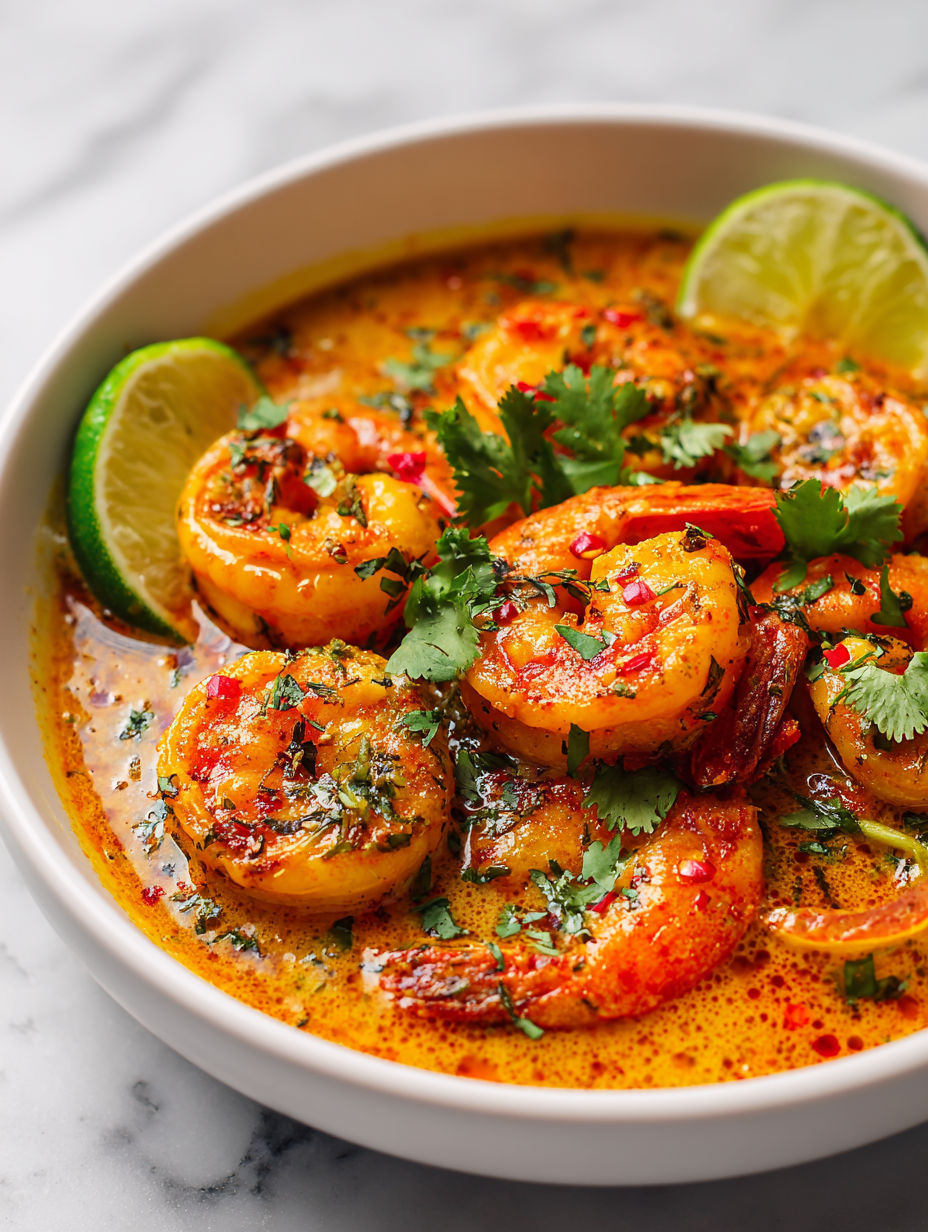
Shrimp Coconut Curry
Ingredients
Equipment
Method
- Begin by heating the coconut oil in a deep skillet or wok over medium heat until it shimmers and you can smell a subtle coconut aroma.
- Add the red curry paste to the hot oil, stirring constantly for about 1 minute until fragrant and slightly darkened, signaling the spices are blooming.
- Stir in the chopped onion and minced garlic, sautéing for 3-4 minutes until the onion becomes translucent and the mixture smells warm and fragrant.
- Pour in the full-fat coconut milk, stirring well to combine with the spice paste. Bring the mixture to a gentle simmer, where it will bubble softly and fill the kitchen with a sweet, coconutty aroma.
- Stir in the lime juice and honey or sugar, tasting the sauce and adjusting the balance of sweet and tangy to your liking.
- Add the shrimp evenly into the simmering sauce, spreading them out so they cook uniformly. Cook for 4-5 minutes, stirring occasionally, until the shrimp turn pink and opaque.
- If using vegetables, stir in sliced bell peppers or spinach now, cooking for another 2 minutes until they soften slightly or wilt, depending on your choice.
- Check the sauce’s consistency; it should be silky and coat the back of a spoon. If too thin, simmer for another minute to thicken; if too thick, stir in a splash of water or broth.
- Remove the curry from the heat and let it rest for a minute to allow flavors to meld. Taste again and add salt or pepper as needed.
- Squeeze fresh lime juice over the curry, sprinkle with chopped herbs if desired, and serve hot over steamed jasmine rice or your favorite grain for a vibrant, comforting meal.
Pro tips for perfect shrimp coconut curry
- Bolded Mini-Head: Sear shrimp briefly before adding liquids to lock in juices and develop a slightly caramelized exterior.
- Bolded Mini-Head: Use high-quality curry paste; it makes a big difference in aroma and depth of flavor.
- Bolded Mini-Head: Stir the coconut milk slowly into the pan to prevent curdling and keep the sauce silky smooth.
- Bolded Mini-Head: Adjust heat carefully; too high can scorch spices, too low can dull their vibrant aroma.
- Bolded Mini-Head: Taste and balance the acidity—lime or vinegar—before serving to brighten the dish perfectly.
- Bolded Mini-Head: Let the curry rest a minute after cooking; flavors meld, and sauce thickens slightly for better coating.
- Bolded Mini-Head: Use fresh herbs and citrus at the end; they add a burst of brightness that elevates the whole dish.
Common mistakes and how to fix them
- FORGOT to adjust heat after adding shrimp; keep an eye to prevent overcooking.
- DUMPED all coconut milk at once; add gradually, tasting for thickness and flavor balance.
- OVER-TORCHED the curry paste; cook on medium, stirring constantly to avoid bitterness.
- USED cold shrimp directly from fridge; should be room temperature or slightly warmed for even cooking.
Quick Fixes and Pantry Swaps
- When sauce seizes, splash in warm coconut milk and stir gently to loosen.
- If shrimp overcooks, add a splash of water or broth and simmer briefly to rehydrate.
- Splash a bit of lime juice if curry tastes dull or flat after simmering.
- Patch a burnt curry by removing from heat immediately and stirring in fresh coconut milk.
- Shield the curry from over-torching by lowering heat once spices bloom and coconut milk is added.
Prep, store, and reheat tips
- Prep all ingredients: chop vegetables, measure spices, and peel shrimp the day before; it saves time and keeps everything fresh.
- Store cooked shrimp in an airtight container in the fridge for up to 2 days; ensure they’re cooled quickly to maintain texture.
- Coconut curry keeps well in the fridge for 2-3 days; the flavors deepen, and the sauce thickens slightly—reheat gently.
- Reheat curry on low heat in a pan, stirring frequently until steaming and fragrant; add a splash of water or coconut milk if it thickens too much.
- For best flavor, reheat within 2 days. Sensory cue: smell should be fragrant, with coconut and spice resonating clearly.
Top questions about Shrimp Coconut Curry
1. Should I peel and devein the shrimp?
Peeling and deveining shrimp makes them cook evenly and look nicer when served. If you buy pre-peeled, just ensure they’re fresh and firm.
2. Can I use light coconut milk?
Full-fat coconut milk provides a richer, creamier sauce that coats the shrimp better. Light coconut milk works if you want a thinner sauce, but it won’t be as lush.
3. What if I don’t have curry paste?
Red curry paste is the flavor base—spicy, fragrant, and vibrant. If you don’t have it, try a milder yellow curry or a homemade blend with turmeric, cumin, and chili powder.
4. When should I add lime juice?
Adding lime juice at the end brightens the dish with a fresh, tangy burst. It balances the richness of coconut and spiciness of the curry.
5. How do I control the heat?
Adjust the heat by adding more or less curry paste or chili. If it’s too spicy, stir in a bit more coconut milk or a pinch of sugar to mellow it out.
6. How do I know when shrimp are done?
Cooking the shrimp just until pink and opaque keeps them tender and juicy. Overcooking makes them rubbery and tough, so keep an eye on the time.
7. What’s the right cooking time for shrimp?
A quick simmer for 4-5 minutes is enough. The sauce should be fragrant and slightly thickened, and the shrimp will turn pink and curl up.
8. What should I serve it with?
Serve the curry over jasmine rice or your favorite grain. It soaks up the sauce and makes every bite flavorful and satisfying.
9. How long does it keep?
Store leftovers in an airtight container in the fridge for up to 2 days. Reheat gently on the stove, stirring until steaming hot and fragrant.
10. What if the sauce separates?
If the sauce separates or looks oily, stir in a splash of warm coconut milk or water. It helps restore that silky, cohesive texture.
This curry is a little slice of tropical comfort, even if you’re just cooking it in your kitchen. It’s honest, straightforward, and a reminder that simple ingredients can make something memorable. Every time I make it, I think about those warm nights when the house smells like spices and coconut—no fancy tricks, just good, honest cooking.
In a world that’s constantly rushing, this dish invites me to slow down and enjoy the process. It’s about balancing heat and sweetness, and finding joy in the little moments of simmering and tasting. Honestly, it’s become a go-to when I need something nourishing and full of flavor, no fuss required.

Hi, I’m Katie Dawson, a paediatric speech-language pathologist by day and a passionate food storyteller by night. Based in Seattle but with a love for global flavours (and a soft spot for Indian chai), I created this blog to bridge the gap between therapeutic nutrition and the simple joy of eating.
