
Shrimp Étouffée isn’t just another seafood dish; it’s a soulful stew that wraps you in smoky, spicy warmth. I’ve always loved how the rich roux and vibrant seasonings come together to create something deeply comforting, especially on chilly nights when you crave something hearty and nostalgic.
Growing up, this dish was a Sunday staple at my family table. The smell of caramelized onions and paprika simmering in the background still makes me smile. It’s simple, but each spoonful feels like a small celebration of Cajun spirit, a reminder of how good food can bring people together with its bold, honest flavors.
Making it at home is a bit of a balancing act—getting that perfect roux, not burning it, while coaxing out the smoky depth of the spices. It’s messy, it’s loud, but it’s worth every bubbling, fragrant minute. This recipe is about capturing that magic, turning humble ingredients into something special and satisfying.
Focusing on how the rich, smoky roux and vibrant spices can transform a humble shrimp dish into a soulful comfort food that’s perfect for cozy nights and nostalgic gatherings.
The soulful comfort of Shrimp Étouffée
- This dish reminds me of my grandma’s kitchen, where the smell of smoky roux filled the air and made everything feel right.
- There’s a quiet pride in mastering that perfect, nutty roux—it’s a messy ritual, but so worth it when it turns a deep amber.
- Cooking this takes me back to lazy Sunday afternoons, the spicy aroma wrapping around us like a warm blanket.
- I love how a simple handful of spices can turn fresh shrimp into something that tastes like a celebration.
- Every time I make Étouffée, I feel a little bit like I’m bringing a piece of Cajun soul into my home.
The story behind this recipe
This recipe for Shrimp Étouffée comes from a memory of a rainy day in Louisiana, where I watched my friend’s aunt effortlessly stir a bubbling pot of spicy seafood goodness. It’s a dish that feels like a warm hug after a chilly day, built on the idea that simple ingredients, treated right, can create something deeply satisfying. I’ve always loved how the smoky roux and vibrant spices turn humble shrimp into something soulful and full of character.
Historical and Cultural Roots
- Shrimp Étouffée originated in Louisiana, blending French, Spanish, and African culinary influences into a rich, spicy stew.
- The word ‘étouffée’ means ‘smothered’ or ‘suffocated’ in French, referring to the way ingredients are cooked slowly in a thick sauce.
- Traditionally served during Mardi Gras celebrations, it’s a dish that embodies festive, communal spirit with bold flavors.
- This dish is a cousin to Cajun gumbo but is quicker to make, emphasizing a thick, roux-based sauce over a broth.
- Cooks have been tweaking the spice blends for generations—some prefer a smoky kick, others go for bright lemon zest to balance the heat.
Ingredient breakdown: key components
- Shrimp: I prefer wild-caught, juicy, with a firm snap. You might try smaller shrimp for quicker cooking, but fresh makes a sweeter, ocean-bright flavor.
- Roux: I love my roux dark and nutty, almost like caramel. If it’s too thick or burnt, just add a splash of oil or butter and stir it back to a rich, velvety consistency.
- Bell Peppers: I use a mix of red and green for color and sweetness. Skip the red if you want less sugar, but the crunch and brightness really lift the dish.
- Onions: I go for yellow onions—they caramelize beautifully and provide a sweet, savory base. If you only have shallots, use them for a milder, slightly sweeter note.
- Cajun Seasoning: I keep a blend of paprika, cayenne, garlic powder, and thyme. For a smoky kick, add a dash of smoked paprika or chipotle powder—just a pinch.
- Stock: I prefer seafood or chicken broth—adds depth and umami. If you’re out, a good vegetable broth works, but the seafood stock makes it extra special.
- Lemon Juice: I squeeze fresh lemon at the end for brightness. If you want more zing, add a little zest along with the juice to really make it pop.
Spotlight on key ingredients
Shrimp:
- I prefer wild-caught, juicy, with a firm snap. You might try smaller shrimp for quicker cooking, but fresh makes a sweeter, ocean-bright flavor.
- Roux: I love my roux dark and nutty, almost like caramel. If it’s too thick or burnt, just add a splash of oil or butter and stir it back to a rich, velvety consistency.
Bell Peppers & Onions:
- Bell Peppers: I use a mix of red and green for color and sweetness. Skip the red if you want less sugar, but the crunch and brightness really lift the dish.
- Onions: I go for yellow onions—they caramelize beautifully and provide a sweet, savory base. If you only have shallots, use them for a milder, slightly sweeter note.
Notes for ingredient swaps
- Seafood Substitutes: Frozen shrimp can work in a pinch, but fresh shrimp really shine with a sweet ocean aroma and firm texture. If you want a milder seafood flavor, crab meat or crawfish tail meat can be excellent swaps.
- Dairy-Free: Skip butter and use olive oil or coconut oil instead. The smoky richness will be slightly different, but still satisfying and smooth.
- Gluten-Free: Use a gluten-free flour blend or rice flour to make the roux. It won’t darken quite the same, but it’ll thicken just as well.
- Vegetarian Version: Substitute shrimp with hearty mushrooms or eggplant for smoky, umami flavor. Use vegetable broth and add extra spices to boost flavor.
- Vegetables: Bell peppers can be swapped for poblano or Anaheim peppers for a milder, smoky note. Carrots or celery can add sweetness or crunch if you like.
- Stock: If seafood or chicken broth isn’t available, water with a splash of fish sauce or soy sauce can add depth. Use a concentrated bouillon for richer flavor.
- Lemon Juice: Lime juice can replace lemon for a slightly different bright, tangy note. Add zest for an extra zing.
Equipment & Tools
- Heavy-bottomed skillet or Dutch oven: Provides even heat for roux and stew.
- Wooden spoon: Stirs the roux and vegetables without scratching the pan.
- Measuring spoons: Ensures accurate seasoning.
- Sharp knife: Preps vegetables and shrimp efficiently.
Step-by-step guide to Shrimp Étouffée
- Equipment & Tools: Use a heavy-bottomed 30cm (12-inch) skillet or Dutch oven for even heat distribution. Have a wooden spoon, measuring spoons, and a sharp knife ready.
- Prepare ingredients. Peel and devein 450g (1 lb) of large shrimp, set aside. Dice 1 medium onion, 1 green bell pepper, 1 red bell pepper, and 2 cloves garlic.
- Make the roux. In the skillet over medium heat (~160°C / 320°F), melt 4 tbsp butter, then stir in 4 tbsp all-purpose flour. Cook, stirring constantly, for 10-15 minutes until dark amber and nutty-smelling. Watch carefully to avoid burning.
- Add aromatics. Stir in diced onions, peppers, and garlic. Cook over medium heat for 8-10 minutes, until vegetables are tender and fragrant. The mixture should smell rich and slightly smoky, with a deep color.
- Season. Stir in 2 tsp smoked paprika, 1 tsp cayenne, 1 tsp thyme, and salt to taste. Cook for 1-2 minutes until spices are fragrant and coating the vegetables.
- Add liquids. Pour in 2 cups seafood or chicken broth, scraping up any browned bits from the bottom. Bring to a gentle simmer and cook for 10 minutes, allowing flavors to meld and sauce to thicken.
- Cook the shrimp. Add the prepared shrimp to the simmering sauce. Cook for 3-4 minutes, until shrimp turn pink and opaque. Stir occasionally to prevent sticking. If overcooked, they become rubbery; if undercooked, they remain translucent.
- Final touches. Squeeze in 1 tbsp fresh lemon juice, stir, and taste for seasoning. Adjust salt or spice as needed. The sauce should be rich, thick, and fragrant with a smoky kick.
- Rest & Plate: Let the stew rest for 2 minutes off heat. Serve hot over steamed rice or crusty bread. Garnish with chopped green onions or parsley if desired.
Let the stew rest for 2 minutes off heat to settle flavors. Serve hot, garnished with fresh herbs if desired. Pair with rice or crusty bread for a complete meal.
How to Know It’s Done
- Roux is dark amber and fragrant, not burnt.
- Vegetables are tender and aromatic.
- Shrimp are fully pink and opaque, with a firm texture.
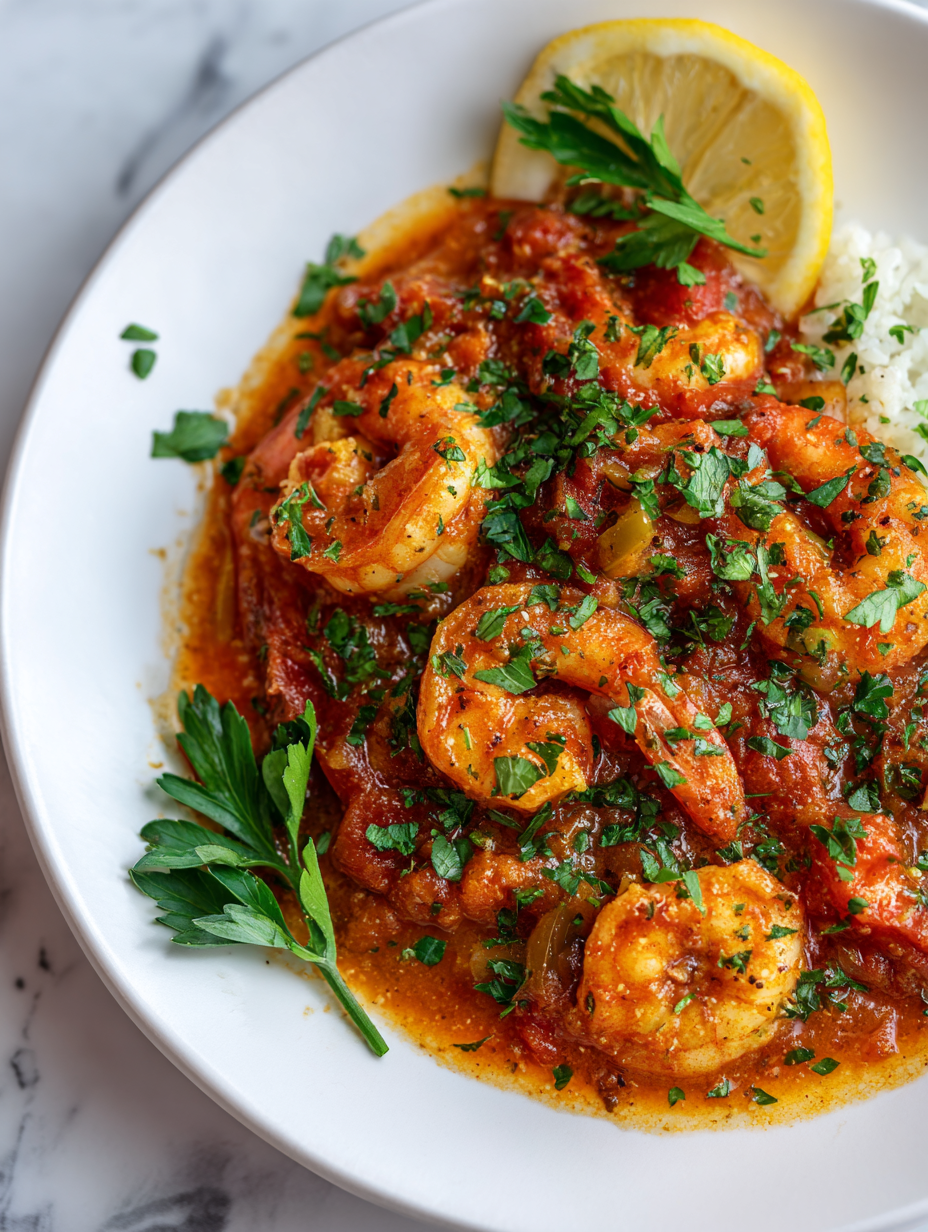
Shrimp Étouffée
Ingredients
Equipment
Method
- Begin by peeling and deveining the shrimp, then set aside. Dice the onion and bell peppers, and mince the garlic.
- In your heavy-bottomed skillet or Dutch oven, melt the butter over medium heat until it starts to foam and smell nutty. Stir in the flour, then cook, stirring constantly, for 10-15 minutes until the roux turns a deep amber color and develops a rich aroma.
- Add the diced onions and bell peppers to the roux. Cook, stirring occasionally, for about 8-10 minutes until the vegetables are tender and fragrant, and the mixture has thickened slightly.
- Stir in the minced garlic, smoked paprika, cayenne pepper, thyme, and a pinch of salt. Cook for 1-2 minutes until the spices release their aroma and coat the vegetables evenly.
- Pour in the broth, scraping up any browned bits from the bottom of the pan. Bring the mixture to a gentle simmer and cook for about 10 minutes until the sauce thickens and the flavors meld.
- Add the peeled and deveined shrimp to the simmering sauce. Cook for 3-4 minutes, stirring gently, until the shrimp turn bright pink and are opaque.
- Finish by squeezing in the fresh lemon juice and tasting for seasoning. Adjust salt or spices as needed to balance smoky heat with brightness.
- Serve the Shrimp Étouffée hot over steamed rice or with crusty bread, garnished with chopped green onions if desired. The sauce should be thick, glossy, and fragrant with smoky spices and tender shrimp.
Pro tips for Shrimp Étouffée
- Bolded Tip: Use medium-low heat for the roux; patience yields a deep, nutty color without burning.
- Bolded Tip: When adding liquids, do so gradually and stir constantly to avoid lumps and promote smoothness.
- Bolded Tip: For the perfect shrimp, add them only at the end; overcooking leads to rubbery bites.
- Bolded Tip: Smell your roux; it should have a rich, toasted aroma, not acrid or raw—adjust heat as needed.
- Bolded Tip: Keep a splash of water handy; if your roux gets too dark, deglaze with water to control color and prevent bitterness.
- Bolded Tip: Taste and adjust seasonings before serving—balance smoky, spicy, and bright flavors for depth.
- Bolded Tip: Serve immediately after resting; the sauce thickens slightly as it cools, losing some vibrancy.
Common mistakes and how to fix them
- FORGOT to watch roux color; it burns easily—stir constantly and remove from heat if dark enough.
- DUMPED in too much liquid; if sauce is too thin, simmer longer until it thickens naturally.
- OVER-TORCHED the spices; if they burn, discard and start the seasoning step again with fresh spices.
- MISSED the shrimp doneness; overcooked shrimp turn rubbery—remove from heat as soon as they turn pink.
Quick kitchen fixes
- When sauce is too thin, splash in a little flour or cornstarch slurry and simmer briefly.
- Splash cold water on a burnt roux to halt cooking and start a new batch if necessary.
- Patch over over-salted stew with a squeeze of lemon or a pinch of sugar to balance flavors.
- Shield shrimp from overcooking by adding them last and removing from heat as soon as pink.
- If the spices seem dull, toast them lightly in a dry pan before adding to boost aroma and flavor.
Prep, store, and reheat tips
- Prep the shrimp: peel and devein up to a day ahead, keep refrigerated for fresh ocean scent when cooking.
- Make the roux in advance; store in an airtight container in the fridge for up to 3 days, its nutty aroma intensifies overnight.
- Chop vegetables early; keep in a sealed container for quick assembly and fragrant, sweet crunch when sautéing.
- Store leftover étouffée in an airtight container in the fridge for up to 2 days; reheat gently on the stove, stirring often until fragrant and bubbling.
- For freezing, portion into freezer-safe containers—saucy, smoky flavors hold well for 1 month, but expect a slight loss in brightness upon reheating.
FAQs about Shrimp Étouffée
1. How do I know when the shrimp are done?
Shrimp should be pink and opaque, with a firm bite. Overcooked shrimp turn rubbery and lose their juicy texture.
2. What indicates a perfect roux?
Look for a deep caramel color in your roux, with a nutty smell. It shouldn’t smell burnt or acrid.
3. How can I tell when the stew is ready?
The sauce should be thick and glossy, clinging to the shrimp and vegetables. It should smell smoky with a hint of spices.
4. Can I use frozen shrimp?
Use fresh, wild-caught shrimp for the best flavor and texture. Frozen shrimp can work but may be less sweet and firm.
5. How do I balance the flavors?
Adjust seasoning gradually, tasting as you go. The dish should have a balanced smoky, spicy, and bright lemon flavor.
6. My sauce is too thin, what now?
If the sauce is too thin, simmer longer until it thickens naturally. For a quick fix, stir in a cornstarch slurry and cook briefly.
7. How long should I cook the veggies?
Cook the vegetables until tender and fragrant, about 8-10 minutes. The mixture should smell rich and slightly smoky, with vibrant colors.
8. How should I store and reheat leftovers?
Store leftovers in an airtight container for up to 2 days in the fridge. Reheat gently on the stove until bubbling and fragrant.
9. What equipment do I need?
Use a heavy-bottomed skillet or Dutch oven for even heat. Have a wooden spoon and measuring spoons ready for easy stirring and seasoning.
10. What if my dish is too salty?
If you over-salt, add a splash of lemon juice or a small piece of potato to absorb excess salt, then remove before serving.
Making shrimp étouffée is about embracing the messy, fragrant process—simmering that smoky roux and coaxing out bold flavors. It’s a dish that feels like a warm, spicy hug after a long day, especially when served over rice with a squeeze of lemon.
Whenever I cook this, I remember how simple ingredients can come together to create something deeply satisfying and full of soul. It’s a dish that invites you to slow down, stir, and enjoy each fragrant, flavorful bite.

Hi, I’m Katie Dawson, the owner, cook, and storyteller behind Little More Lovely. I run a small café in a cozy corner of Seattle, where the smell of freshly baked bread meets the hum of neighborhood chatter. I’ve spent years learning how food can bring people together, both as a professional and as someone who loves to share meals with family and friends.